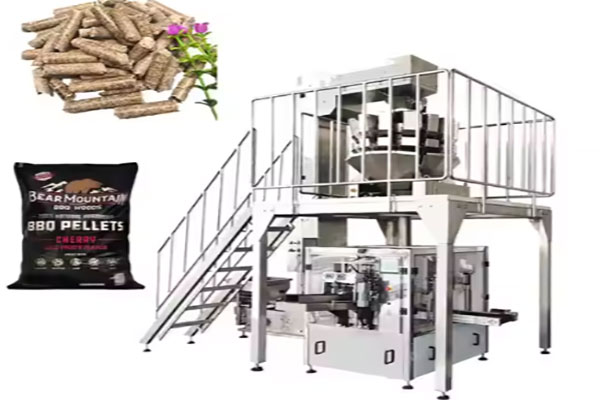
Double Feeding Vertical Packaging System
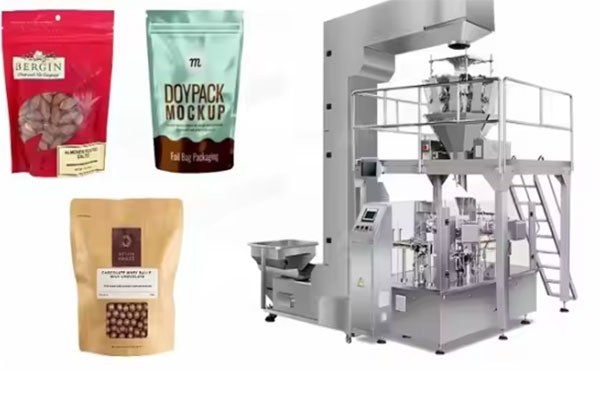
Double Feeding Vertical Packaging System supported bag types include three-side sealed bags, stand-up bags, zipper bags and special-shaped bags. The single-line production capacity reaches 30-60 bags/minute, with a packaging accuracy of ±0.5-1.5 grams, suitable for materials weighing between 10 and 6,500 grams. Depending on the complexity of the equipment configuration, the system price ranges from US$7,000 to US$50,000. Packaging speed: 30-60 bags/minute Packaging accuracy: 0.5-1.5 grams Packaging range: 10-6500 grams Packaging type: stand-up bag, zipper bag, etc. Control system: PLC control Applicable materials: granules, powders, liquids, sauces, etc. Automatic functions: filling, sealing, printing, etc. Material: stainless steel body, durable and corrosion-resistant
What is Double Feeding Vertical Packaging System?
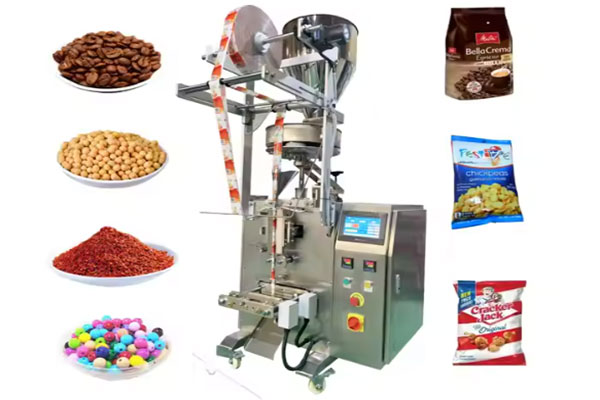
Double Feeding Vertical Packaging System use two feeding units to alternate or simultaneously feed materials, reducing downtime during operation and making them more suitable for production scenarios requiring continuous output. For products requiring mixed feeding, such as combinations of nuts and dried fruits, or granules and powders, this structure can complete filling within the same packaging cycle, avoiding frequent downtime for adjustments. In actual operation, packaging speeds typically reach 30–60 bags per minute, depending on the material state and metering method.
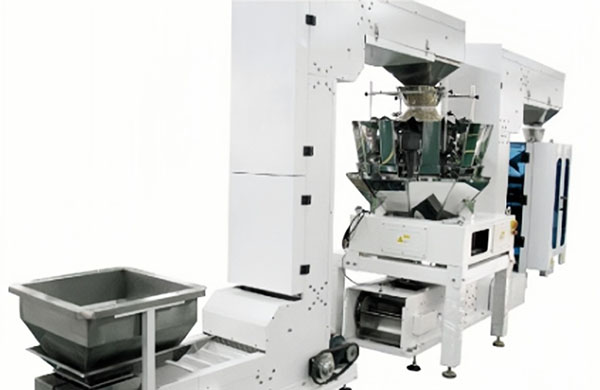
Compared to single-feeding systems, this type of system is more stable during long-term production and less prone to disruptions caused by feeding interruptions. For users planning to expand production capacity or wanting to reduce manual intervention, it maintains packaging consistency while ensuring smoother operation of the entire packaging line. The following sections will further explain its operation and the details to consider when selecting a system.
How Does a Double Feeding System Work
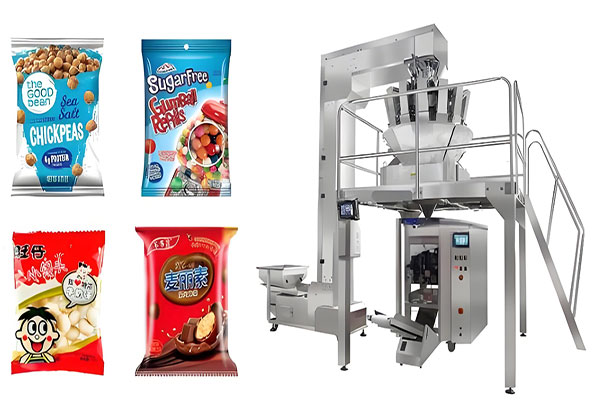
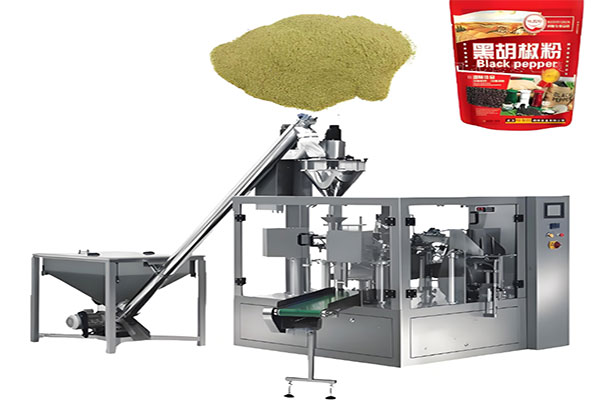
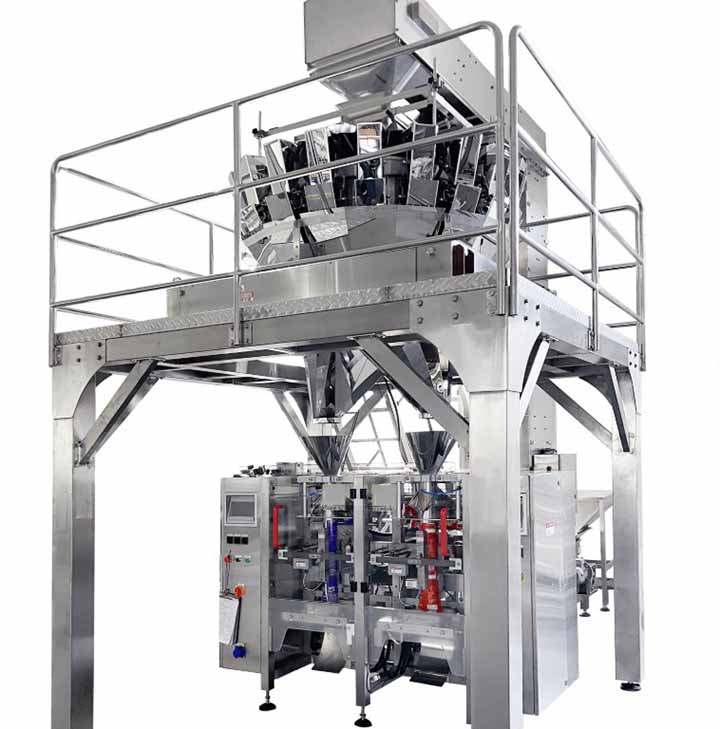
A Double Feeding Vertical Packaging System can be understood as two feeding devices working together on the same vertical packaging machine. For example, one side uses a spiral feeder to dispense powder, while the other side uses a combination scale to dispense granules. During operation, the equipment alternates feeding according to a set rhythm, or feeds both materials together into the pre-formed bags. The entire process is controlled by a PLC and a touchscreen. Operation only requires setting the weight and cycle time, and the machine will complete feeding, filling, and sealing in sequence. Compared to single-channel feeding, this dual-channel packaging method does not stop the equipment during replenishment, making it suitable for automated packaging of mixed materials or continuous production lines. It also reduces instability caused by frequent manual intervention.
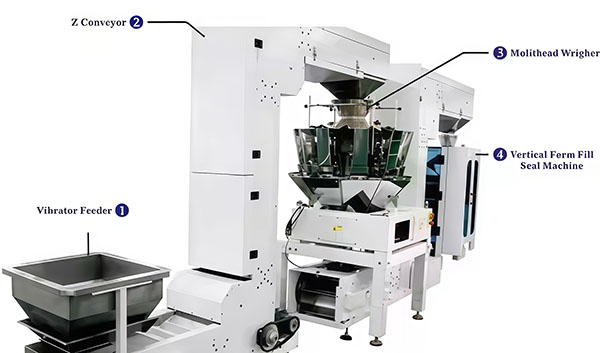
Double Feeding vs Single Feeding
| Feature | Single Feeding System | Double Feeding System |
| Production Speed | Generally 20-40 bags/min, greatly affected by feeding rhythm | Up to 30-60 bags/min, dual-channel feeding for more coherent production |
| Downtime | Pause required for refilling or material change, affecting continuous production | Two channels work alternately, reducing waiting time |
| Material Handling | Suitable for single material, such as pure granules or single powder | Capable of handling mixed materials, such as nuts + dried fruits, powder + granules |
| Feeding Method | Single feeding method (screw or cup meter) | Combined feeding method, such as screw + combination scale |
| Production Stability | Rhythm fluctuations easily occur during long-time operation | More uniform discharging rhythm, suitable for long-time operation |
| Labor Involvement | Frequent manual refilling or adjustment required | Less manual intervention, suitable for automated packaging lines |
| Application Scenario | Small-batch or single-product packaging | Multi-category combined packaging or continuous production lines |
| Changeover Flexibility | Shutdown adjustment required for material or specification change | Reduced downtime via parameter switching |
| Initial Cost | Lower equipment investment | Higher investment but stronger output capacity |
| Long-term Output | Limited capacity improvement | More suitable for expanding output or increasing production line rhythm |
Key Advantages of Double Feeding Packaging System
The Double Feeding Vertical Packaging System operates with two feeding devices working alternately. Even when one device is replenishing material, the other is still discharging, ensuring the machine doesn't stop waiting. This is particularly noticeable in continuous production packaging. Increased output stems from this rhythm, allowing for more bags to be filled in the same amount of time, especially noticeable in the 30-60 bags/minute range. If two materials need to be packed into the same bag, such as a combination of nuts and dried fruit, or powder and granules, this dual-channel structure allows for one-step filling without additional steps. Operation is also more convenient; once parameters are set, the equipment automatically cycles according to the set weight, requiring only manual replenishment and simple inspections. For users concerned about weight accuracy, using a combination scale or screw meter ensures more stable filling amounts in each bag, reducing the likelihood of inconsistent filling.
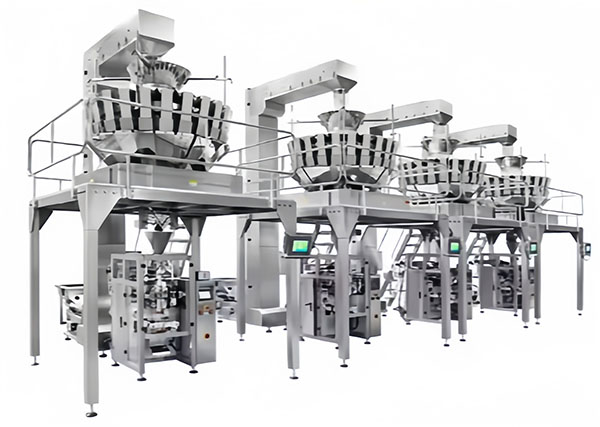
Applications
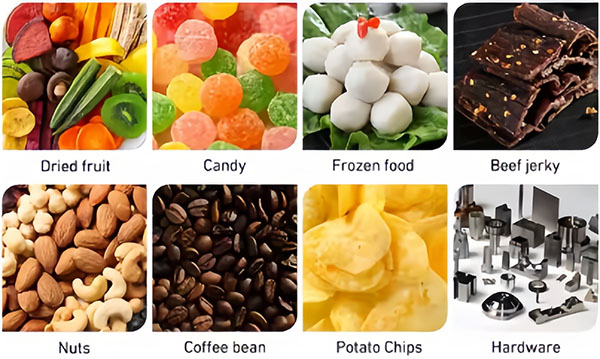
Dual-material conveying systems are typically used in scenarios where different materials need to be packed into the same bag. For example, in mixed packaging of nuts and dried fruits, peanuts are fed on one side while raisins are fed on the other, allowing filling to be completed within the same cycle. In pet food manufacturing, combinations of kibble and small meat pieces are common; this structure allows both materials to enter the packaging bag simultaneously. Small packages of coffee powder with sugar, or filling kibble and powder together, are also suitable for this dual-channel feeding method. For frozen food combination packaging, such as mixed vegetable packs, the equipment does not require repeated stops to switch materials during operation, making it more suitable for continuous discharge packaging lines and reducing time consumption from intermediate transfers.
How to Choose a Double Feeding Vertical Packaging System?
When selecting a system, consider:
1. Material Type
Powder, granule, liquid, or mixed materials
2. Packaging Speed Requirement
Higher speeds require synchronized feeding systems
3. Feeding Method
Auger filler (for powder)
Multi-head weigher (for granules)
4. Bag Type
Pillow bags, gusset bags, or sachets
5. Automation Level
Fully automatic vs semi-automatic
Double Feeding Vertical Packaging System parameters
| Model | GX-220DKF | GX-320DKF | GX-420DKF |
| Max roll film width | 220mm | 320mm | 420mm |
| Bag Length | 10-150mm | 10-190mm | 10-260mm |
| Bag Width | 20-100mm | 60-150MM | 120-200MM |
| Filling range | 1-99G | 10-500G | 100-1000G |
| Dimension(L*W*H) | 520*420*1590mm | 640*480*1700mm | 890*490*1850mm |
| Power | 220V/110V 50HZ/60HZ 550W | 220V/110V 50HZ/60HZ 600W | |
| Weight | 70KG | 94KG | 101KG |
Price of Double Feeding Vertical Packaging System
The price of a dual-feed packaging system generally ranges from $7,000 to $50,000, with the difference depending on the configuration options and actual usage requirements. A basic dual-feed structure will have a relatively lower cost; however, if a combination weigher, screw feeding, or a more complex automated packaging line is required, the price will increase accordingly. Users who need automated packaging for mixed materials or continuous production packaging lines often customize their systems based on material characteristics and production volume requirements; therefore, the final quote usually needs to be confirmed based on the specific solution.
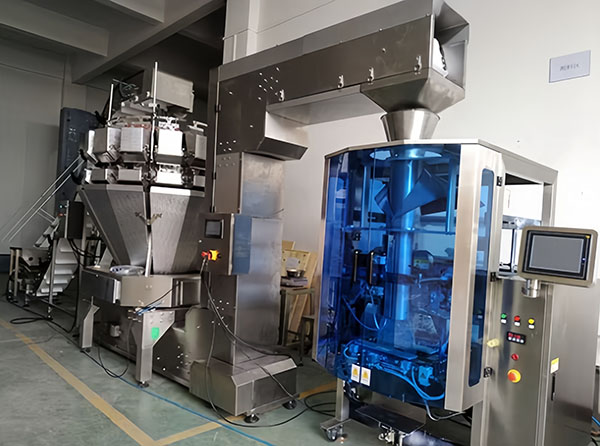
If your production line frequently experiences downtime due to refueling, or if you need to pack two different materials into the same bag, consider a dual-feed vertical packaging system. This structure is more likely to maintain a stable rhythm in continuous discharge and automated packaging of mixed materials, reducing the impact of interruptions. For users planning to increase packaging speed or expand production capacity, switching to a dual-channel feeding solution will make the entire packaging line run more smoothly.