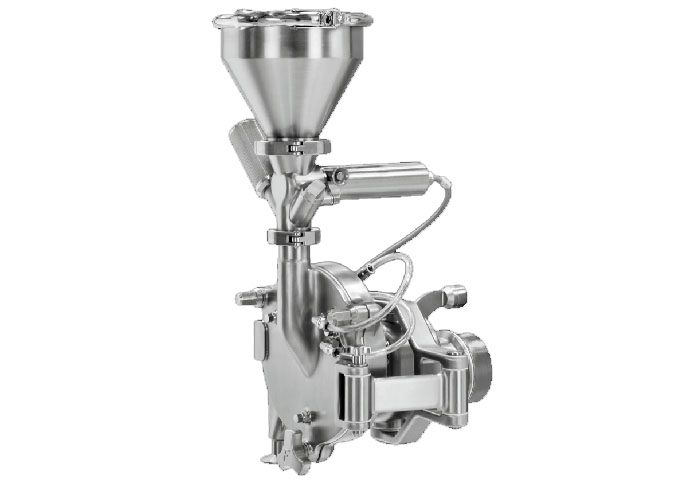
Pin Grinding Crusher
Pin Grinding Crusher is a mechanical impact mill that utilizes the impact shearing between a high-speed rotor and a stator pin disk to achieve ultrafine grinding of materials.
Rotor diameter: 320mm
Rotor speed: 3000-12000rpm (adjustable)
Processing capacity: 100-1000kg/h (depending on material characteristics)
Fineness range: D50: 2-50μm; D90: 5-100μm (adjustable)
Power configuration: Main motor 55kW, total system power 75kW
What is Pin Grinding Crusher?
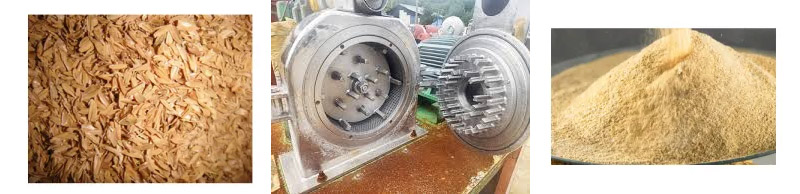
A pin grinding crusher, also known as a pin mill or pin disc mill, is a precision grinding machine that achieves ultrafine grinding through high-speed impact and strong shearing. Its grinding zone consists of a high-speed rotating rotor and stator discs, with high-strength, wear-resistant pins arranged concentrically on both discs. After being uniformly fed into the grinding chamber by the feeding system, the material is immediately drawn into the staggered area of the pins, where the linear velocity can reach 250 m/s. Within extremely narrow gaps, it undergoes repeated impact, shearing, and friction, instantly pulverizing it to the micron level. The pulverized powder is then discharged through a precision sieving system (or a built-in classifier) driven by airflow, ultimately yielding ultrafine powder with uniform particle size and concentrated distribution. The output fineness can be precisely controlled between 20 mesh and 2000 mesh according to the rotor speed and screen/classification settings, with a maximum processing capacity of 1000 kg/h. It can be used for the preparation of heat-sensitive materials, fibrous materials, and high-value-added fine powders.
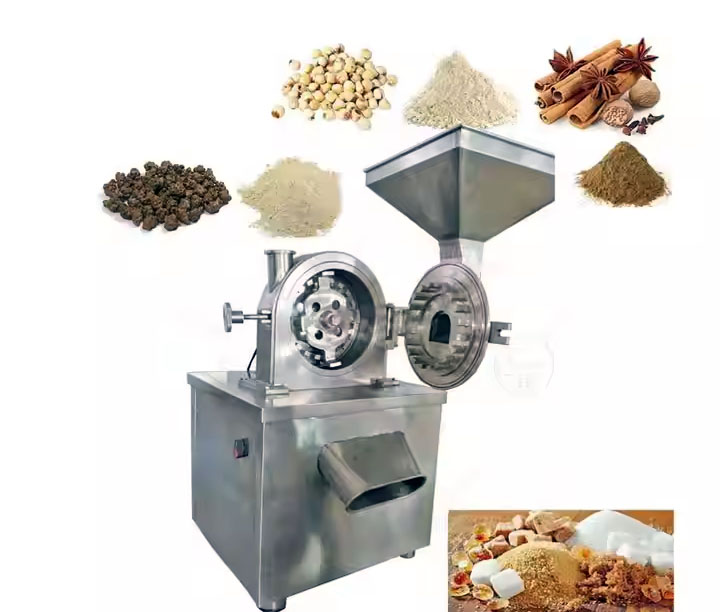
Compared with traditional grinding equipment, our Pin Grinding Crusher has the following unique working characteristics:
Fully enclosed negative pressure system: patented vacuum environment operation (0/20ATEX certification), completely exclude oxygen, eliminate explosion risks, especially suitable for flammable and explosive material processing
Low temperature crushing technology: extremely low friction heat, no liquid nitrogen cooling, process temperature rise is controlled below 50℃, perfectly protect heat-sensitive components
Self-cleaning design: special rotor structure avoids material accumulation, with quick-release pipe connection, to achieve fast material change and cleaning
What types of Pin Grinding Crusher are there?
Pin Grinding Crusher is available in four main series based on processing capacity, output fineness, and material characteristics: Standard, Ultrafine, Low-Temperature, and Explosion-Proof, precisely matching the grinding needs of different industrial scenarios.
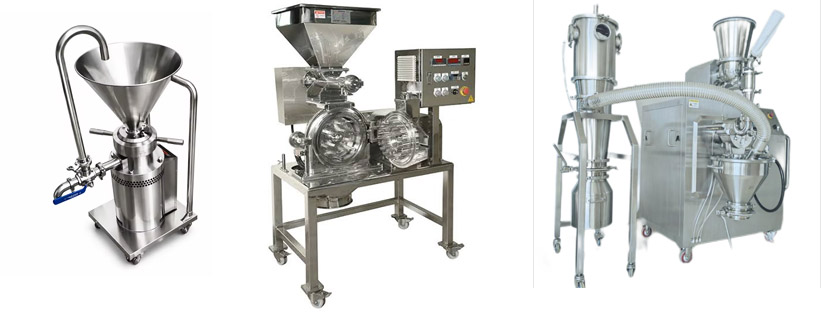
Standard Pin Grinding Crusher: Highly versatile, used for fine grinding of materials with medium hardness (Mohs hardness below 5). Utilizing a conventional pin-disc structure and rotation speed design, the output fineness can be controlled between 20-150 mesh. Suitable for large-scale pulverization of chemical raw materials, minerals, grains, and traditional Chinese medicine, it is a cost-effective basic grinding solution.
Ultrafine Pin Grinding Crusher: Achieves ultra-fine pulverization from micron to submicron levels through higher precision grinding elements and ultra-high rotation speed. The classification device works in conjunction with the pin disc, achieving a fineness of 200-2000 mesh with a concentrated particle size distribution. Used for pigments, fillers, engineering ceramic powders, and high-value-added fine chemicals with stringent fineness requirements.
Low-Temperature Pin Grinding Crusher: Equipped with a jacketed water-cooling or liquid nitrogen cryogenic system, effectively absorbing the heat generated during grinding and keeping the chamber temperature below the safe threshold for heat-sensitive materials. Particularly suitable for low-melting-point materials such as epoxy resins, food additives, beeswax, and traditional Chinese medicine extracts, preventing sticking, discoloration, and component damage.
Explosion-Proof Pin Grinding Crusher: The entire machine uses an explosion-proof motor and anti-static treatment, and can be connected to an inert gas protection system to isolate oxygen during grinding, strictly meeting dust explosion safety regulations. Specifically designed for flammable and explosive hazardous materials such as sulfur, metal powders, and fireworks agents, ensuring production safety under extreme operating conditions.
What are the advantages of Pin Grinding Crusher?
The Pin Grinding Crusher utilizes a direct-drive and high-speed impact structure, resulting in low energy loss and high crushing efficiency. Its processing capacity exceeds 1000 kg/h, reducing unit energy consumption by approximately 30% compared to traditional impact mills of the same capacity, and ensuring stable continuous mass production. By adjusting the rotor speed and pin disc gap, the output fineness can be flexibly controlled within the range of 20–2000 mesh, resulting in uniform and concentrated powder particle size distribution. Ultrafine models can stably achieve D90 < 6 μm, ensuring consistent batch quality. It is suitable for applications with stringent particle size requirements, such as engineering ceramics and high-grade powder coatings. It is highly versatile, capable of processing various materials including minerals with a Mohs hardness below 5, heat-sensitive food additives, traditional Chinese medicine extracts, and oily and fibrous plant materials. Standard configuration includes jacketed water cooling, with an optional liquid nitrogen cryogenic system, enabling it to handle low-melting-point, high-toughness materials that are difficult to process using air jet mills and ball mills. Furthermore, the machine features a quick-opening hinged door, a rapidly replaceable pin disc, and a modular screening and grading structure, facilitating tool-free cleaning and maintenance, convenient material replacement, and lower labor costs.
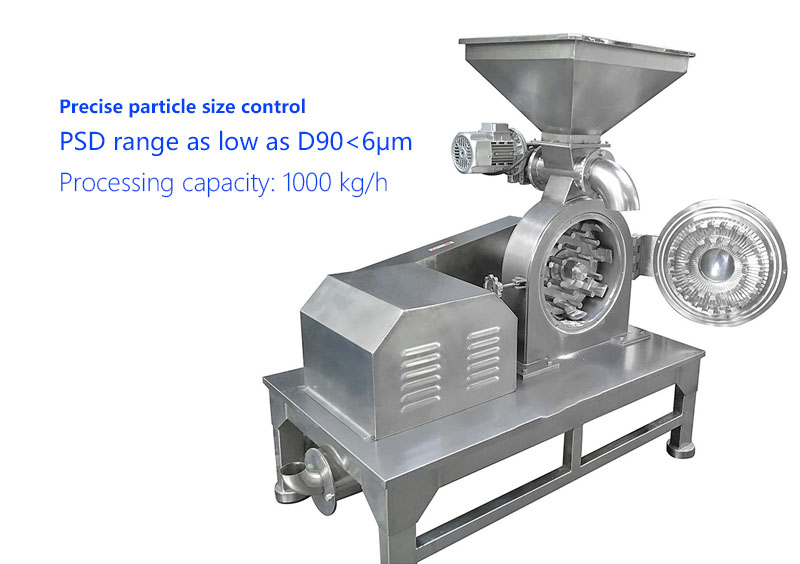
How does Pin Grinding Crusher work?
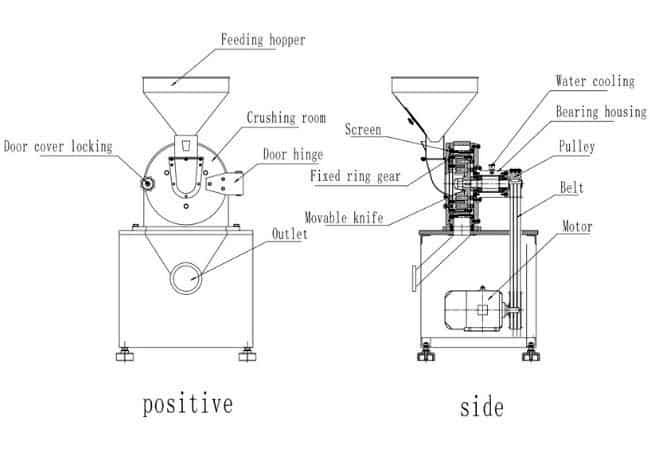
The working principle of our Needle-Type Grinding Mill is based on the high-speed rotation of a set of needles. As the material enters the grinding chamber, it is subjected to intense impact and shearing forces from the rapidly rotating needles. This continuous action breaks down the material into fine particles, which are then discharged through a sieve or cyclone separator.
What are the applications of Pin Grinding Crusher?
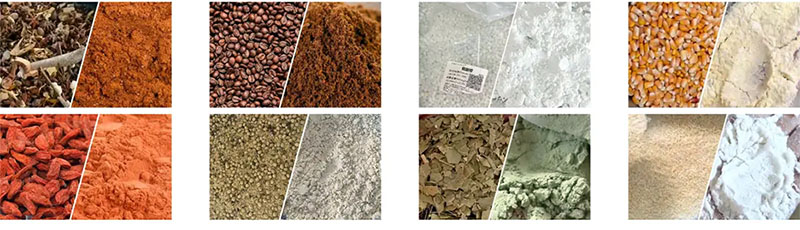
Pin Grinding Crusher has applications in various fields, including pharmaceuticals, food, chemicals, new materials, and fine minerals. In the pharmaceutical industry, Pin Mills are commonly used for the ultrafine grinding of active pharmaceutical ingredients to improve bioavailability. They significantly increase the release of active ingredients by achieving a cell wall breakage rate of up to ≥98% in traditional Chinese medicine. Poorly soluble drugs can be micronized to accelerate dissolution. The equipment design supports cGMP standards, meeting the requirements for aseptic powder production environments. In the food and health product sector, it excels in the ultrafine processing of functional raw materials such as Ganoderma lucidum spores and Cordyceps sinensis, achieving the micronization of flavorings and fragrances to enhance flavor retention, refining dietary fiber to improve taste, and ensuring the uniform dispersion of nutritional enhancers in formulations. Moving to the chemical and new materials industries, Pin Grinding Crusher can achieve micron-level fine dispersion of high-performance pigments, uniformly grind positive and negative electrode materials for batteries to improve electrochemical performance, modify polymer fillers, and control the particle size of catalyst carriers. In addition, it also performs excellently in the preparation of metal powders, processing of electronic pastes, and ultra-fine grinding of advanced ceramic raw materials and minerals such as kaolin and talc, making it a core piece of equipment for achieving high-value-added powder production.
Pin Grinding Crusher Customer Case
A multinational pharmaceutical company needed to establish a micronization production line compliant with FDA standards for its novel anticancer active pharmaceutical ingredient (API). The core challenges lay in the stringent requirements for particle size control (D90 < 10 μm), a production capacity exceeding 500 kg/h, and the cytotoxicity of the anticancer drug necessitating a completely enclosed, dust-free production process to eliminate cross-contamination and operator exposure risks, resulting in immense compliance pressure.
Machrise Machinery custom-designed a PMV-320ATEX explosion-proof Pin Grinding Crusher, integrating an inert gas circulation system and a HEPA-grade airtight enclosure. The production line operates under full negative pressure, completely preventing drug dust leakage.
After the equipment was put into operation, the production capacity stabilized at 600 kg/h, exceeding the target by 20%. The measured particle size (D90) was 8.5 μm, with extremely high batch-to-batch consistency. The entire process was dust-free, completely eliminating the risk of cytotoxic exposure for operators.
Pin Grinding Crusher FAQs
Q: What is the typical particle size range a Pin Mill can achieve?
A: Depending on the model and material properties, a standard Pin Mill can achieve a fineness of 20-150 mesh. Our ultra-fine models, equipped with integrated dynamic classifiers, can precisely control output down to D90 < 10 μm (around 1250 mesh) or even finer, with a narrow particle size distribution.
Q: What materials can a Pin Grinding Crusher process?
A: It is highly versatile and suitable for a wide range of materials with a Mohs hardness below 5. Typical applications include chemicals, pharmaceuticals API, herbal medicine, food ingredients spices, fibers, grains, talc, calcium carbonate, pigments, and polymers. For heat-sensitive or tough materials, we offer liquid nitrogen cooling or water-cooled jacket configurations.
Q: Is a Pin Mill suitable for oily, sticky, or fibrous materials?
A: Standard Pin Mills can struggle with very sticky or fibrous materials that may build up on the pins. However, we offer specialized solutions such as Cryogenic Pin Mills (using liquid nitrogen to embrittle the material) or models with special scraper designs and wider grinding chambers, which effectively handle these challenging materials without clogging.
Q: What is the production capacity of a Pin Mill?
A: Capacity varies significantly by model and material. Our lab-scale mills start from a few kg/h, while large-scale production models can deliver up to 1000 kg/h or more, depending on the target particle size and material density. We provide detailed capacity curves based on specific material testing.
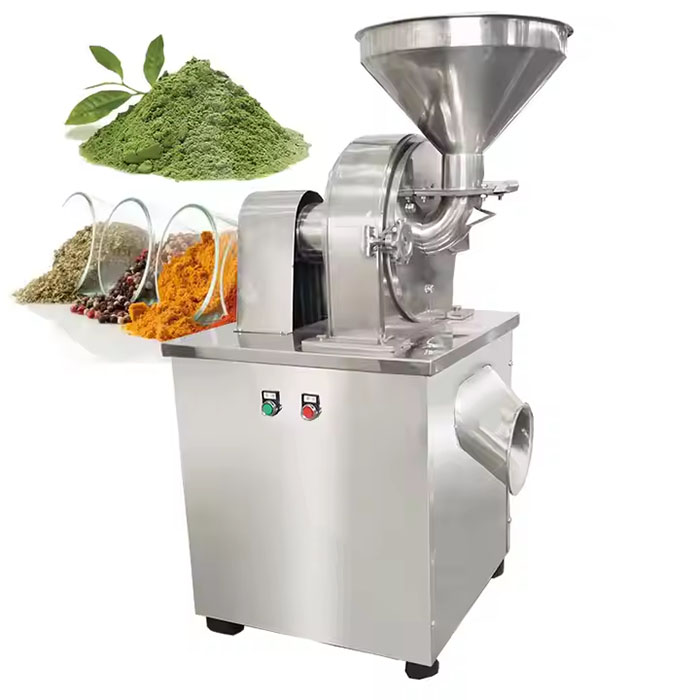 Chinese Herb Grinder Machine
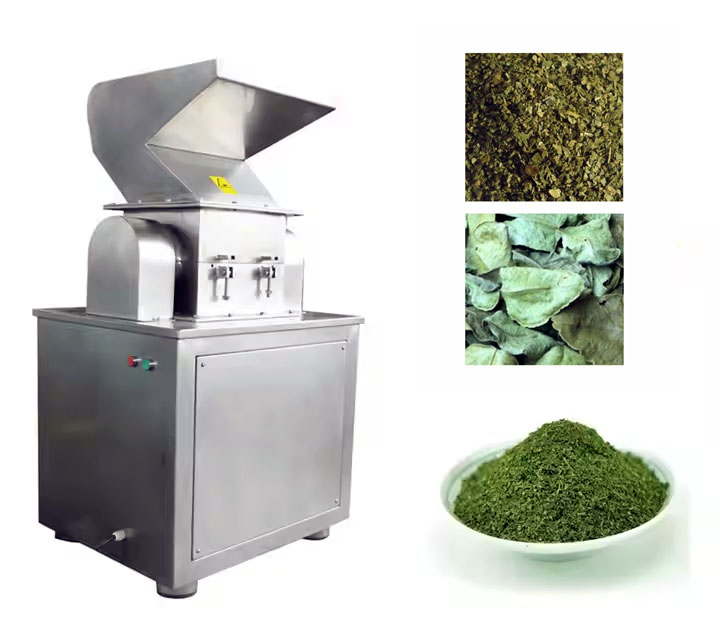 Coarse crusher
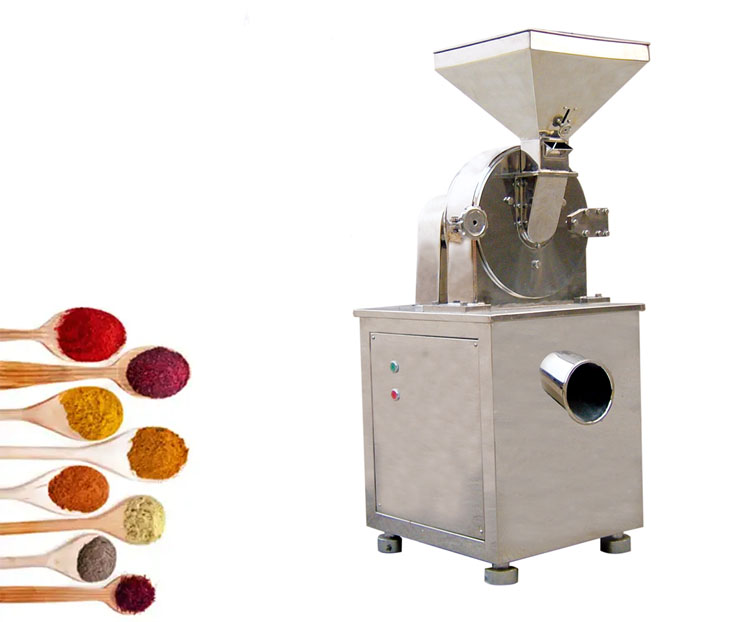 Universal Crusher
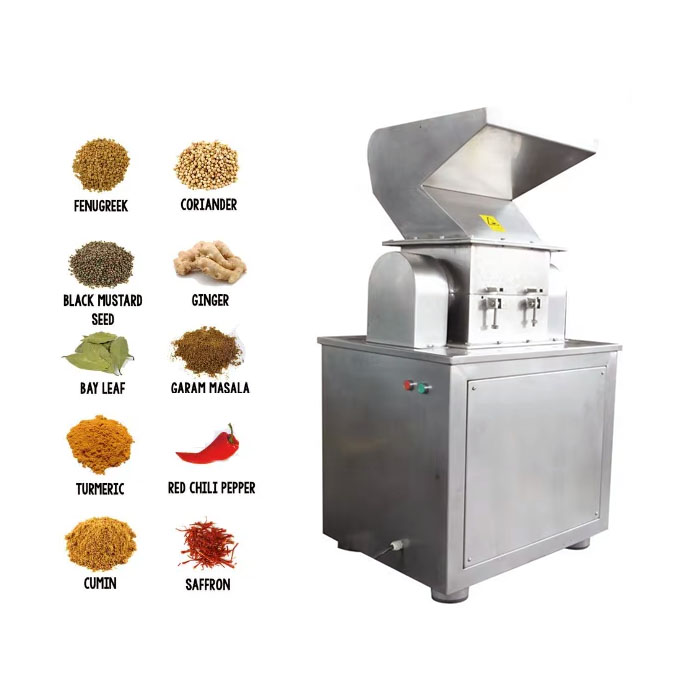 Spice Crusher