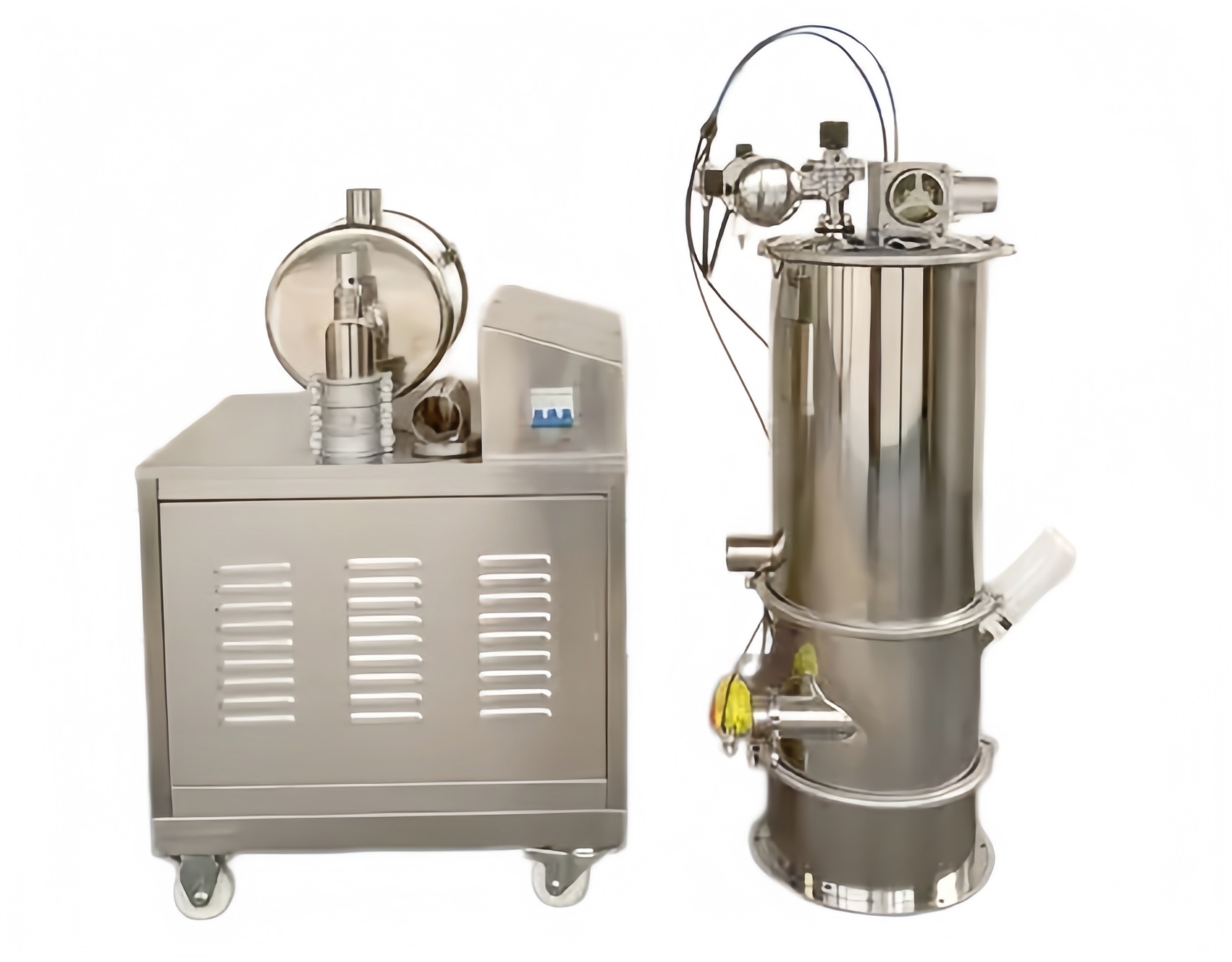
Industrial Vacuum Feeder for Powder Handling
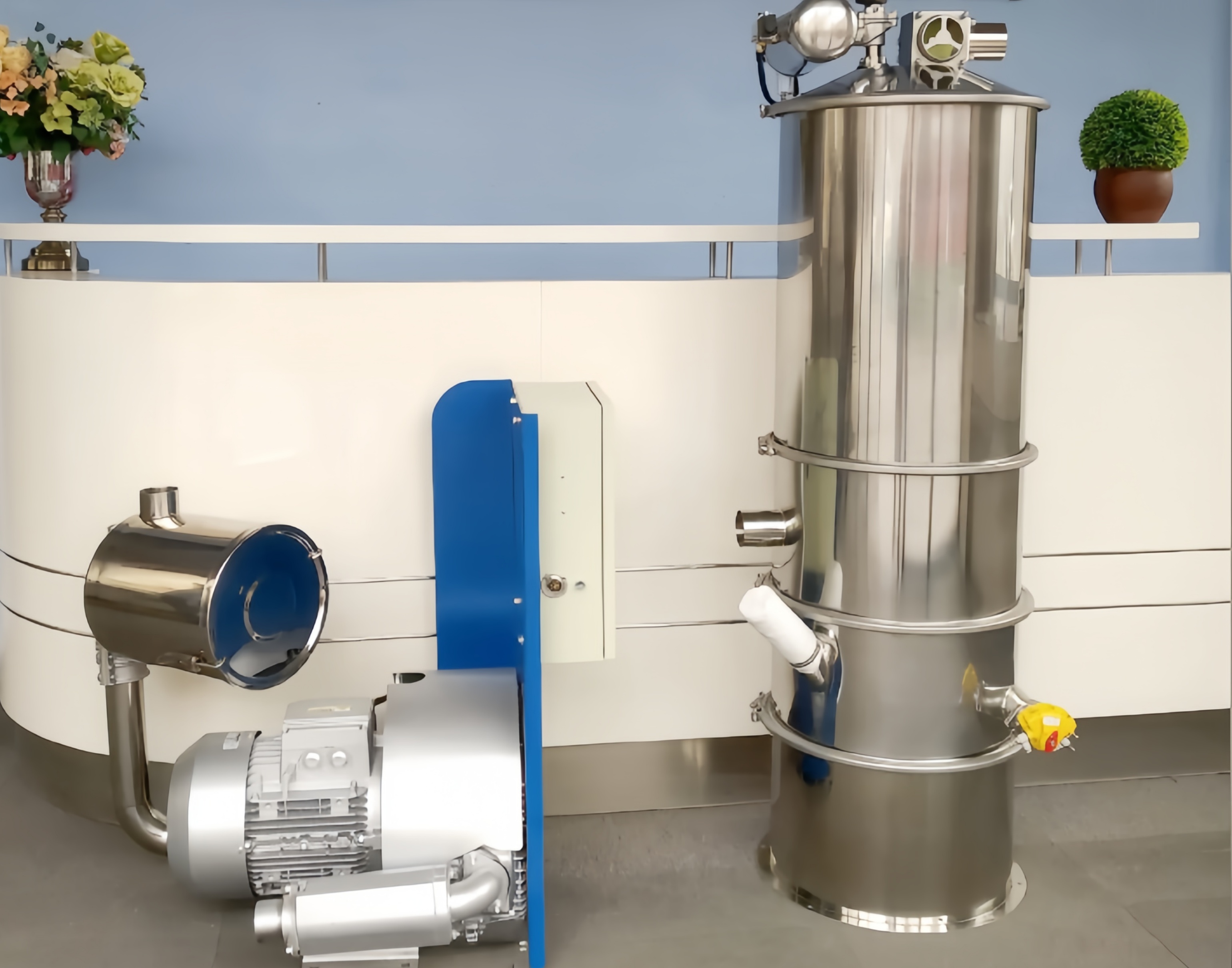
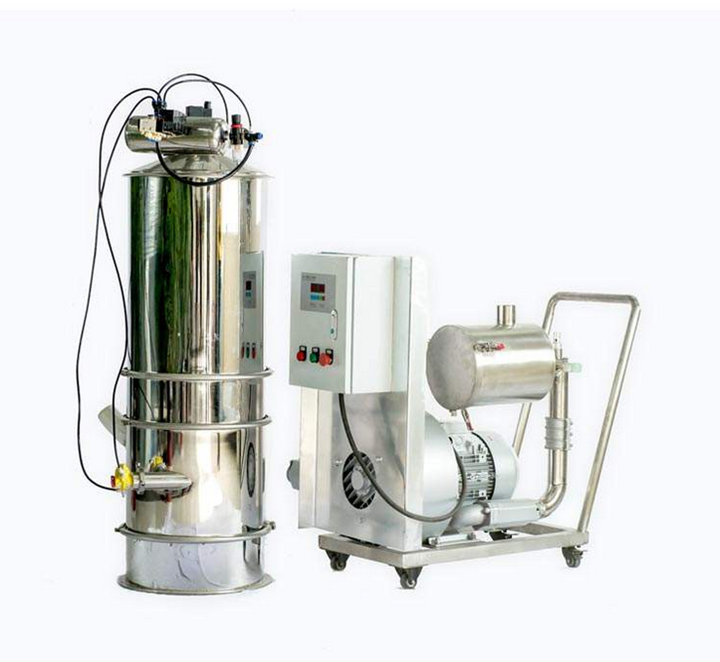
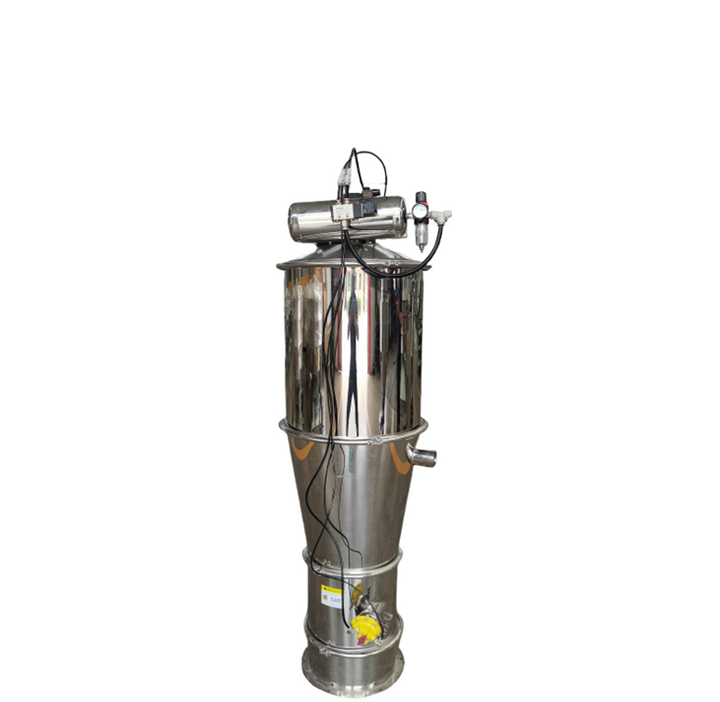
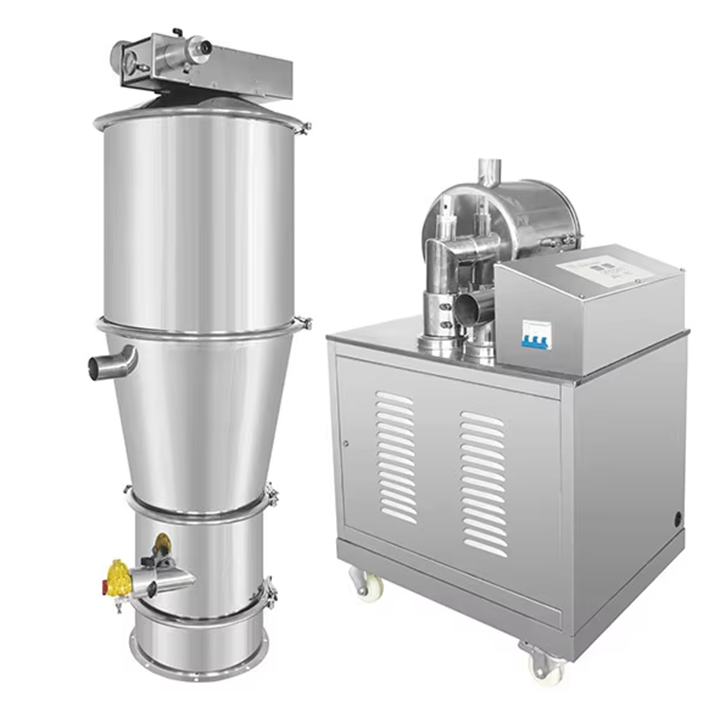
The Industrial Vacuum Feeder for Powder Handling features a closed-loop conveying system, dust-free operation, and a highly automated design. It can be integrated with various devices to achieve seamless powder handling throughout the entire process.
Power: 1.5-5.5 kW (customizable)
Dimensions (L*W*H): Depends on specific model
Material: 304/316 stainless steel
Voltage: 220V/380V/415V or customized upon request
Type: Pneumatic/Electric/Continuous
Applicable Materials: Flour, sugar, milk powder, food additives, chemical powders, fertilizers
What is an Industrial Vacuum Feeder for Powder Handling?
Industrial Vacuum Feeder for Powder Handling is a closed-loop conveying system that uses vacuum suction to transport powdery or granular materials. Compared to traditional manual handling or mechanical conveying methods, vacuum feeders fundamentally solve problems such as dust pollution, material contamination, and high labor intensity. The product supports non-standard customization, allowing for tailored production to specific production site requirements and conveying needs. It can also be customized to integrate with upstream and downstream equipment to ensure the normal operation of the entire production line.
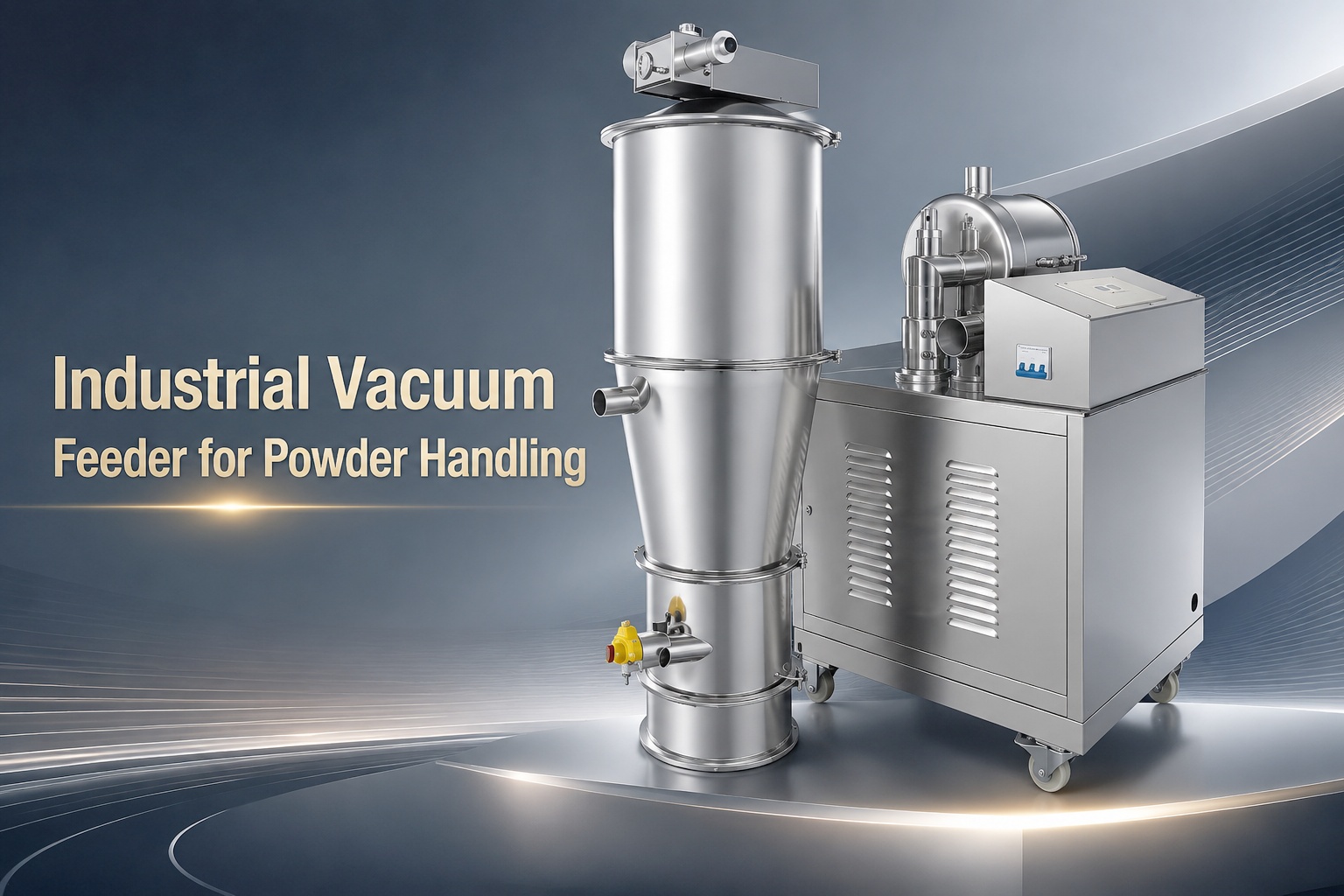
Working Principle of an Industrial Vacuum Feeder for Powder Handling
The Industrial Vacuum Feeder for Powder Handling works by using a vacuum pump or vacuum generator as a power source to create a vacuum negative pressure within the separation hopper. Under this pressure difference, the material is drawn into the hopper through the suction nozzle and conveying hose. Subsequently, the material is intercepted and separated from the air by a filter within the hopper, and the air is expelled. When the material accumulates to a set amount in the hopper, the control system automatically shuts off the vacuum source, opens the discharge valve, and the material falls into the downstream equipment by gravity.
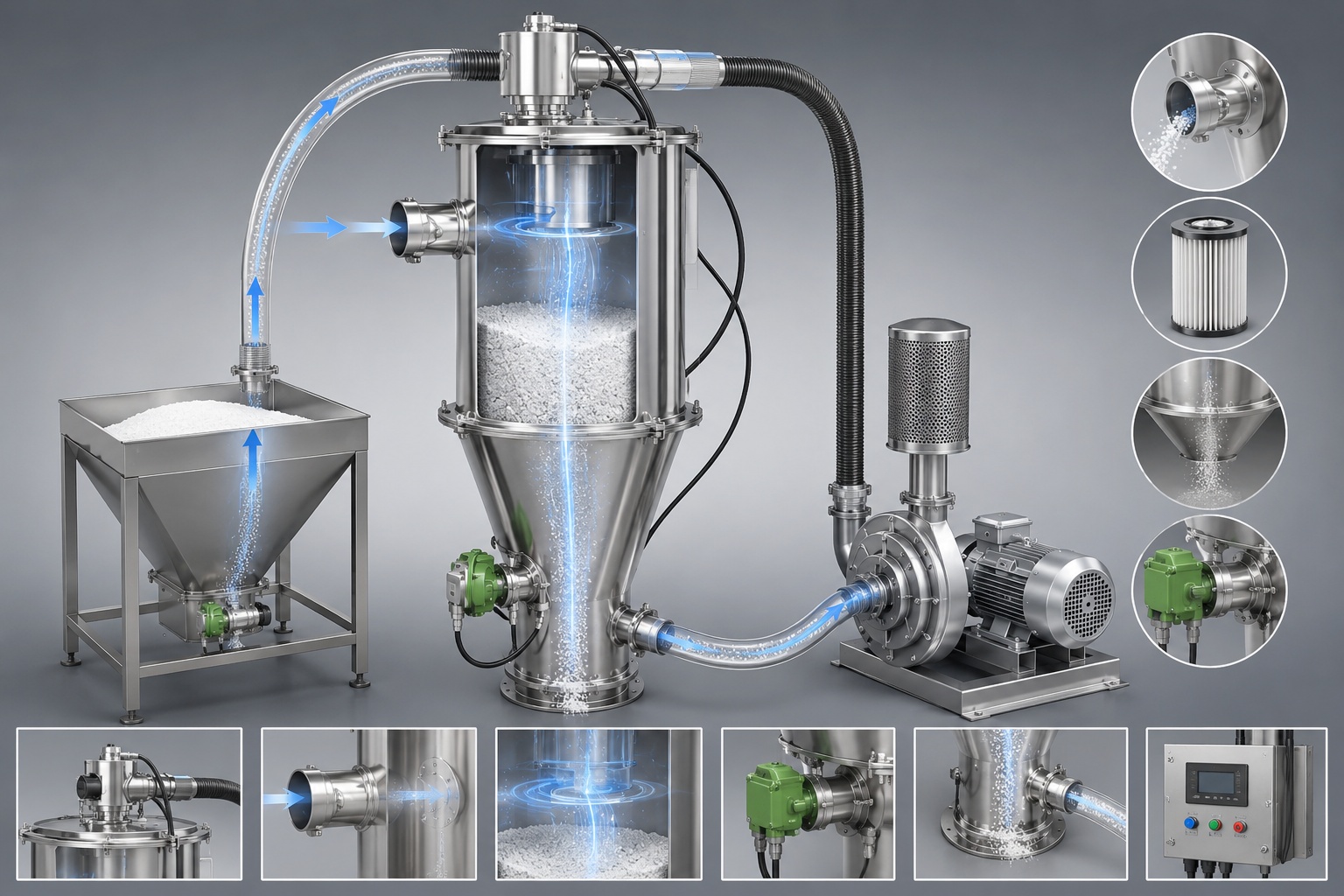
What are the advantages of an Industrial Vacuum Feeder for Powder Handling?
With its core characteristics of fully enclosed pipeline conveying and dust-free operation, the Industrial Vacuum Feeder for Powder Handling is becoming standard equipment in many powder handling industries. It eliminates dust and material contamination at the source, significantly reduces manual labor intensity, and boasts outstanding advantages such as flexible layout and small footprint.
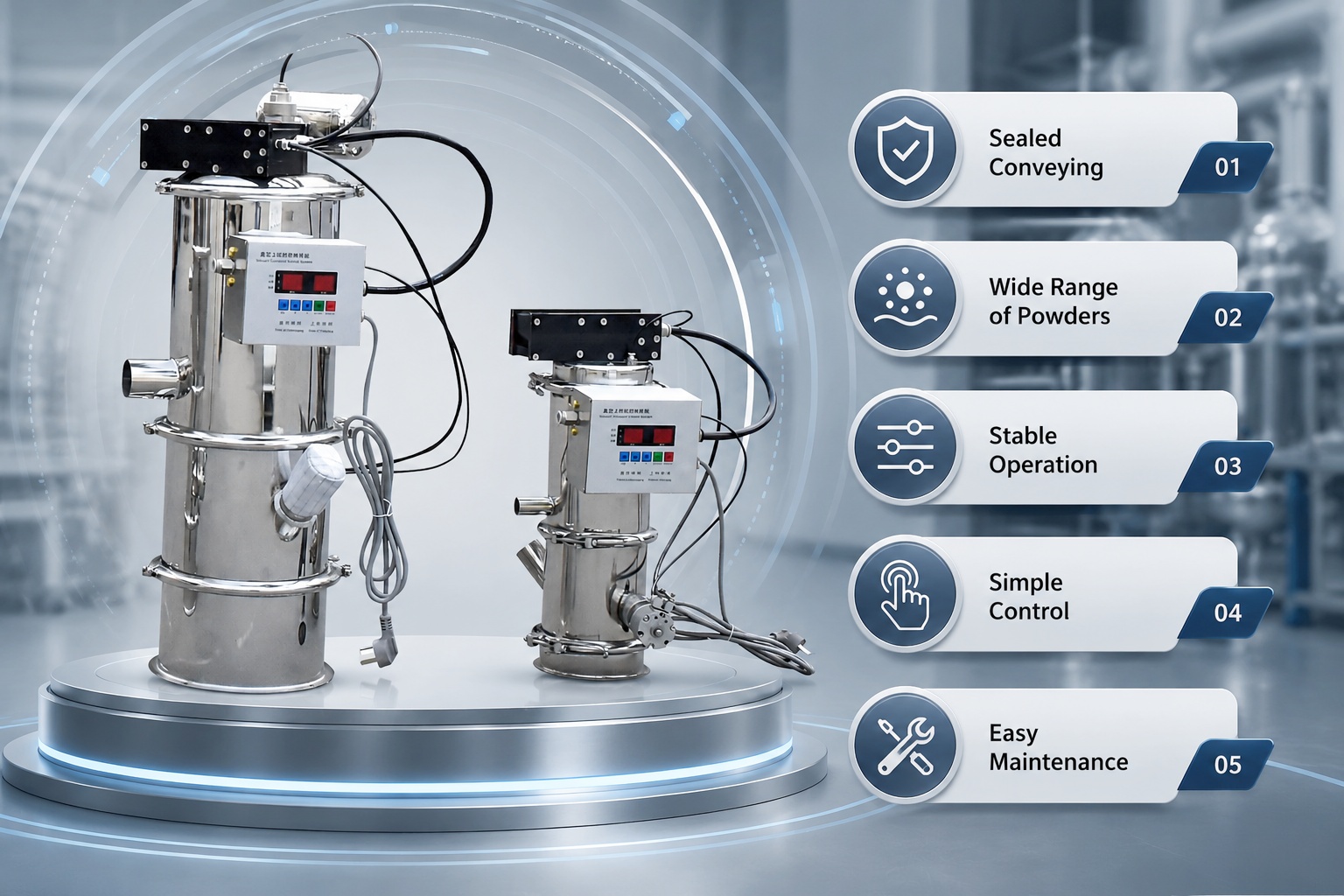
Dust-free production: The fully enclosed pipeline conveying eliminates the risk of dust leakage and cross-contamination, improving the workshop environment and protecting the health of operators.
Energy-saving conveying: It significantly improves conveying efficiency and reduces manual intervention; processes that previously required multiple people can now be completed with just one person monitoring.
Flexible layout: Pipeline conveying is not limited by space, allowing for flexible layouts to complete conveying tasks in confined spaces, resulting in a more aesthetically pleasing overall workshop.
Safe and reliable: The entire conveying process takes place in a closed environment, effectively isolating external impurities, and special design eliminates static electricity, preventing damage to materials or introduction of contamination.
Structure of the Industrial Vacuum Feeder for Powder Handling
The Industrial Vacuum Feeder for Powder Handling is a powder conveying system consisting of multiple functional modules working in tandem. Its structure can be mainly divided into four units: a power source module, a separation and filtration module, a control and execution module, and an auxiliary connection module.
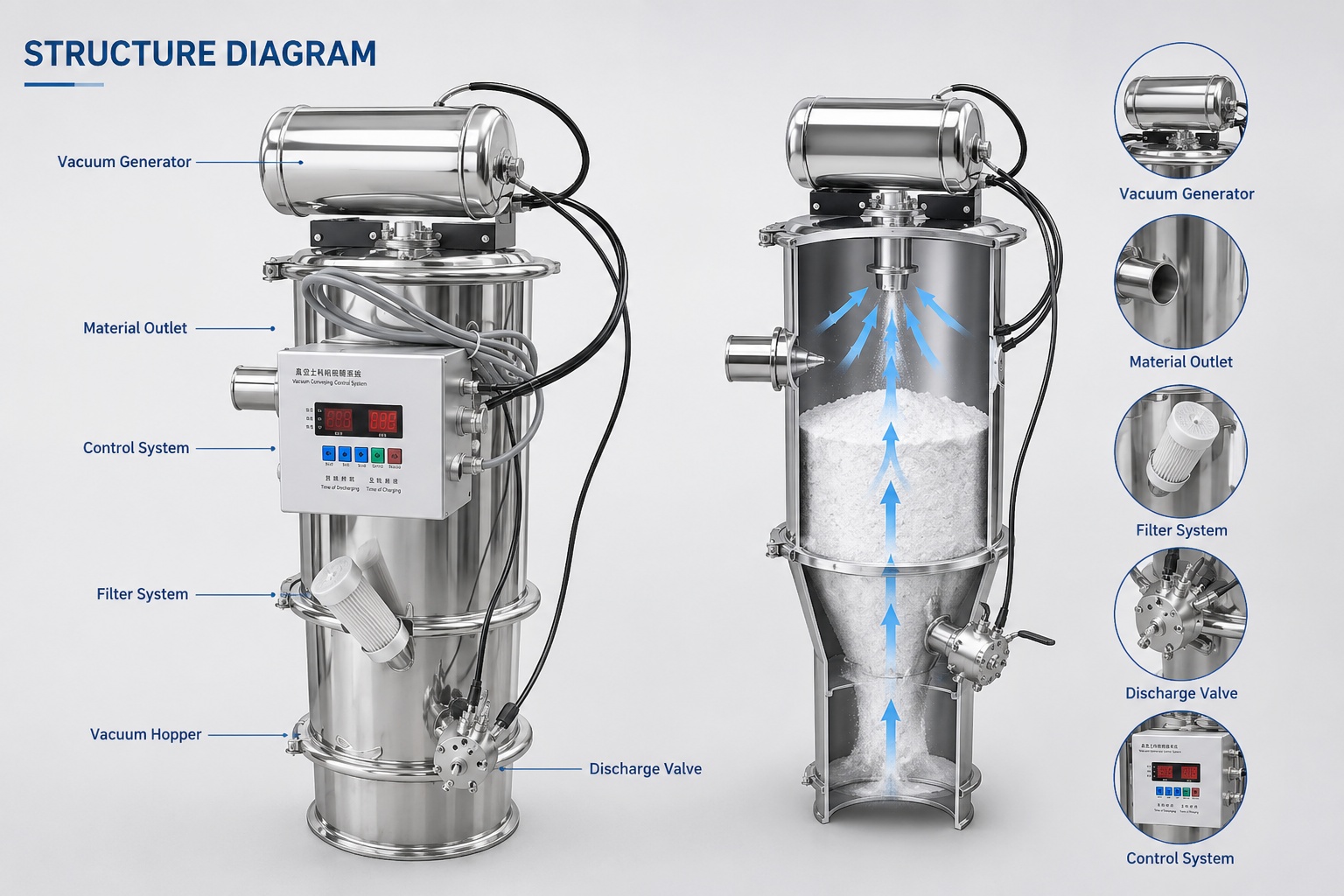
Power Source Module: Responsible for generating the vacuum negative pressure required for conveying. This module typically uses a vacuum pump or vacuum generator. The choice of power source directly affects the equipment's conveying capacity, energy consumption, and applicable scenarios.
Separation and Filtration Module: The core working unit of the system, mainly including a vacuum hopper and a filter. The vacuum hopper is a temporary storage area for separating materials from air, while the filter plays a crucial role in intercepting powder and preventing fine dust from being discharged with the airflow.
Control Module: Responsible for achieving automated operation, consisting of a PLC or relay control system, a pneumatic discharge gate, and a compressed air backflushing device. A level sensor monitors the material level in the hopper in real time, and the control system automatically starts and stops the vacuum source, opens and closes the discharge gate, and triggers the backflushing device during each cycle interval.
Auxiliary connection modules: These include stainless steel suction nozzles, specially designed wear-resistant conveying hoses, and various seals and pipe fittings. While these components may seem simple, their sealing and wear resistance directly affect the stability and lifespan of the system.
What powders can the Industrial Vacuum Feeder for Powder Handling convey?
The Industrial Vacuum Feeder for Powder Handling is suitable for an extremely wide range of materials, covering most powder types from fine powders to granules. It can stably convey raw materials for pharmaceuticals, flour and additives for the food industry, pigments for the chemical industry, and modified particles for the plastics industry.
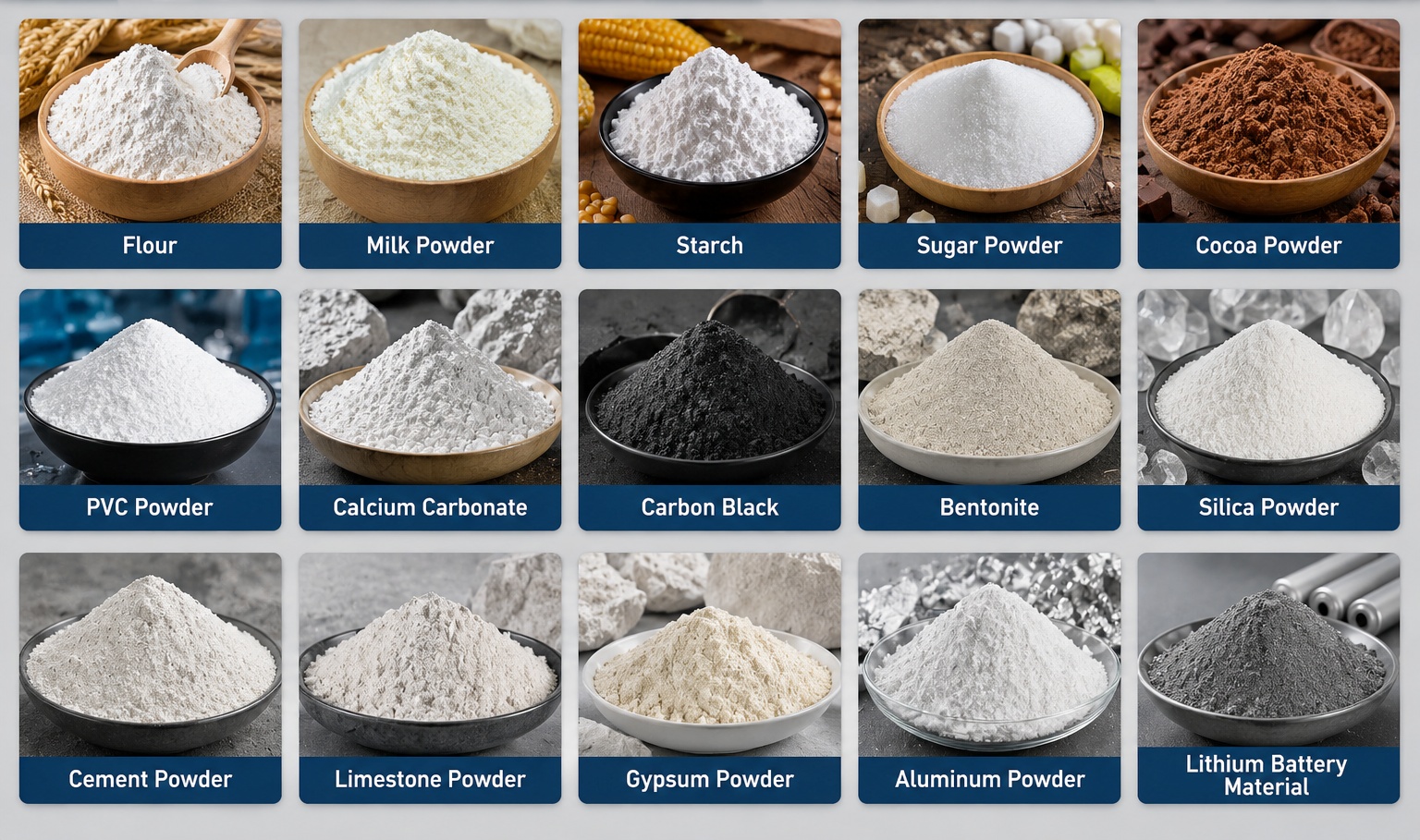
Powdered materials: Including various fine and ultrafine powders. Typical examples include pharmaceutical raw material powders, food-grade flour/milk powder/starch, chemical pigments/dyes/titanium dioxide, carbon powders, and metal oxide powders.
Granular materials: Including regular or irregular particles of varying sizes. Typical examples include plastic particles, food particles, fertilizer particles, and ceramic raw material particles.
Mixed materials: These are mixtures of powders and granules, or granules containing a certain proportion of fine powder. Commonly found in feed additives, some chemical intermediates, and dry mortar for building materials.
Flammable and explosive powders: Such as aluminum powder, magnesium powder, certain organic pigments, and coal powder. These materials are prone to explosion during transport due to static electricity or friction, requiring the use of explosion-proof vacuum feeders.
Adhesive powders: Such as certain food additives, traditional Chinese medicine extracts, and some chemical auxiliaries. These materials easily adhere to the inner walls of pipes and the surface of filters, causing blockages. For these materials, polished stainless steel pipes with increased backflushing pulse cleaning frequency should be used. If necessary, an air drying device can be installed to pre-treat the material.
Industrial Vacuum Feeder for Powder Handling Model Parameters
| Model | Motor Power (KW) | Conveying Capacity (Koh) |
| HCSL - 1 | 1.5 | 400 |
| HCSL - 2 | 2.2 | 600 |
| HCSL - 3 | 3 | 1200 |
| HCSL - 4 | 5.5 | 2500 |
| HCSL - 6 | 5.5 | 3200 |
| HCSL - 7 | 7.5 | 6000 |
| HCSL - 10-6 | 7.5 | 6000 (When the conveying distance is 10 meters) |
| HCSL - 20-5 | 11 | 5000 (When the conveying distance is 20 meters) |
Which industries can use Industrial Vacuum Feeder for Powder Handling?
Industrial Vacuum Feeder for Powder Handling is widely used in many powder handling industries, including pharmaceuticals, food, chemicals, plastics, metallurgy, building materials, and grain processing. We provide safe and temperature-controlled solutions for any scenario involving the transfer of powdery or granular materials.
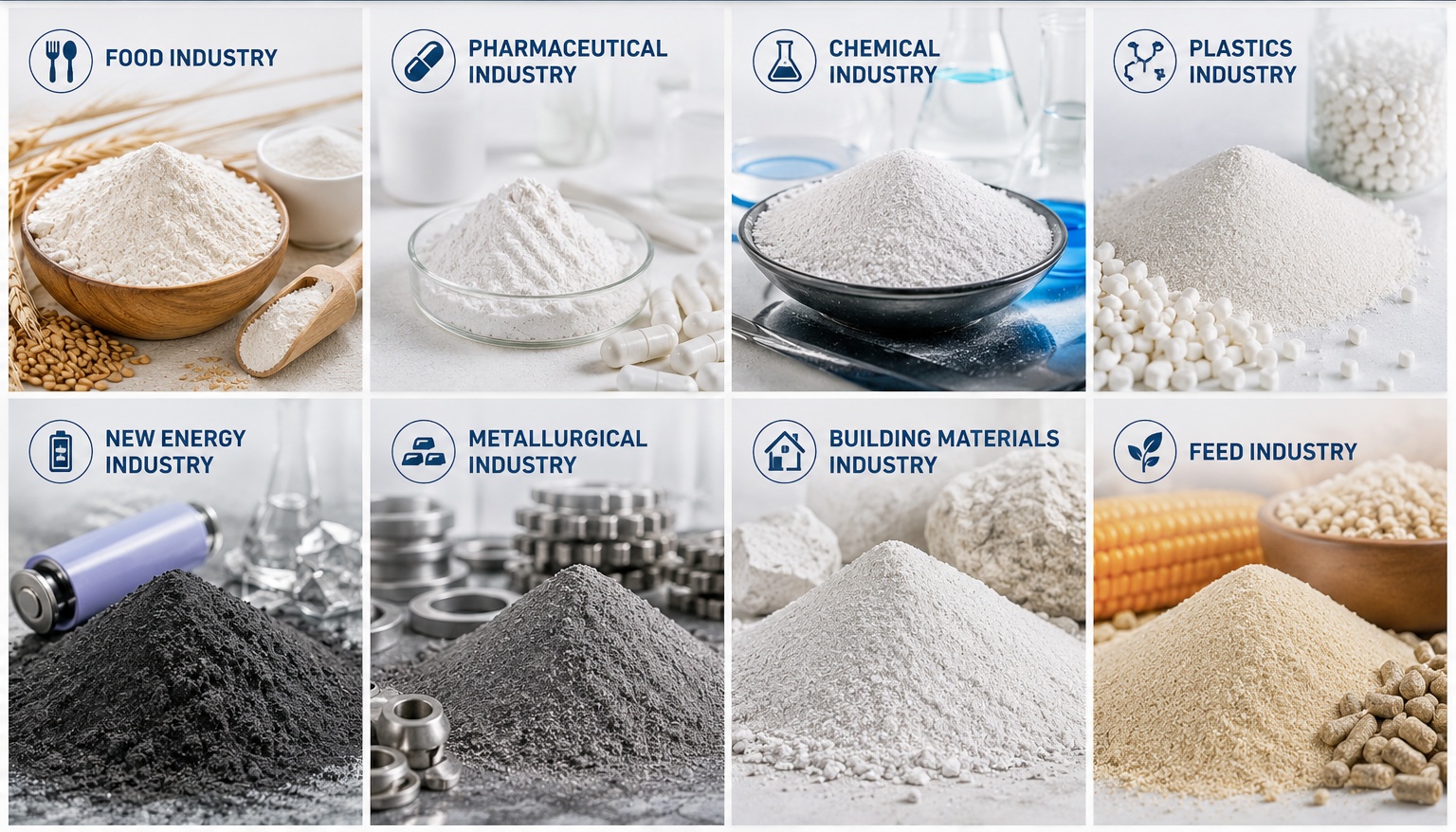
Pharmaceutical Industry: For the clean and precise transport of raw materials, pharmaceutical precursors, and other materials.
Chemical Industry: Handles various chemical powders, additives, pigments, etc., enabling dust-free operation.
Food Industry: Transports flour, sugar, milk powder, food additives, etc., ensuring food safety and hygiene.
Plastics Industry: Used for the automated transfer and feeding of modified plastic particles, masterbatches, and other materials.
How to Choose the Right Industrial Vacuum Feeder for Powder Handling?
Selection is the decisive step in maximizing the efficiency of a vacuum feeding system. Factors such as material characteristics, conveying distance, process requirements, and on-site conditions must be comprehensively considered.
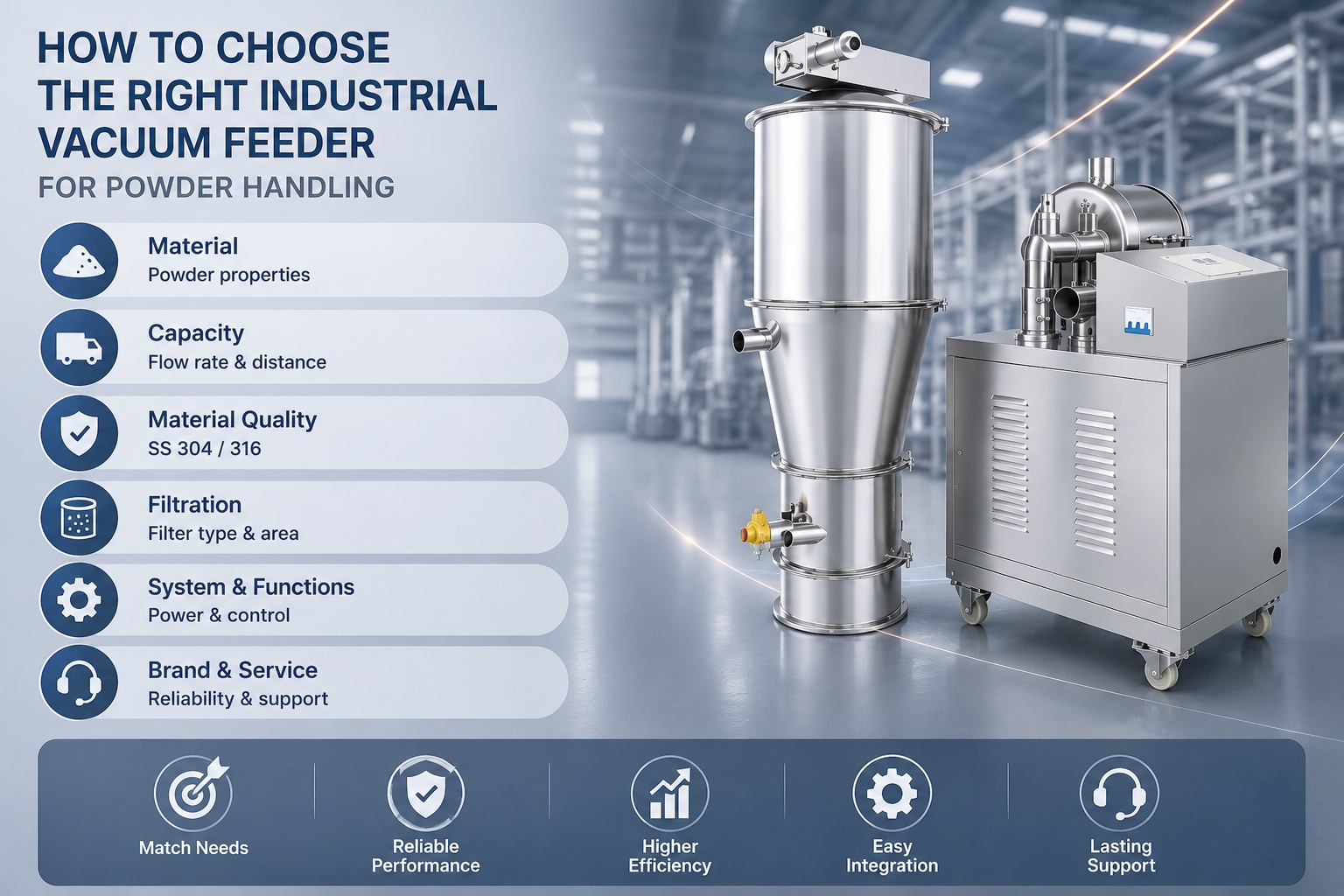
Material Characteristics: Identify whether the material is powdery, granular, or mixed, and whether it possesses special properties such as stickiness, toxicity, or explosiveness.
Conveying Capacity: Select an appropriate conveying capacity based on production needs. Different models of equipment have significantly different processing capacities.
Conveying Distance: The horizontal and vertical distances of the conveying process directly affect the required vacuum level and the choice of power source.
Power Source Selection: Depending on site conditions, a vacuum pump driven by electricity or a vacuum generator driven by compressed air can be selected.
Industrial Vacuum Feeder for Powder Handling Customer Case
Our factory has been deeply involved in the field of powder vacuum conveying for many years, and we understand that different industries and materials have vastly different equipment requirements. We always adhere to the concept of customized service, tailoring the most suitable vacuum feeding solution for our customers based on material characteristics, conveying distance, process environment, and production needs.
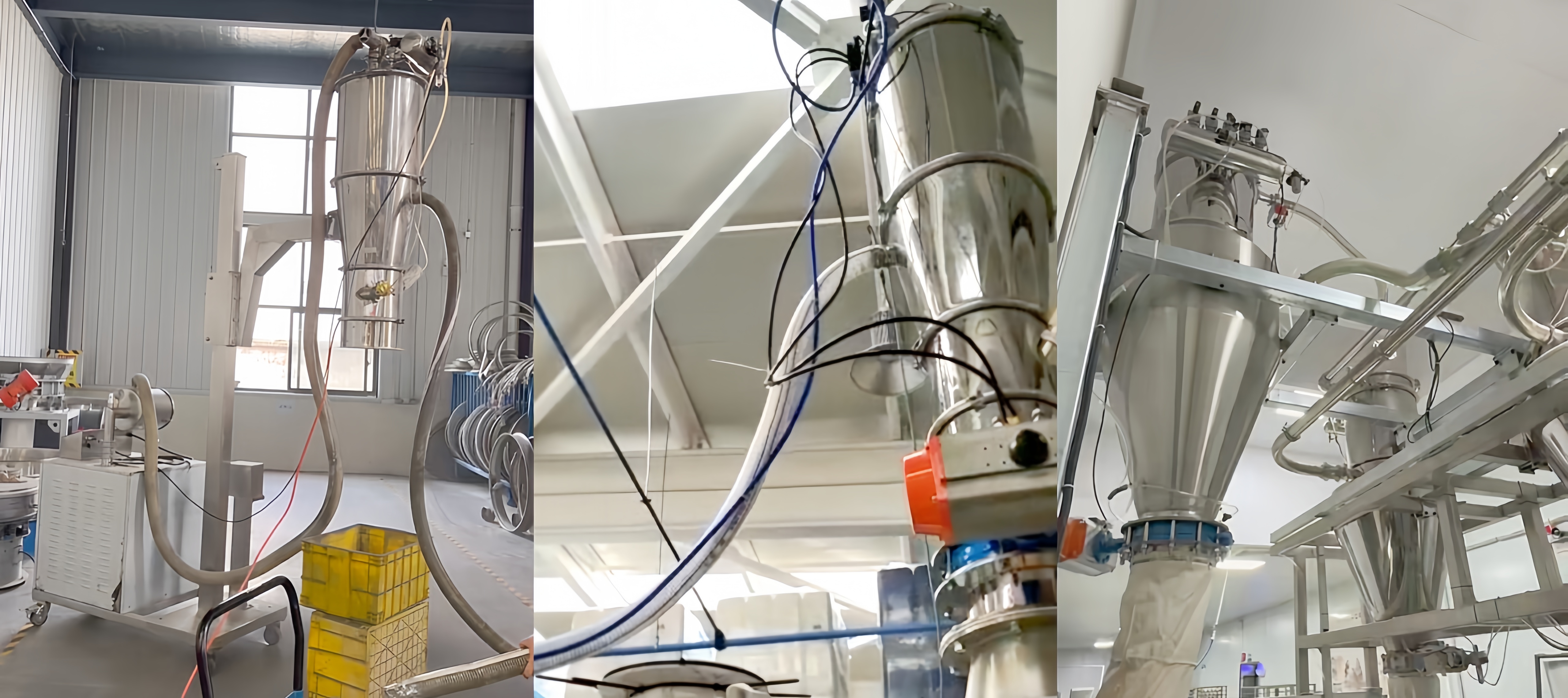
Polymer Materials Company: The company mainly produces modified PP particles for automotive interiors. Previously, manual material handling not only resulted in high dust levels in the workshop but also easily introduced fiber impurities, leading to approximately 5% of batches needing rework due to excessive impurities. After introducing a fully enclosed vacuum feeding system, PP particles are directly conveyed to the granulator through negative pressure adsorption. Parameters were optimized for particle characteristics, and an antistatic device was added, reducing the single-batch feeding time from 1 hour to 25 minutes.
Pharmaceutical API (Active Pharmaceutical Ingredient) Industry: To meet stringent production standards, this company introduced a continuous vacuum feeder for the precise transport of pharmaceutical precursors. The equipment utilizes pharmaceutical-grade stainless steel and a PLC intelligent control system, achieving fully enclosed, contactless material transport.
Large Chemical New Materials Company: During production, various powder raw materials and additives need to be transported via long-distance pipelines to reactors located at higher elevations. Using a high-powered industrial vacuum feeder system, stable transport over tens of meters in length and more than twenty meters in vertical height was achieved, solving the problems of low efficiency and significant safety hazards associated with manual handling.
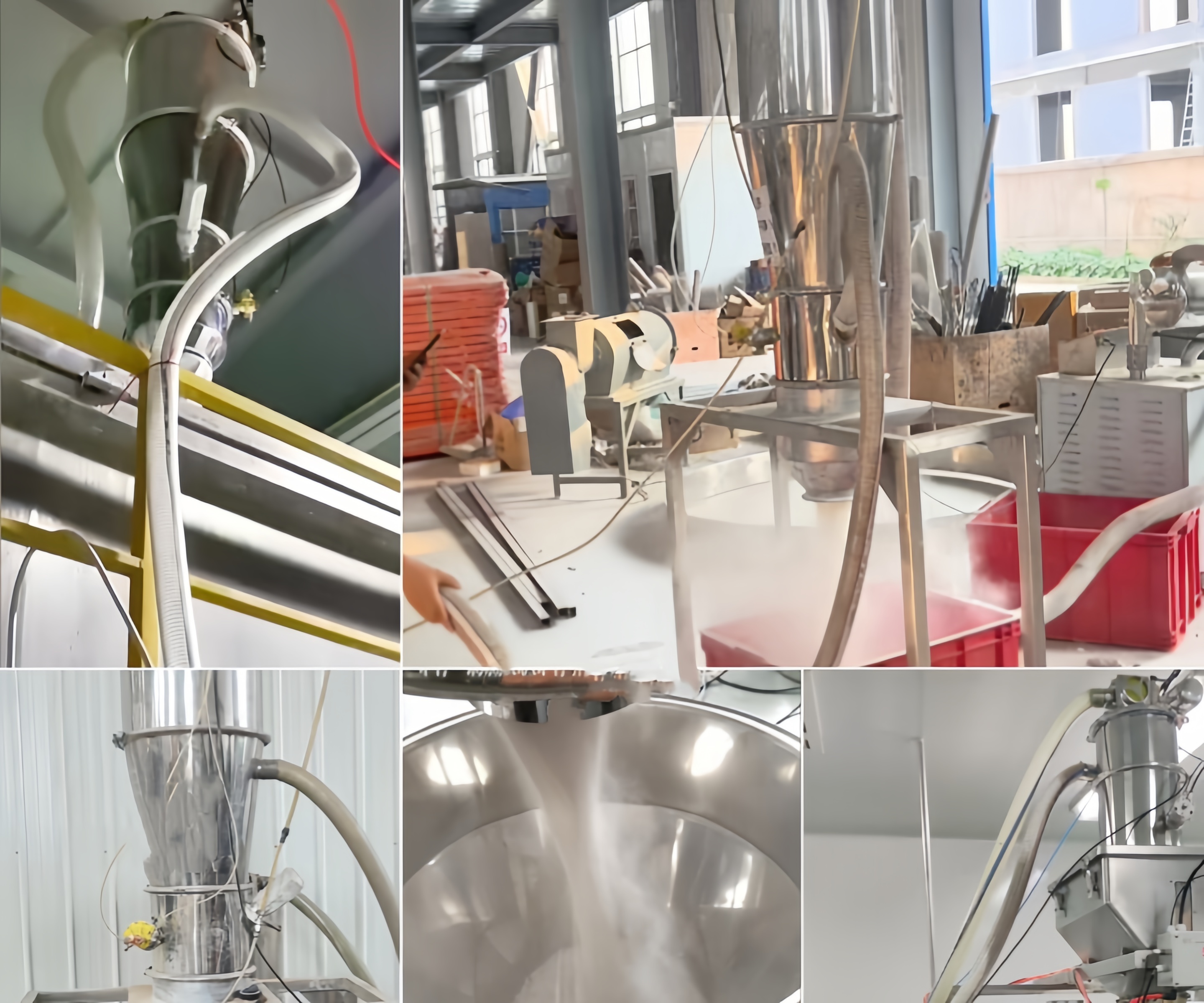
Industrial Vacuum Feeder for Powder Handling Customer Site
FAQ
Will the vacuum feeder cause material blockage?
Effectively avoidable. Material blockage is usually caused by highly viscous materials, high moisture content, or too many bends in the pipeline. Our equipment is equipped with a high-frequency pulse backflushing system to automatically clean the filter, and optimizes pipeline design and airflow parameters based on material characteristics, reducing the risk of blockage from the source.
What is the maximum transport distance?
Horizontal conveying can typically reach 20-30 meters, while vertical lifting can reach approximately 10 meters, depending on the vacuum level, material density, and piping configuration. Our factory can customize high-power systems according to customer needs to meet special conveying requirements for longer distances and greater drops.
Can it be continuously conveyed?
Yes. Our factory provides continuous vacuum feeders with a dual-hopper alternating operation design. While one hopper is discharging material, the other is still absorbing material, achieving uninterrupted feeding and meeting the needs of continuous production lines.