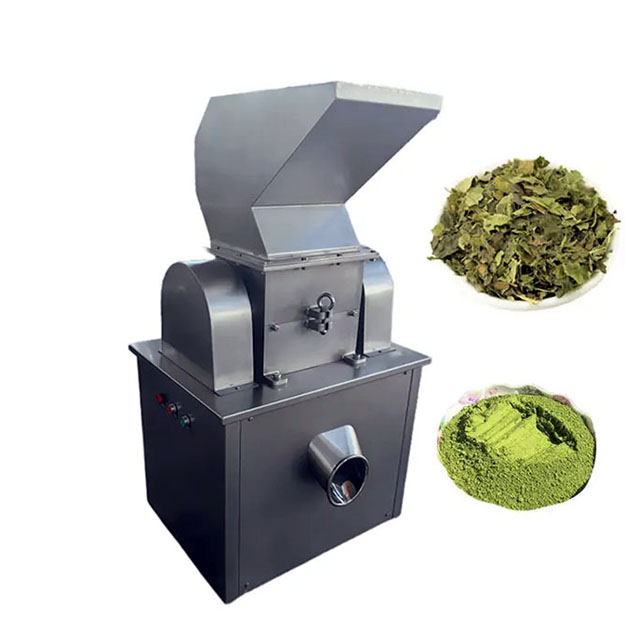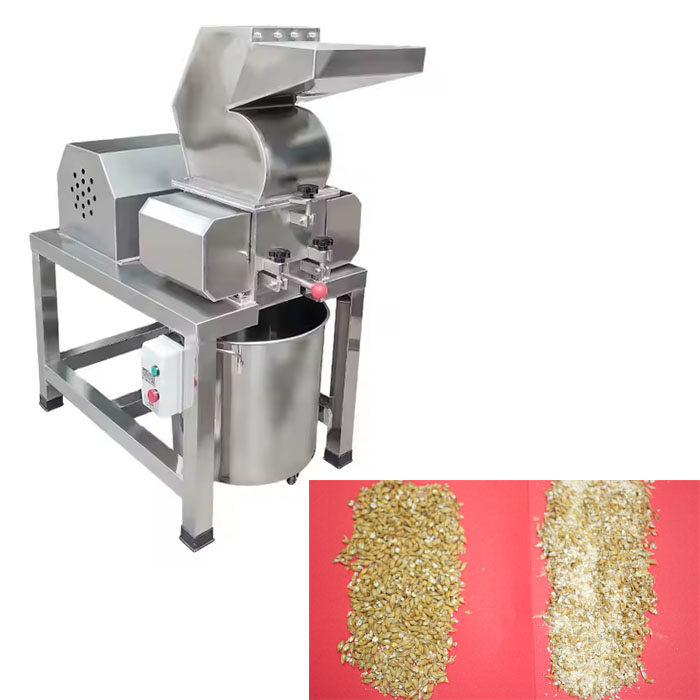
Grain Coarse Crusher
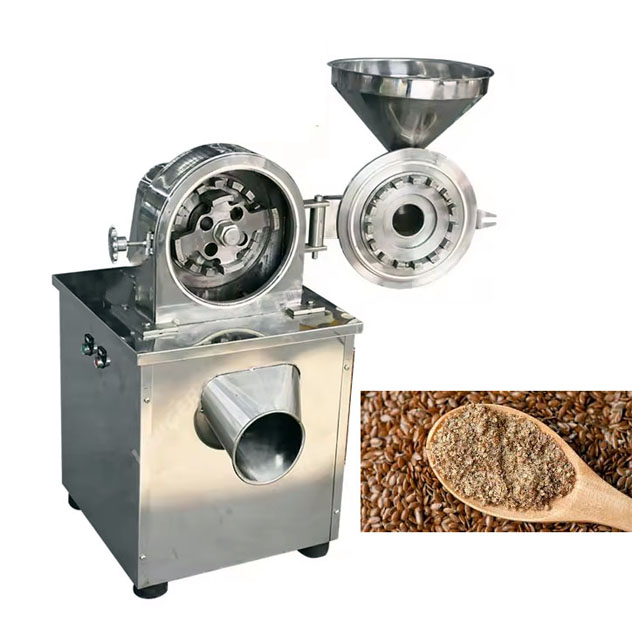
This is a type of milling machine used for primary grain processing. It uses mechanical force, such as hammer mills, toothed discs, or rollers, to crush whole grains like corn, wheat, soybeans, rice, and oats into uniform coarse particles or fragments. It does not produce fine powder, only coarse crushing. Materials include carbon steel, 304 stainless steel, or 316L stainless steel. Depending on the material characteristics and production capacity requirements, hammer mills, toothed disc mills, or double-roll mills can be selected. Prices range from $600 to $8500.
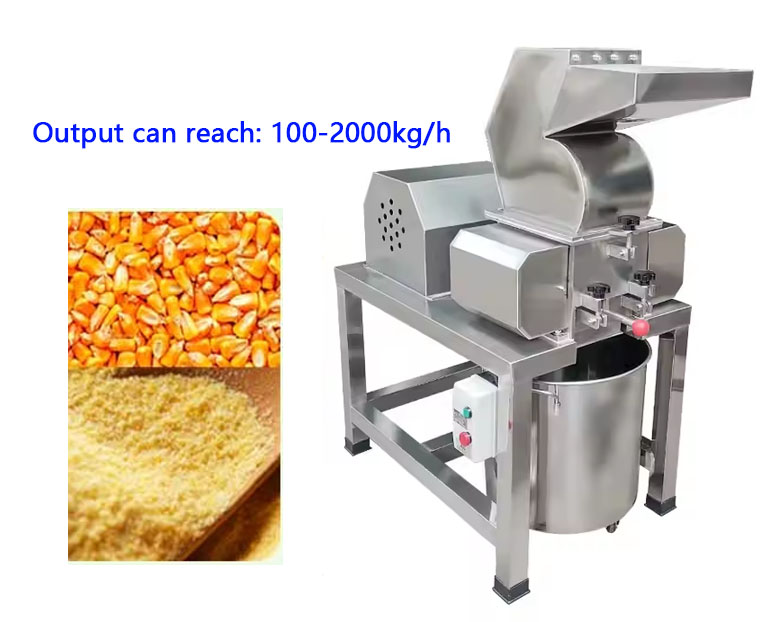
Output: 100-2000kg/h
Output particle size: 2mm – 10mm
What is Grain Coarse Crusher?
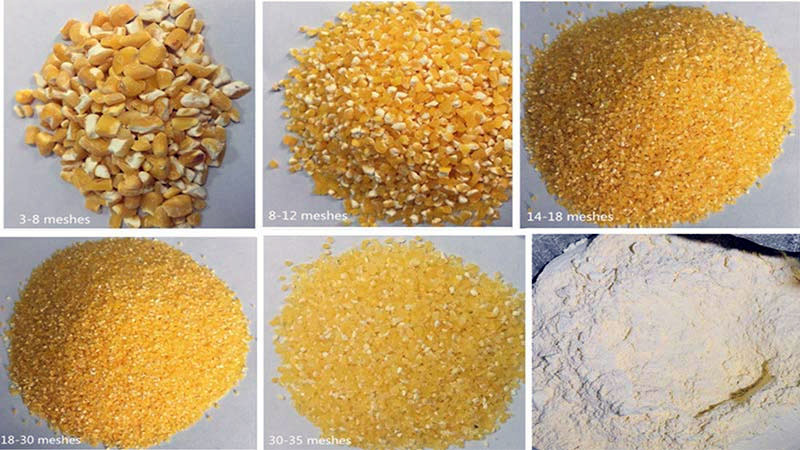
Grain Coarse Crusher is used for primary grain processing, performing coarse crushing of whole grains. It utilizes compression, shearing, and impact to break whole grains such as wheat, corn, soybeans, sorghum, and oats into coarser particles or fragments, but not into fine powder. This provides intermediate material of standard particle size for subsequent animal feed mixing, edible oil pretreatment, grain fermentation, or secondary fine grinding. The particle size range is 4-20 mesh, and the crushing capacity varies from 100 kg to 5 tons per hour.
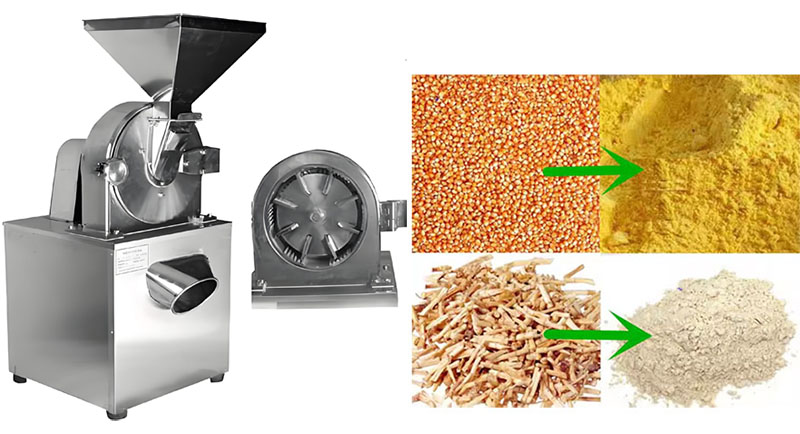
Unlike fine grinders, Grain Coarse Crusher allows for controlled particle size reduction, maintaining high productivity and avoiding energy waste and material overheating caused by over-grinding. Made of stainless steel, it is rust-resistant, easy to clean, and prevents cross-contamination of grains. It is equipped with two crushing devices: wear-resistant alloy blades or hammers, suitable for crushing grains of different hardness. However, it cannot be used to crush high-moisture or sticky grains, as these grains can easily clog the machine or shorten its lifespan.
What types of Grain Coarse Crusher are there?
Based on their crushing principles and applicable materials, grain coarse crushers are mainly classified into hammer crushers, toothed disc crushers, and double roller crushers. Different types determine the output particle size, production capacity, and the hardness of the grains that can be processed. Choosing the appropriate model is key to balancing efficiency and cost.
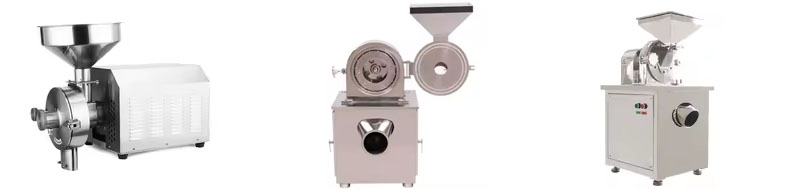
Hammer grain coarse crusher utilize high-speed rotating hammers to violently strike and shear the material, discharging it through a screen after reaching the target particle size. The output particle size can be controlled between 2mm and 8mm by changing the screen, producing uniform coarse particles. Production capacity ranges from 500 to 2000 kg/hour. They are suitable for medium-hardness and brittle grains such as corn, wheat, sorghum, and soybean meal. With high capacity and efficiency, they are the most common coarse crushing equipment in feed mills and grain and oil mills, and are relatively insensitive to material impurities.
The toothed disc grain coarse crusher uses a pair of opposing rotating toothed discs to shear, compress, and grind grains, resulting in a smoother crushing process. The output particle size is controlled by adjusting the disc spacing, typically between 3mm and 10mm. It produces less fine powder during crushing, with a capacity of 800-3000 kg/hour. It is suitable for grains with relatively low hardness or that are easily broken, such as rice, oats, buckwheat, and dried beans. Its low temperature rise during crushing helps maintain the original shape and flavor of the material, making it suitable for applications requiring a certain appearance, such as food brewing and grain pretreatment.
The double-roller grain coarse crusher uses a pair of opposing inward rotating rollers to crush whole grains with strong extrusion force. By adjusting the roller gap, the output particle size can be precisely controlled between 2mm and 6mm, with a processing capacity of 1-5 tons/hour. It is commonly used for corn, soybeans, and barley, and is particularly suitable for applications requiring flat and uniform particle shapes after crushing. It has a large processing capacity, low energy consumption, very uniform output and almost no fine powder production, making it an ideal choice for large-scale edible oil pretreatment and feed crushing production lines.
What are the advantages of Grain Coarse Crusher?
All material contact parts of the Grain Coarse Crusher are made of 304 stainless steel, with a smooth interior and no dead corners. Equipped with a quick-opening cleaning door, it completely eliminates residue and cross-contamination, strictly meeting food-grade hygiene standards. In terms of capacity, different models can cover a processing volume of 500 to 5000 kg per hour. Particle size control is precise and flexible; by changing the screen, the output size can be adjusted between 2mm and 10mm as needed. Whether it's small corn grits or large soybean fragments, one machine can produce multiple sizes without replacing the entire machine. The crushed particles have extremely high uniformity, with particle size deviation controlled within ±5%, avoiding over-crushing and large particle residue from the source. This provides a stable foundation for subsequent mixing, pressing, or fermentation processes, effectively improving the yield of the finished product. Furthermore, we support in-depth non-standard customization, matching blade material and speed according to the material's hardness, oil content, or fiber characteristics, ensuring that each machine is precisely adapted to your production line, allowing for immediate use and rapid production.
How does Grain Coarse Crusher work?
During operation, the Grain Coarse Crusher feeds grain evenly into the crushing chamber through the inlet. High-speed rotating hammers or toothed discs exert intense impact, shearing, and friction on the material, progressively crushing whole grains into coarse particles. Material reaching the target particle size is promptly discharged through a screen to prevent over-crushing; larger particles that do not meet the standard continue to circulate and crush within the chamber until they pass through the screen. This "crushing and screening simultaneously" principle ensures uniform and controllable output particle size while effectively reducing the generation of fine powder, perfectly meeting the processing requirements for coarsely crushed materials in feed and grain/oil processing.
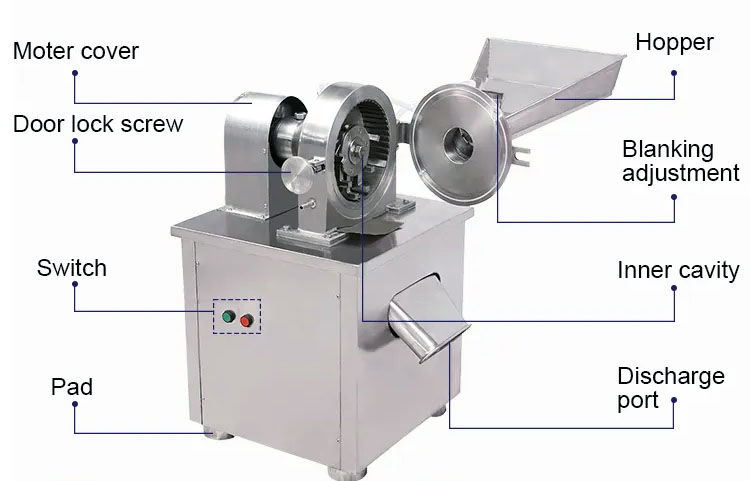
Grain Coarse Crusher Parameters
| Model | Grinding fineness | Output (kg/h) | Power (kW) | Applicable grain type |
| WF-20 | 20-80 mesh | 500-1000 | 4-7.5 | Corn, wheat |
| WF-40 | 80-120 mesh | 300-800 | 5.5-18.5 | Rice, beans |
| WF-60 | 120-200 mesh | 100-300 | 7.5-37 | Ultrafine rice flour, seasoning powder |
What are the applications of Grain Coarse Crusher?
Grain Coarse Crusher is widely used in grain processing, feed production, and food brewing industries, providing uniformly sized coarse grain particles for subsequent fine grinding, mixing, pressing, or fermentation processes.
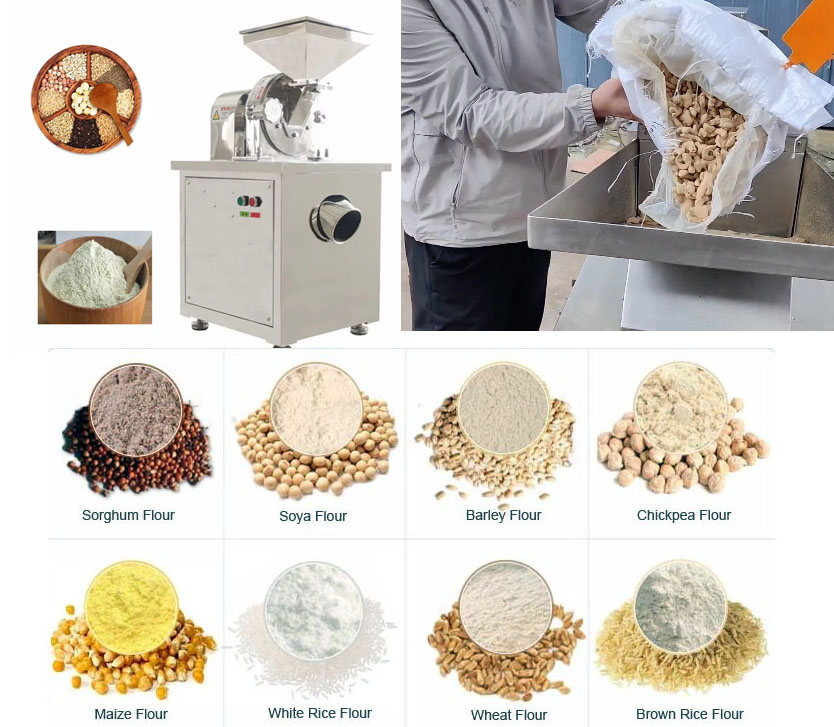
In feed processing, it can crush feed ingredients such as corn, wheat, and soybean meal to prepare pre-particles for poultry, livestock, and aquatic compound feeds; it also performs primary crushing of protein raw materials such as soybeans and peas, facilitating subsequent batching and pelleting.
In grain, oil, and food processing, it is used to crush oilseeds such as soybeans and rapeseed, improving rolling efficiency and oil yield; it can also coarsely crush grains such as rice, oats, buckwheat, and quinoa for the production of grain flour, meal replacements, and health foods; and it performs peeling and crushing pretreatment of legumes such as red beans and mung beans for use in fillings and bean flour production.
In the brewing and fermentation industry, Grain Coarse Crusher can crush brewing raw materials such as barley and highland barley, providing ideal particle size for saccharification and fermentation. This equipment is used for coarse crushing of sorghum, corn, and other grains, serving as a pretreatment source for raw materials in the production of baijiu (Chinese liquor) and edible alcohol.
For special materials, it can handle some high-moisture materials with a moisture content of 10%-20%, such as fermented soybeans. For materials with excessively high moisture or viscosity, such as fresh potatoes, it is recommended to use specialized equipment or consult customer service beforehand.
How to choose a Grain Coarse Crusher?
Choosing the right grain coarse crusher depends on matching the material's hardness, target particle size, and production capacity. For medium-hardness grains such as corn, wheat, sorghum, and soybean meal, a hammer mill is recommended due to its strong crushing force and high efficiency. For fragile grains like rice, oats, and buckwheat, a disc mill is suitable, providing a gentle crushing process that maintains particle shape. For materials requiring a flattened shape, such as soybeans and barley, a roller mill is recommended for its uniform output. Regarding particle size, all three types of mills can achieve uniform coarse particles of 2-4 mm, while hammer and roller mills perform better for larger particles of 5-10 mm. In terms of production capacity, small benchtop or mobile mills are suitable for small batches under 500 kg, standard industrial models are suitable for 500-2000 kg, and large-scale continuous production of 2 tons or more is recommended using a large industrial coarse crusher equipped with an automatic feeding system. If you are unsure about the optimal mill type or particle size, you can send us a material sample, and we will provide real test data and output samples to help you make an accurate selection.
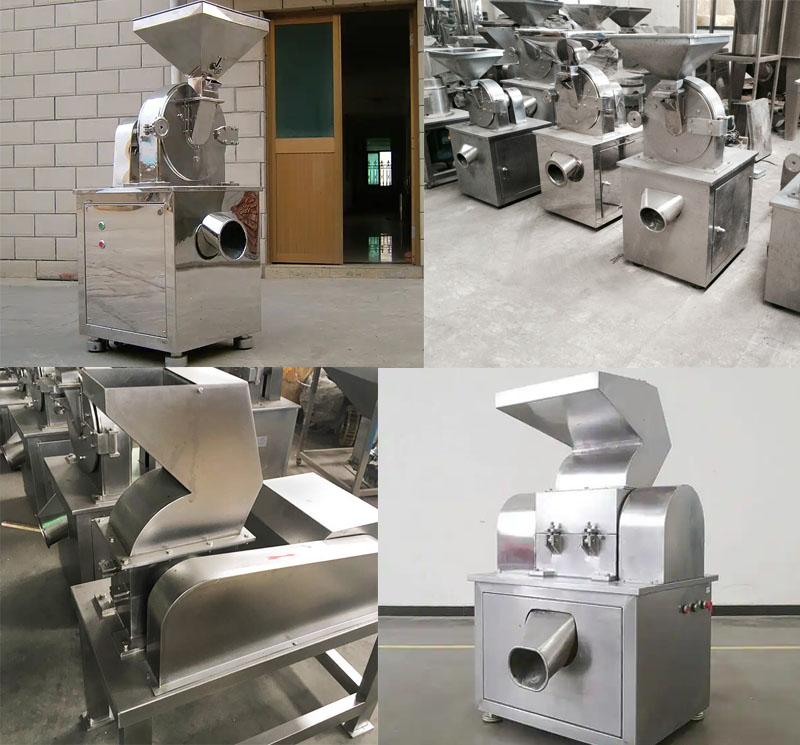
Grain Coarse Crusher Manufacturer
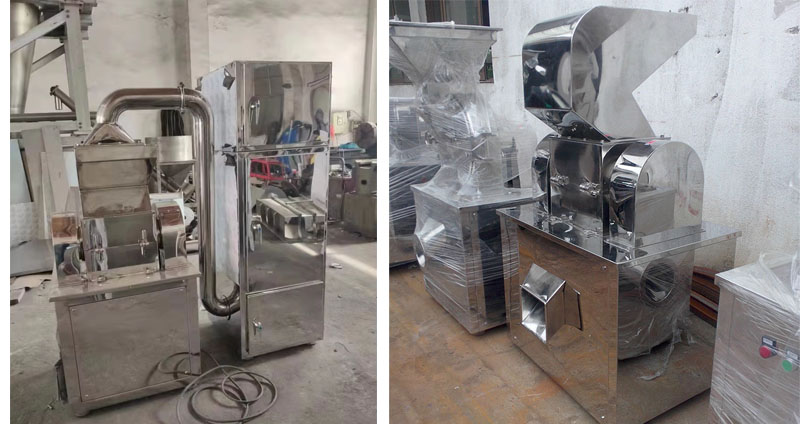
MACHRISE Grain Coarse Crusher manufacturers manufacture equipment made of polished 304 or 316L stainless steel, ensuring cleanliness and ease of cleaning. They offer a comprehensive range of models, including hammer, gear, and turbine models to suit different grain hardnesses. Customized models can be tailored to grain properties and crushing requirements (such as refrigeration, vacuum, and dust removal), or equipped with accessories. These models include explosion-proof, air-cooled, mobile, and dust-removal devices, meeting diverse crushing needs.
Grain Coarse Crusher FAQs
How much does a Grain Coarse Crusher cost?
The price of a Grain Coarse Crusher varies depending on the model, capacity, and configuration, but generally ranges as follows: Small laboratory or home machines (80-100 kg/hour) cost approximately $600 – $1,500; Medium-sized commercial machines (500-800 kg/hour) cost approximately $1,200 – $5,500; Large industrial machines (over 1 ton/hour) cost approximately $3,000 – $8,500 or more.
Can it crush high-moisture or highly sticky grains?
The Grain Coarse Crusher is designed for coarse crushing of dry grains. High-moisture or highly sticky materials (>18%) may cause screen clogging, blade sticking, reduced efficiency, or even damage to the equipment. For processing high-moisture materials such as fermented soybeans, it is recommended to control the feed rate and use a large-aperture screen, or contact customer service for a trial run.
Can it crush husk grains?
Yes. When crushing rice, oats, and other hulled grains with the Grain Coarse Crusher, it is recommended to reduce the feed rate and adjust the screen aperture to 5-10mm to obtain ideal coarse particles and avoid clogging.
How to adjust the output particle size?
This can be adjusted by changing to a screen with a different aperture. Screens from 2mm to 10mm can meet most coarse crushing needs. Changing the screen only takes a few minutes and requires no special tools or training.
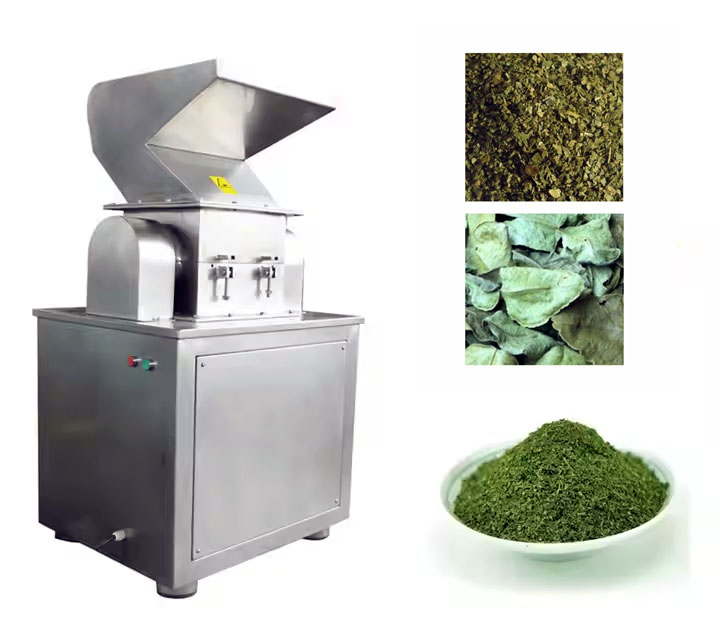
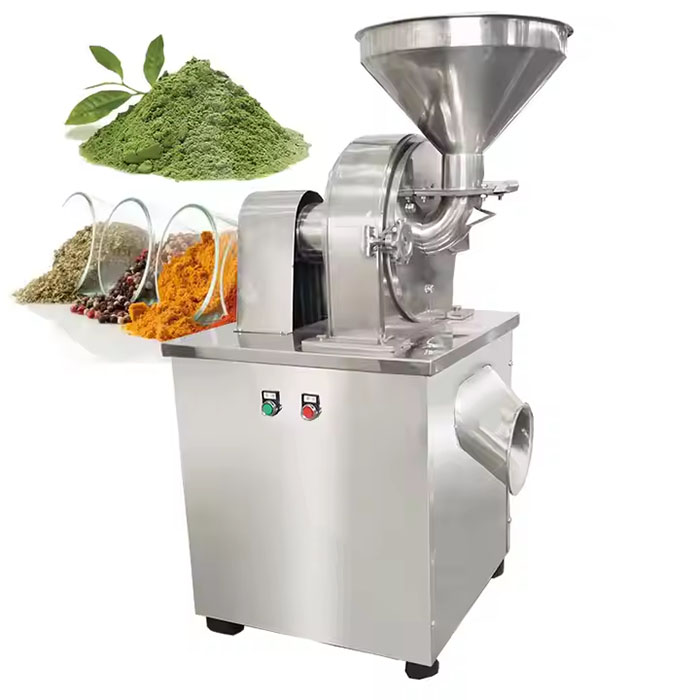 Chinese Herb Grinder Machine
 Seeds Coarse Crusher