Ore Crusher Machine Manufacturer
Wednesday October-14 2026 10:58:38
Ore Crusher Machine Manufacturer provides equipment covering jaw crushers, gyratory crushers, hydraulic cone crushers, and high-pressure grinding rolls, handling primary, secondary, tertiary, and ultra-fine crushing tasks. In mining project procurement, issues such as below-target throughput, elevated energy consumption, and early wear part failure often trace back to a mismatch between initial selection and operating conditions.
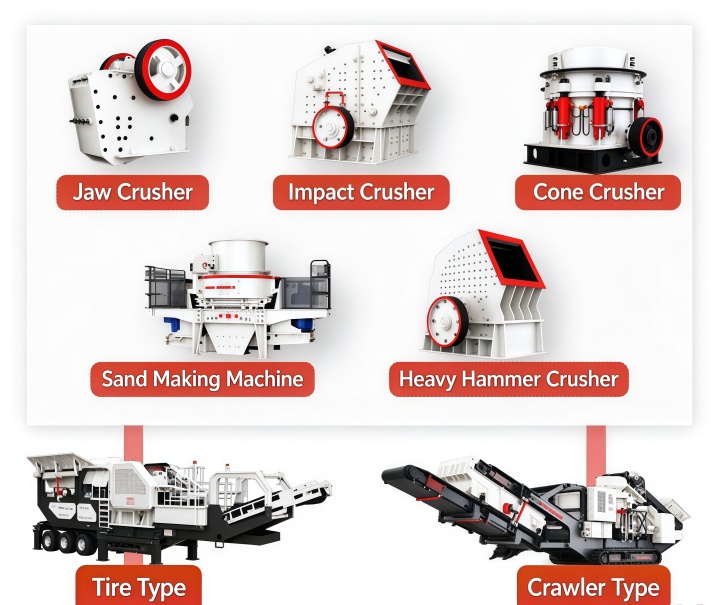
The core criteria for choosing a manufacturer are threefold: equipment configuration matched to ore hardness, traceable material quality for key wear parts, and controllable full-cycle expense per ton of ore crushed.
From Coarse to Ultra-Fine: How Ore Crusher Machine Manufacturer Matches Station Requirements
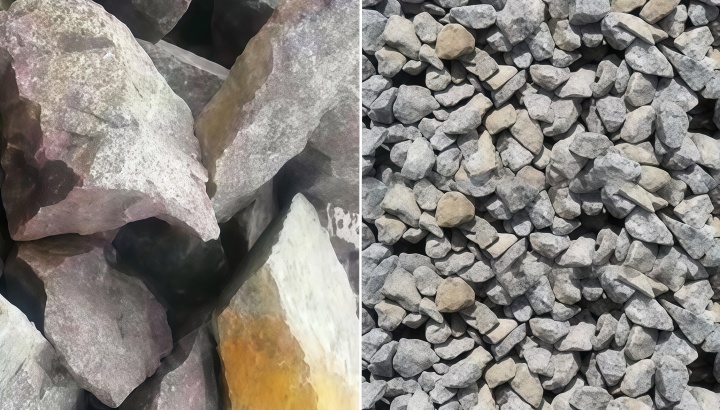
Selection should begin by confirming the ore's Protodyakonov hardness coefficient, then locking the model by threshold range. For soft materials such as limestone and marl with hardness below 8, a standard PE series jaw crusher is sufficient, with high throughput and low energy consumption as primary goals. For medium-hard materials such as sandstone and iron ore with hardness between 8 and 16, a reinforced frame and high-manganese steel jaw plates are needed.
For hard materials such as granite and basalt with hardness above 16, a heavy-duty jaw crusher with a large reduction ratio and high stroke frequency is required. Standard cone crushers handle secondary crushing with product size generally above 25 mm; short-head types handle tertiary crushing with product size controllable below 25 mm.
For feed size, the crusher opening should be 15 to 20 percent larger than the upper limit of feed granularity. When moisture content is above 8 parts or clay content is high, the discharge opening should be enlarged with hydraulic adjustment, and a de-sliming screen added at the feed stage. Throughput planning should set theoretical throughput 10 to 15 percent above actual demand. Some buyers select based on upper-limit parameters, overlooking occasional large blocks and moisture fluctuations, and effective processing volume after commissioning falls below expectations.
Between Jaw and Gyratory: Ore Crusher Machine Manufacturer's Coarse Crushing Selection Logic
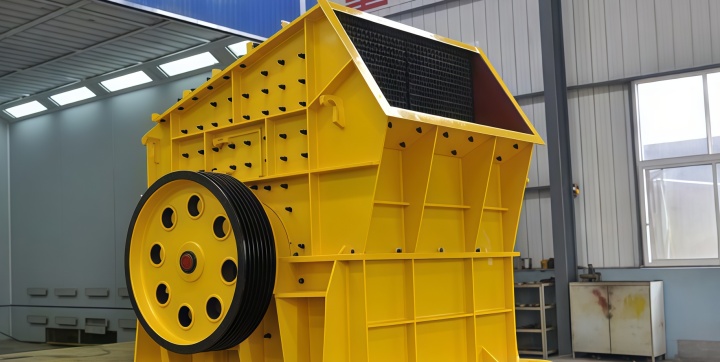
Different machine types differ in application scenarios, feed size, and energy performance, so buyers should choose based on material properties and target throughput.
| Machine Type | Station | Feed Size | Suitable Material | Tonnage Power Reference |
| Jaw Crusher | Primary | Up to about 1200 mm | High-hardness ore | About 1.5 kWh/t |
| Gyratory Crusher | Primary | Up to about 1500 mm | Large-scale mines | About 0.95 kWh/t |
| Hydraulic Cone Crusher | Secondary/Tertiary | Generally below 300 mm | Medium-hard ore | About 1.3 kWh/t |
| High-Pressure Grinding Rolls | Ultra-fine | Generally below 50 mm | Brittle materials | 0.78 to 2.34 kWh/t |
Primary station selection errors are a common cause of production bottlenecks. Gyratory crushers often show better overall returns than multiple jaw crushers in parallel for large-throughput scenarios.
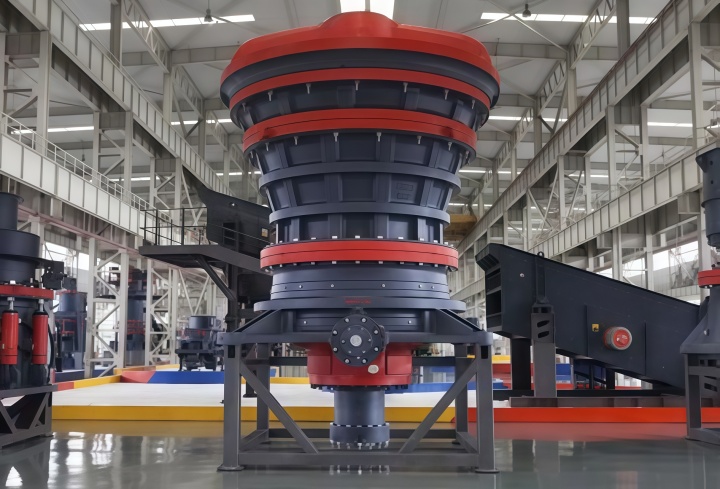
For secondary and tertiary stations, cavity type should be matched to material hardness and target product size. The top three global crushing and screening equipment suppliers together hold about 35 percent of the market, but the core basis for equipment selection remains the project's own operating parameters, not brand recognition.
Why Does Liner Service Duration Vary So Much? Ore Crusher Machine Manufacturer's Material Analysis
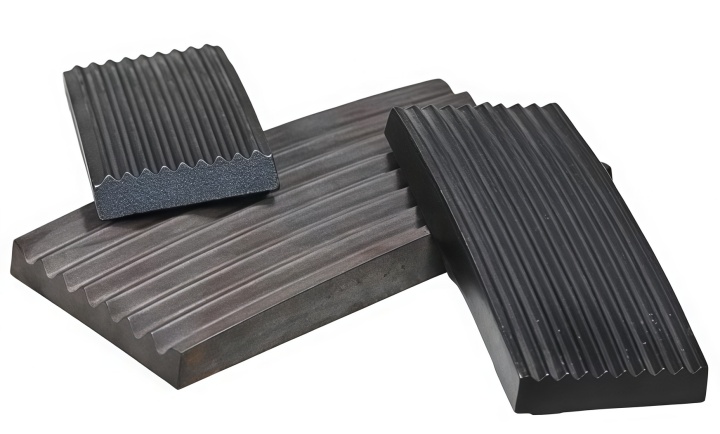
Liner failure mechanisms are far more complex than simple abrasive wear. A cone crusher mantle liner at a Botswana diamond mine required replacement after an average of 3600 operating hours, 720 hours shorter than the manufacturer's expected value of 4320 hours. Failure modes included abrasive wear, plastic deformation, subsurface cracking, and fretting corrosion cracking.
High-manganese steel can see surface hardness rise from HB180 to 260 up to HB450 to 550 under strong impact, but if material granularity is small and impact is insufficient, the work-hardened layer cannot fully form, and wear becomes dominated by cutting. Under granite crushing conditions, standard jaw plates run for about 800 to 1200 hours, while Mn18Cr2 high-wear-resistant jaw plates extend to a longer period.
In hard rock conditions, bimetallic composite jaw plates with a high-chromium cast iron surface layer reach hardness above HRC58, extending service duration by about 30 to 50 percent compared with pure high-manganese steel. A certain company's iron ore mine used cavity optimization on its gyratory crusher. The third optimized liner set processed over 10.21 million tons of ore, with service duration about three times that of the original manganese steel liner. Annual maintenance time dropped from 491 hours to 155 hours, and steel consumption fell by about 40 percent.
A multinational mining company's Brazilian iron ore project adopted hybrid design liners with metal inserts, extending cone crusher liner service duration by up to 100 percent. Buyers should request third-party material test reports and actual operating data.
Tonnage Expense Breakdown: Ore Crusher Machine Manufacturer's Full-Cycle Perspective
Purchase price is only part of total expenditure. Installation, spare parts, downtime losses, and energy consumption together form the full-cycle expense. An Indian hematite project's closed-circuit HPGR test data showed that under roller surface pressure of 5.54 N/mm² and feed moisture of 3 parts, specific energy consumption was 1.75 kWh per ton, circulating load index was 115.95, and the -3 mm fraction rose from 9.10 parts to 49.46 parts by mass.
For iron ore HPGR screening configurations, specific energy consumption ranges from 0.78 to 1.24 kWh per ton, and can drop to 0.90 kWh per ton under air classification configuration.
At the quotation stage, suppliers typically list installation and commissioning fees separately, and buyers should evaluate using tonnage-based crushing expense as a unified measure. When providing full-cycle expense estimates, liner replacement intervals, spare part unit prices, and annual operating hours should be included in the calculation.
Before Inquiry, Parameters Ore Crusher Machine Manufacturer Recommends Confirming
On May 14, 2026, Google officially launched the GSIM global sourcing intent recognition model, bringing procurement behavior signals into search ranking algorithms for the first time. If an independent site does not deploy procurement terms such as MOQ, FOB, and Sample Request, or lacks a convenient inquiry button, it may be marked as non-procurement-friendly, with exposure weight possibly dropping by up to 63 percent.
This means that when buyers browse a page, whether they can quickly find minimum order quantity, lead time, and trade terms affects their decision efficiency. The industry-standard minimum order is 1 unit, while custom parts or small models may require 5 units. Standard model batch lead time is 15 to 30 days, and fixed production lines generally take 2 to 3 months overall.
For global spare parts lead time, crusher spares with existing casting molds typically deliver in 4 to 6 weeks, while those without existing molds take 6 to 8 weeks. Complex components such as eccentric sleeve assemblies can take 12 to 16 weeks. Payment is mainly by letter of credit and wire transfer. Under FOB terms, cargo risk transfers from seller to buyer after delivery to the carrier.
When inquiring, provide ore type and Protodyakonov hardness, upper feed size limit, target throughput, product size, power supply conditions, and site information. The more complete the parameters, the better the configuration plan and quotation fit.
After-Sales Capability Beyond Promises: Ore Crusher Machine Manufacturer's Evaluation Dimensions
After-sales delivery capability should be assessed by spare parts inventory coverage, on-site response time, and remote support capability. A Canadian gold mine's cone crusher, after switching to an optimized liner solution, saw wear metal utilization rise by about 8 parts for bowl liners and about 30 parts for mantle liners.
A South African platinum mine's cone crusher originally had liners averaging 110 days of service per set, requiring replacement more than 3 times per year. After optimizing the liner solution, service duration extended to 8 to 10 weeks.
For cross-regional projects, spare parts supply timing and fault response standards should be stated in the contract.
Ore Crusher Machine Manufacturer FAQ
Q1: How to choose between mobile and stationary crushing stations?
For short project cycles and frequently moving quarry faces, choose mobile; for long operating years and stable throughput, choose stationary. Mobile stations relocate faster; stationary stations have lower continuous tonnage expense.
Q2: How long from order to commissioning?
Modular mobile stations typically commission 5 to 7 days after arrival. Fixed production lines involve civil works and installation, generally taking 2 to 3 months.
Q3: How to control crusher power expense?
Copper mine crushing stations consume about 3 kWh per ton, with tonnage electricity expense around 1.5 to 2 yuan. Controlling feed size and matching crushing cavity can help lower power consumption.
Q4: How to tell if a supplier is a manufacturer or a middleman?
Request real-time video factory verification and check whether jaw plates, liners, and other castings are melted and heat-treated in-house. Verify whether the business license scope includes casting production and complete machine assembly.
Conclusion
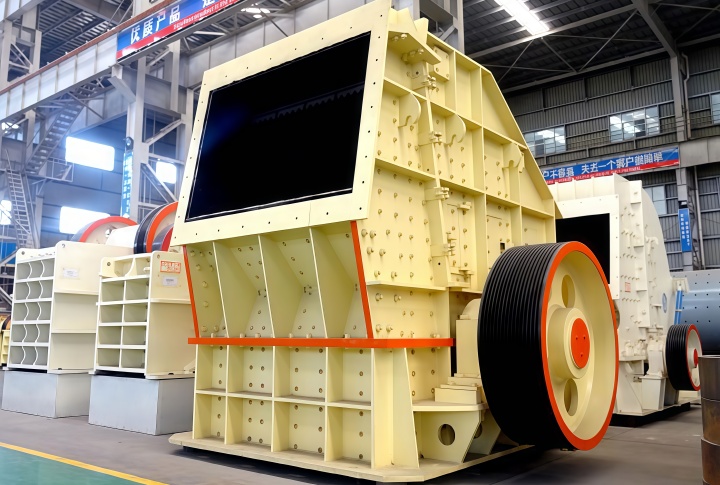
Choosing an Ore Crusher Machine Manufacturer is not about brand recognition, but about equipment configuration matched to operating conditions, reliable wear parts, controllable full-cycle expense, and deliverable after-sales service. After confirming ore Protodyakonov hardness, upper feed size limit, and target throughput, entering the inquiry process can reduce about two rounds of repeated plan adjustments.
If you are planning a crushing production line or upgrading equipment, send material parameters and target throughput. The technical team will assist with preliminary calculations for a configuration plan.
Sugested Products
Related news
- Ore Crusher Machine Price – How Much Does a Mining Crusher Cost in 2026?
- How to Choose a Reliable Ore Crusher Machine Manufacturer – 7 Key Factors to Check
- What is the difference between a coarse crusher and a fine crusher?
- Cone Crusher Models and Specifications
- Jaw crusher models and specifications