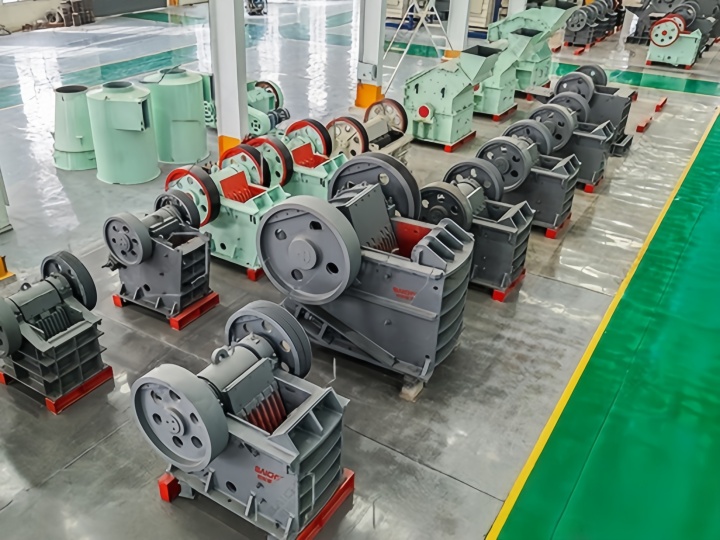
Granite Jaw Crusher
What Exactly Is a Granite Jaw Crusher?
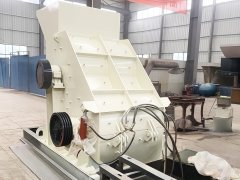
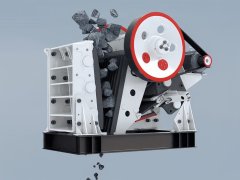
Granite Jaw Crusher is primary crushing equipment for breaking high-hardness rocks, with its original design intent focused on handling materials such as granite that possess relatively high compressive strength. This equipment finds extensive application across mining, metallurgy, construction, highway and railway construction, as well as water conservancy and hydropower projects, and is commonly deployed as the first processing stage in a complete crushing production line. Granite Jaw Crusher uses the crushing chamber formed by two jaw plates as its core component, simulating the motion of animal upper and lower jaws to achieve the squeezing and breaking of materials.
This equipment is typically positioned at the very front of the production process, responsible for reducing blasted large granite blocks to particle sizes suitable for subsequent secondary and tertiary crushing stages. Granite Jaw Crusher is specifically engineered for hard rocks with compressive strengths exceeding three hundred megapascals, demonstrating particularly outstanding performance when processing difficult-to-break materials like granite and basalt.
How Does a Granite Jaw Crusher Operate?
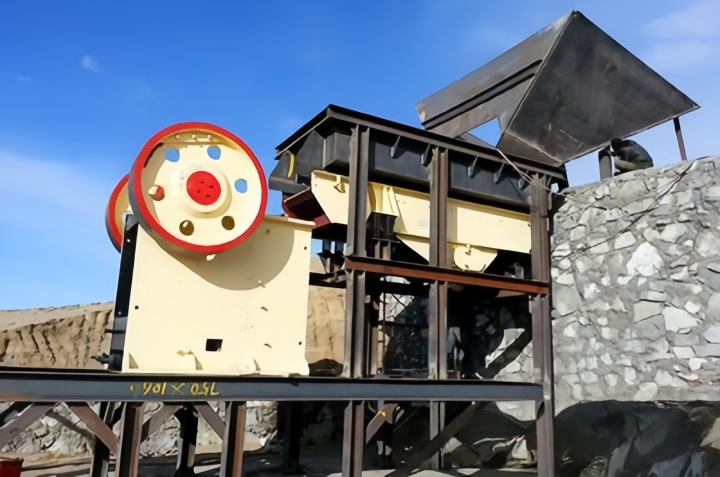
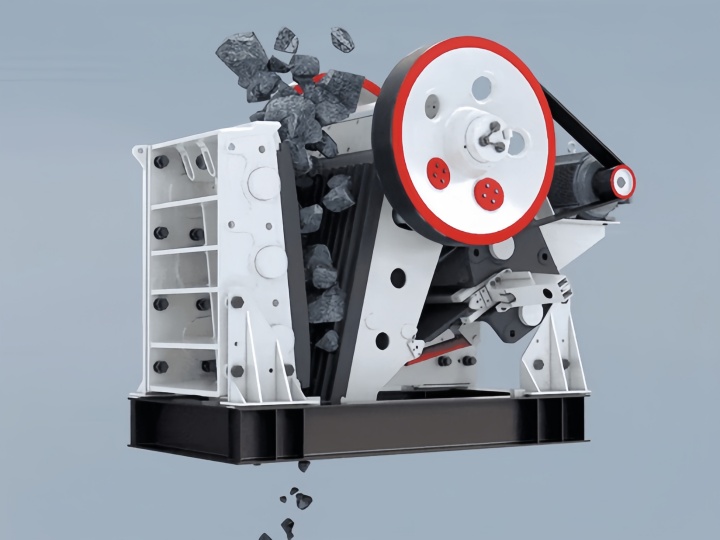
Granite Jaw Crusher is driven by an electric motor that transmits power through belts and pulleys to rotate the eccentric shaft, which in turn drives the moving jaw to perform periodic reciprocating motion. When the moving jaw approaches the fixed jaw, the granite material within the crushing chamber undergoes multiple forces including compression, splitting, and bending, resulting in breakage. When the moving jaw retreats under the action of the pull rod and spring, the already crushed material is discharged from the discharge opening at the bottom of the crushing chamber.
Power transmission pathway: The rotational motion output from the motor is transferred via belts and pulleys to the eccentric shaft, whose eccentric structure converts rotational motion into the reciprocating swinging motion of the moving jaw
Types of crushing forces applied: As the moving jaw approaches the fixed jaw, the granite material primarily experiences compressive stress, accompanied by shear stress and bending stress generated between material layers
Discharge mechanism: During the retreat of the moving jaw, the crushing chamber volume increases, allowing the already crushed material to discharge by gravity through the discharge opening, completing one working cycle
Operational cycle characteristics: This intermittent squeezing and releasing cycle repeats continuously, enabling Granite Jaw Crusher to process large quantities of granite raw material in a sustained manner
Material breakage principle: This equipment essentially applies compressive force to the material until its internal stress exceeds the material's own compressive strength, causing fracture
Design considerations for specific conditions: Given the high hardness of granite, Granite Jaw Crusher incorporates a relatively large crushing ratio and robust structural rigidity in its design to ensure stable operation when processing such hard materials
What Common Types of Granite Jaw Crusher Exist
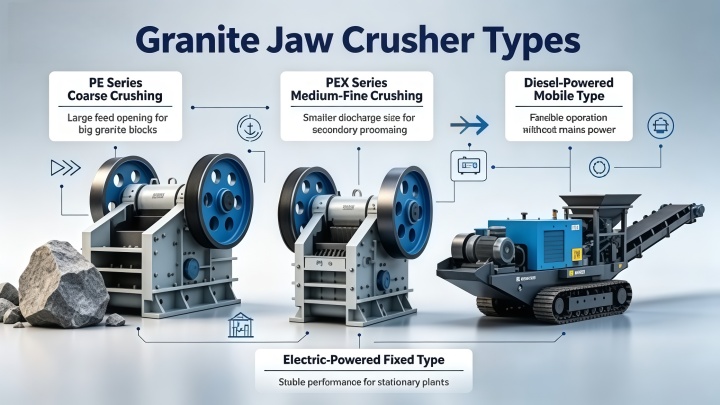
Based on differences in jaw plate motion trajectories and structural designs, Granite Jaw Crusher can be primarily divided into the simple-swing type and the compound-swing type. Based on application stages, Granite Jaw Crusher can also be classified into the PE series for coarse crushing and the PEX series for medium and fine crushing. Additionally, the market offers Granite Jaw Crusher distinguished by power source, including electric-powered and diesel-powered versions.
Distinction between simple-swing and compound-swing types: The simple-swing Granite Jaw Crusher has its moving jaw suspended on the eccentric shaft with power transmitted through toggle plates, featuring greater motion amplitude at the upper end of the moving jaw, making it suitable for processing extra-large granite blocks; the compound-swing Granite Jaw Crusher adopts a structure where the moving jaw is directly connected to the eccentric shaft, with the entire moving jaw participating in the crushing action, resulting in relatively higher processing capacity
Differentiation between PE series and PEX series: The PE series Granite Jaw Crusher features a larger feed opening size, making it suitable for processing raw large granite blocks; the PEX series Granite Jaw Crusher focuses on reprocessing already coarsely crushed materials to meet the particle size requirements of subsequent processes
Difference between electric-powered and diesel-powered versions: The electric-powered Granite Jaw Crusher is suitable for fixed operation sites requiring connection to mains or industrial power grids; the diesel-powered Granite Jaw Crusher carries its own diesel generator set, making it more appropriate for mobile operation scenarios where power supply is inconvenient
Why Choose a Granite Jaw Crusher?
Granite Jaw Crusher possesses multiple outstanding performance characteristics in the field of hard rock crushing, making it the preferred equipment for granite processing. The overall advantages of this equipment are reflected in aspects such as structural design, maintenance convenience, feed adaptability, discharge adjustment flexibility, wear parts service life, and long-term operational economy.
Structural design aspect: Granite Jaw Crusher features a relatively simple overall structure with compact connections between components, making routine inspection and maintenance work more convenient and helping to reduce equipment downtime
Feed handling capability: The relatively deep crushing chamber of this equipment can accommodate larger-sized granite raw materials, reducing the need for pre-crushing stages
Discharge adjustment functionality: Granite Jaw Crusher offers a wide adjustment range for the discharge opening, allowing users to flexibly control output particle sizes according to actual production requirements to suit different downstream process needs
Wear parts service life: Granite Jaw Crusher employs high-manganese steel jaw plates as the primary wear-resistant components, providing a relatively long service life when dealing with strongly abrasive materials like granite
Operational economy performance: The operating costs of this equipment remain relatively controllable, with lower energy consumption and maintenance frequency helping users achieve long-term economic benefits
Technical Parameter Overview of Granite Jaw Crusher
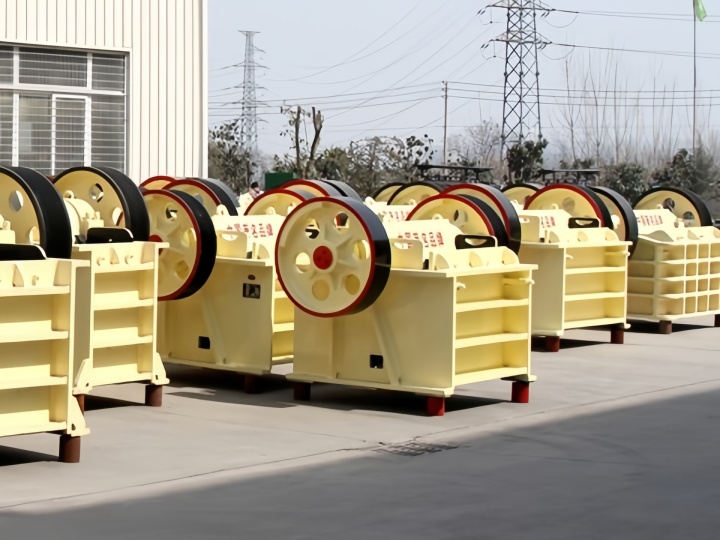
The technical parameters of Granite Jaw Crusher vary across different equipment models, primarily covering feed opening dimensions, maximum feed particle size, discharge opening adjustment range, processing capacity, motor power, and overall machine weight. Different specifications of Granite Jaw Crusher are matched with motors of varying power ratings, ranging from approximately five kilowatts up to over two hundred kilowatts.
| Model | Feed Opening | Max Feed Size(mm) | Discharge Range(mm) | Capacity(t/h) | Motor Power(kW) | Weight(t) |
|---|---|---|---|---|---|---|
| PE-150×250 | 150×250 | 125 | 10-40 | 1-3 | 5.5 | 0.8 |
| PE-200×300 | 200×300 | 180 | 15-50 | 2-6 | 7.5 | 1.2 |
| PE-250×400 | 250×400 | 210 | 20-60 | 5-20 | 15 | 2.8 |
| PE-400×600 | 400×600 | 350 | 40-100 | 15-60 | 30 | 6.5 |
| PE-500×750 | 500×750 | 425 | 50-120 | 30-80 | 45 | 10.5 |
| PE-600×900 | 600×900 | 500 | 65-160 | 50-120 | 55 | 15.5 |
| PE-750×1060 | 750×1060 | 630 | 80-180 | 80-200 | 90 | 26.0 |
| PE-800×1060 | 800×1060 | 680 | 100-200 | 100-240 | 110 | 28.5 |
| PE-870×1060 | 870×1060 | 750 | 120-220 | 120-280 | 132 | 30.5 |
| PE-900×1200 | 900×1200 | 750 | 150-250 | 150-350 | 160 | 45.0 |
| PE-1000×1200 | 1000×1200 | 850 | 180-280 | 180-400 | 180 | 50.0 |
| PE-1200×1500 | 1200×1500 | 1020 | 200-350 | 250-500 | 220 | 78.0 |
| PEX-150×750 | 150×750 | 120 | 10-40 | 5-15 | 15 | 3.2 |
| PEX-250×750 | 250×750 | 210 | 15-50 | 10-30 | 22 | 4.5 |
| PEX-250×1000 | 250×1000 | 210 | 15-55 | 15-40 | 30 | 6.0 |
| PEX-250×1200 | 250×1200 | 210 | 15-60 | 20-50 | 37 | 7.5 |
| PEX-300×1300 | 300×1300 | 250 | 20-65 | 25-60 | 55 | 10.0 |
Core Structure Analysis of Granite Jaw Crusher
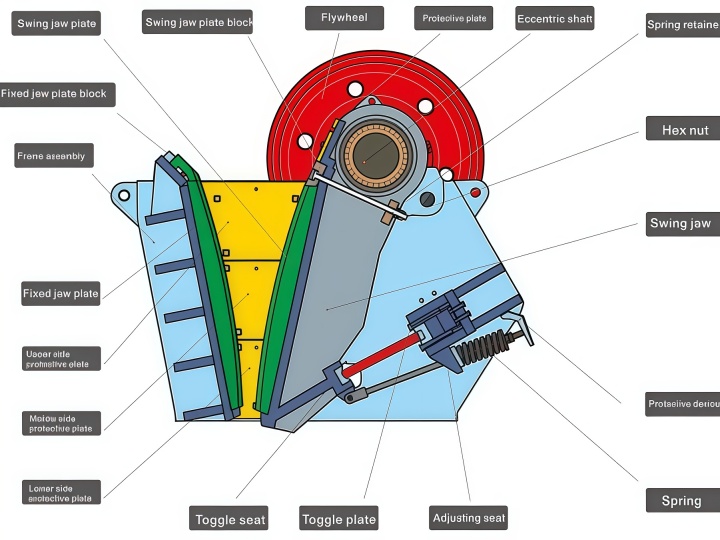
The main structure of Granite Jaw Crusher consists of key components including the frame, eccentric shaft, moving jaw, fixed jaw, jaw plates, toggle plate, and adjustment device. Each component has a distinct function and works in coordination with others to collectively ensure the stability and reliability of the equipment when crushing high-hardness granite materials.
Frame: load-bearing foundation, fabricated from high-quality steel plates via welding or casting, with sufficient rigidity and strength to withstand impact loads from granite crushing
Moving jaw and fixed jaw: direct actuators of the crushing action, with replaceable jaw plates made of high-wear-resistant manganese steel to cope with intense surface wear from granite materials
Eccentric shaft: power transmission core, its precision and strength directly affect operational stability and crushing efficiency of Granite Jaw Crusher
Toggle plate: performs power transmission and serves as overload protection when encountering uncrushable objects, an important safety component of Granite Jaw Crusher
What Application Scenarios Suit a Granite Jaw Crusher?
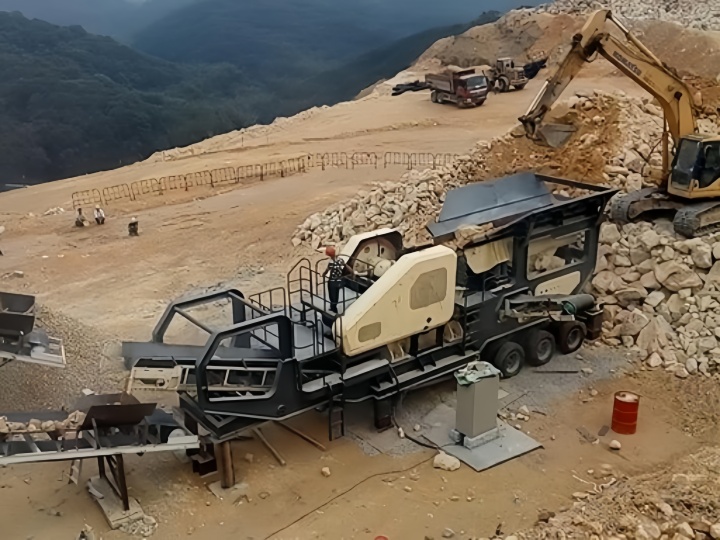
Granite Jaw Crusher is widely applied across various industrial scenarios that require processing granite materials. This equipment plays a critical role in fields such as mining, construction aggregate production, transportation infrastructure construction, and water conservancy and hydropower projects.
Mining field: Granite Jaw Crusher is used to crush blasted large granite ores to particle sizes suitable for transportation and subsequent processing
Construction aggregate production: Granite Jaw Crusher processes granite raw materials into crushed stone aggregates that meet the requirements for concrete and asphalt mixtures
Road and railway construction: In road and railway construction projects, Granite Jaw Crusher provides granite crushed materials that meet specifications for subgrade filling and track ballast placement
Water conservancy and hydropower engineering: In water conservancy and hydropower projects, Granite Jaw Crusher also undertakes the task of processing granite into concrete aggregates
Our Manufacturing Advantages for Granite Jaw Crusher
In the manufacturing process of Granite Jaw Crusher, we place emphasis on quality control at every process detail. From raw material inspection to complete machine testing, from core component machining to after-sales technical support, we provide users with service coverage throughout the entire equipment lifecycle.
Raw material quality control: Starting from incoming raw material inspection, we conduct rigorous testing on each batch of steel and castings to ensure that the materials used for manufacturing Granite Jaw Crusher frames and key components meet design standards
Factory testing system: Our Granite Jaw Crusher undergoes complete machine no-load trial operation and load simulation testing before leaving the factory to verify operational stability and crushing performance
Wear parts process optimization: To address the wear resistance requirements of Granite Jaw Crusher under high-intensity operating conditions, we select high-grade manganese steel for jaw plate production and optimize heat treatment processes to enhance surface hardness and impact resistance
Personalized selection support: Our technical team can assist users in selecting appropriate Granite Jaw Crusher models and configuration schemes based on the provided granite material characteristics and production capacity requirements