Granite Jaw Crusher Selection Guide
Thursday October-08 2026 17:43:44
By Factory Technical Team, based on over ten years of on-site selection and commissioning experience in mining crushing projects. Key data from ASTM standards and public equipment manufacturer parameters.
Granite Jaw Crusher Selection Guide 2026 is for primary crushing of granite. Granite jaw crushers handle rock with Mohs hardness 6 to 7 and compressive strength 120 to 300 MPa. They use two jaw plates to squeeze large feed down to 150 to 300 mm for secondary cone crushing. An oversized crusher wastes power on idle capacity. An undersized one causes constant bridging and downtime. This guide covers the key variables and parameter logic.
Core Variables and PE/CJ Differences
The feed opening width should be about one quarter larger than the maximum feed size. Compressive strength is 120 to 300 MPa. The hard rock correction factor is 0.6 to 0.75, so leave 25% to 40% capacity margin. Choose Mn18Cr2 or composite insert jaw plates.
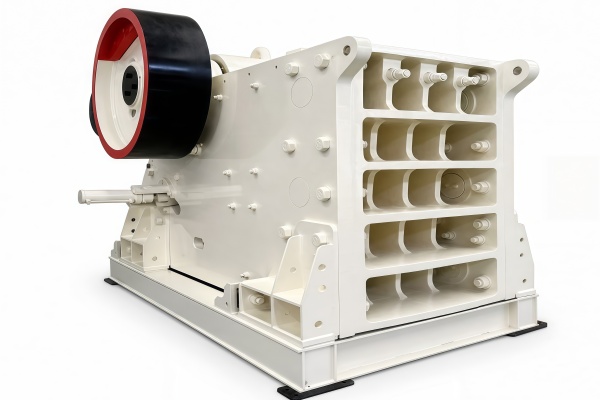
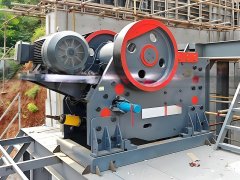
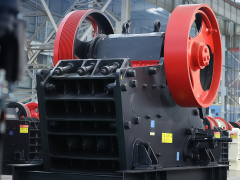
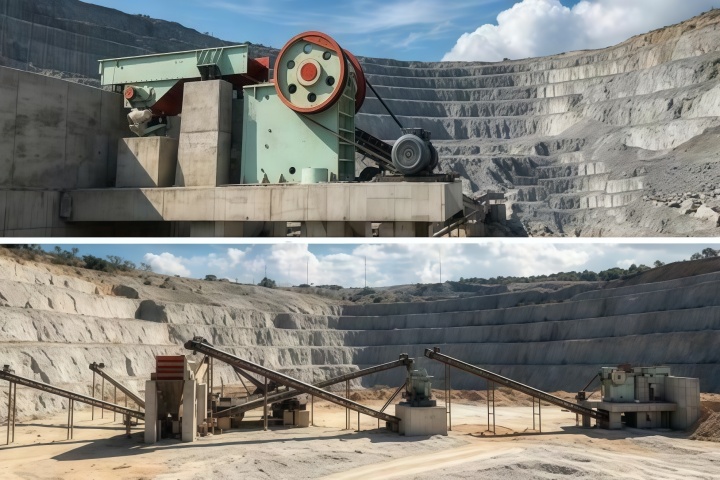
PE series uses a welded frame, suitable for small to medium quarries. CJ series uses a non-welded dismantled frame, suitable for large mines. CJ125 runs at 160 kW and handles 290 to 840 t/h. Metso Nordberg C series uses a pinned non-welded frame, validated in over 10,000 quarry, mining and recycling projects since 1975. The Silasomboonsub mine in Thailand used a Sandvik UJ310 wheeled mobile jaw plant with CJ411, 110 kW motor, 325 tph, processing 500,000 tons of granite.
This Granite Jaw Crusher Selection Guide suggests that feed size limit and abrasiveness decide whether PE or CJ is needed. Budget and project duration decide whether CJ is worth the higher initial cost.
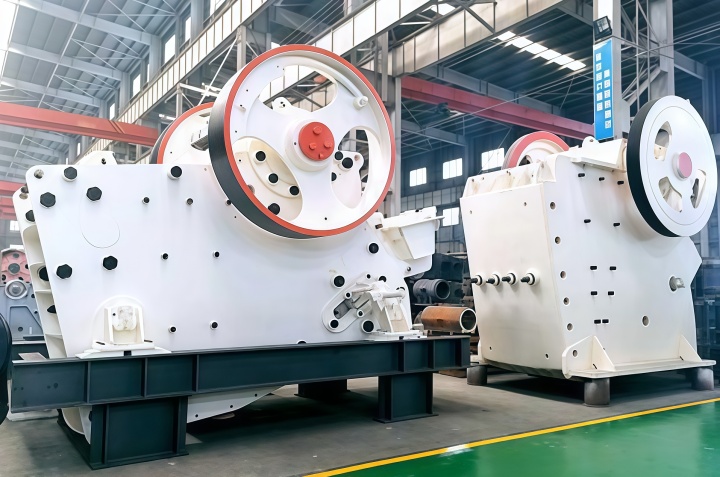
Capacity Selection and Feed Impact
| Target TPH | Recommended Model | Max Feed Size | Nominal Capacity | Power |
| 50 − 80 t/h | PE400×600 | 340 mm | 16 − 64 t/h | 30 kW |
| 80 − 150 t/h | PE600×900 | 500 mm | 50 − 160 t/h | 75 kW |
| 150 − 300 t/h | PE750×1060 | 630 mm | 110 − 320 t/h | 110 kW |
| 300 − 500 t/h | CJ125 | 760 mm | 290 − 840 t/h | 160 kW |
| 500+ t/h | CJ160 or CJ200 | 960 − 1200 mm | 430 − 1590 t/h | 250 − 400 kW |
Note: Nominal capacity varies by manufacturer design. Confirm with the equipment nameplate before purchase. For granite, estimate actual output at 70% of nominal capacity. This Granite Jaw Crusher Selection Guide advises going one size up when the target tph is right at the nominal upper limit.
When feed fines below the CSS exceed 30%, a material cushion forms and reduces direct block-to-block crushing. When moisture exceeds 4 percentage points, wet sticky material arches in the lower chamber. When jaw teeth wear beyond 30% to 40% of original height, throughput drops by 15% to 20%. High manganese jaw plates in granite typically last 2 to 5 months. Less than 30 days indicates abnormal wear.
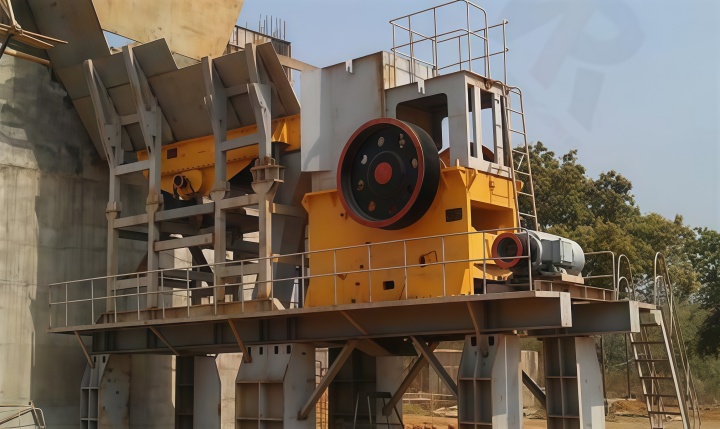
Mobile vs Stationary and Selection Pitfalls
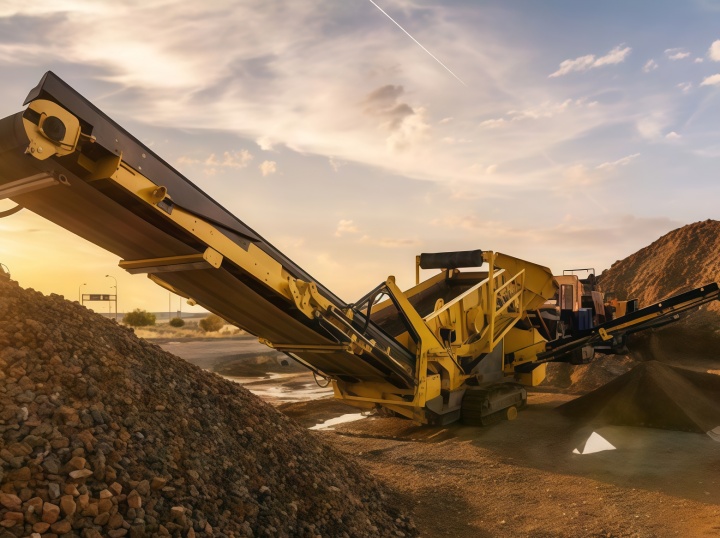
Stationary plants suit long-term high output. Power consumption per ton is 15% to 20% lower than mobile plants, and maintenance space is better. Tracked plants suit short-term transfers. Wheeled plants suit road-based relocations. In the Sandvik Thailand case, the UJ310 wheeled mobile jaw plant was commissioned quickly and helped the quarry process stockpiled granite for a large railway project.
This Granite Jaw Crusher Selection Guide summarizes three common pitfalls. First, looking only at feed opening width and ignoring chamber type. A small-chamber model at the same opening can produce one third less than a large-chamber model. Second, setting the CSS too tight. This increases crushing pressure, concentrates stress on a small contact area, accelerates jaw plate wear, and overloads the toggle plate. For granite, a closed side setting of 80 to 100 mm is recommended for primary output of 0 to 150 mm. The product top size is about 1.5 to 1.7 times the CSS. Third, ignoring foundation and installation. Uneven foundation or off-center feeding causes vibration and uneven liner wear. A few millimeters of settlement can break the toggle plate repeatedly.
Troubleshooting
If bearing temperature exceeds 75°C, check grease type and seals first. Normal operating temperature is 60 to 75°C. Stop the machine if it exceeds 85°C. Wrong grease is a common cause.
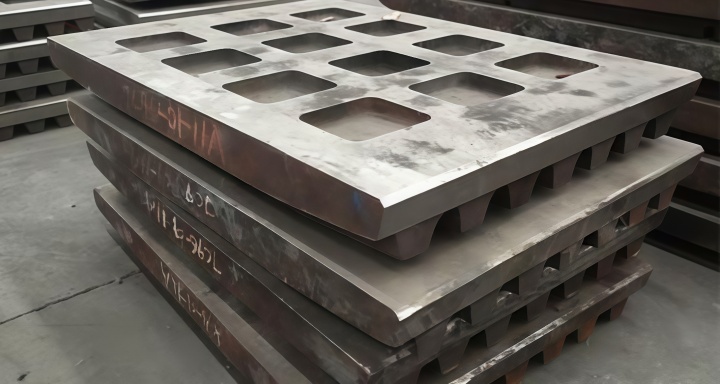
If the lower part of the jaw plate wears faster than the upper part, check for off-center feeding or excessive material speed at the discharge zone. Align the feed with the center of the crushing chamber and rotate the jaw plates regularly. Reversible jaw plates used upside down can extend service life by 20% to 40%.
If output size suddenly gets coarser but the CSS has not changed, the lower teeth of the fixed jaw plate are likely worn flat. Measure the actual CSS weekly with a lead ball or wire. Replace or flip the plate when teeth wear exceeds 30% to 40% of original height.
If the flywheel wobbles or the belt slips, check the keyway and belt tension. A wobbling flywheel usually means keyway wear or loose flywheel bolts. Continued operation can damage the main shaft. If belt tension is correct but slipping continues, inspect the pulley grooves for wear.
Uniform feeding is essential. Add a vibrating feeder before the jaw crusher to remove fines and dirt. This protects the jaw plates and improves throughput. Tighten jaw plate bolts weekly. Change bearing grease every three months.
FAQ
Q1: How to choose between jaw crusher and gyratory crusher for granite primary crushing?
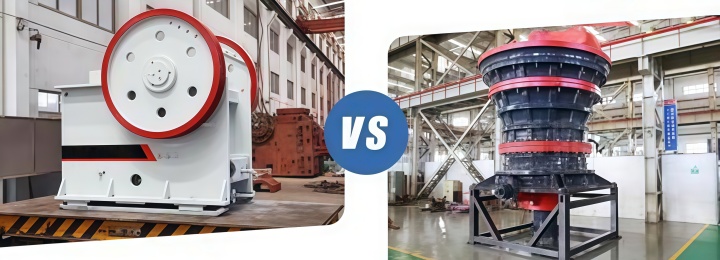
Below 500 t/h, choose a jaw crusher plus cone crusher. Above 1000 t/h, choose a gyratory crusher. This Granite Jaw Crusher Selection Guide recommends evaluating target tph and capital budget together.
Q2: How much maintenance time differs between hydraulic and shim CSS adjustment?
Hydraulic wedge adjustment takes about 10 to 15 minutes. Shim adjustment requires shutdown, bolt removal, and shim changes, taking at least 40 to 60 minutes. For frequent product size changes, hydraulic adjustment saves several days of production time per year.
Q3: How to choose jaw plate material?
Mn18Cr2 suits most granite conditions. For high quartz content and strong abrasiveness, choose composite insert plates with hard alloy blocks at the teeth. High chrome iron has lower toughness and is not recommended when occasional iron pieces are present in the feed.
Q4: How to coordinate jaw crusher and cone crusher CSS?
Set the jaw crusher CSS at 80% to 90% of the cone crusher maximum feed size to leave a buffer. If the jaw CSS is too small, the cone crusher will choke. If too large, the cone crusher load fluctuates and liner wear becomes uneven. This Granite Jaw Crusher Selection Guide stresses that the two-stage CSS settings are linked parameters and must not be adjusted independently.
First define target tph, then work backward to the model using the 70% factor, then choose stationary or mobile based on quarry life and relocation frequency. Once feed size, rock hardness, and capacity margin are clear, add the two field variables of feed fines content and moisture. This Granite Jaw Crusher Selection Guide helps you avoid pitfalls and reduce downtime. If you are planning a granite crushing line, sort out your raw rock size, target tph, and product requirements, then use the tables above to narrow down to two or three candidate models.