Granite Jaw Crusher for Quarry vs Cone Crusher for Primary Crushing
Monday September-28 2026 16:04:19
The division of labor between Granite Jaw Crusher for Quarry vs Cone Crusher for Primary Crushing can be checked against operating data from a real quarry. The jaw crusher handles uncontrolled blasted rock, while the cone crusher controls particle shape and per-ton expense.
The two cannot swap positions because their feed size limits differ considerably. The following analysis is based on an actual upgrade case at a granite quarry in California, USA.
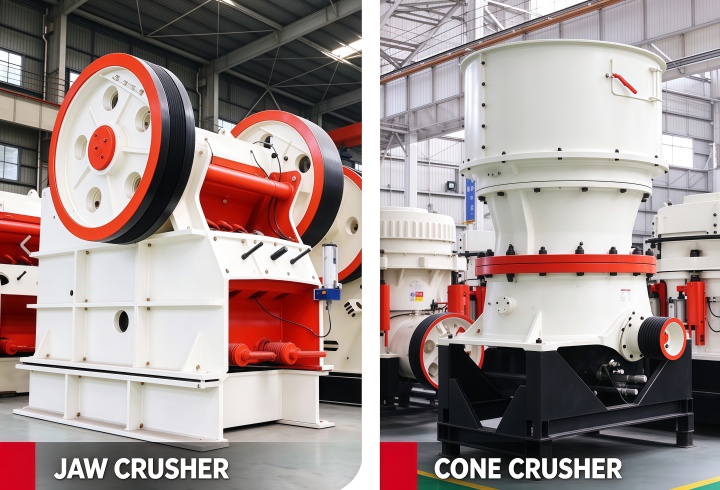
Can Granite Jaw Crusher for Quarry vs Cone Crusher for Primary Crushing Swap Positions?
No, the jaw crusher's feed size limit is typically above 1 meter, while the cone crusher's upper limit is generally 200 to 300 mm. The Rocky Canyon aggregate plant in Atascadero, California, processes blue and brown granite. Its original jaw crusher had a feed size limit of only 457 mm.
This prevented the blasting team from widening drill spacing, caused frequent blockages, and limited operation to three or four days per week. After switching to a McLanahan 3254H jaw crusher, the feed size limit went up to 610 mm, the closed side setting was set at 102 mm, and hourly output doubled from 150 tons to over 300 tons.
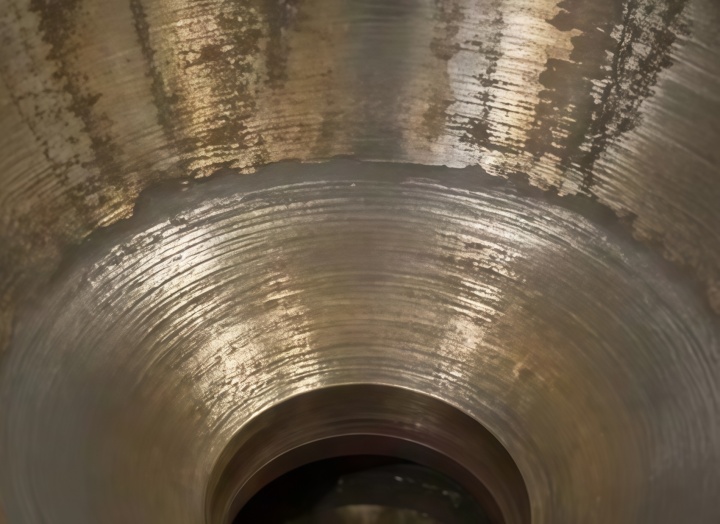
The cone crusher does not have this feed capability. Forcing large blocks into it causes abnormal liner wear and main shaft eccentric loading. The jaw crusher product page has more complete feed parameter information.
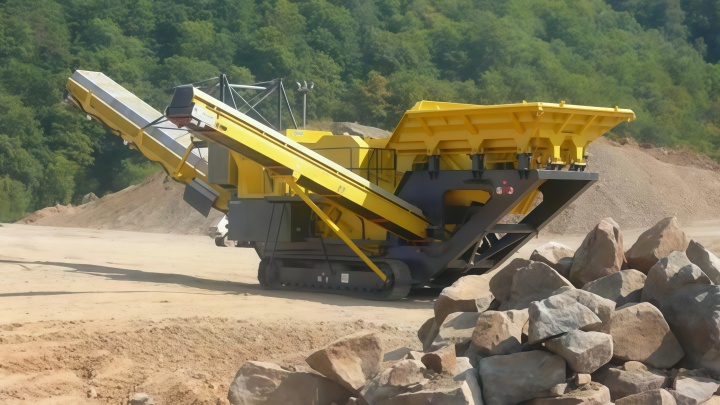
Why Primary Crushing Must Start with a Jaw Crusher in Granite Jaw Crusher for Quarry vs Cone Crusher for Primary Crushing
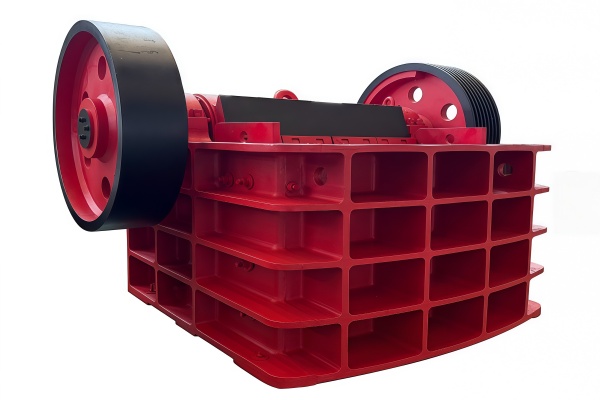
Because the core task of primary crushing is to accept the larger blasted rock size. The deep chamber design of the jaw crusher is one of the few primary crushing solutions that can handle 1-meter granite feed.
In the Rocky Canyon case, the key data change is not the doubling of hourly output, but the 153 mm difference from raising the feed size limit from 457 mm to 610 mm. That 153 mm changed the economics of the blasting process. The original 457 mm limit forced narrower drill spacing, and drilling and explosive consumption per cubic meter of rock was about a fifth to a quarter higher than wide-spacing blasting.
After the feed size limit went up to 610 mm, the blasting team could widen drill spacing by about 0.3 to 0.5 meters, and the combined drilling and blasting expense per ton of raw rock dropped by about one sixth. This is a hidden benefit that competitor pages do not calculate.
The Metso Nordberg C150 jaw crusher at the Wotzdorf quarry in Bavaria, Germany, handles blasted feed with a larger size of 1.3 to 1.4 meters. It runs 10 hours per day, with an hourly output of 250 to 300 tons, and processes about 350,000 tons of granite annually. Its feed opening is 1400 mm wide and 1200 mm deep. The frame uses bolted connections rather than welding, and the modular design allows internal components to be replaced individually. Its practical value under high-impact granite conditions carries greater weight than simply comparing feed sizes.
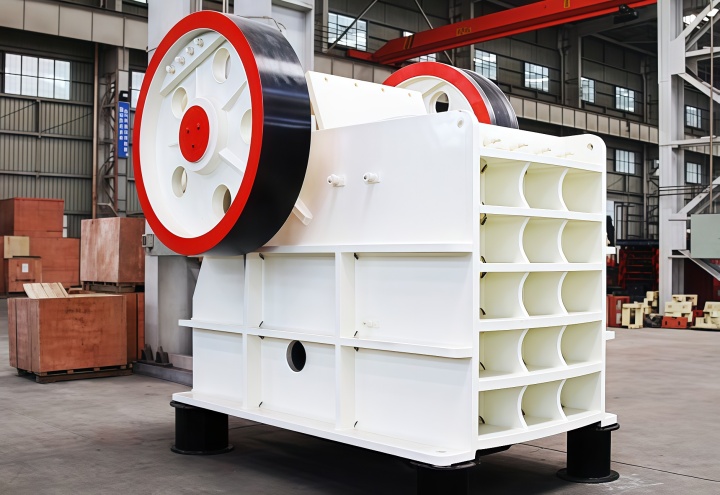
How Much Can Secondary Crushing Cut Per-Ton Expense in Granite Jaw Crusher for Quarry vs Cone Crusher for Primary Crushing?
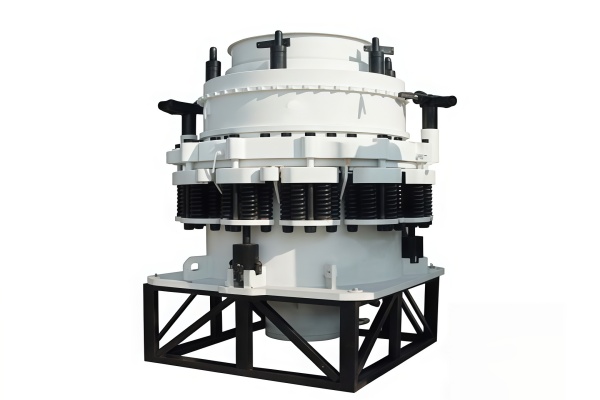
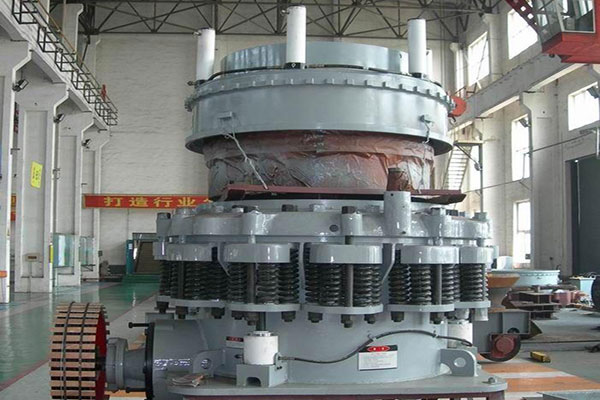
In a two-stage granite process, the cone crusher's value is mainly in particle shape control and cutting recirculation. The Rocky Canyon jaw crusher produces material below 4 inches, which then goes to the cone crusher before entering the finished product plant.
In this flow, the jaw crusher and cone crusher form a clear series relationship. The jaw crusher solves whether the material can be accepted, and the cone crusher solves whether the output is good enough.
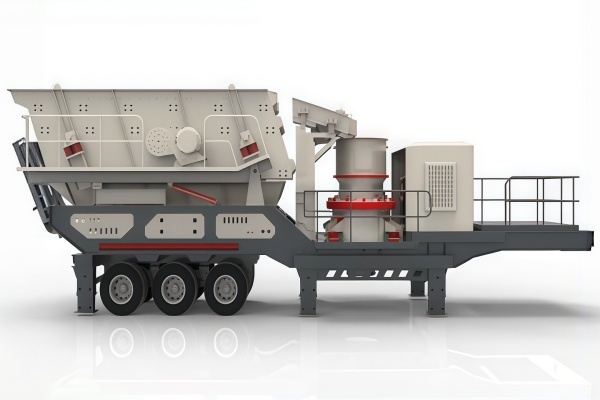
At the Boda quarry in Sweden, granite compressive strength is above 300 MPa. A Kleemann MOBICAT MC 120 Z jaw crusher reduces 1-meter feed to below 200 mm, then a MOBICONE MCO 11 S cone crusher processes it further. The mobile crushing combination has a daily output above 1000 tons. The cone crusher uses interparticle crushing to produce aggregate with a higher cubical content, cutting needle-like and flaky material returned by downstream screening. For every one tenth cut in recirculation, the effective output of the entire production line goes up by about one twelfth.
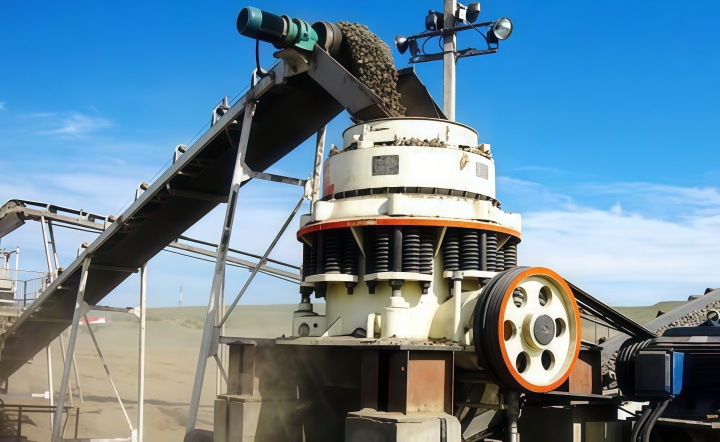
Why Purchase Price Alone Fails in Granite Jaw Crusher for Quarry vs Cone Crusher for Primary Crushing
Because purchase price is only a small part of per-ton expense. Downtime losses and hidden blasting process expenses are the larger items.
In the Rocky Canyon case, the original jaw crusher blocked frequently. The operations manager described having to use an excavator to dig it out often, and it ran only three to four days per week. Based on an hourly output of 300 tons, losing two days per week at an estimated finished aggregate price of 8 USD per ton results in a loss of about 384,000 USD per week.
After switching to the new jaw crusher, installation took only three days to resume operation. This figure is higher than the price difference of the jaw crusher itself.
Industry data shows that unplanned downtime expense for hard rock crushing lines averages about 2,800 USD per hour, and under high-silica granite conditions, liner wear rates can exceed 0.15 USD per ton. To calculate true per-ton expense, you must multiply downtime hours by hourly output by finished product unit price, then add liner replacement parts and labor.
Which Metric Comes First in Granite Jaw Crusher for Quarry vs Cone Crusher for Primary Crushing?
First measure the larger blasted rock size, because it mainly affects whether the primary crushing stage can use a jaw crusher and how much the blasting process needs to be narrowed.
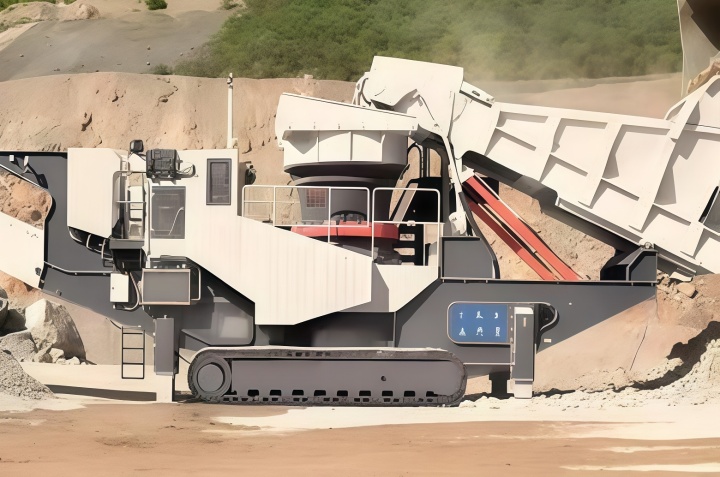
The Tabsakae Granite quarry in Thailand uses a Sandvik QJ341 jaw crusher plus QH331 cone crusher mobile combination. The jaw crusher has a feed size limit of 750 mm, and the cone crusher reduces material to four specifications, with a monthly output of 50,000 tons. The jaw crusher's feed size limit affects the drill spacing range, and the cone crusher's output specifications affect whether finished aggregate meets customer needs. After measuring the larger size, measure the abrasion index and clay content. These two indicators affect liner material selection and whether pre-screening is needed.
When calculating final per-ton expense, include power consumption, liners, downtime, and labor. Looking only at purchase price leads to selection bias.
Returning to the choice between Granite Jaw Crusher for Quarry vs Cone Crusher for Primary Crushing, the core judgment basis is the larger blasted rock size. The jaw crusher's feed size limit affects the optimization space for drilling and blasting, and the cone crusher's secondary contribution affects the compliance rate of finished particle shape.
The per-ton expense advantage of the two working together only appears when blasting and crushing are calculated together. If you are planning a granite production line, organize the larger blasted rock size, abrasion index, and target output specifications to further calculate the specific configuration combination of jaw crusher and cone crusher.
FAQ
Which Has Lower Per-Ton Expense in Granite Jaw Crusher for Quarry vs Cone Crusher for Primary Crushing?
Under granite conditions, jaw plate expense per ton is about 0.07 to 0.10 USD, while cone crusher Mn18Cr2 liner wear rate is about 15 to 20 grams per ton. However, cone crusher liners have a longer replacement interval, so the overall per-ton expense gap narrows.
Can an Impact Crusher Replace a Jaw Crusher in Granite Jaw Crusher for Quarry vs Cone Crusher for Primary Crushing?
No. When granite silica content is above six tenths, impact crusher blow bar working cycle may be only 50 to 80 hours. Industry selection guides generally recommend jaw crushers for hard rock primary crushing, and impact crushers only for medium to low hardness materials.
How Should Blasting Adjust After a Jaw Crusher Feed Size Expands?
For every 50 mm rise in feed size limit, drill spacing can be widened by about 0.1 to 0.15 meters. In Rocky Canyon, after going from 457 mm to 610 mm, drilling and blasting expense per ton of raw rock dropped by about one sixth.
Why Can't a Cone Crusher Restart Immediately After Plugging?
Material remaining in the cone crusher chamber creates overload, and restart load is greater than for a jaw crusher. Clear the crushing chamber before starting to avoid hydraulic system impact.