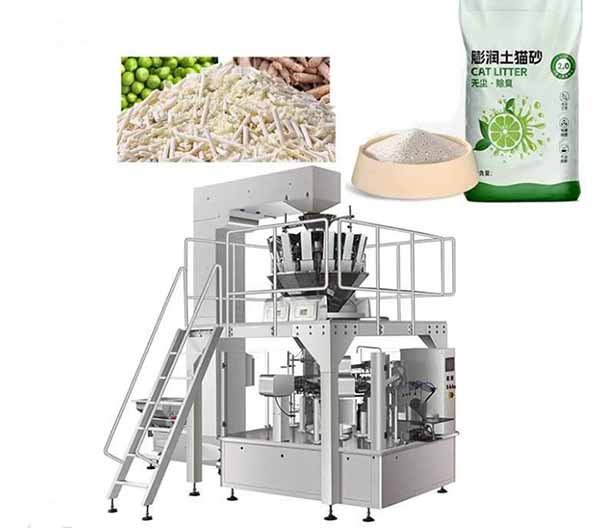
automatic vacuum cat litter packaging machine
Packaging speed: 4 - 15 bags/minute
Weighing range: 1kg - 5kg
Quantitative accuracy: ≤ ±10g or ≤ ±0.2%
Vacuum degree: -0.08 MPa to -0.1 MPa
Gas supply requirements: Pressure 0.6 - 0.8 MPa, gas consumption ≥ 0.6 m³/min
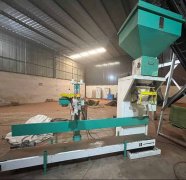
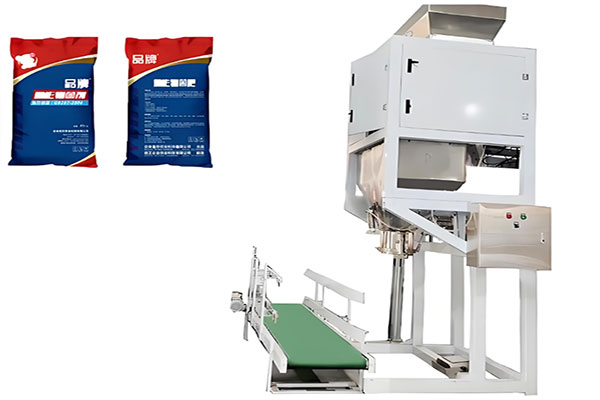
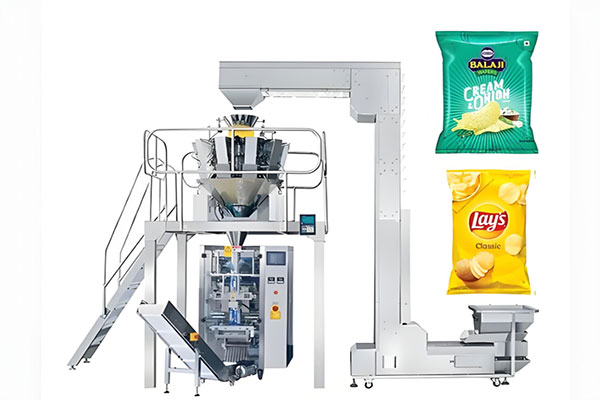
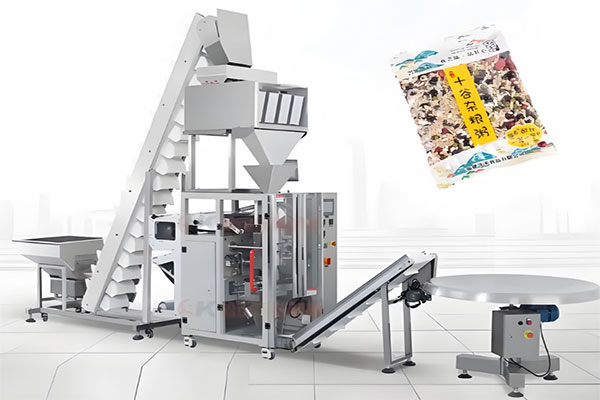
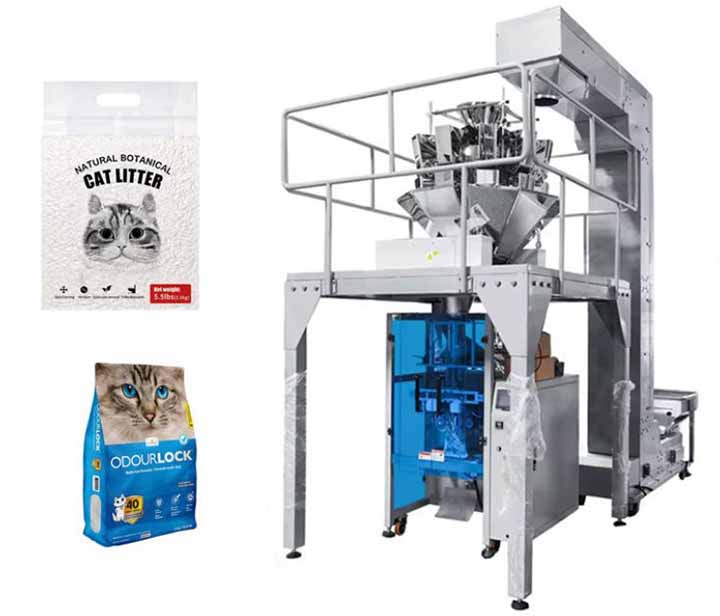
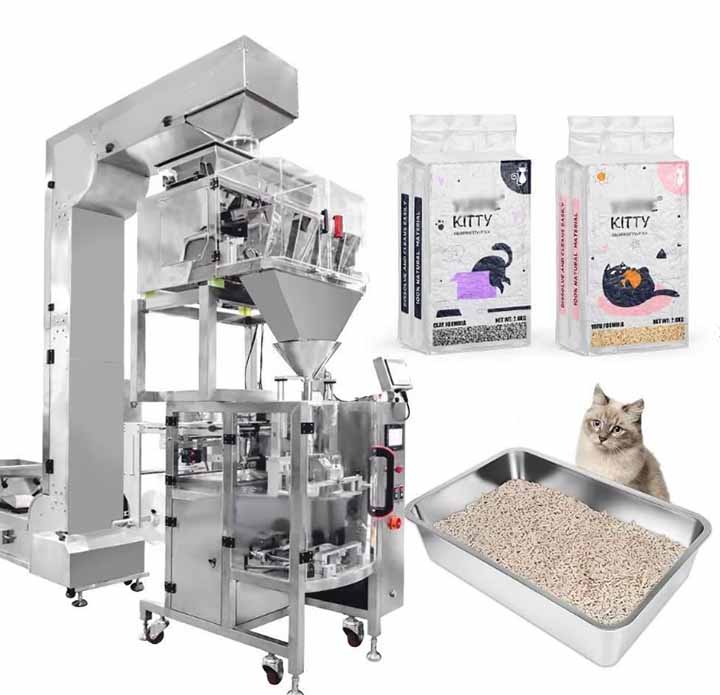
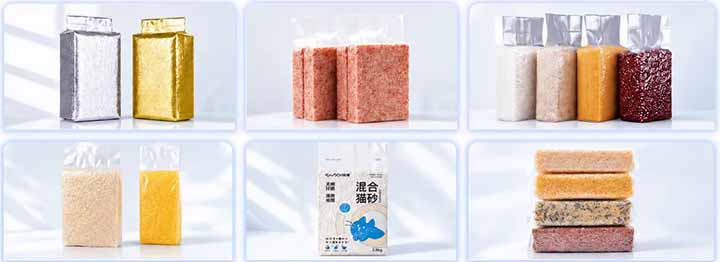
The automatic vacuum cat litter packaging machine is a continuous production line integrating electronic weighing, automatic bag feeding, mechanical shaping, vacuum extraction, and heat sealing. This machine can process bulk cat litter into regular hexahedral brick bags or flat vacuum bags. The packaging weight range is adjustable from 1kg to 5kg (approximately 2.2 lbs to 11 lbs), with 2.5kg (approximately 5.5 lbs) being a common size on the market. In terms of production output speed, the machine operates at a rate of 4 to 15 bags per minute. This speed depends on the number of weighing heads and the bulk density of the material.
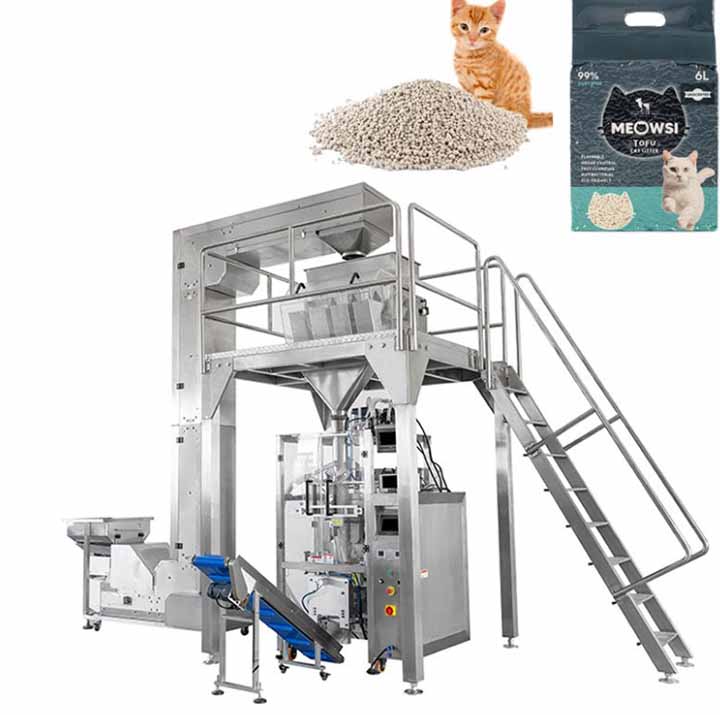
Types of Cat Litter that the Automatic Vacuum Packaging Machine Can Pack
This system is suitable for various granular materials, including Tofu cat litter, bentonite clay litter, pine wood litter, crystal silica litter, and eco-friendly mixed litter.
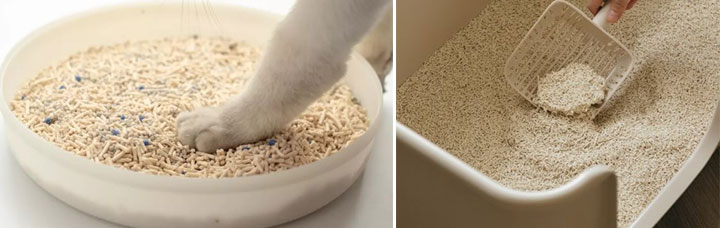
How Does the Automatic Vacuum Cat Litter Packaging Machine Pack?
The automatic vacuum cat litter packaging machine automatically weighs and bags the cat litter, vibrates it to shape it, vacuums it, and heat-seals it into regular hexahedral brick-shaped bags.
Quantitative Conveying: The cat litter is fed into a multi-head linear scale above via a bucket elevator. Electronic sensors measure the weight until a set mass (e.g., 2500 grams) is reached.
Bag Grabbing: A pneumatic robotic arm removes a pre-made bag from the storage tank, uses a suction cup to open the bag opening, and places it under the feed inlet.
Filling and Compacting: The discharge valve opens, and cat litter particles fall into the packaging bag. A vibration mechanism at the bottom reciprocates, shaking the bag to cause the particles to settle and expel some internal air.
Mold Shaping: The filled bag is fed into a four- or six-sided steel mold box. Mechanical pressure plates apply pressure from both sides to shape the bag into a brick-like geometric shape.
Vacuum Sealing: The mold enters the sealed vacuum chamber, where a rotary vane vacuum pump reduces the pressure to -0.08 MPa. Double-sided heating strips then press the bag opening together, fusing the plastic layer.
Conveying and Discharging: The vacuum chamber opens, and a pneumatic pusher pushes the formed cat litter brick bags onto a flat belt conveyor, which then transports them to the subsequent packing station.
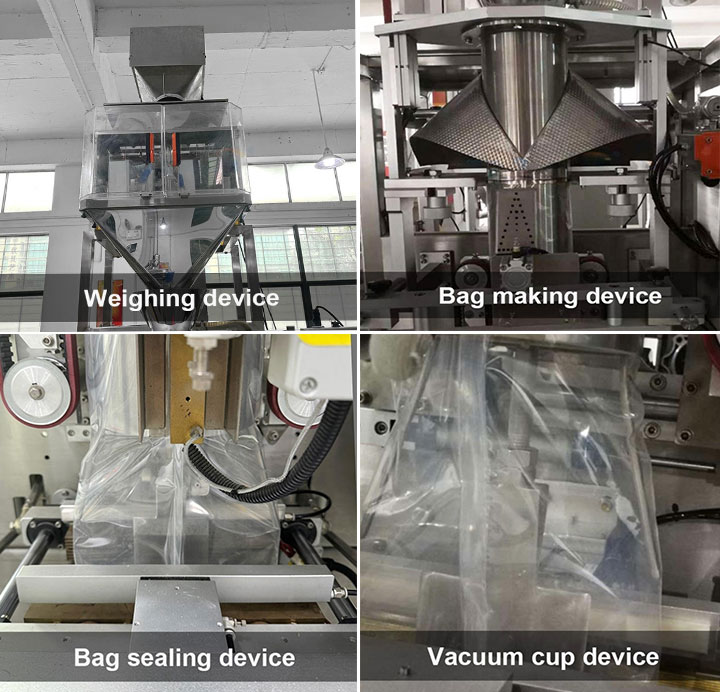
What are the advantages of an automatic vacuum cat litter packaging machine?
The automatic vacuum cat litter packaging machine uses a flexible gripping mechanism combined with heat-sealing micro-temperature control to prevent scratches on the composite film. It controls the air leakage rate during transportation to below 0.3%, ensuring the cat litter remains undamaged and leak-free during transport. The machine relies on multiple alternating stations to synchronize the vacuuming and bag feeding processes, achieving high hourly output. For fragile materials like cat litter, the packaging machine features height-limited drop channels and buffer chutes, reducing the particle breakage rate to below 0.5%, maintaining the integrity of the cat litter particles. The machine components are equipped with quick-release locking pins, allowing operators to adjust molds across different specifications within 15 minutes, facilitating flexible switching between various product types.
Technical Specifications
| Core Parameter Dimension | Common Industrial Standard Range |
| Packing Speed | 4 - 15 bags per minute (bpm) |
| Weighing Capacity / Weight Range | 1kg - 5kg or 2.5kg - 10kg |
| Dosing Accuracy | ≤ ±10g or ≤ ±0.2% |
| Vacuum Degree | -0.08 MPa to -0.1 MPa |
| Bag Size Range | Length / Width / Thickness (Customized according to manufacturer) |
| Air Supply & Air Consumption | 0.6 - 0.8 MPa, ≥ 0.6 m³/min |
| Total Power | 5kW - 12kW (Single-phase / Three-phase power) |
How much does an automatic vacuum cat litter packaging machine cost?
An automatic vacuum cat litter packaging machine integrating a complete weighing, shaping, and sealing system typically ranges in price from $18,000 to $45,000. The final investment varies depending on technical parameters such as weighing configuration, component origin, and dust microfiltration system.
Systems using four-head linear scales are at the lower end of the price range; systems with ten- or fourteen-head computer-controlled scales have more complex sensor arrays, resulting in higher initial purchase costs. Models using standardized domestic pneumatic components represent the base price; replacing them with international standard parts will increase the purchase cost but extend the machine's lifespan. Models equipped with a sealed negative pressure dust collection hood and pulse bag dust collector will have a different capital investment compared to open-type models.
Finished Product Packaging Showcase
Frequently Asked Questions (FAQ)
Q: How many minutes does it take to change the mold for different bag sizes?
A: The operator makes physical adjustments to the mechanical components using quick-release pins. The entire changeover process usually takes 15 to 20 minutes.
Q: Will the vacuum process break up the cat litter?
A: The material drop height inside the equipment is controlled within 400 mm, and the chute is lined with a buffer pad. Combined with a flexible pressure shaping mechanism, the particle breakage rate can be controlled within 0.5%.
Q: What is the average air consumption requirement for this machine?
A: The system requires an external air compressor. The average air source pressure needs to reach 0.6 to 0.8 MPa, and the air consumption per minute should not be less than 0.6 cubic meters.
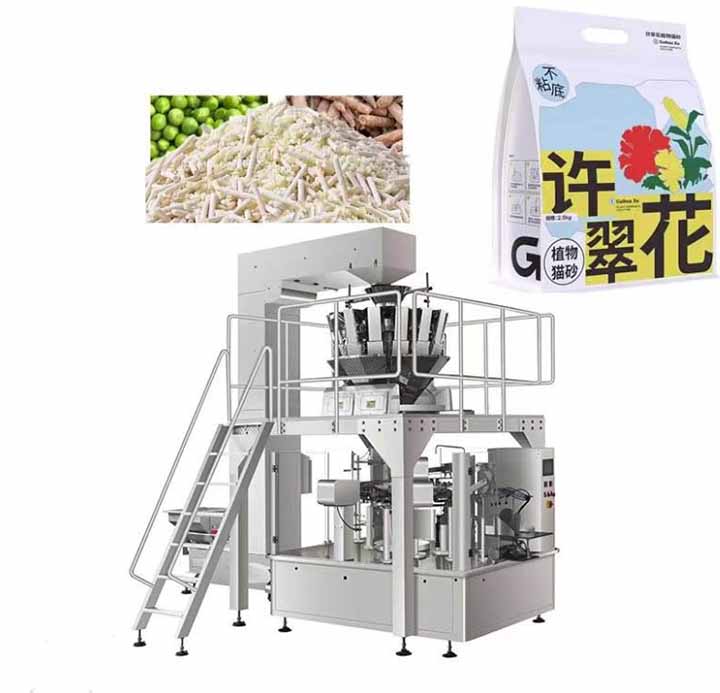
The automatic vacuum cat litter packaging machine is suitable for commercial processing sites requiring standardized brick packaging. By integrating the weighing, shaping, and sealing processes onto a single machine line, this equipment establishes standardized bag dimensions, reduces reliance on manual assembly, and protects particles from external air humidity during long-distance sea transport. When selecting this equipment, production managers need to balance the range of bag weight variations, weighing accuracy requirements, and hourly production needs.