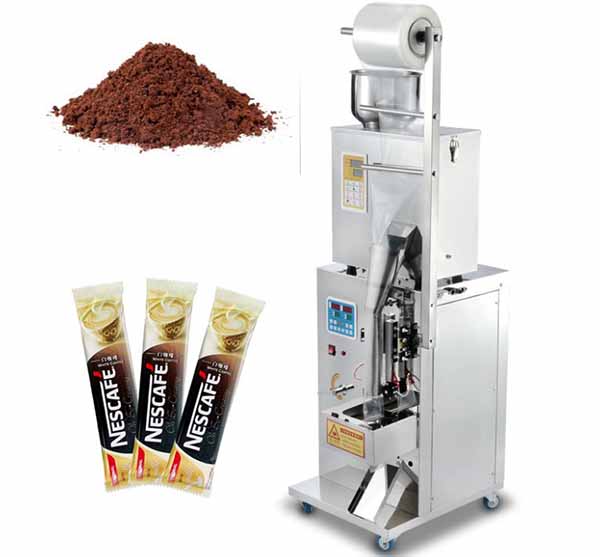
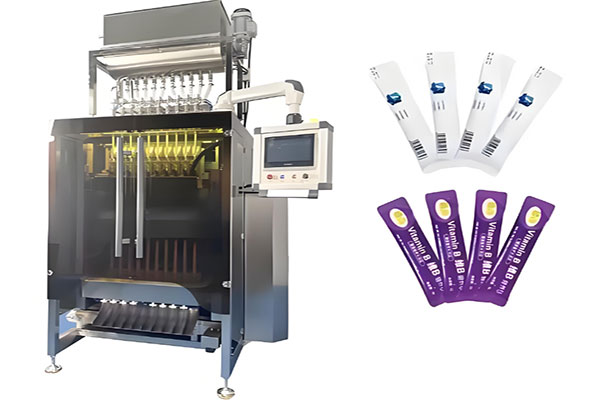
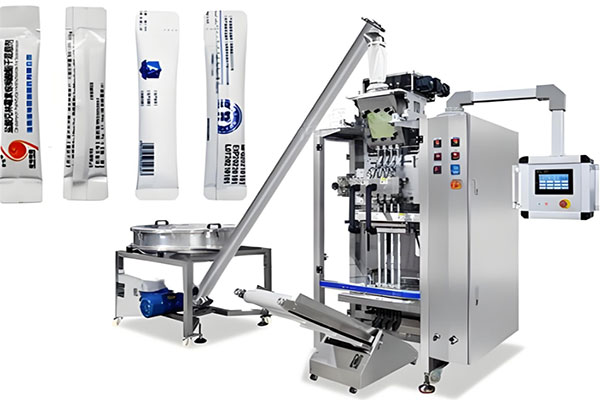
Coffee powder stick packaging machine
Packaging speed: 160-480 bags/minute
Number of lanes: 1–12 (optional)
Fill weight: 1.5–14 g/bag
Bag size: Width 16-50 mm, Length 40-170 mm
Measuring accuracy: Error ≤ ±1%
What is a coffee powder stick packaging machine?
A coffee powder stick packaging machine, as an automated industrial system, transforms flexible film into sealed, quantitative stick products. This equipment can process 1.5g to 15g of instant black coffee, 3-in-1 coffee powder, and freeze-dried granules. Its hardware configuration includes multi-channel designs with 4, 6, 8, or 12 rows.

Depending on the number of rows, this multi-channel system can operate at speeds of 160 to 480 bags per minute. This high-capacity output allows manufacturers, professional roasters, and contract packaging plants to break free from the limitations of manual filling, directly achieving large-scale production of single-serving convenient beverage lines by converting bulk powder into standardized stick packages.
How does a stick packaging machine package coffee powder?
Coffee powder is hygroscopic and prone to static electricity, easily generating dust during high-speed movement. Furthermore, 3-in-1 formulas tend to thicken and bridge in humid environments. The packaging process involves the film roll being slit and shaped, entering a spiral metering filling system with dust removal, followed by vertical and horizontal sealing, and finally outputting finished stick packages.

To prevent dust accumulation, the system integrates a vacuum dust removal port at the filling nozzle. A servo-driven vertical screw conveyor rotates within the metering tube, directly feeding material to the bottom of the forming film sleeve. This deep-feeding method prevents powder from floating upwards, keeps the sealing jaws clean, thus maintaining a tight thermal bond and eliminating the risk of seal leakage.
What are the functions of a coffee powder stick packaging machine?
To achieve high throughput, the equipment integrates specific mechanical and electronic subsystems. A multi-channel slitting assembly can simultaneously cut a single wide film into 4, 8, or 12 independent strips. A programmable logic controller interface coordinates the mechanical timing, film traction length, and auxiliary accessory operation. For sealing and tension control, a PID temperature regulator sets independent temperatures for the vertical and horizontal sealing strips to accommodate different film structures. A servo-driven film traction belt provides stable tension control, preventing registration misalignment of the printed packaging material. Finally, an eye-mark registration sensor precisely controls the cutting length between individual packaging bags by scanning the printed tracking mark.

What are the benefits of using a stick packaging machine to package coffee powder?
Introducing a multi-channel strip packaging system can improve the operational efficiency of the entire production line, offering specific advantages in the following aspects.
High throughput: A typical 8-channel configuration can operate at speeds of 160 to 480 bags per minute.
Minimized material usage: The narrow design saves up to 15% of composite film compared to standard four-side seal bags of the same capacity, allowing for easy packing into standard retail cartons.
Reduced material waste: The servo-controlled screw conveyor system keeps the metering deviation of each coffee powder package below 1%, protecting raw material profits over long production runs.
Convenient downstream integration: The exit conveyor can be directly connected to automated cartoning units, achieving a seamless transition from raw coffee powder to finished packaging boxes.

Coffee powder packaging machine model parameter table
| Model | LC-500B-04P | LC-500B-06P | LC-500B-08P | LC-500B-10P | LC-500B-12P |
| Lane Number | 4 lanes | 6 lanes | 8 lanes | 10 lanes | 12 lanes |
| Bag Width | 16-50mm | 16-50mm | 16-50mm | 16-50mm | 16-50mm |
| Bag Length | 40-170mm | ||||
| Packing Speed | 30-80 Bags/Min/Lane | ||||
| Control System | Bus type PLC+Bus type AC servo | ||||
| Cutting Type | 1.Flat Cutting, 2.Zigzag Cutting, 3.Continuous Cutting, 4.Customized Special Shap Cutting | ||||
| Optional device | Date Coder, Air-filling Device, Tear Notch Device | ||||
How much does a coffee powder stick packaging machine cost?
The capital investment for a strip packaging production line depends on the required scale and configuration of the machinery. Multi-channel machines range in price from approximately $5,999 to $30,000. The price will be lower if the quantity of coffee powder stick packaging machines ordered is large. Typically, the price of a fully automatic multi-channel 4-12 line filling and labeling coffee stick pouch packaging machine is around $30,000.

Price Drivers
1. Number of Channels: Each additional channel requires extra forming shoulders, cutting blades, and metering screw conveyors, increasing manufacturing costs.
2. Material Specifications: Using specific alloys (e.g., SUS316 stainless steel) for product contact parts alters the machine's base cost.
3. Optional Modules: Adding continuous inkjet date encoders, nitrogen rinsing systems for extended shelf life, or specific tear-off dies will increase the final price.
Common Material Applications
In addition to standard instant coffee, the Coffee Powder Stick Packaging Machine configuration is also suitable for the following specific coffee powder and creamer powder categories: Freeze-dried fine coffee powder: This type of fine powder has a strong electrostatic reaction, requiring specific anti-static strips in the feeding area to ensure smooth feeding.
Flavored Cocoa Compound Powder: Due to its high oil content and density, the machine is equipped with heavy-duty agitator blades in the hopper to prevent clumping and maintain stable flow.
Functional Coffee Additive Powder: This includes compound beverage powders fortified with collagen or protein, available in single-fill formulations to meet specific serving sizes required by the fitness market.
Coffee Creamer and Sweetener Powder: Non-dairy formula powders designed specifically for complementary beverages, packaged in individual long strips for convenient office coffee service.

Case Study
A coffee packaging plant in Kuala Lumpur upgraded its single-channel bagging machine, which produced only 40 bags per minute with a 6% scrap rate. The plant introduced a six-channel servo-driven strip packaging system. During a 30-day trial run on two shifts daily, the new system resolved the dust clogging issue with dark roast instant espresso powder, maintaining a stable output of 270 strips per minute. Thanks to the filling design of the deep-tube screw conveyor, the packaging waste rate has been reduced from 6% to 0.4%, resulting in a cost reduction of approximately 42 kg of coffee blend ingredients per week.

Frequently Asked Questions
Q: Can one machine produce strip packages of various widths?
A: To change the width of the packaging bag, the operator must replace the forming shoulder and film slitting blade assembly. However, length adjustment is digitally controlled via a PLC touchscreen, eliminating the need for mechanical disassembly.
Q: How does the system handle variations in coffee powder density?
A: The system uses a bulk density test to calibrate the screw conveyor's speed. If a new batch of coffee powder has a different density, the operator can adjust the servo motor's pulse count via the interface to maintain the correct weight.
Q: What type of packaging film is needed for coffee strip packaging?
A: The machine requires a heat-sealable co-extruded or composite film, such as PET/AL/PE or kraft paper/AL/PE structures, to block moisture and oxygen.

The coffee powder strip packaging machine combines multi-channel processing with a dustproof screw conveyor process, solving the mechanical challenges of dry powder formulations. When selecting equipment, avoid blindly pursuing speed and instead focus on the actual needs of the workshop. Before purchasing, clarify the film thickness, package size, and expected daily output to match the appropriate number of rows and feeding screws. If the budget allows, it is recommended to prioritize models with dustproof feeding structures and reserve an interface for automatic cartoning machines to ensure the entire production line can operate smoothly without jamming or powder leakage over a long period of time.