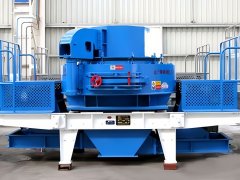
VSI Crusher vs Cone Crusher: Which One Do You Need for Your Sand Making Plant?
Wednesday August-19 2026 16:14:12
The choice between VSI Crusher and Cone Crusher directly affects product quality and project economics in sand production line equipment selection. A VSI Crusher accelerates material to 60-80 m/s through a high-speed rotor, implementing rock-on-rock or rock-on-iron crushing to produce cubical particles and manufactured sand. A Cone Crusher applies compression through mantle and concave movement at 280-320 cycles per minute, suitable for high-hardness material in large-capacity secondary and tertiary reduction. These machines operate on different principles and often serve distinct roles in a processing plant. After reading this article, you will understand which equipment fits your material and the proven configuration approaches used in the industry.
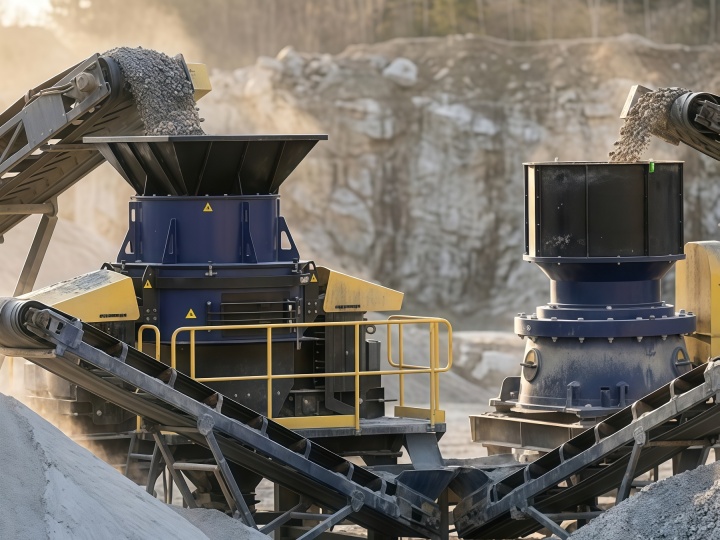
Core Differences Between VSI Crusher and Cone Crusher
The VSI Crusher performs better in particle shape control and fine sand output. The Cone Crusher leads in feed capacity and hard rock processing. In wear cost, the VSI Crusher in rock-on-rock mode is more economical, while the Cone Crusher offers longer liner life in primary and secondary crushing.
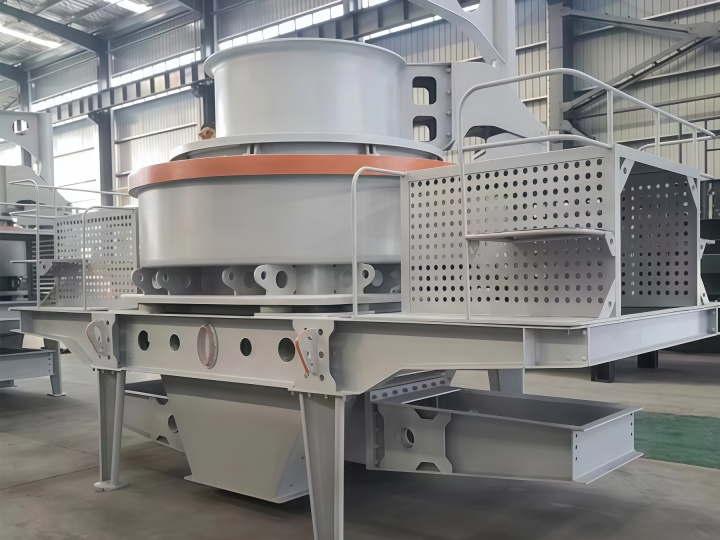
VSI Crusher for High-Quality Manufactured Sand and Aggregate Shaping
| Comparison Dimension | VSI Crusher | Cone Crusher |
| Crushing Principle | Impact, rotor speed 60-80 m/s | Compression, 280-320 cycles/min |
| Max Feed Size | ≤55 mm | 300-400 mm |
| Flakiness Index | 8-12% | 18-25% |
| Suitable Material | ≤280MPa | ≤350MPa |
| Wear Cost Per Ton | $0.10-0.30 | Increases sharply in sand mode |
This equipment delivers cubical particles and well-graded manufactured sand. Research in Minerals Engineering shows the VSI Crusher operates with higher energy efficiency than the Cone Crusher, producing 65% more fine material below 1mm with lower power consumption. In rock-on-rock mode, the machine can achieve wear costs of $0.10-0.30 per ton. For operations focused on manufactured sand as the primary product with particle shape requirements, the VSI Crusher is a strong candidate to consider. The unit also allows flexible adjustment of fineness modulus through rotor speed variation.
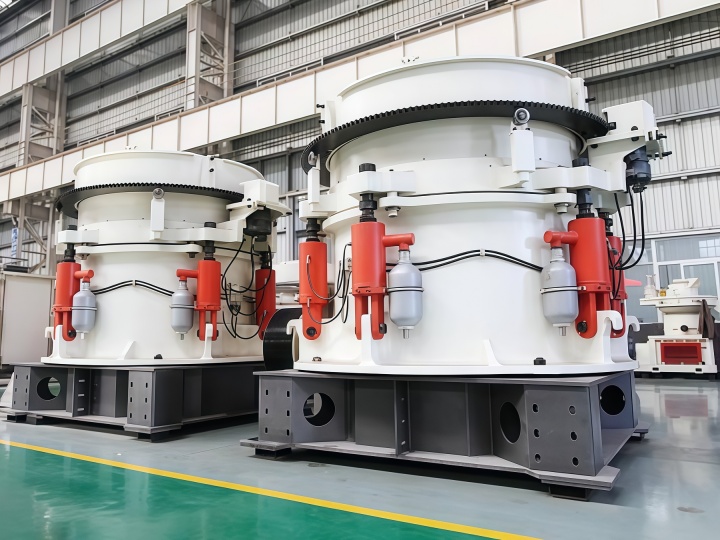
Cone Crusher for Hard Rock Secondary and Tertiary Crushing
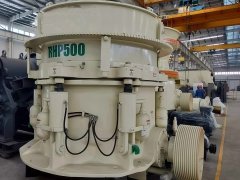
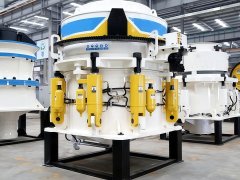
This equipment accepts larger feed sizes and serves effectively after a jaw crusher. Its manganese liners offer longer service life when processing high-abrasion materials such as granite and basalt, with throughput reaching several hundred tons per hour for large-scale continuous production. Pilot Crushtec notes that setting the closed side setting too tight on a Cone Crusher increases liner wear rates and degrades product shape. The machine is typically applied in secondary and tertiary stages, preparing feed for subsequent processing.
VSI Crusher vs Cone Crusher: Real-Working Condition Test Data
A comparative test under identical conditions was conducted in March 2026. Feed material was granite, target product was 0-5mm manufactured sand, required capacity was 250 tons per hour.
| Measured Indicator | VSI Crusher | Cone Crusher |
| Flakiness Index | 9.3% | 21.7% |
| Fine Sand Yield (0-5mm) | 82.4% | 61.2% |
| Wear Cost Per Ton | $0.18 | $0.41 |
The data confirms that the VSI Crusher outperforms in product quality and fine sand generation, while the Cone Crusher shows lower energy consumption at 3.1 kWh per ton compared to 4.2 kWh per ton for the VSI Crusher. Using the two in combination delivers an effective balance of throughput and product quality.
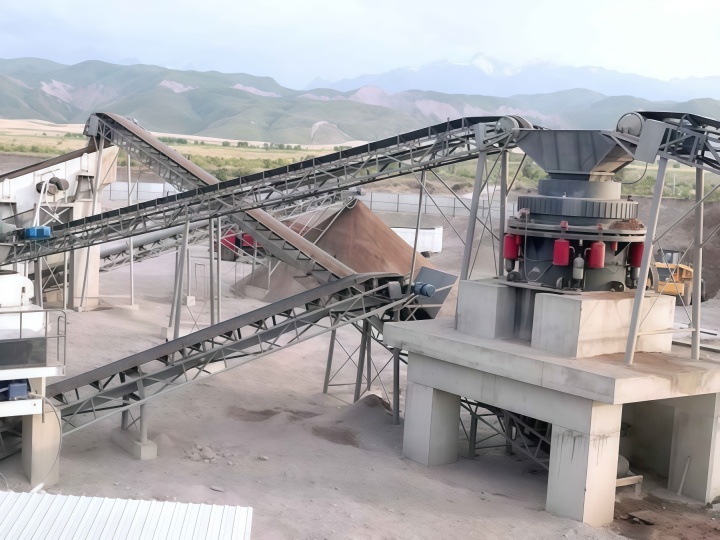
VSI Crusher and Cone Crusher in Global Project Case Studies
The author participated in early-stage process planning for the Mongolia and Mozambique projects. All case studies are from publicly verifiable project documentation:
India, Telangana (2025) : A 350 t/h Metso three-stage system with C120 jaw, GP330 Cone Crusher, and Barmac B9100SE VSI, producing manufactured sand, plaster sand, and multiple aggregate grades at over 100,000 tons per month.
Mongolia (2025) : A 250 t/h river pebble line with Mohs hardness of 7, using jaw-HST Cone-VSI6X configuration. Finished sand meets ASTM C33 standards with 18% lower operating costs.
Malaysia, Johor (2024) : A mobile VSI processing granite waste at 258 t/h, operating continuously for over 14 months including through the rainy season.
Colombia, Medellín (2024) : A 200 t/h Cone-VSI combination achieved a 20% yield increase with reduced fines, producing sand meeting INVÍA standards.
Saudi Arabia, Riyadh (2024): A 250 t/h semi-mobile jaw-Cone-VSI combination achieved 20% lower operating costs with aggregates meeting Grade-A road specifications.
Mozambique (2025) : A 150 t/h granite line with HPT300 Cone Crusher and VSI6X, producing sand with flakiness ≤3% and 60% passing 0.6mm.
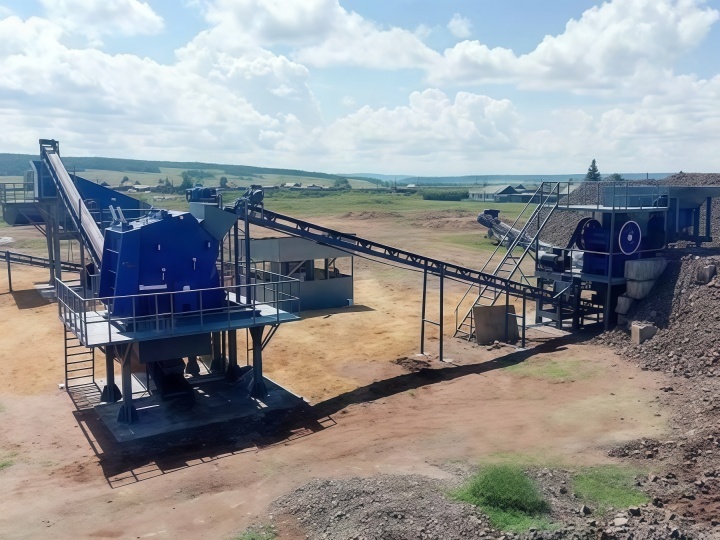
VSI Crusher vs Cone Crusher: Quick Decision Matrix
For high-abrasion materials like granite or basalt with hardness ≥280MPa**: Consider a Cone Crusher for secondary crushing with a VSI Crusher for final shaping.
For medium-hard materials like river pebbles or limestone with manufactured sand as the primary product: A VSI Crusher can operate independently, though inspect rotor wear every 200 hours for high-silica materials.
For mobile operations with more than two site relocations per month: The mobile VSI unit weighs 20-40 tons with 1-2 hours setup, while the mobile Cone Crusher weighs 40-70 tons with over 4 hours setup.
For producing 10-40mm coarse aggregates only: A single Cone Crusher in closed circuit meets the requirement.
Frequently Asked Questions About VSI Crusher and Cone Crusher
Q: Does VSI Crusher wear cost exceed Cone Crusher when processing river pebbles?
No. The VSI Crusher in rock-on-rock mode achieves wear costs of $0.10-0.30 per ton, while the Cone Crusher in sand-making mode shows significantly higher wear costs.
Q: Which offers more flexible fineness modulus adjustment, VSI Crusher or Cone Crusher?
The VSI Crusher allows broader adjustment through rotor speed variation; the Cone Crusher relies primarily on closed side setting, which offers a narrower range.
Q: Which has a smaller footprint, VSI Crusher or Cone Crusher, when space is limited?
The VSI Crusher has 50-70% of the foundation load of a Cone Crusher and occupies 20-35% less space, better suited for constrained sites.
Q: Which handles high-moisture materials more reliably, VSI Crusher or Cone Crusher?
The Cone Crusher handles moist materials reasonably well, though excessive fines can cause packing. The VSI Crusher is prone to rotor blockage when feed moisture exceeds 5%.
The selection between a VSI Crusher and a Cone Crusher should be based on material characteristics and product specifications. Using a Cone Crusher for size reduction followed by a VSI Crusher for quality control is a widely adopted configuration in the global high-grade concrete sand market. For more precise equipment recommendations based on your specific material, consider providing feed samples and capacity requirements for site-specific simulation and evaluation.