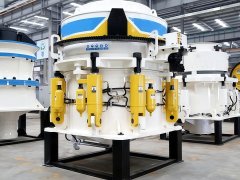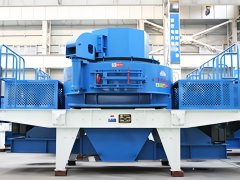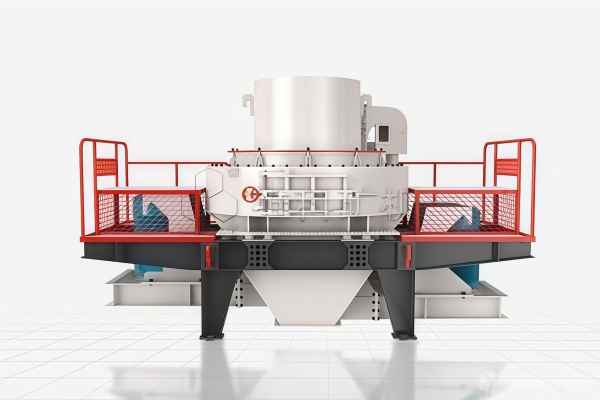
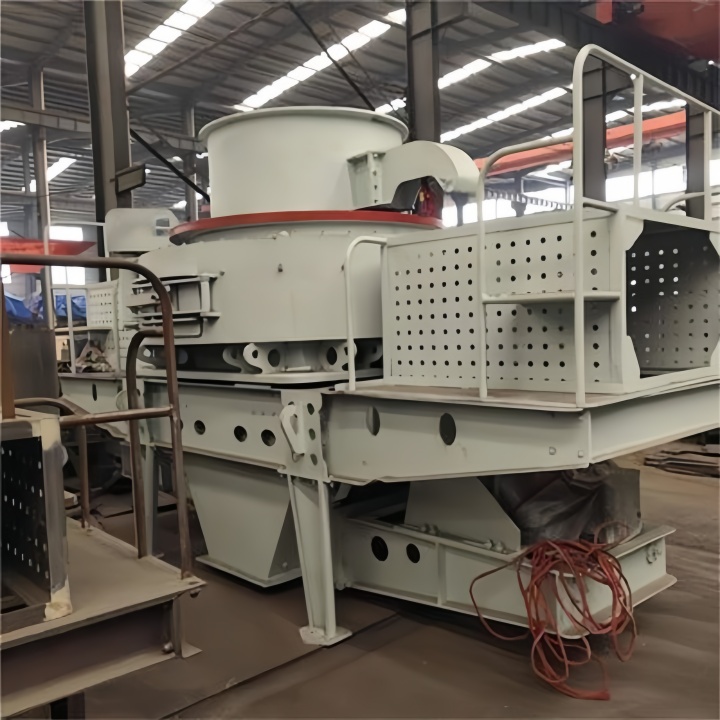
VSI Crusher
VSI Crushers are used for secondary and fine crushing of stone materials, producing high‑quality manufactured sand with varying particle sizes for use in construction, building materials, road paving and concrete mixing industries. Prices typically range from $25,000 to $380,000. Feed opening size: ≤120mm Production capacity: 10‑580 tons/hour Discharge opening adjustment range: 0‑20mm Spindle speed: 1000‑1800 rpm Motor power: 55‑315kW
This article provides a comprehensive introduction to the VSI crusher, a high-efficiency sand making and fine crushing machine. It explains the working principle of the "rock-on-rock" action, highlights the key advantages such as superior cubical product shape and low operating costs, and breaks down the essential technical specifications to guide equipment selection. Furthermore, it explores diverse applications from manufactured sand production to aggregate shaping, and emphasizes the importance of choosing a customized solution based on specific material properties and site conditions to ensure reliable and cost-effective performance.
About VSI Crusher, What Do You Need to Know?
Our VSI crusher handles the toughest rock materials and turns them into high-quality sand and aggregates. The machine uses a high-speed rotor to fling rocks against each other. This "rock-on-rock" action breaks the stones along their natural fracture lines, producing cubical particles that are ideal for concrete and asphalt production. The design is straightforward, so maintenance and parts replacement are simple tasks that your team can handle without special training.
This crusher gives you consistent output with minimal fuss. You can adjust the rotor speed to match different material hardness, giving you control over the final product size. The wear parts are built from durable materials to extend service intervals, so you spend less time on repairs and more time running your production. Whether you are processing river pebbles, granite, or limestone, this machine delivers reliable performance day after day.
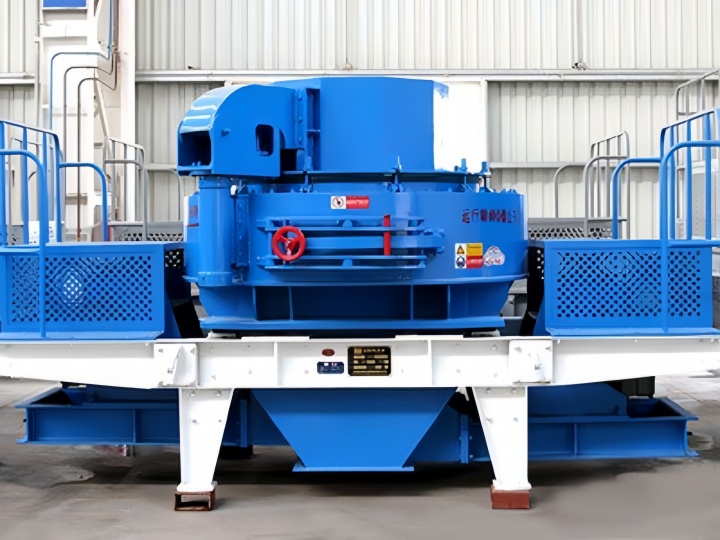
VSI Crusher Video Showcase
How Does the VSI Crusher Actually Work?
The VSI (Vertical Shaft Impact) crusher operates on the principle of rock-on-rock impact crushing rather than compression.
Material enters the crusher through the feed hopper and passes into the center of a high-speed rotor. The rotor, spinning at high velocity, accelerates the material by centrifugal force and discharges it through peripheral openings at speeds of 60-75 meters per second. The material then impacts against the crushing chamber lining—either against a bed of accumulated rock (rock-on-rock) or against metal anvils (rock-on-iron).
This high-velocity impact fractures the rock along its natural fault lines, producing cubical-shaped particles. The crushed material then falls by gravity through the chamber and is discharged from the bottom.
Two Crushing Modes:
Rock-on-Rock: Material impacts against accumulated rock bed—ideal for abrasive materials, lower wear cost
Rock-on-Iron: Material impacts against metal anvils—higher output (10-20% more than rock-on-rock), suitable for less abrasive materials
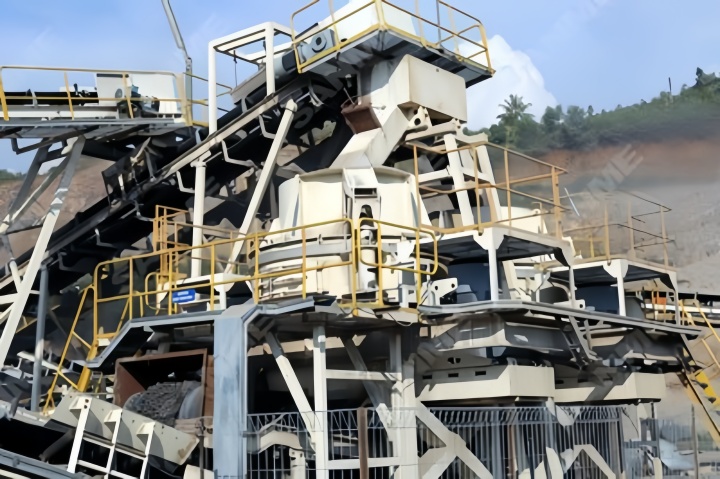
What Are the Appealing Advantages of the VSI Crusher?
VSI crushers are significantly more energy efficient than cone crushers. Studies show that VSI products contain 65% more material smaller than 1mm while consuming less power. Depending on the energy model and final product size, VSI crushing can save 2% to 14% of energy in downstream grinding operations
Superior Product Shape
VSI crushers produce cubical aggregates with flakiness under 10%, making them ideal for high-quality manufactured sand, concrete, and Superpave asphalt applications. Sand forming percentage increases by 20-30% compared to traditional crushing equipment.
Higher Output with Same Power
Under the same power, VSI crushers deliver 30% higher output with stable performance, with maximum throughput reaching up to 520 tons per hour.
Lower Operating Costs
The rock-on-rock crushing principle minimizes wear cost. Operating costs are up to 40% lower than traditional equipment, with consistent product gradation maintained throughout the wear life of the rotor.
Better Energy Efficiency
VSI crushers are significantly more energy-efficient than cone crushers, saving 15-20% of energy in downstream grinding operations, depending on the final product size and energy model.
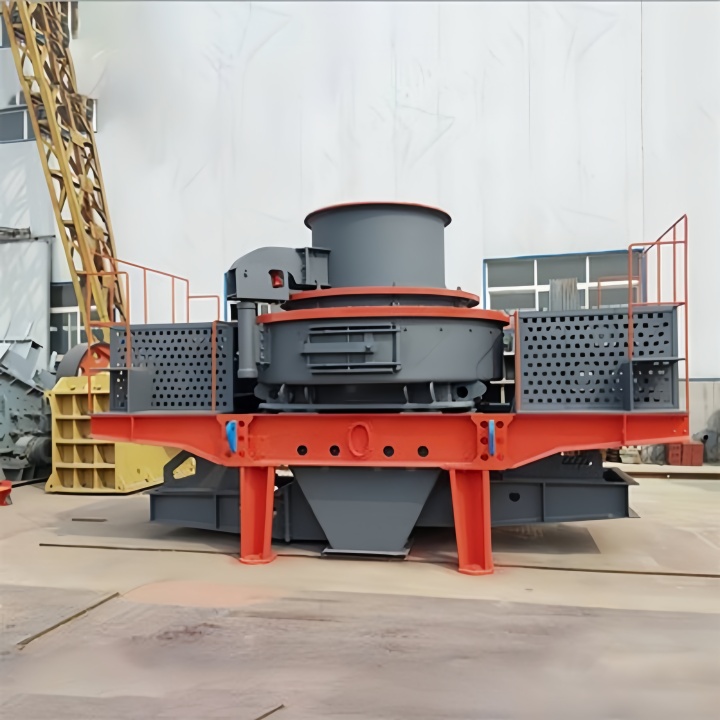
The VSI Crusher Technical Specification Sheet
Product: VSI Crusher / High Efficiency Sand Maker / Fine Crushing Equipment
| Model | Max. Feed Size (mm) | Rotor Speed (r/min) | Capacity (t/h) | Motor Power (kW) | Weight (kg) | Overall Dimensions (L×W×H) (mm) |
| VSI-7611 | <30 (Soft) / <25 (Hard) | 1700-1890 | 60-120 | 110-150 | - | - |
| VSI-8518 | <35 / <30 | 1520-1690 | 100-200 | 180-220 | - | - |
| VSI-9526 | <40 / <35 | 1360-1510 | 150-260 | 264-320 | - | - |
| VSI-1140 | <45 / <40 | 1180-1310 | 225-520 | 400-440 | - | - |
| VSI-1145 | <50 / <45 | 1100-1310 | 250-640 | 400-440 | - | - |
| VSI900 | 40 | 1200-1600 | 100-220 | 2×110 | 9000 | - |
| VSI1145 | 40 | 1050-1300 | 140-300 | 2×160 | 16000 | - |
| VSI1148 | 40 | 1050-1300 | 180-400 | 2×220 | 17000 | - |
Application Notes:
Manufactured Sand Production: All models—VSI is the core equipment for producing high-quality manufactured sand (M-Sand) conforming to standards
Hard Rock Processing (Granite, Basalt): VSI-850 and above—recommend rock-on-rock mode for lower wear cost
Limestone & Medium-Hard Material: VSI-550 to VSI-1000—rock-on-iron mode for higher output (10-20% more)
Mining & Ore Processing: VSI-1000 and VSI-1200—for liberation of ores and producing fine materials for heap leaching
Recycling Applications: VSI-550 to VSI-700—processing glass, ceramics, and construction waste into sand specification
What Do the Various Parameters of the VSI Crusher Mean?
Understanding the key technical parameters helps us judge whether a VSI crusher is suitable for a specific production need. These parameters collectively determine the equipment's processing capacity and application range. The table below lists several core indicators and their significance.
| Parameter Name | What It Means |
| Maximum Feed Size | Refers to the maximum dimension of material the equipment can process. It directly determines the requirements for the upstream crushing process. For example, some models handle materials smaller than 40 mm, while large models can process stones of 80 mm or even larger. |
| Processing Capacity | Refers to the tons of material the equipment can crush per hour under specified operating conditions. This is the core indicator for measuring production output, covering a wide range: from 10 tons per hour for small units to several hundred tons per hour for large-scale equipment. |
| Motor Power | The power of the electric motor that drives rotor rotation, measured in kilowatts (kW). Generally, higher power enables processing harder materials and delivers greater output, yet it also leads to higher energy consumption. |
| Rotor Speed | The number of rotor rotations per minute, a critical factor affecting output particle size and particle shape. Higher rotational speed imparts greater kinetic energy to materials for stronger crushing performance, but also accelerates component wear. |
These parameters are interconnected, and the selection requires a comprehensive balance based on expected capacity, material characteristics, and final product requirements.
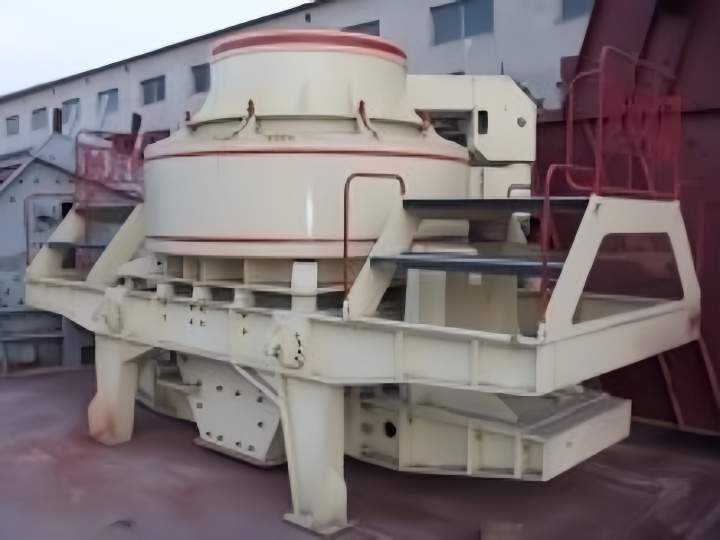
Where Are the Capabilities of the VSI Crusher Applied?
Leveraging its unique advantages, the VSI crusher plays a key role in many fields. From basic manufactured sand production to high-standard aggregate shaping, it provides reliable solutions.
Producing High-Quality Manufactured Sand: With natural sand resources becoming increasingly scarce, the VSI crusher is the primary equipment for producing manufactured sand with good shape and well-graded particle size distribution, widely used in concrete batching plants and dry-mix mortar production lines.
Aggregate Shaping: For aggregates produced from primary crushing, "shaping" them through a VSI crusher can significantly reduce the content of flat and elongated particles, improving aggregate quality to meet the stringent requirements of high-grade highways, bridges, and other projects.
Processing Medium-Hard and Hard Rocks: It can effectively handle various materials with different hardness and abrasiveness, such as limestone, granite, basalt, and river pebbles. Depending on the material properties, different crushing chamber types, such as "rock-on-rock" or "rock-on-iron," can be selected for optimal results.
Special Material Processing: Besides rocks, the VSI crusher is also used for processing some special materials, such as glass, slag, and cement clinker, demonstrating good material adaptability.
Why Choose Our VSI Crusher?
Choosing equipment is not just about selecting a product; it is also about choosing a long-term partner. Our focus on product details and user needs constitutes the unique value of our equipment.
Our VSI crusher employs mature technology and proven designs. The rotor structure is optimized to ensure smooth material flow and efficient energy utilization. Key components such as the distribution plate and wear-resistant anvils are made of high-quality materials, aiming to balance service life and maintenance convenience. We understand that the stability of equipment operation and predictable maintenance cycles are crucial for production continuity and cost control.
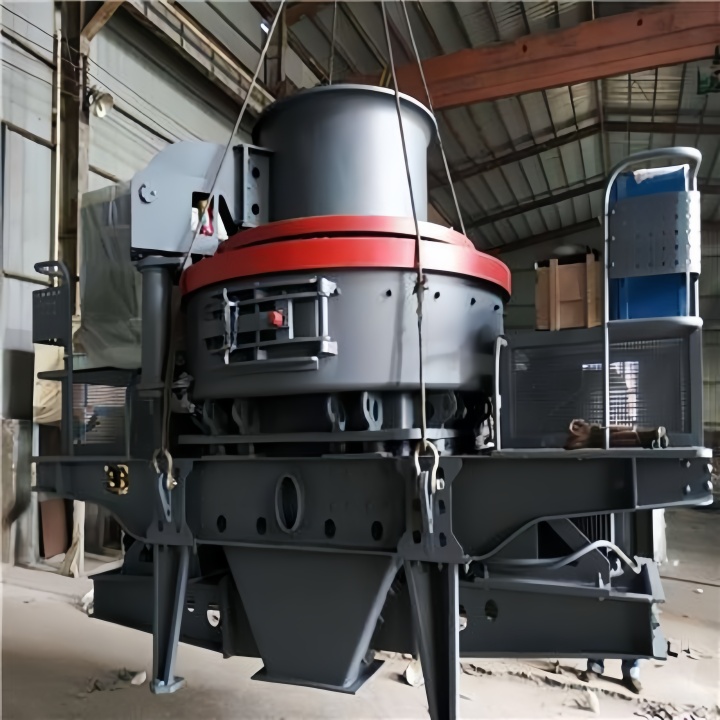
Can We Provide Customized VSI Crusher Solutions for Your Working Conditions?
The answer is yes. We understand that every customer's material, site, and output requirements are unique. Therefore, we offer not just standard products but personalized, integrated solutions.
Selection Based on Material Properties: For highly abrasive materials, we can recommend configurations with specialized wear-resistant materials and "rock-on-rock" crushing chambers. For medium-hardness materials, a "rock-on-iron" solution that focuses more on capacity can be chosen.
Design Based on Site Layout: Whether your site is a fixed plant or requires mobile operation, we can provide corresponding equipment layout suggestions and installation plans.
Matching Based on Output Requirements: We can accurately calculate and recommend the appropriate model based on your target output and provide a complete process solution from feeding and crushing to screening.
Frequently Asked Questions
What are the main differences between a VSI crusher and a jaw crusher or cone crusher?
Jaw crushers and cone crushers mainly crush through compression, suitable for coarse and medium crushing, but produce a relatively poorer particle shape. The VSI crusher, however, uses the impact principle, mainly for fine crushing and shaping, producing a better-shaped final product.
Which is better, "rock-on-rock" or "rock-on-iron"?
There is no absolute answer. "Rock-on-rock" is suitable for highly abrasive materials, reducing iron contamination but with slightly lower efficiency. "Rock-on-iron" is suitable for medium-hardness materials, offering higher crushing efficiency but with greater wear parts consumption. The choice depends on your material properties and production goals.
How can we effectively reduce the wear parts consumption of a VSI crusher?
Properly controlling the feed size, maintaining continuous and uniform feeding, and optimizing the rotor speed according to material characteristics are key to reducing wear. At the same time, choosing reliable quality spare parts is also crucial.
Conclusion
So here is the bottom line. The VSI crusher really stands out because of that rock-on-rock crushing action. It gives you sand and aggregates with great shape, and it does not cost a fortune to run. Whether you are working with soft stone or hard rock, whether you need coarse material or fine sand, this machine adapts to what you are doing. Choosing the right crusher comes down to knowing your material, your target output, and what your final product needs to look like.
We do not just hand you a machine and walk away. We take the time to understand your actual site conditions, offer practical recommendations, and tailor a solution that fits your setup. If you are unsure which configuration works best for your project, or if you simply want to explore your options, we are always here to help. Feel free to get in touch—we would be happy to share our expertise and work with you to keep your production running smoothly and reliably, day in and day out.