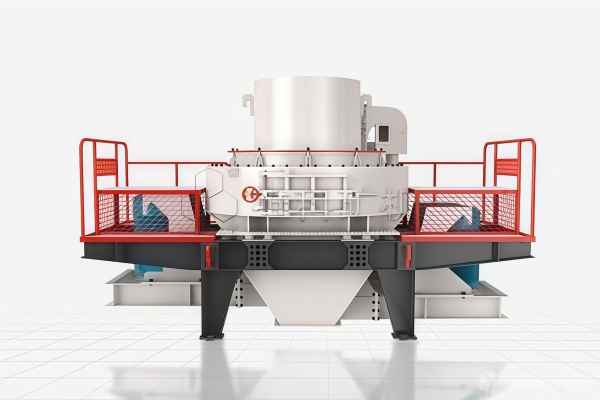
VSI Crusher Maintenance Guide: 7 Essential Tips to Extend Wear Parts Life
Saturday August-22 2026 15:48:39
Unlike compression-style crushers such as jaws and cones, a VSI Crusher relies on continuous, high-speed impact to fracture material. This means VSI Crusher wear occurs faster—rotor tips face extreme abrasion at velocities up to 80 m/s as particles are accelerated and thrown against the crushing chamber.
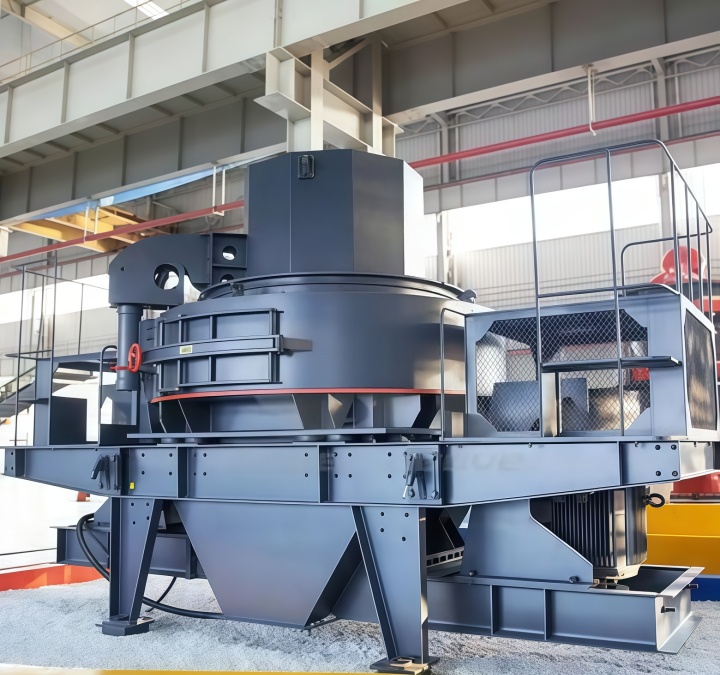
Superior Industries service technician Kyle Ruschmeyer has witnessed the consequences of neglected maintenance firsthand: "I've seen material wear right through the anvils and start cutting into the crusher body itself." A Texas quarry that upgraded to the B7150SE heavy-duty rotor tip system reduced wear part changes by 45% , saving $120,000 annually. The following seven practices are drawn from real-world field data across multiple sites.
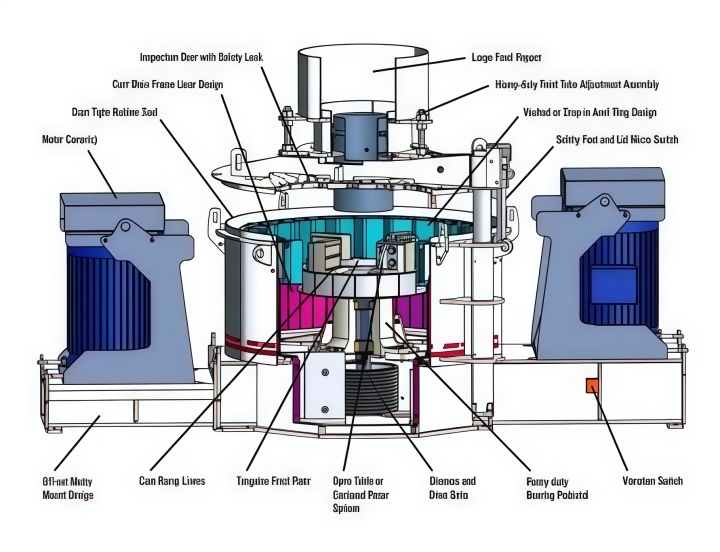
Inspect before every shift
Well-organized operations inspect their equipment at the start or end of each shift. Key areas include rotor tips for rounding, chipping, or excessive wear; table liners for uneven patterns, cracks, or thinning; and the feed tube and distributor plate for uneven wear.
In high-abrasion applications such as manufactured sand or quartzite crushing, VSI Crusher inspections may be required every four hours. Catching issues early prevents minor problems from escalating into major repairs—and more importantly, prevents unsafe operating conditions that could endanger personnel or equipment.
Replace tips in matched sets—and rotate when possible
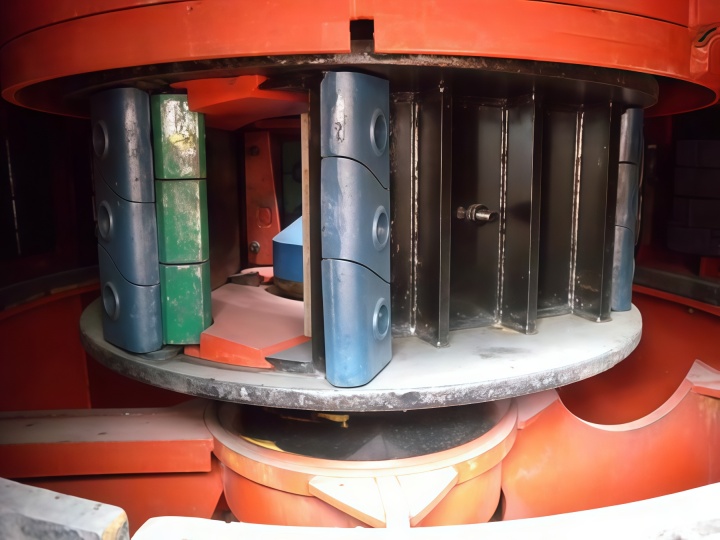
Replacing worn components without balancing inevitably leads to vibration. Always replace opposing parts together to ensure even weight distribution. Metso's Orange Series rotors supply all wear parts as weight-matched sets to prevent VSI Crusher imbalance. Modern quick-change designs have reduced tip replacement time from 90 to 20 minutes.
A widely used practice to extend wear part life is flipping or rotating rotor tips when they show wear on one edge. Many VSI Crusher tips are designed with symmetrical profiles, allowing operators to flip them to expose a fresh edge before replacement becomes necessary. This simple step can effectively double the usable life of each tip. However, when rotating or flipping tips on a VSI Crusher, always rotate the entire set uniformly—never flip only one side, as this creates weight imbalance and uneven wear patterns that lead to vibration and premature bearing failure.
Control feed size strictly
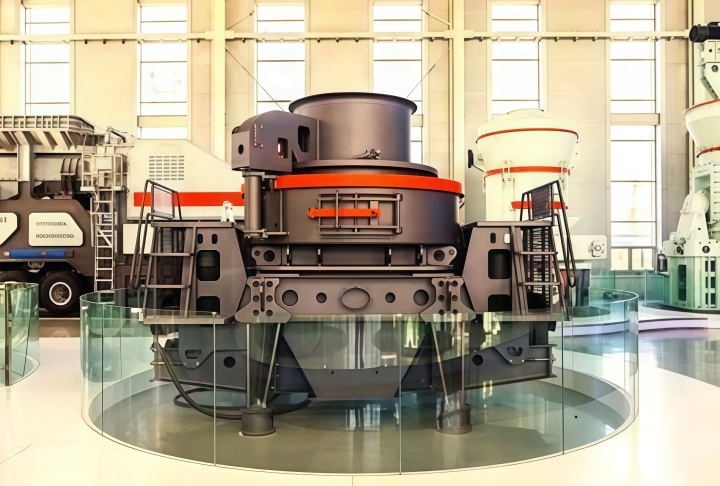
Never feed material larger than the maximum recommended size, typically 40-50mm. Oversized rocks can crack carbide tips instantly upon impact, while unstable or insufficient feed rates prevent the formation of a protective material layer inside the rotor.
If oversize feed continues, the VSI Crusher rotor suffers uneven impact loads, which gradually lead to rotor imbalance and, in severe cases, structural damage to the rotor body and spindle. Beyond equipment damage, a structurally compromised VSI Crusher rotor poses serious safety risks during operation. A VSI Crusher with stable, compliant feed conditions wears evenly and delivers longer part life. Standard steel tips processing granite may wear out in just 40-60 hours.

Monitor lubrication daily
VSI Crusher high-speed operation places substantial load on bearings, making proper lubrication critical to preventing premature wear, overheating, and catastrophic failure. Daily checks should include oil levels, flow meters, and signs of water contamination, metal shavings, or sludge.
Rising oil temperature signals friction or cooling system issues. Bearing temperature should not exceed 70°C. Insufficient lubrication causes rapid metal-to-metal contact and bearing seizure; over-lubrication generates excessive internal heat that degrades oil quality and damages seals. Both conditions must be avoided.
Track operating parameters
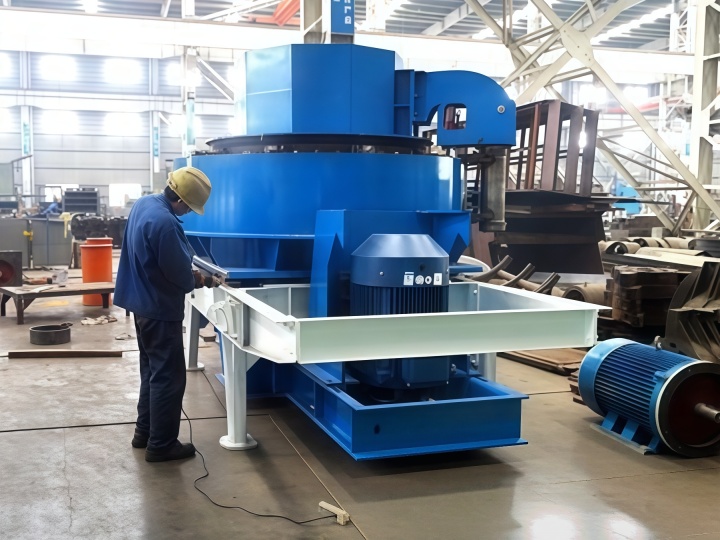
Recording VSI Crusher rotor speed, feed rate, motor current, and vibration values daily enables predictive maintenance. As rotor tips wear, motor current gradually increases due to reduced efficiency. When imbalance develops, vibration values show a clear upward trend—if left unaddressed, this vibration accelerates bearing wear, spindle fatigue, and can eventually crack the rotor housing.
Metso's Orange Series rotor has been tested in real quarry operations, delivering 30-50% longer tip life. Predictive VSI Crusher maintenance through parameter tracking is more cost-effective than reactive repairs after equipment failure.
Keep feed centered
Uneven feed distribution causes one side of the VSI Crusher rotor to wear faster than the other. This uneven wear creates a weight differential across the rotor, quickly destroying dynamic balance. The resulting vibration not only shortens tip life but also accelerates bearing and spindle wear—and in extreme cases, can cause catastrophic rotor failure that endangers nearby workers.
Check the feed tube and distributor plate weekly for signs of uneven wear. When the distributor plate shows a pronounced wear pocket on one side or the feed tube outlet becomes tilted, immediate replacement is required. Keeping VSI Crusher feed centered requires only a caliper and a few minutes of inspection—and it is a cost-effective way to extend wear part life.
Build a wear record for each material
There is no single replacement interval that fits every application. Wear life depends on material abrasiveness, feed size, rotor speed, and operating conditions. Record tip weight at installation, remaining thickness at change-out, and running hours for each material type.
After two to three replacement cycles, you can establish an accurate VSI Crusher replacement schedule tailored to your specific materials. Standard steel tips in basalt last only 200-400 hours, while carbide solutions can exceed 1,500 hours.

Understanding wear patterns
Observing wear patterns on removed components provides valuable diagnostic information. For example, streaming wear—characterized by deep grooves aligned with the direction of material flow—typically indicates abrasive material passing through the rotor at high velocity. Impact wear, showing as rounded or chipped edges, suggests oversized feed or improper rotor speed.
By identifying these patterns during each VSI Crusher inspection, operators can trace problems back to their root causes—feed issues, speed settings, or material handling problems—rather than simply replacing parts and repeating the same mistakes.
Wear life by material type
| Material | Feed Size | Carbide Tip Life | Maintenance Focus |
| Granite | 25-40mm | 1,200-2,000h | Inspect every 4h, maintain spare stock |
| Basalt | 20-35mm | 1,200-1,500h | Monitor rotor balance closely |
| River stone | 30-45mm | 550-720h | Control maximum feed size |
| Limestone | 35-50mm | 1,200h+ | Watch anvil wear patterns |
Rotor tips typically account for 25-35% of total wear part expenditure. A cost comparison illustrates the value: steel tips cost $5,000 over 50,000 tons ($0.10/ton), while carbide tips cost $8,000 over 250,000 tons ($0.032/ton)—a clear advantage for the higher-quality option over the long run.
Quick troubleshooting guide
When diagnosing VSI Crusher issues, approach the problem systematically rather than replacing components one by one. Start with vibration data, then inspect rotor tips, then check feed distribution—each step eliminates one variable and narrows down the root cause.
| Symptom | Most Likely Cause | Recommended Action |
| Rising vibration | Uneven tip wear or mixed old/new tips | Check wear consistency, verify weight matching |
| Oil temperature above 70 °C | Low oil level or contamination | Inspect oil level and quality, check cooling system |
| Capacity drop exceeding 15% | Worn tips or blocked feed tube | Measure remaining tip thickness, clear feed tube |
| Coarser product gradation | Worn anvils or liners | Measure remaining anvil thickness |
Daily and weekly inspection checklist
| Frequency | Inspection Item | Recommended Action |
| Daily | Rotor tips: rounding, chipping, cracking | Replace if worn beyond 30-40% of original |
| Daily | Oil level, temperature, and contamination | Top up or change oil; check cooling system |
| Daily | Vibration levels and motor current | Compare with baseline; investigate changes |
| Weekly | Feed tube and distributor plate wear | Measure wall thickness; check centered discharge |
| Weekly | Anvils or table liners for grooving | Measure remaining thickness; plan replacement |
FAQs
Should VSI Crusher tips be replaced by time or wear amount?
Always by wear amount. Use calipers to measure the remaining thickness at the thinnest point. Replace when 30-40% of the material has been lost. All tips on the same rotor should remain within 2mm of each other—exceeding this indicates feed distribution or rotor problems.
When should the VSI Crusher feed tube be replaced?
When the outlet wall thickness has been reduced by more than 50% of the original. A more practical indicator: if material no longer drops vertically into the rotor center and shows visible deflection, the VSI Crusher rotor is already experiencing uneven impact and requires immediate feed tube replacement.
Why does VSI Crusher vibration increase after installing new tips?
The common cause is failing to clean mating surfaces of weld spatter and burrs, resulting in point contact rather than full surface contact. Metso's official guide states all mating surfaces must be free of any high spots. The solution is to disassemble, clean thoroughly, and retighten in the correct sequence with a torque wrench.
Can regular gear oil substitute for VSI Crusher bearing oil?
No. VSI Crusher bearings operate at speeds and loads beyond standard gearboxes, requiring extreme-pressure and high-temperature oxidation resistance. Regular gear oil lacks sufficient film strength, leading to metal-to-metal contact and bearing failure within hours. Use the manufacturer-specified grade or an equivalent high-performance lubricant.
Closing
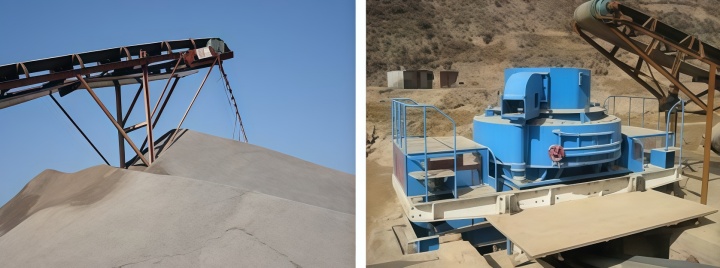
Effective VSI Crusher maintenance rests on seven fundamentals: pre-shift inspections, matched tip replacement with flipping/rotation where possible, strict feed size control, daily lubrication monitoring, operating parameter tracking, centered feed distribution, and material-specific wear records. A Texas quarry saved $120,000 annually by upgrading its wear parts. Standard steel tips in granite last only 40-60 hours; carbide solutions can exceed 1,500 hours. These practices are drawn from real field data across multiple sites.
If your operations encounter VSI Crusher wear issues not covered in this guide, we welcome the opportunity to discuss your specific conditions and challenges.