Jaw Crusher vs Impact Crusher vs Cone Crusher: Which Stone Crusher Machine Do You Need?
Wednesday August-19 2026 16:17:24
You bought a crusher, and three months into production, the blow bars wore through. Replacing them cost you 80,000, and two days of downtime lost 5,000 tons of output. Where did things go wrong? It wasn't poor equipment quality—it was using an impact crusher to crush granite.
Jaw crushers, impact crushers, and cone crushers are the three mainstream equipment types on the market. Many investors make decisions based solely on price, only to find after startup that the equipment doesn't match the material—either excessive wear leads to frequent shutdowns, or the finished product shape doesn't meet specifications and requires re-processing. Each type of Stone Crusher Machine has its own working principle and application boundaries.
Our factory has many years of experience in the R&D and manufacturing of crushing equipment. Combining global project feedback and publicly available industry cases, we help you clarify the essential differences among the three equipment types. Before selecting, don't forget to consider mobile versus stationary—if your project lasts more than five years and the material source is fixed, stationary is more cost-effective; if you have multiple sites or need rapid relocation, mobile is more suitable.
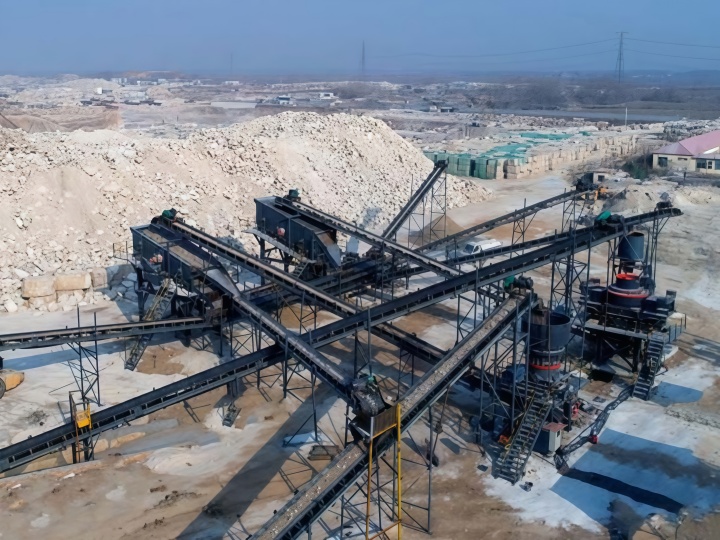
Quick Selection:
Coarse crushing of large hard rock → Jaw Crusher
Medium/fine crushing of hard rock with precision requirements → Cone Crusher
Medium-hard materials with shape requirements → Impact Crusher
Core Parameter Comparison of the Three Stone Crusher Machines
| Comparison Dimension | Jaw Crusher | Impact Crusher | Cone Crusher |
|---|---|---|---|
| Primary Crushing Stage | Coarse | Medium or Fine | Medium or Fine |
| Applicable Material Hardness | All hardness levels | Medium-hard and below | High hardness, highly abrasive |
| Typical Feed Size | Up to 1200mm | Within 500mm | Requires pre-crushing, within 300mm |
| Crushing Ratio | Up to 6:1 | Up to 12:1 | 3-5:1 |
| Typical Capacity | 50-1500+ t/h | 50-800+ t/h | 50-1000+ t/h |
| Finished Flakiness Content | 15%-25% | Below 5% | 8%-12% |
| Wear Cost | Lowest | Highest when processing hard rock | Medium |
| Cost per Ton | Low | Low-medium for soft rock | Medium |
What Materials Is a Jaw Crusher Suitable For: The Foundation Stone Crusher Machine for Primary Crushing
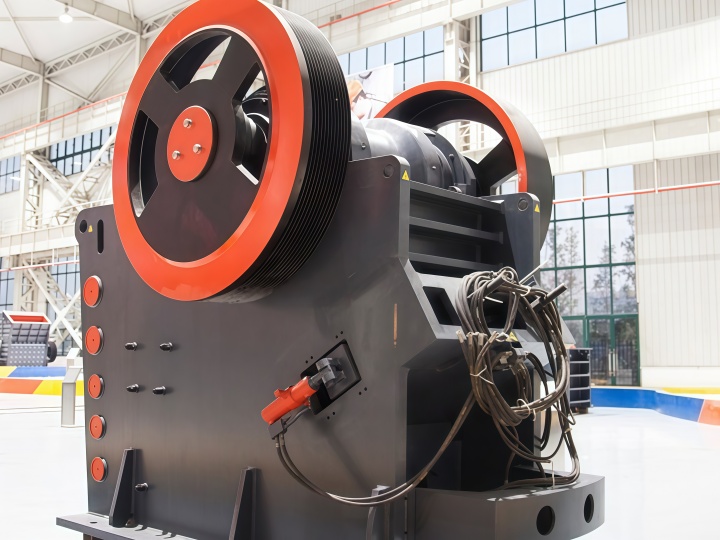
The blasted rock from a quarry—pieces over a meter in size—can be directly fed into a jaw crusher, and no other Stone Crusher Machine can handle that. This equipment relies on two jaw plates to compress and crush the rock. Its simple design means there's almost nothing that can go wrong, and a maintenance worker can replace a set of jaw plates in half a day.
The CalPortland Company's aggregate plant in Atascadero, California, processed blue and brown granite. Their original jaw crusher could only handle material below 18 inches, causing frequent blockages and limiting operation to three or four days a week. After replacing it with a McLanahan 3254H Universal jaw crusher, the feed capacity increased to 24 inches, and throughput doubled from 150 t/h to over 300 t/h. Installation took only three days, and maintenance work was minimal. According to a Pit & Quarry magazine report from May 2026, this equipment has become a key asset for CalPortland's long-term development. Industry reference: small jaw crushers range from approximately $15,000 to $50,000.
When Is a Jaw Crusher Not Suitable
If you have strict requirements for finished particle shape—for example, supplying highway surface layers or high-grade concrete aggregates—a jaw crusher alone may not suffice. Its compression crushing principle results in a higher percentage of flaky particles, typically between 15% and 25%, which may not meet quality acceptance standards for certain projects. Therefore, if particle shape is a critical indicator, this Stone Crusher Machine alone often cannot meet the requirement.
When Is an Impact Crusher More Cost-Effective: The Shaping Expert for Particle Shape
An impact crusher processing limestone can achieve 800 hours of blow bar life. The same Stone Crusher Machine used for granite will require replacement after just 200 hours—blow bar life decreases by 75%, and the cost per ton rises from 2.8 to 7.5.
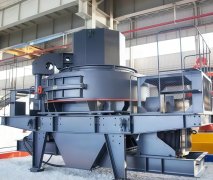
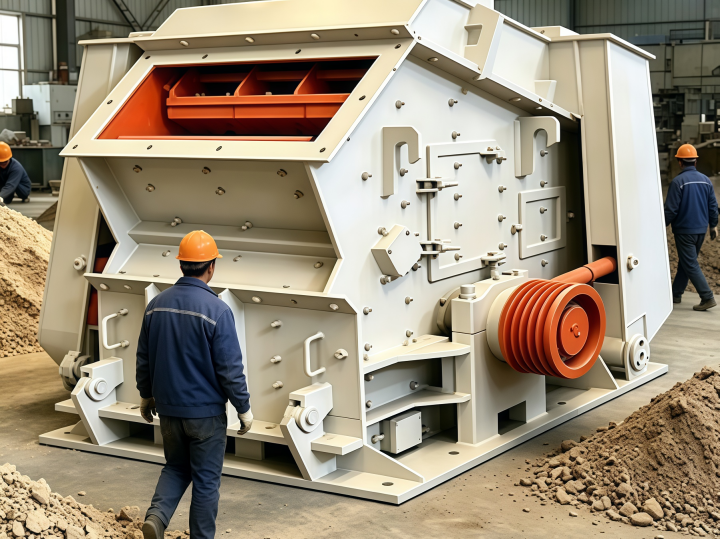
This equipment uses a high-speed rotor to throw material against impact plates, breaking it through repeated impacts. Its crushing ratio can reach 12:1, and the flakiness content of the finished product can be controlled below 5%. The particles are rounded and well-graded, making it the preferred equipment for highway surface layers and bridge concrete.
Mohawk Valley Mining Company in the U.S., located on the Alabama-Florida border, processes challenging limestone and must meet different aggregate specifications for both states. They selected a Kleemann MOBIREX MR 110i EVO2 mobile impact crusher with two screening units to produce materials meeting each state's specifications. The equipment offers low fuel consumption and simple operation, as reported by Agg-Net in 2025. The Oetelshofen quarry in Germany has been using a Kleemann MR 130i PRO impact crusher since 2022, with a feed size of 600mm and a single unit producing 0-45mm final product, replacing the previous two-unit setup of crusher plus screener, with significantly reduced fuel consumption, as reported by AT Minerals in 2023. Industry reference: impact crushers range from approximately $25,000 to $60,000.
When Is an Impact Crusher Not Suitable
When processing highly abrasive hard rocks such as granite, basalt, or quartzite with a silica content exceeding 15%, blow bar wear accelerates rapidly, and frequent replacement of wear parts will drive up cost per ton. The harder the material, the higher the operating cost of this Stone Crusher Machine.
What Ores Is a Cone Crusher Suitable For: The Precision Advantage in Hard Rock Fine Crushing
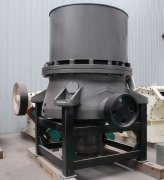
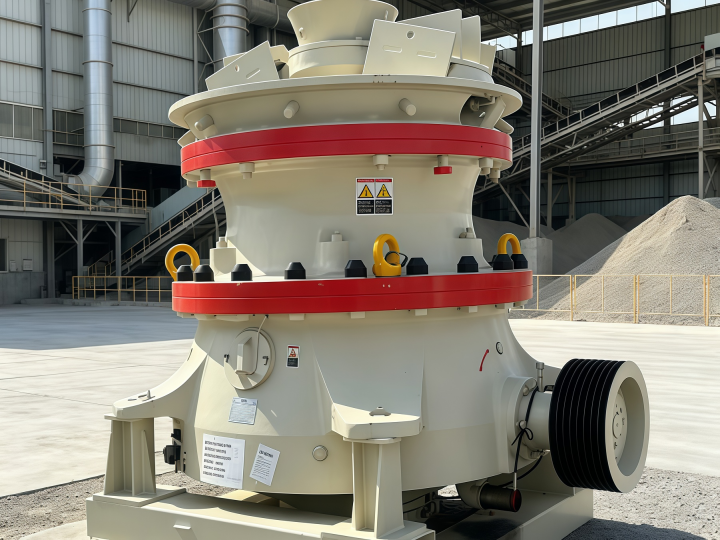
The cone crusher works differently. Instead of impacting, it compresses—the mantle gyrates within the concave, crushing the material between them in layers. The finished product has a narrow particle size distribution and minimal over-crushing, with a crushing ratio of 3-5:1.
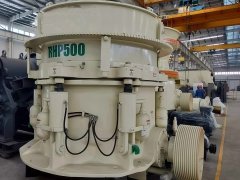
The Minas-Rio iron ore project in Brazil is a benchmark case for cone crusher applications. Anglo American uses Nordberg HP500 cone crushers at this mine to process iron ore. In late 2024 to early 2025, Metso and Anglo American conducted field tests of MX wear liners, confirming that the MX liners extended service life by 100% compared to traditional liners, significantly reduced maintenance stoppages, improved equipment availability, and lowered CO₂ emissions related to backing material consumption by 58%. This achievement earned Metso both the "Optimization Highlight" award and the overall championship in Anglo American's supplier evaluation, as officially released by Metso in August 2026.
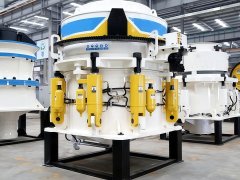
In China, the Benxi Iron and Steel Group replaced an old spring cone crusher PYD1650 with a multi-cylinder hydraulic cone crusher HPT300 in the fine crushing stage of iron ore processing. The discharge size decreased to below 12mm, with a throughput of 145 t/h. Industry reference: cone crushers start at approximately $30,000. For more on crushing equipment maintenance cost analysis, please refer to another detailed guide on our site.
When Is a Cone Crusher Not Suitable
Feed size requirements are strict—typically limited to 300mm or less, requiring a jaw crusher or feeder in front. It cannot directly handle large run-of-mine material. The equipment itself is precision-engineered, and maintenance of the hydraulic and lubrication systems requires skilled technicians. Without a jaw crusher to prepare the feed, this Stone Crusher Machine simply cannot function properly.
How to Calculate Total Lifecycle Cost Without Losing Money—A Concrete Example
When purchasing any Stone Crusher Machine, you cannot look only at the purchase price. Let's run a specific calculation: processing granite with an annual output of 500,000 tons.
Option A: Jaw crusher + impact crusher. The jaw crusher costs about $40,000, and the impact crusher about $50,000, totaling $90,000 in equipment investment. However, when processing granite with the impact crusher, blow bars need replacement every 200 hours. A set of blow bars costs about $6,000, and with about 20 replacements per year, the annual blow bar cost alone is $120,000. Total three-year cost of ownership: equipment $90,000 + blow bars $360,000 + electricity and maintenance $180,000 = $630,000.
Option B: Jaw crusher + cone crusher. The jaw crusher costs $40,000, and the cone crusher about $100,000, totaling $140,000 in equipment investment. Cone crusher wear parts are replaced every 2,000 hours, with a set costing about $20,000. With about 4 replacements per year, annual wear parts cost is $80,000. Total three-year cost of ownership: equipment $140,000 + wear parts $240,000 + electricity and maintenance $150,000 = $530,000.
Over three years, Option B has $50,000 more in equipment investment but $100,000 lower total cost of ownership. That's the logic of lifecycle costing—buying cheaper can end up costing more in use.
The Three Most Common Selection Mistakes
1. Using an impact crusher for granite—blow bar life drops 75%, cost per ton jumps from 2.8 to 7.5
2. Looking only at purchase price, not total lifecycle cost—could cost you over $100,000 extra over three years
3. Ordering without testing the material first—one hardness grade off, and the entire selection is wrong
Global Market Data
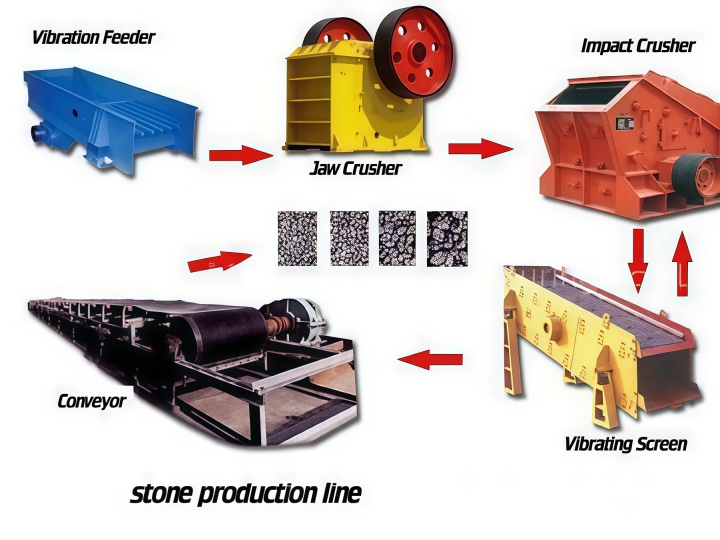
The global crushing equipment market was valued at approximately $6.2 billion in 2025 and is projected to reach $11.1 billion by 2032, with a compound annual growth rate of about 8.5%. Jaw crushers hold the largest market share, accounting for approximately 46%-50%. This growth trend reflects sustained strong demand for Stone Crusher Machines from global infrastructure construction and mining operations. For more on planning a complete crushing production line configuration, please refer to another detailed guide on our site.
Quick Selection Checklist
Step 1: Material testing. For limestone with hardness below 5 and silica content below 10%, an impact crusher is a recommended choice. For granite with hardness above 7 and silica content exceeding 15%, the recommended route is jaw crusher plus cone crusher. For more on specific methods of abrasiveness testing, please refer to another detailed guide on our site.
Step 2: Determine project duration. For fixed material sources lasting more than five years, choose stationary equipment. For multi-site or short-term projects, choose mobile equipment.
Step 3: Calculate total lifecycle cost. Apply the three-year calculation method above—plug in your output, material, local electricity rates, and spare parts prices to arrive at a true total cost of ownership.
Closing Remarks
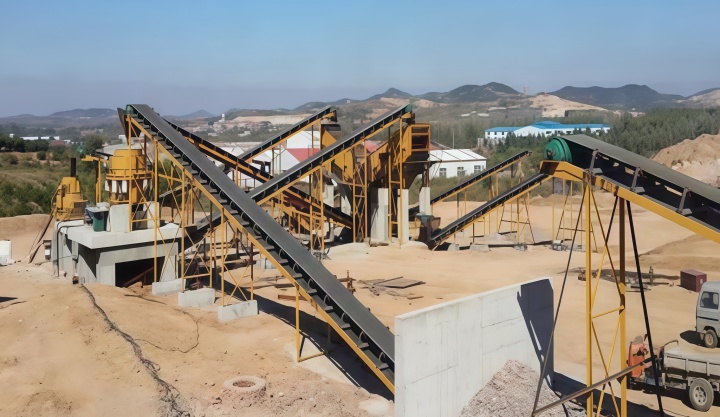
Choosing a crusher is not about picking the best among three options—it's about laying out your material, output, and budget, and seeing which option gets eliminated first. Jaw crusher for primary, impact crusher for shaping, cone crusher for hard rock finishing—the key is not which is best, but which best fits your specific operating conditions. Do the material test, calculate total lifecycle cost, and follow these three steps, and you won't go wrong.
FAQ
Q: Is it enough to look only at the quoted price when selecting a Stone Crusher Machine?
A: No. Wear parts and electricity are the major long-term costs. You must calculate total lifecycle cost—a three-year calculation can reveal a difference of hundreds of thousands of dollars.
Q: How much does finished particle shape affect concrete quality?
A: For every 5% increase in flakiness content, concrete slump loss accelerates, and strength may drop by 3 to 5 MPa, directly affecting project acceptance.