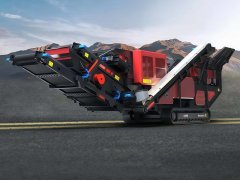
Mobile Jaw Crusher Price 2026: How Much Does a Portable Jaw Crusher Cost?
Friday August-21 2026 11:52:30
In 2026, Mobile Jaw Crusher prices range from $100,000 to over $400,000, with models of similar configurations often quoting prices that differ by as much as double. The SE‑650D mini model has an FOB China factory price of approximately $100,000 to $140,000, while the SE‑1160 heavy‑duty model comes in at roughly $240,000 to $300,000.
Why is there such a large price gap between machines that appear similar? This article draws on global public pricing data from the first quarter of 2026 and actual factory production experience to systematically break down the cost structure and purchasing considerations for this equipment.
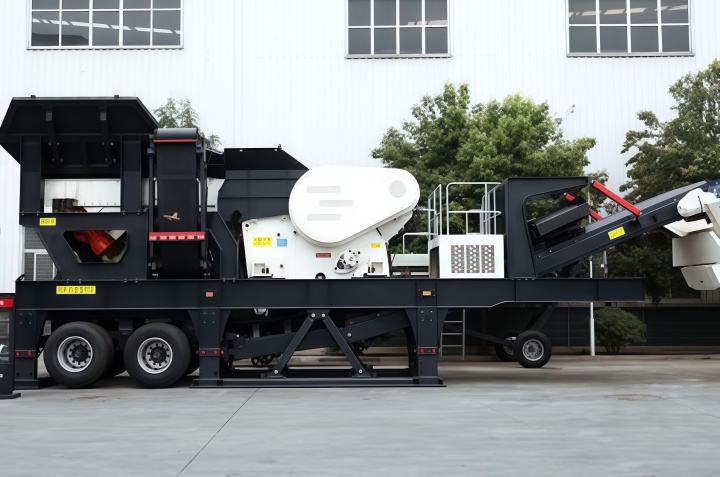
2026 Mobile Jaw Crusher Price Ranges and Brand Positioning Differences
The following reference prices are compiled from public quotations in the first quarter of 2026, with data sourced from the SUHMAN 2026 public price list, the CFTC equipment budget guide, and sales platforms including Machinery Trader and Frontline Machinery.
| Chinese Manufacturer Model | Capacity tons/hour | FOB China Price USD 10,000 | Application Scenario |
|---|---|---|---|
| Mini Grade e.g. SE‑650D | 50‑150 | 10‑18 | Urban construction waste, small infrastructure |
| Standard Grade e.g. SE‑1060 | 120‑250 | 17‑35 | Medium quarries, road construction |
| Heavy Grade e.g. SE‑1160 | 250‑450 | 24‑65 | Large mines, aggregate production |
| European & American Brand Model | Capacity tons/hour | European Market Price USD 10,000 | Application Scenario |
|---|---|---|---|
| Sandvik QJ241 | ~200 | ~12 | Small to medium quarries |
| Kleemann MC110i EVO2 | ~250 | ~31.6 | Medium quarries |
| Cedarapids JW42 | ~350 | ~43.7 | Large aggregate production |
For models with the same specifications, European brands are typically priced 30% to 50% higher than their Chinese counterparts. Landed prices in North America, Europe, and Australia are also affected by ocean freight and import duties, usually running 18% to 35% above FOB factory prices. The above figures are equipment reference only; actual transaction prices vary based on configuration, power system, and after‑sales service terms.
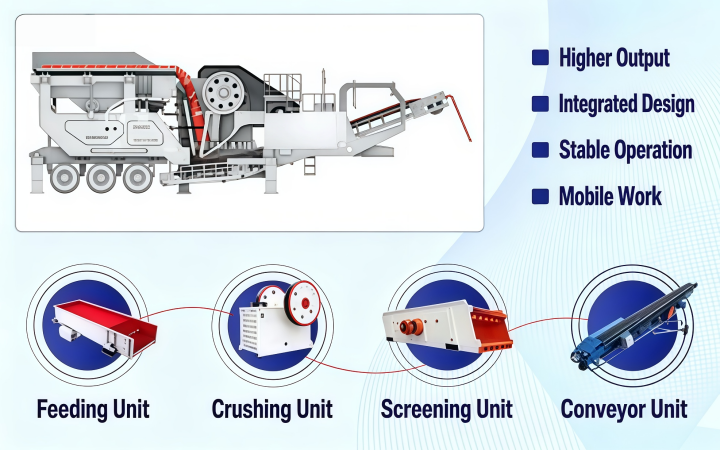
Five Core Variables Affecting Mobile Jaw Crusher Price
From a factory production perspective, the final quotation for a Mobile Jaw Crusher is influenced by the following five core variables.
Production capacity affects the base material cost of the equipment. Between a 50‑ton‑per‑hour model and a 300‑ton‑per‑hour model, the difference in steel frame material alone is more than threefold, representing a hard cost that no brand can avoid.
Power system configuration impacts the overall complexity of the unit. The single‑power version has a simpler structure, requiring only a motor and control cabinet. The dual‑power version requires an integrated diesel generator set, adding $30,000 to $80,000 to the total equipment cost. Based on our tracking statistics for units already sold, customers who chose the dual‑power configuration experienced average equipment availability rates more than 20% higher than those with single‑power versions when operating in remote mining areas.
Undercarriage type involves different levels of manufacturing complexity. Wheeled models have a relatively simple chassis structure and can be towed by tractor trailer for relocation. Tracked models require independently designed hydraulic drive and steering systems, with manufacturing costs 22% to 30% higher. For projects requiring more than two relocations per month, the savings in trailer rental and lifting costs from a tracked model are enough to offset this price difference within one year.
Control system and core component brands also carry a price premium. For the same PLC controller, the procurement cost difference between international brands and domestic alternatives can be severalfold. Upgrading the motor from a standard brand to Siemens or ABB adds 5% to 12% to the total equipment cost.
Warranty terms represent a cost reserve built into the price. Suppliers offering a two‑year warranty and 48‑hour spare parts delivery typically price their equipment 6% to 10% higher. For projects running more than 1,500 hours per year, this additional investment often pays for itself through reduced downtime losses.
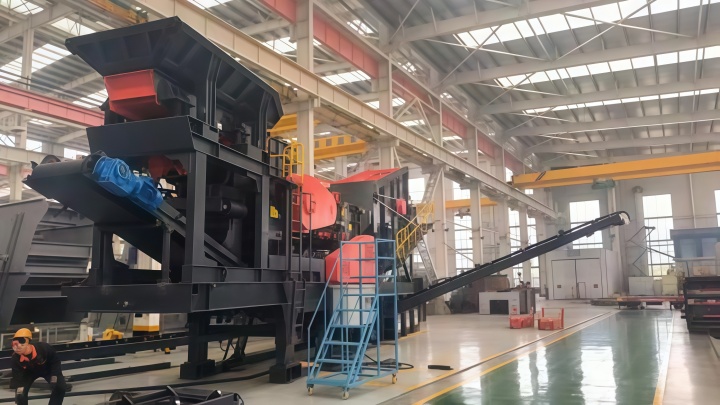
How to Identify Questionably Low Mobile Jaw Crusher Quotes?
When faced with a quote that is notably below the market average, buyers can quickly assess the risks from the following three angles.
Request factory site photos and production line videos from the supplier to verify actual manufacturing capabilities. Many unusually low quotes come from trading companies rather than factories, where intermediaries mark up prices without adding substantial value.
Ask for actual operational data for the specific model under similar working conditions, including real production capacity, fuel consumption, and wear parts service life, rather than relying solely on brochure specifications.
Confirm the specific brands and models of core components listed in the quotation, including the engine, hydraulic system, control system, and jaw plate material. A Mobile Jaw Crusher that can operate reliably has a clear lower bound on manufacturing cost. An unusually low price typically means compromises have been made in areas that are not immediately visible, such as using thinner steel plates, generic hydraulic components, or refurbished parts.
Five Essential Checks When Purchasing a Mobile Jaw Crusher
The following five areas are frequently overlooked during the inquiry stage, yet they are critical to making a sound decision.
Clarify material data and production requirements before asking for quotes. With three key data points—material compressive strength, required tons per hour, and target finished particle size—suppliers can provide a targeted quotation that actually fits your needs.
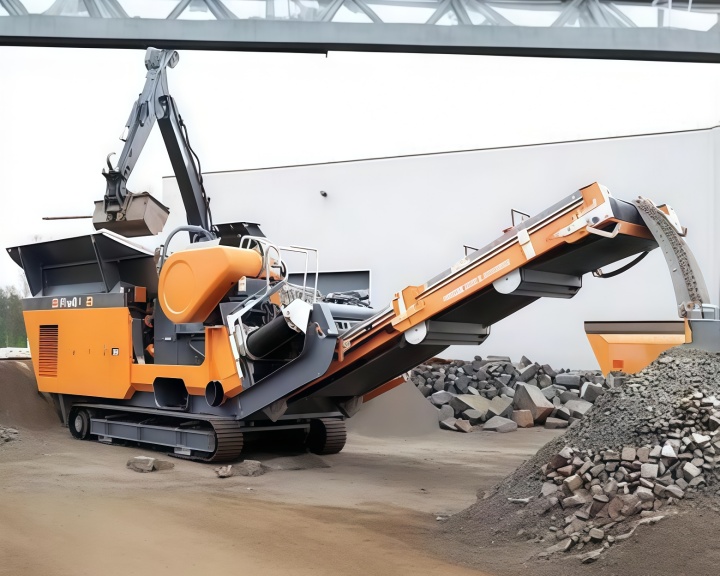
Compare prices based on total lifecycle cost.A Mobile Jaw Crusher typically carries a 30% to 70% price premium over fixed equipment of the same capacity, but it eliminates foundation construction and installation costs, saving $10,000 to $30,000 on foundation work alone.
Choose the undercarriage type based on the job site.For smooth terrain and short‑distance relocations, a wheeled model offers better cost‑effectiveness. For muddy slopes and rough terrain, a tracked model is the necessary choice.
Confirm spare parts availability and after‑sales service details. Are the jaw plates and bearings for this model available locally? How long does a full set of jaw plate replacement take? Upgrading the jaw plate material from Mn13 to Mn18 extends service life by 20% to 40%.
Clarify what the quotation includes. Some suppliers quote an ex‑works factory price, while others quote a landed cost including ocean freight and duties, with the difference reaching up to 30%. Upon receiving a quote, check line by line whether it covers the motor, control cabinet, hydraulic oil, and installation guidance services.
2026 Global Mobile Jaw Crusher Market Trends and Procurement Timing
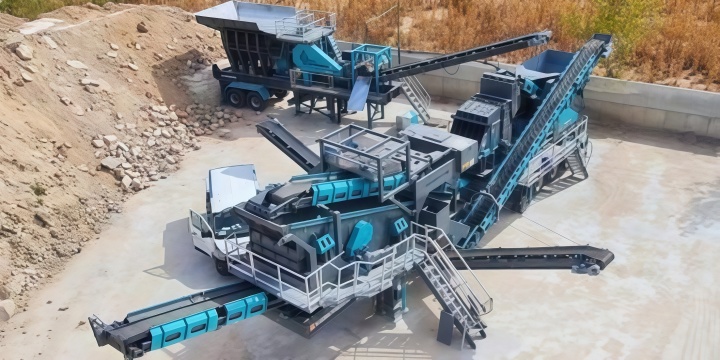
According to market reports from Grand View Research and QYResearch, the global mobile crushing and screening equipment market is expected to reach $4.4 billion in 2026 and $5.7 billion by 2033, representing a compound annual growth rate of 5.3% to 7.6%. The Mobile Jaw Crusher segment is showing particularly strong growth, with projections reaching $2.2 billion by 2030.
On the procurement timing front, the first and third quarters of each year are typically periods when prices have more room for negotiation, as some manufacturers release inventory or adjust order schedules during these windows. The second and fourth quarters are construction season peaks, with prices holding firmer. For projects planned to start production in the second half of 2026, it is advisable to complete equipment selection and contract signing between May and June, allowing 2 to 3 months for production and ocean shipping. For units requiring custom configurations, production lead times may exceed 4 months.
Mobile Jaw Crusher FAQ
Q1: New or used Mobile Jaw Crusher – which should I choose?
A used unit typically costs 55% to 65% of a new one and suits short‑term projects. A professional inspection should verify remaining jaw plate thickness, main shaft bearing clearance, and hydraulic system seal integrity before purchase. For long‑term operations, a new Mobile Jaw Crusher is the better choice to ensure availability and predictable operating costs.
Q2: What is the approximate hourly operating cost for a Mobile Jaw Crusher?
A tracked model consumes approximately 3 to 6 gallons of diesel per hour, with jaw plate wear costing roughly $0.50 to $1.50 per ton. Actual costs vary based on material hardness, local fuel prices, and operating practices. When requesting quotes, asking the supplier for actual consumption data from the same model under similar working conditions is more reliable than reviewing brochures.
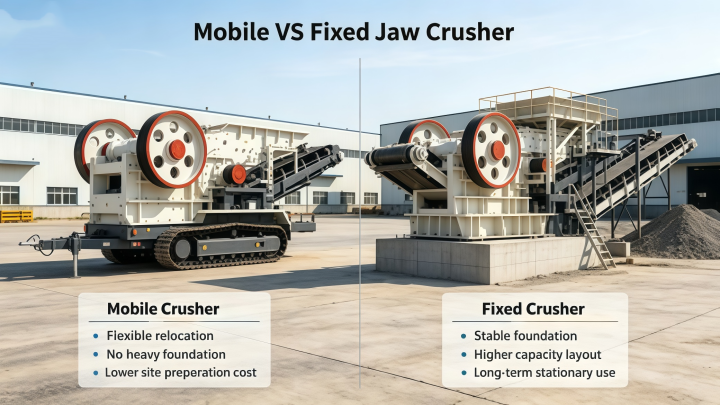
Q3: Mobile Jaw Crusher vs. fixed crusher – which is more cost‑effective?
A Mobile Jaw Crusher costs 30% to 70% more than a fixed crusher of equivalent capacity, but eliminates concrete foundation pouring and equipment installation expenses, saving $10,000 to $30,000 on foundation work alone. For projects lasting one year or less, or those requiring multiple relocations, the mobile option offers better overall economics.
Q4: What is the maximum feed size for a Mobile Jaw Crusher?
Most units can process rocks and concrete blocks up to approximately 1.5 meters in diameter. The actual maximum depends on the jaw opening width and depth specifications. Selection should match the model to the largest material size present on site.
Closing Remarks
The 2026 purchasing decision requires considering multiple factors together: the equipment's manufacturing specifications affect the base cost, brand positioning and after‑sales service terms are each reflected differently in the price, and the actual site conditions and material data serve as the essential basis for selecting the right model.
When purchasing a Mobile Jaw Crusher, pay attention to the detailed configuration and pricing method on the quotation, and prioritize suppliers with proven manufacturing capabilities and a stable export record. Start by organizing your material data and project timeline, then request detailed configuration quotes from 2 to 3 suppliers for side‑by‑side comparison. This approach will help you find the unit that truly matches your project needs.