Basalt vertical shaft impactor for asphalt mixture Selection Guide
Tuesday September-15 2026 10:50:01
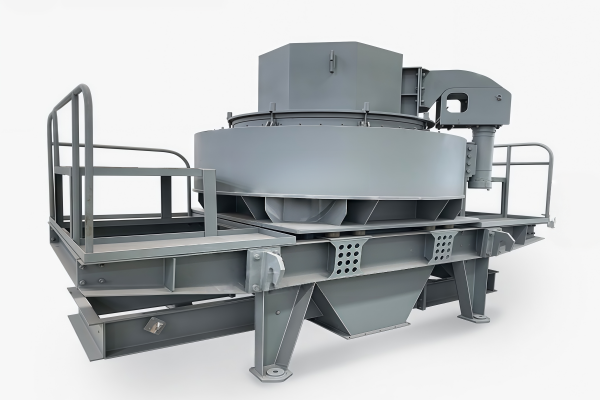
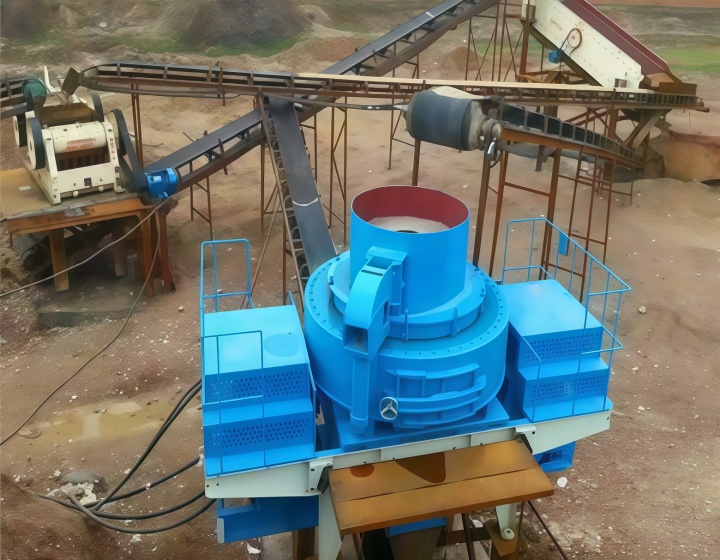
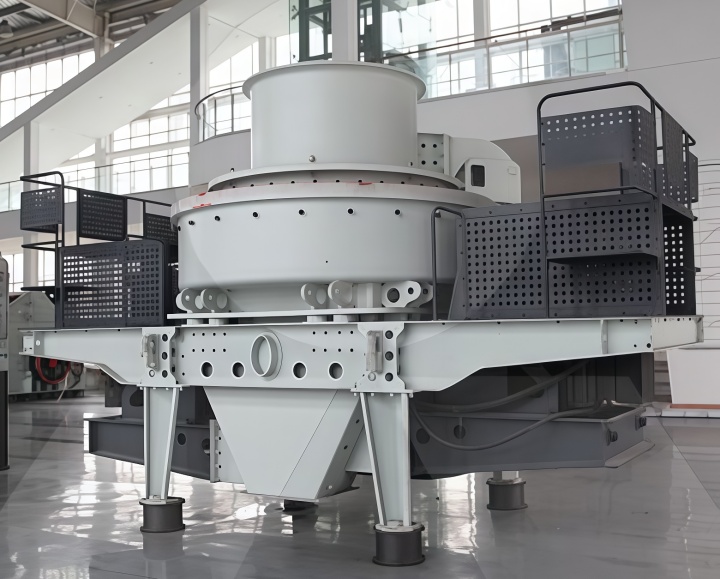
Our factory encountered a problem in a Southeast Asia highway SMA aggregate project: basalt crush value was below 15 percent, but the needle-like particle content after primary crushing exceeded 18 percent, causing the asphalt mixture interlocking structure to fail. Basalt vertical shaft impactor for asphalt mixture Selection is the key equipment designed to address this contradiction.
In early debugging, the production rate in rock-on-rock mode was about 15 percent lower than expected. Investigation found that the cascade feed ratio was set improperly, making the material layer too thick and reducing impact energy. After adjusting the cascade ratio to 30 percent of total feed, production returned to design value.
We have accumulated parameters and operational recommendations from on-site debugging of multiple basalt aggregate production lines, covering five dimensions: principle, selection, fine-tuning, cost, and case. Related equipment background can be found at MACHRISE official website.
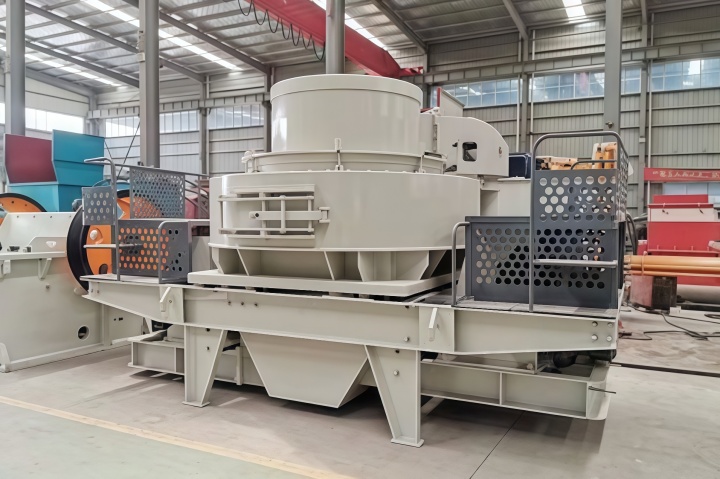
Basalt vertical shaft impactor for asphalt mixture Selection Working Principle and Advantages
Basalt compressive strength is 150 to 300 MPa, putting high wear pressure on crushing equipment. This equipment uses a high-speed rotor to accelerate material to 60 to 80 meters per second and then centrifugally throws it. Material impacts other material or anvils, breaking along natural fissures. During debugging, we found that the micro-porous structure of basalt makes the impact crushing efficiency in rock-on-rock mode about 12 percent higher than in rock-on-iron mode, but rock-on-iron mode is more stable in controlling fine powder content.
After shaping, the needle-like particle content can be controlled within 10 percent, meeting the Superpave requirement that flat and elongated particles at a 5 to 1 ratio not exceed 10 percent. A study funded by the North Carolina Department of Transportation compared limestone and granite aggregates. Results showed that the more cubic particle shape obtained by VSI crushing has a positive effect on volumetric properties and rutting resistance of compacted mixtures. Rotor speed can be adjusted from 1000 to 2500 rpm, and this equipment covers multiple gradation needs.
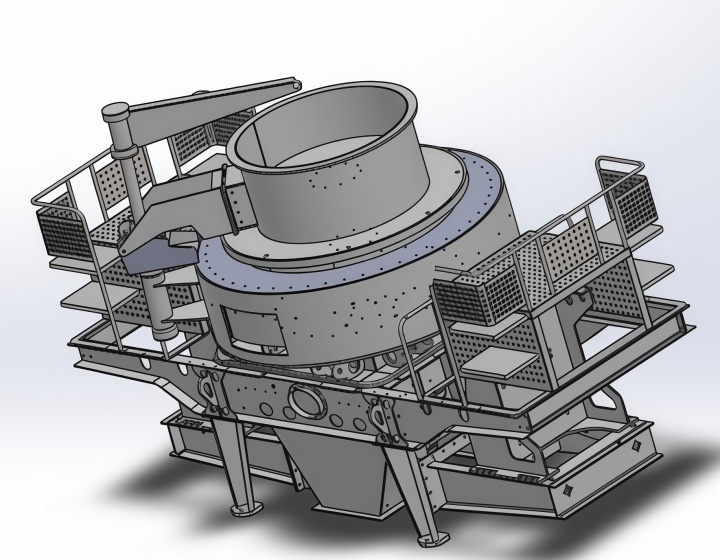
Basalt vertical shaft impactor for asphalt mixture Selection Parameters and Quick Reference Table
When selecting Basalt vertical shaft impactor for asphalt mixture Selection, attention should be paid to processing capacity, feed size, rotor tip speed, and motor power. Processing capacity needs to match the mixing plant demand, commonly 40 to 400 tons per hour, with feed size within 50 mm.
Rotor tip speed affects gradation. Speeding up to above 60 meters per second increases fine material, while slowing down to around 45 meters per second retains more coarse aggregate.
The following parameters can serve as a preliminary reference.
| Model | Motor Power | Processing Capacity | Max Feed Size | Rotor Speed | Equipment Weight |
|---|---|---|---|---|---|
| 6X75 | 55 kW | 40 to 100 t/h | 32 mm | 1500 to 2500 rpm | 4500 kg |
| 6X100 | 75 kW | 60 to 150 t/h | 32 mm | 1400 to 2400 rpm | 4800 kg |
| 6X150 | 110 kW | 80 to 200 t/h | 37 mm | 1300 to 2200 rpm | 5200 kg |
| 7X220 | 160 kW | 120 to 300 t/h | 37 mm | 1200 to 2000 rpm | 6880 kg |
| 8X300 | 225 kW | 180 to 400 t/h | 50 mm | 1000 to 1800 rpm | 9325 kg |
The above data comes from our factory's public technical manuals and measured verification from multiple basalt aggregate projects. The complete model matrix can be found on the MACHRISE official website product page. Actual capacity is affected by material and operation. Specific selection should be confirmed based on conditions.
Basalt vertical shaft impactor for asphalt mixture Selection Parameter Fine-Tuning and Troubleshooting
Parameter fine-tuning of this equipment requires two to three iterations. The first round adjusts rotor speed, observing needle-like particle and fine powder ratios. The second round adjusts feed rate and cascade ratio. Too much feed makes the material layer too thick; too little causes ineffective wear. The third round checks wear parts. Wear on the rotor tips changes the throwing angle, and needle-like particles may increase by 3 to 5 points later.
If a dull metal impact sound occurs during operation, it often comes from a fallen rotor tip or loose anvil bolt. Stop the machine immediately to check dynamic balance. Bearing temperature rise is often related to insufficient lubrication. Check grease condition and clearance.
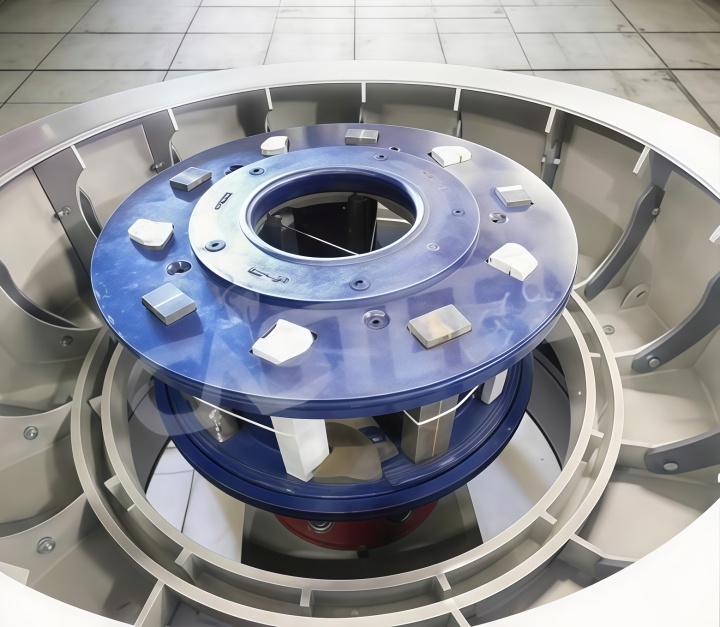
Basalt vertical shaft impactor for asphalt mixture Selection Operating Cost and HSI Comparison
Basalt is highly abrasive, and wear part cost is the main variable. According to a technical analysis of VSI wear parts selection, under medium abrasive basalt conditions, the cost per ton for tungsten carbide rotor tips is about 0.10 USD, and for high-chrome cast iron about 0.11 USD. The difference in basalt is not obvious. The real advantage of tungsten carbide appears in high-abrasive clean feed conditions. Under hard granite conditions, tungsten carbide costs about 0.12 USD per ton, while chrome iron alloy costs about 0.18 USD. The higher the downtime cost, the more worthwhile it is.
Rotor tips on both sides must be replaced simultaneously. Single-side replacement disrupts dynamic balance. Compared with horizontal shaft impactors, Basalt vertical shaft impactor for asphalt mixture Selection relies on centrifugal self-impact for shaping. The particle shape is closer to cubic, and gradation is more concentrated, making it suitable for final crushing and shaping. Horizontal shaft impactors are suitable for primary and secondary crushing of medium-soft materials, but basalt will accelerate their blow bar wear.
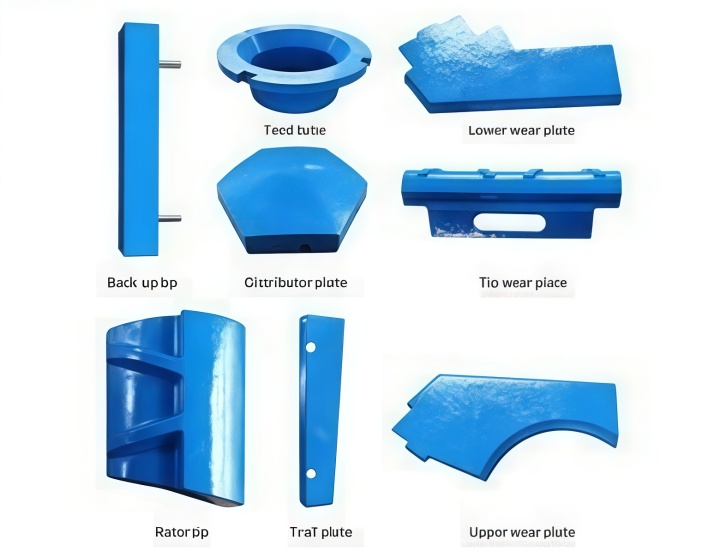
Basalt vertical shaft impactor for asphalt mixture Selection Practical Case
Espanola Transit Mix in New Mexico, USA, faced a problem where cone crusher output had excessive needle-like particles and could not meet Superpave specifications. New Mexico has mandated Superpave specifications for all projects since mid-1997. The company's management determined that cone crushers could not solve the excessive needle-like particles in small-size aggregates and decided to switch to impact crushers.
They selected a Pioneer 2500 Ultra-Spec VSI, using full autogenous rock-on-rock crushing with a hybrid shelf. In applications at multiple abrasive mines, the equipment ran for over 1500 hours with no obvious anvil wear. After switching to VSI, aggregate particle shape met specification requirements while meeting both processing capacity and low wear cost targets.
Basalt vertical shaft impactor for asphalt mixture Selection Frequently Asked Questions
The high-frequency problems we encountered during debugging are concentrated in five areas: moisture control, abnormal noise, mine point changes, rock-on-iron effect, and wear part condition. The following answers are based on on-site records.
Q: How to handle material blockage when moisture content is high in rainy season?
A: Surface moisture increases fine powder adhesion. A vibration motor can be added to the feed hopper and a hot air interface added at the crushing chamber inlet, controlling surface moisture within 10 parts per thousand. Blockage frequency drops by over 70 percent. If hot air is not available on site, extending stockpile resting time or increasing turning frequency can be used.
Q: A dull metal impact sound occurs during operation but particle shape does not change. What is the problem?
A: It usually comes from a fallen rotor tip or loose anvil bolt. Stop the machine immediately to check rotor dynamic balance and anvil tightening status. Continued operation may cause main shaft bending. During inspection, focus on whether the pre-tightening force of rotor tip fixing bolts is consistent.
Q: After changing mine points, product gradation suddenly becomes coarser. Is it an equipment problem?
A: No. The new mine point has different cleavage development, causing a change in fracture tendency. Use a new rock sample to conduct an impact crushing index test and re-calibrate rotor tip speed to restore. If testing is not possible temporarily, increase rotor speed by about 5 to 10 percent for trial operation.
Q: After switching to rock-on-iron, fine powder increases but needle-like particles do not decrease. Why?
A: Rock-on-iron mode mainly uses impact fracture rather than grinding and shaping. If needle-like particles do not improve, it indicates anvil wear has entered a later stage. After replacement, they usually decrease by 3 to 5 points. Also check whether the anvil installation angle matches the current material.
Q: At what wear level must rotor tips be replaced, and how does particle shape change after wear?
A: In later wear stages, the throwing angle changes, and needle-like particle content may increase by 3 to 5 points. Vibration and power consumption also rise. According to VSI wear part maintenance data, under medium abrasive materials, tungsten carbide rotor tips should be inspected every 120 to 180 hours. When wear exceeds one-third of original thickness, replace in pairs. Single-side replacement disrupts rotor dynamic balance.
Conclusion
The selection of this equipment starts from aggregate particle shape, gradation control, and wear cost to find a suitable intersection between equipment and asphalt performance. If planning a production line, reverse-derive specifications from the target gradation curve and annual output. MACHRISE's experience is that the most easily overlooked step is to conduct an impact crushing index test with rock samples from the target mine point. The same model equipment on basalt with different cleavage development may have product gradation differences of 3 to 5 points. This test usually gives a specific answer in two to three days, making investment return more controllable.