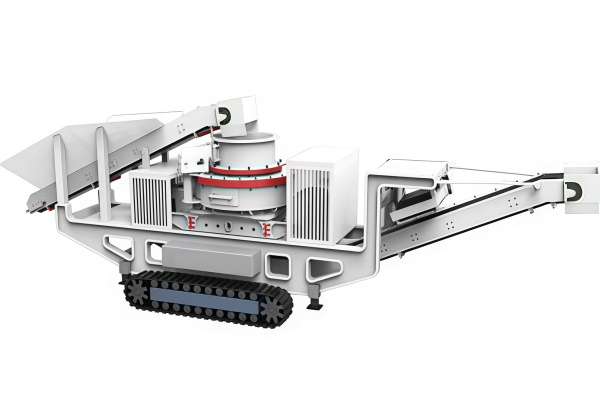
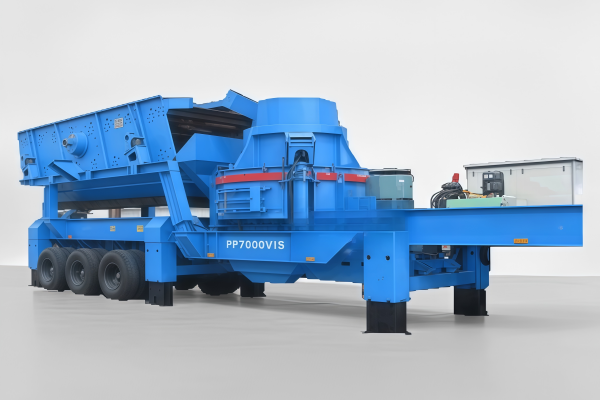
Tracked Impact Crusher Buying Guide: 10 Factors to Consider
Monday August-31 2026 15:43:19
The core of selecting a Tracked Impact Crusher comes down to three things: material silica content, site conditions, and annual workload. Medium-hard materials with silica below 15% are suitable; high-silica hard rock should go to cone crushers. Short-duration projects with frequent site moves call for tracked units, while long-distance road transfers favor wheeled plants. Choosing the wrong machine often leads to downtime and wear costs that far exceed the price difference between options. This guide walks you through 10 key factors to help you make a more informed decision.
We are a factory specializing in mobile crushing equipment manufacturing and on-site technical services. The following content is compiled from globally verifiable industry data, manufacturer technical literature, and real project case studies.
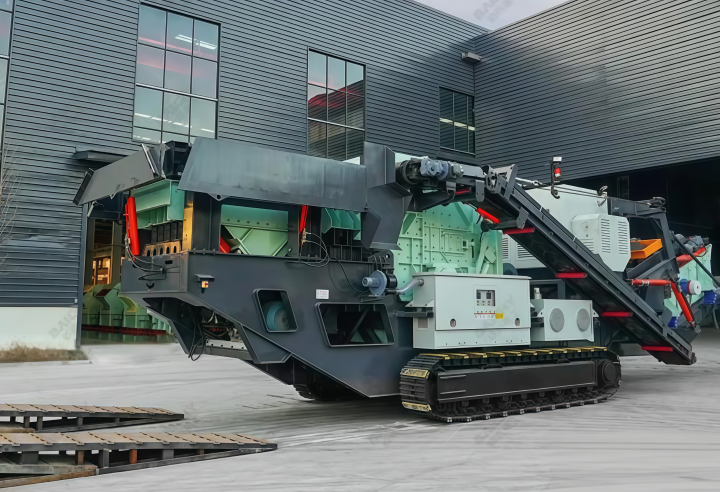
Material Characteristics and Tracked Impact Crusher Suitability
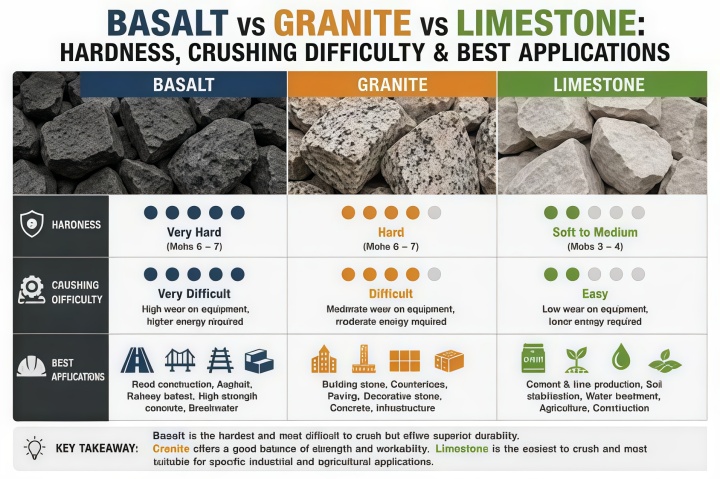
Impact crushers are designed for medium-hard, low-abrasive materials such as limestone, concrete debris, and asphalt millings. Industry technical guidelines indicate that when material silica content exceeds 10% to 15%, blow bar wear rates increase significantly. When evaluating whether this type of crusher is suitable for your material, the Ethiopian high-speed rail project is a notable reference—the project attempted to process basalt with 56% silica content using an impact crusher, and the high-chrome blow bars were severely worn within just 22 hours. Granite contains 25% to 35% silica, making it a better candidate for cone crushers.
Production Capacity and Actual Throughput
Production capacity is one of the most common stumbling blocks when selecting equipment. Different models vary significantly: the FABO FTI-110s handles 200 to 240 tons per hour, the FTI-130s ranges from 400 to 450 tph, and the Tesab 623TR runs above 120 tph. In real-world conditions, the DMI160RS has been measured at a stable 300 tph when processing limestone and construction waste in mountainous terrain. When sizing a Tracked Impact Crusher for your operation, base your calculation on daily processing targets and operating hours with a built-in margin—never size up against the machine's maximum rated capacity.
Site Conditions and Traversability
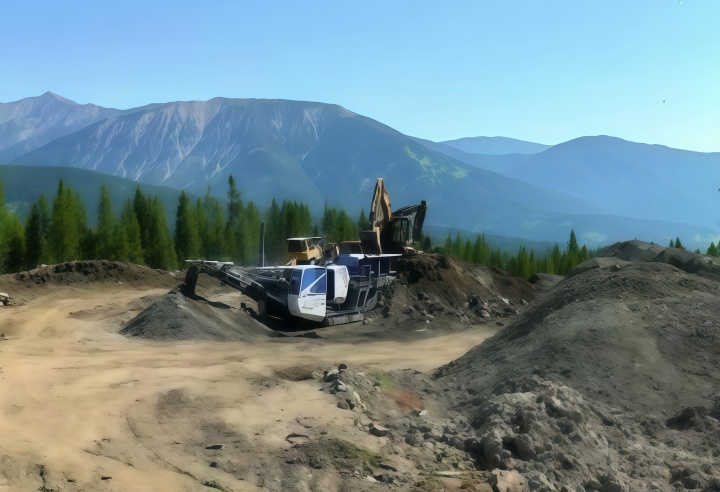
The mobility advantage of a tracked crusher is what sets it apart from stationary plants. With its large track footprint and low center of gravity, it can operate on muddy, rocky, or gently sloping ground. Narrow tracks suit tight urban job sites, while wider tracks offer better flotation on soft ground. Industry data shows that for projects lasting less than 12 months, the savings in dismantling, transport, and logistics from using a mobile plant amount to roughly 15% of the total equipment investment. At the Belgard Quarry in Ireland, processing abrasive limestone, the plant achieved 97.5% availability.
Rotor Configuration – The Heart of the Machine
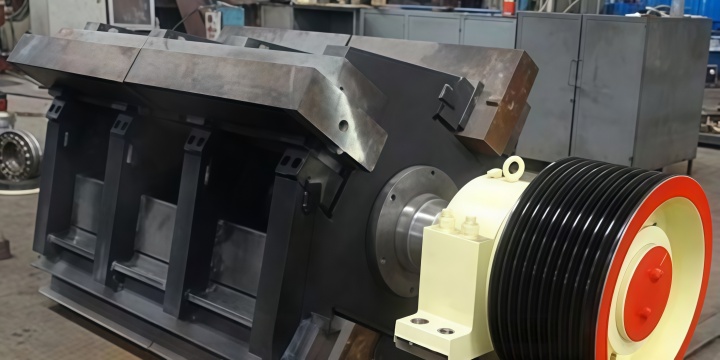
Impact crusher rotors typically run at tip speeds between 25 and 45 m/s, delivering far more kinetic energy per impact than the compressive forces in jaw or cone crushers. A heavy-duty rotor maintains speed better when dealing with large feed, providing more stable crushing force—this is the technical foundation that enables a Tracked Impact Crusher to handle larger top-size material efficiently. Between 60% and 70% of impact crusher downtime can be traced to blow bar or rotor issues; simpler fixing systems help reduce downtime.
Drive Options and Power Source
When selecting the drive system for your crusher, you need to balance operating conditions with energy costs. The 2026 TCO guide shows that a mid-sized mobile impact crusher running purely on diesel costs $18,000 to $25,000 per year in fuel; when connected to the grid, electric drive cuts annual energy costs to $4,000–$6,000, saving $17,500 to $24,700 per year. Raukawa Aggregates in New Zealand has run its Keestrack R5 for over 10 years, clocking 12,000 hours. The SBM REMAX 600 full-hybrid reduces fuel consumption by 30% to 50%.
Discharge Control and Product Shape
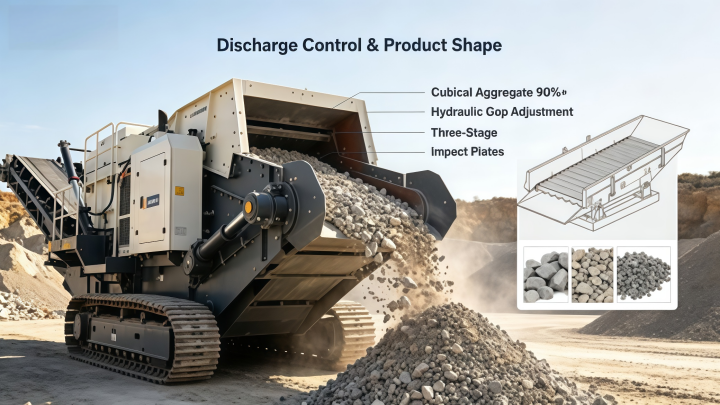
Impact crushers can produce over 90% cubical product with low flakiness—this is one of the main reasons to choose this type over other crusher types. Three-curtain impact plate designs allow material to undergo multiple "rock-on-rock" actions, creating a more uniform particle shape. Hydraulic adjustment systems let operators change the discharge setting without stopping the machine, which is especially useful when frequent product spec changes are required.
Auxiliary Equipment and Integrated Functions
A well-equipped mobile crusher is more than just the crushing chamber—it should include a feeder system, magnetic separator, and screening unit. Rebar in construction waste is a major cause of blow bar wear; manganese steel bars handle rebar-containing feed well, while high-chrome bars tend to shatter when striking steel. When selecting a Tracked Impact Crusher for C&D recycling applications, pay close attention to these integrated features. Grupo Ravi in Spain uses a Metso Nordtrack I908S to recycle ceramic tile waste, achieving 150–200 tph with minimal downtime.
Core Component Quality and Durability
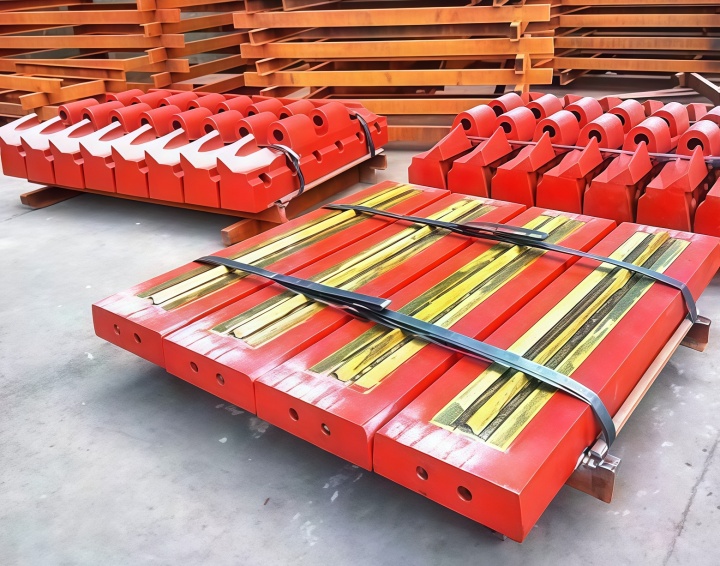
The long-term operating cost of a crushing plant depends heavily on the quality of its core components. Industry benchmark data shows: manganese steel blow bars last 300–600 hours in rebar-containing feed; martensitic steel bars last 600–1,200 hours in limestone; high-chrome bars exceed 1,000–2,000 hours in clean, low-abrasion material. A major Thai cement plant originally changed its blow bars every 30 weeks; after switching to TiC-embedded bars, the interval extended to 65 weeks—a 117% improvement.
Serviceability and Maintenance Design
Ease of maintenance directly affects machine availability—a factor often overlooked when evaluating a Tracked Impact Crusher. Blow bar inspection intervals typically range from 200 to 500 hours. Well-designed units feature hydraulic housing opening and independent blow bar replacement; a typical unplanned bar change takes 4 to 8 hours of downtime.
Total Cost of Ownership – The Complete Picture
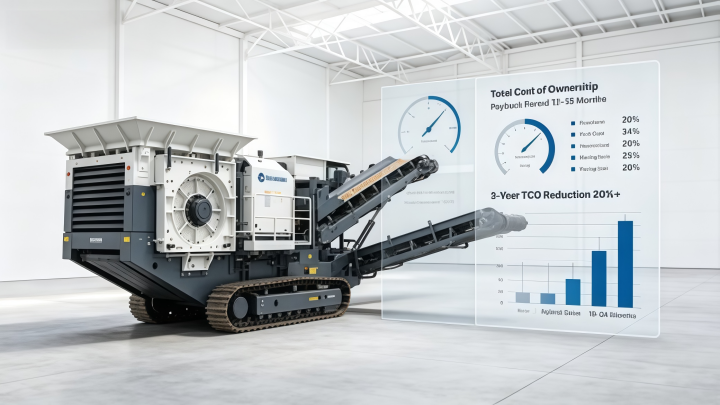
When investing in crushing equipment, don't just look at the purchase price—calculate the total cost over the machine's life. Payback periods for tracked impact crushers typically range from 12 to 18 months, much shorter than the 36+ months for stationary plants. Hybrid-drive units show payback around 18–24 months and can reduce total ownership cost by over 20% over five years. In regions like California where landfill tipping fees exceed $100 per ton, the payback on a Tracked Impact Crusher can be less than two years.
Application Scenario Comparison by Equipment Size
| Comparison Factor | Small | Medium | Large |
|---|---|---|---|
| Reference Throughput | 50-150 t/h | 100-300 t/h | 300-450 t/h |
| Typical Applications | Urban C&D recycling, small demolition | Mid-size quarries, road maintenance | Large mines, high-volume aggregate production |
| Typical Payback Period | 12-18 months | 14-20 months | 18-24 months |
Pre-Purchase Checklist
Material type and approximate silica content?
Daily processing target and product size requirement?
Jobsite surface: hardstanding or muddy/rocky ground?
Is stable grid power available on site?
Does the plant need frequent relocation? Annual operating hours?
Answer these questions before comparing equipment specs—it's more effective than simply price-checking.
FAQ – Frequently Asked Questions
Why does the rated capacity of a Tracked Impact Crusher often fall short in practice?
Rated capacities are measured under ideal conditions; actual throughput depends on feed moisture and gradation, and typically reaches only a portion of the nominal figure.
Can a Tracked Impact Crusher handle granite?
Granite contains 25%–35% silica. Processing high-silica hard rock accelerates blow bar wear significantly—in the Ethiopian high-speed rail project, high-chrome bars were severely worn in just 22 hours. Cone crushers are the preferred choice for such materials.
How expensive is undercarriage maintenance on a Tracked Impact Crusher?
Tracks wear in harsh conditions, but if the machine stays in one spot for long periods, corrosion and aging become issues instead. Either way, factor track maintenance into your lifecycle budget.
Does a hybrid drive save money on a Tracked Impact Crusher?
For long-term fixed-site work with grid power available, electric drive costs less than diesel. For frequent relocations without grid access, diesel remains the more practical choice.
Closing
Selecting a mobile impact crusher is about balancing material, site, capacity, energy, and maintenance. All the case studies cited here—from the Thai cement plant, Ethiopian high-speed rail, Raukawa Aggregates in New Zealand, Belgard Quarry in Ireland, and Grupo Ravi in Spain—are publicly verifiable real-world projects.
Take your actual site data to compare options; professional technical reports and operating cost calculations are far more reliable than sales pitches. We are a factory focused on mobile crushing equipment manufacturing and on-site support—if you have questions about a specific application, feel free to reach out with your operating data for a no-obligation discussion.