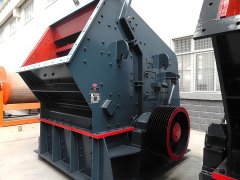
Impact Crusher Machine
Impact Crusher Machine offers higher reduction ratio and better product shape than cone or jaw crushers, with lower upfront cost for medium-hard materials. This guide covers working principle, specifications, operating costs, applications, and selection tips.
What Is an Impact Crusher Machine?
Impact Crusher Machine uses high-speed rotor impact energy to crush materials. It is a medium-to-fine crusher for medium-hard materials like limestone. The equipment reduces 300-350mm feed to 10-50mm product in one pass, with flakiness below 10%. Jaw crushers produce about 20% flakiness, cone crushers about 15%. For limestone, this equipment increases throughput by over 30% compared to hammer crushers, with 0.5-0.8 kWh/t lower energy consumption.
The Working Principle of Impact Crusher Machine
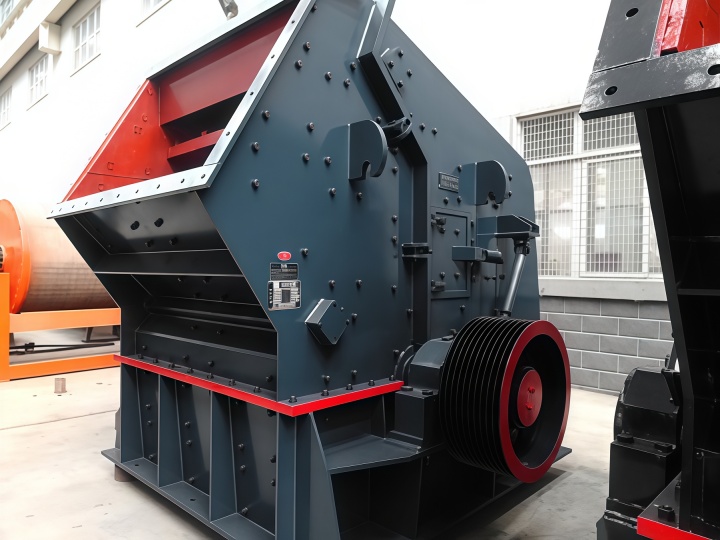
Impact Crusher Machine breaks materials through rotor impact energy, achieving a 15:1 to 20:1 reduction ratio. The rotor throws materials against impact plates at 25-50 m/s linear speed across three crushing chambers. Materials are struck by blow bars, hit the primary impact plate, rebound to the blow bar zone, and are further crushed in secondary and tertiary chambers to target size.
This impact method gives a higher reduction ratio than cone crushers at 4:1 to 6:1. Discharge size adjusts hydraulically by changing the gap between impact plates and rotor without stopping the machine.
Choose the Right Impact Crusher Machine for Your Material
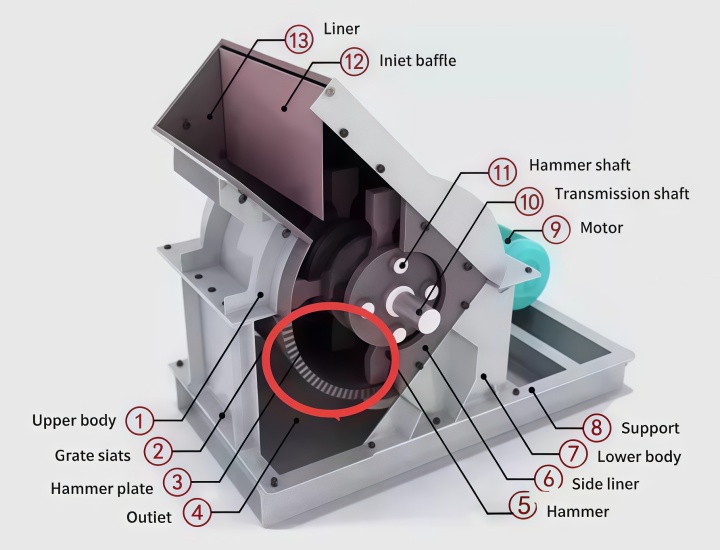
Poor selection is a major cost driver in Impact Crusher Machine applications. Material hardness is the first criterion. Medium-hard materials like limestone and gypsum work with standard PF series rotors, with blow bar life of 2,000-4,000 hours. Hard materials like granite and basalt are not recommended - wear accelerates, making cone crushers more economical. High-moisture materials cause impact plate adhesion and reduced output. Select a model at 120% of target capacity for buffer.
The equipment is not cost-effective in three conditions:
Silica content above 15% drives up abrasion costs.
Moisture above 8% causes chamber blockage.
Feed size above maximum requires pre-crushing.
Complete Technical Specifications of Impact Crusher Machine
The machine selection depends on material properties and target output. Below are PF series reference data for standard limestone applications:
| Model | Rotor Size | Feed Opening | Max Feed | Discharge Size | Capacity (Limestone) | Power | Weight |
| PF-1007 | Φ1000×700mm | 820×700mm | 300mm | 10-40mm | 30-50 t/h | 55kW | 9.5t |
| PF-1010 | Φ1000×1050mm | 1170×720mm | 350mm | 10-50mm | 50-80 t/h | 75kW | 10.0t |
| PF-1210 | Φ1250×1050mm | 1090×465mm | 350mm | 10-50mm | 70-120 t/h | 110kW | 14.0t |
| PF-1214 | Φ1250×1400mm | 1440×465mm | 350mm | 10-50mm | 100-160 t/h | 132kW | 16.8t |
| PF-1315 | Φ1320×1500mm | 1530×990mm | 350mm | 15-60mm | 140-220 t/h | 220kW | 21.0t |
| PF-1515 | Φ1500×1500mm | 1530×748mm | 350mm | 20-60mm | 180-280 t/h | 280kW | 28.5t |
| PF-1620 | Φ1600×2000mm | 2030×1200mm | 600mm | 20-80mm | 380-500 t/h | 500kW | 55.0t |
Operating Cost Data and Field Experience
Operating cost is a key factor in purchasing decisions. For a PF-1315 crushing medium-hard limestone, blow bar life is 2,000-4,000 hours. A blow bar set costs $1,500-$2,200, with replacement including labor at $2,500-$3,500. Impact plate life is about 1.5-2 times blow bar life. Hard materials shorten blow bar life. Hydraulic frame opening takes minutes, reducing downtime. Actual costs vary by material, operation, and maintenance quality - calculate based on your specific conditions.
One limestone operation in Southeast Asia replaced an outdated hammer crusher with a PF-1315 Impact Crusher Machine. Throughput increased from 120 t/h to over 180 t/h, while flakiness dropped from 15% to under 8%.
The Main Advantages of Impact Crusher Machine
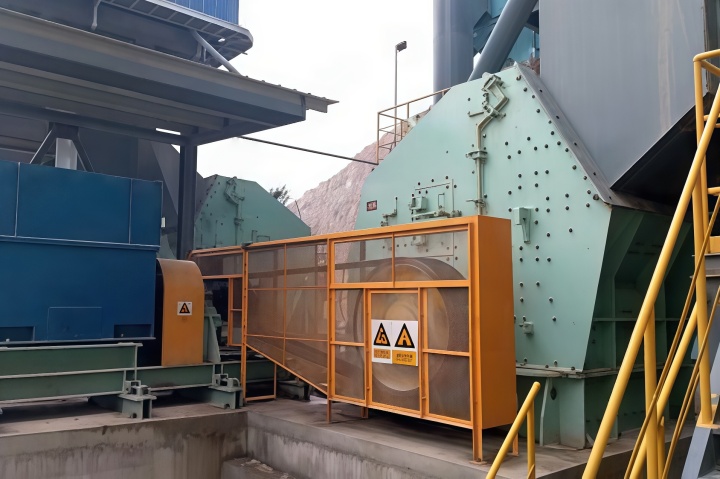
Impact Crusher Machine offers advantages in three areas: crushing efficiency, product quality, and maintenance. The technical details are explained below.
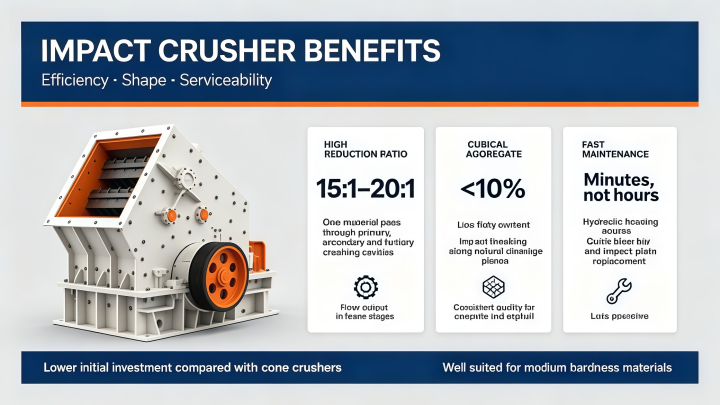
High Reduction Ratio: The equipment achieves 15:1 to 20:1 reduction. Impact crushing passes materials through primary, secondary, and tertiary chambers in one pass for major size reduction, while cone crushers using compression achieve only 4:1 to 6:1.
Excellent Product Shape: Finished particles are cubic with flakiness below 10%. Impact fractures materials along natural cleavage planes, unlike compression which causes random fracturing. This suits concrete and asphalt production with strict aggregate shape requirements.
Lower Initial Investment: Compared to cone crushers, this equipment costs less to purchase and install, making it suitable for medium-hard material crushing.
Easy Maintenance: The hydraulic opening system allows frame access within minutes for quick blow bar and impact plate replacement, reducing downtime.
Materials That Impact Crusher Machine Handles
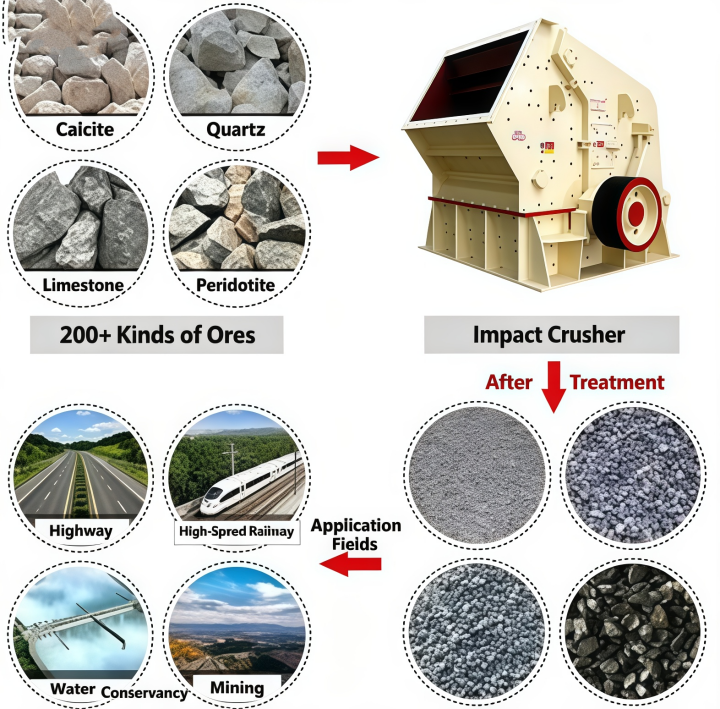
The equipment adapts to various materials. Different hardness levels require matching rotor speeds and blow bar materials. Key applications are listed below.
Limestone and Dolomite: Common applications. Discharge size of 10-50mm, energy use of 1.5-2.5 kWh/t, blow bar life of 2,000-4,000 hours.
Gypsum and Coal: Suitable for fine crushing soft materials with uniform discharge and low dust.
Iron Ore and Copper Ore: Limited to medium crushing stages with higher-grade wear parts.
Granite and Basalt: Impact Crusher Machine is not recommended. Hard materials cause rapid wear and higher per-ton costs - cone crushers are a better choice.
A Philippine aggregate producer processed river pebbles with a PF-1214 Impact Crusher Machine, achieving 130 t/h with blow bar life exceeding 3,000 hours.
Impact Crusher Machine vs Cone Crusher – Which One to Choose
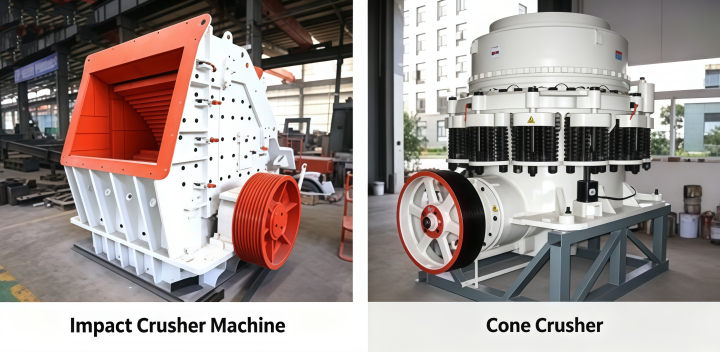
The impact versus cone crusher choice is a common equipment decision. It offers better product shape, higher reduction ratio, and lower initial cost for medium-hard materials. Cone crushers offer longer wear part life and stable operation for hard materials. Choose Impact Crusher Machine for limestone and gypsum; choose cone crushers for granite, basalt, and iron ore. When silica content is high, cone crushers provide better long-term economics.
Common Questions About Impact Crusher Machine
Can an Impact Crusher Machine process wet materials?
Yes, but high-moisture materials cause impact plate adhesion. Install screening equipment at the feed end to control moisture.
How to determine when blow bars need replacement?
Replace or reverse when discharge coarsens, throughput drops, or wear exceeds two-thirds of original thickness.
What is the typical lead time for a PF series model?
Standard delivery is 45-60 days. Custom rotors or special blow bar materials need extra time.
Does the equipment require special foundation design?
Yes. The equipment vibrates during operation. Follow the manufacturer's foundation drawings for concrete construction.