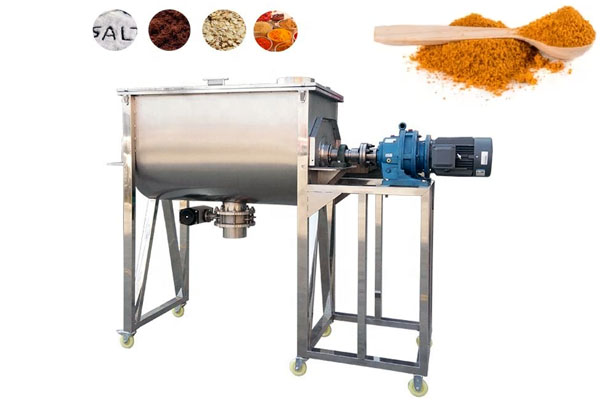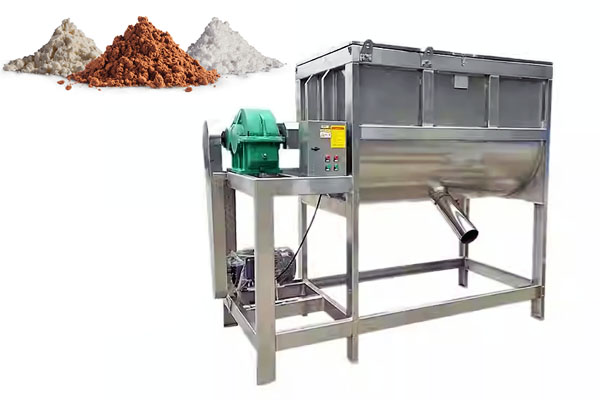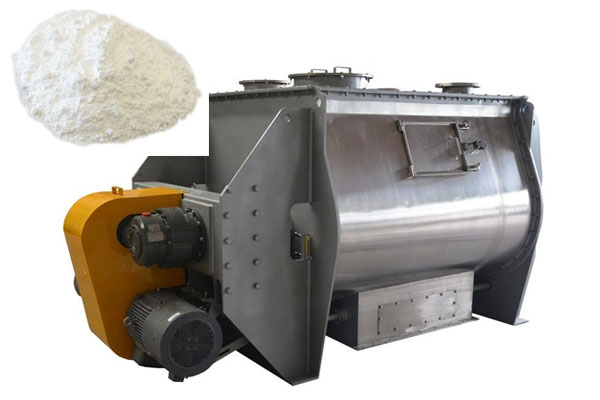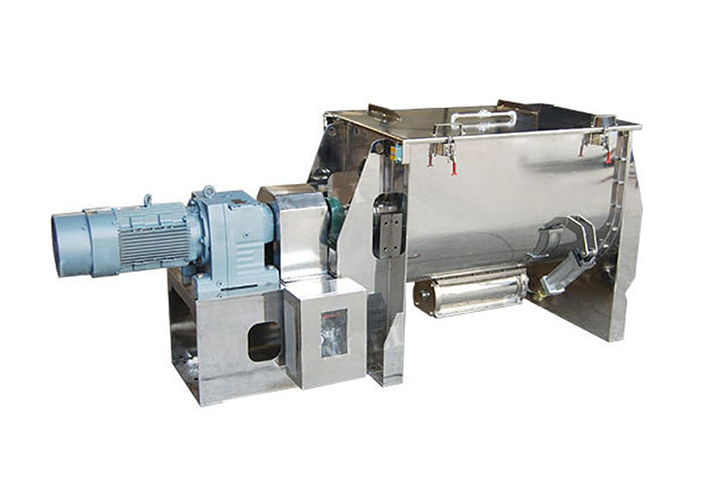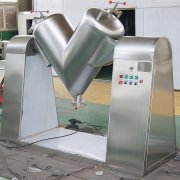
Pharmaceutical Powder V-Blender
Pharmaceutical Powder V-Blender Product Information
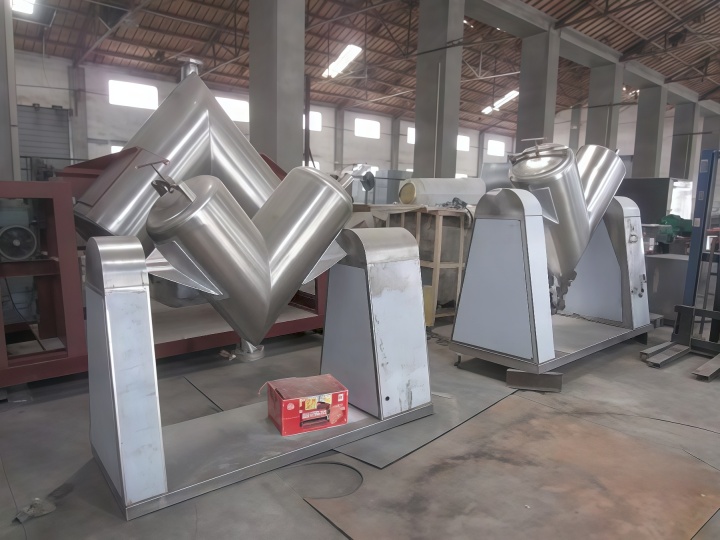
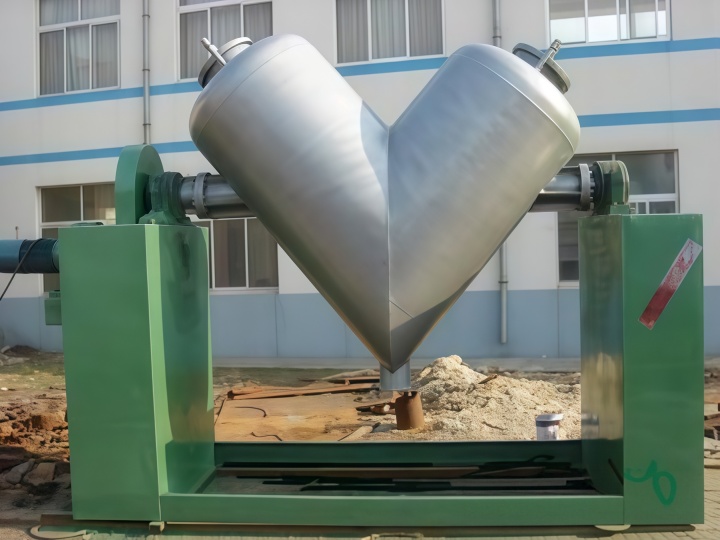
Pharmaceutical Powder V-Blender is a batch-type gravity diffusion mixing equipment that relies on V-shaped shell rotation to achieve dry powder and granular material blending. The mixing uniformity can reach over ninety-nine percent within 8 to 15 minutes, and the recommended filling volume is forty to sixty percent of the total shell capacity.
The technical parameters, selection methods, and operation suggestions on this page are compiled based on actual operating data from it, including the critical speed calculation formula, measured mixing values under different material conditions, and selection comparison analysis for reference by production personnel in pharmaceutical, food, and chemical industries. This equipment complies with USP〈905〉content uniformity testing and GMP standards. The RSD measured data comes from three-layer nine-point sampling tests under fifty percent filling coefficient and 24rpm shell rotation speed.
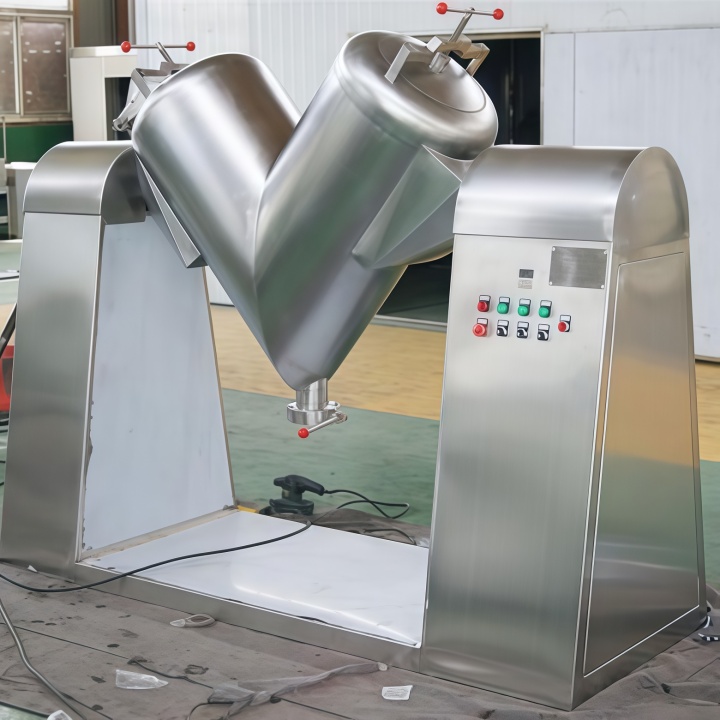
How does Pharmaceutical Powder V-Blender achieve uniform mixing?
Pharmaceutical Powder V-Blender achieves gravity diffusion mixing by rotating the V-shaped shell, driving materials to repeatedly separate into the two arms and converge under gravity. The critical speed calculation formula is n equals 42.3 divided by the square root of R, where R is the shell's radius of gyration in meters. The recommended operating speed is fifty to eighty percent of the calculated value.
For materials with poor flowability, setting the speed at approximately sixty-five percent of the critical speed produces better mixing results and effectively prevents material accumulation at the bottom of the V-shaped arms. Excessive speed causes materials to adhere to the shell wall due to centrifugal force, losing the tumbling effect, while insufficient speed reduces production efficiency.
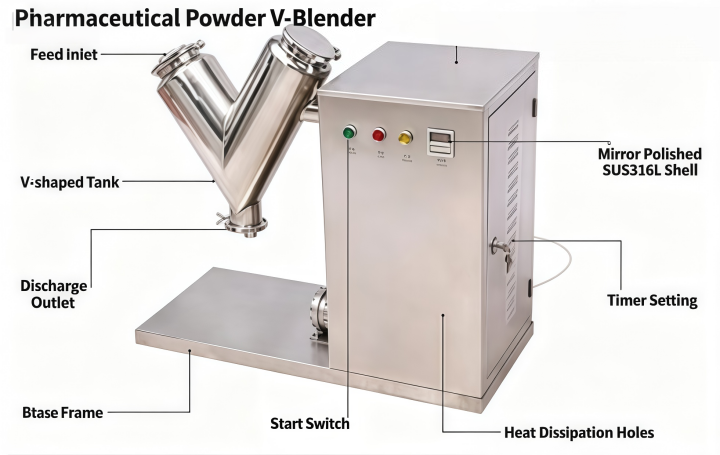
Pharmaceutical Powder V-Blender Technical Specifications by Model
The following table shows the key technical parameters for five commonly used models of Pharmaceutical Powder V-Blender, including total volume, effective filling capacity, shell speed, and motor power.
| Model | Total Volume (L) | Effective Filling Volume (L) | Filling Capacity (kg) | Shell Speed (rpm) | Motor Power (kW) | Equipment Weight (kg) |
|---|---|---|---|---|---|---|
| 100L | 100 | 40-60 | 24-36 | 30 | 1.1 | 500 |
| 300L | 300 | 120-180 | 70-110 | 24 | 1.5 | 1200 |
| 500L | 500 | 200-300 | 120-180 | 24 | 3 | 1600 |
| 1000L | 1000 | 400-600 | 240-360 | 20 | 7.5 | 2000 |
| 2000L | 2000 | 800-1200 | 480-720 | 11 | 11 | 2500 |
Note: The filling coefficient is forty to sixty percent of total volume. Material bulk density is estimated at 0.6g/cm³. Actual filling weight should be calculated based on measured material density.
Pharmaceutical Powder V-Blender Performance in Production
Under fifty percent filling coefficient and 24rpm speed, Pharmaceutical Powder V-Blender achieves RSD values within three percent after 8 minutes of mixing, measured through three-layer nine-point sampling. The equipment has no internal mixing paddles; materials flow solely by gravity, and particles are not crushed by mechanical impact, making it suitable for brittle crystals and heat-sensitive powders. The inner and outer shell surfaces are mirror-polished, equipment cleaning time does not exceed twenty minutes, and operating vibration amplitude remains below 0.5 millimeters.
In a customer project using a lactose-microcrystalline cellulose system, it achieved a content uniformity RSD reduction from 4.7 percent to 2.1 percent after 10 minutes of mixing under fifty percent filling coefficient and 24rpm speed. When the filling coefficient was reduced from fifty percent to forty percent, the mixing time required to achieve the same RSD value decreased by approximately 2 minutes. This pattern has been verified through multiple batches.
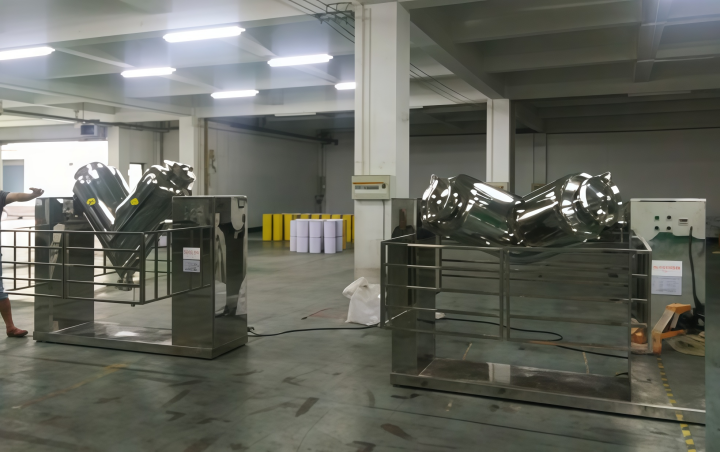
What materials and production lines is Pharmaceutical Powder V-Blender suitable for?
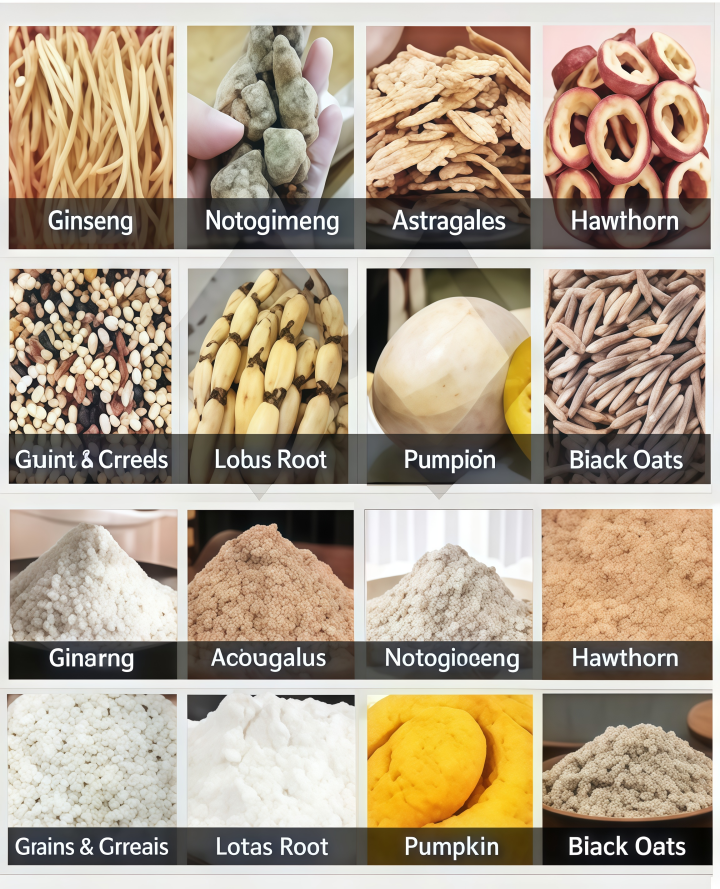
Pharmaceutical Powder V-Blender is used in the pharmaceutical industry for pre-mixing active pharmaceutical ingredients with excipients, blending before tablet and capsule granulation, and homogenizing traditional Chinese medicine powders with extract granules. In solid dosage production lines, it is typically positioned after the wet granulator and before the tablet press. In the food industry, it suits seasoning powders, protein powders, meal replacement powders, and nutritional supplement powder blending.
In chemical and cosmetic industries, it is used for pigments, catalysts, fine chemicals, mineral foundations, and loose powder dry mixing. Dry powders and granular materials with bulk density above 0.3g/cm³ can be processed directly, while materials below 0.3g/cm³ may require a larger model to achieve production capacity.
Pharmaceutical Powder V-Blender Selection Criteria and Configuration Recommendations
Pharmaceutical Powder V-Blender selection requires comprehensive consideration of three core parameters: batch production volume, material bulk density, and filling coefficient.
The required equipment volume equals the batch production volume divided by material bulk density divided by the filling coefficient, with the filling coefficient recommended at forty to sixty percent. For a batch of 120kg material with bulk density of 0.6g/cm³ and fifty percent filling coefficient, the required volume is approximately 400L, corresponding to the 500L model. For sticky or easily agglomerated materials, a high-speed breaking bar can be installed. For flammable or explosive powders, explosion-proof motors, explosion-proof control boxes, and electrostatic grounding devices are required, along with nitrogen displacement interfaces. For materials containing oils or hygroscopic components, the SUS316L stainless steel shell is recommended due to its superior corrosion resistance compared to SUS304.
Pharmaceutical Powder V-Blender Daily Operation and Maintenance Points
Daily operation and maintenance of this equipment focus on three areas: pre-start inspection, discharge cleaning, and regular servicing.
Before each startup, check the shell interior for residual materials and confirm that the safety guard door is properly closed. After mixing, use compressed air to blow back through the feed port for ten seconds to clear any material trapped in the discharge butterfly valve. Check the reducer oil level weekly and inspect bearing temperature monthly; bearing temperature rise should not exceed forty degrees Celsius above ambient temperature. Before extended shutdown, thoroughly clean and dry the shell interior.
FAQs about Pharmaceutical Powder V-Blender
How to prevent cross-contamination when changing product types with Pharmaceutical Powder V-Blender?
Disassemble the shell interior, discharge valve, and sealing rings completely, then clean with specialized cleaning agents. After cleaning, take swab samples to test for residues before proceeding with the next batch.
What factors should be prioritized when Pharmaceutical Powder V-Blender mixing performance is unsatisfactory?
First, confirm whether the filling volume exceeds fifty percent of total shell capacity. Second, check for excessive particle size differences between materials. When the size ratio exceeds three to one, pre-mixing the fine powder and coarse granules separately is recommended.
Can Pharmaceutical Powder V-Blender operate continuously?
This equipment is a batch-type mixer requiring shutdown and discharging between batches. Continuous operation is not recommended; motor operation exceeding two hours should be followed by a ten-minute cooling period.
Is there material residue inside the shell after Pharmaceutical Powder V-Blender discharge?
The mirror-polished stainless steel shell retains less than three thousandths of the total filling volume. After discharge, using compressed air to blow back through the feed port essentially clears residual material from the butterfly valve area.