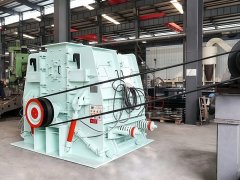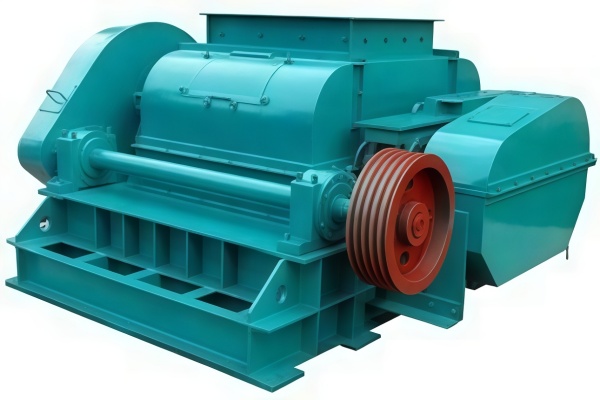
Roller Crusher
Roller Crusher are used for medium and fine crushing of various medium‑soft brittle materials, producing qualified finished sand and aggregates of different particle sizes for use in mining, sand‑making, building materials and chemical industries. Prices typically range from $8,000 to $120,000. Feed opening size: ≤400mm Production capacity: 5‑150 tons/hour Discharge opening adjustment range: 2‑50mm Spindle speed: ≤320 rpm Motor power: 7.5‑132kW
What Is a Roller Crusher?
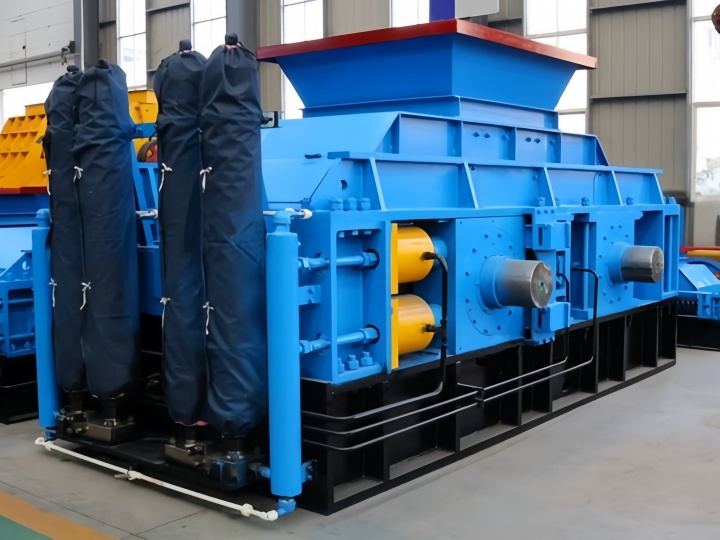
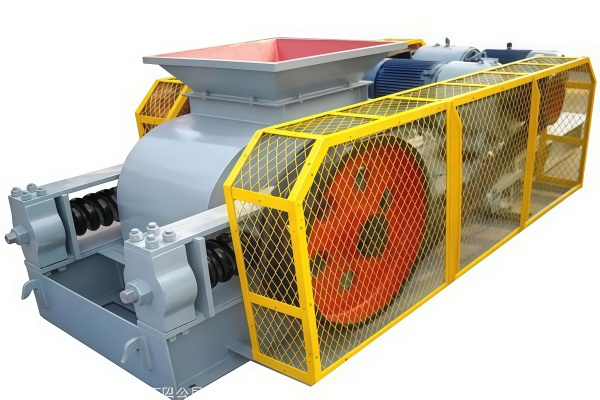
A roller crusher relies on two cylindrical rolls that rotate toward each other to crush material by compression. Material is drawn into the gap between the two rolls and, after being subjected to high pressure, fractures into smaller particles. This structure can process a variety of industrial materials such as limestone, coal, slag, and coke. The value of it lies in its ability to provide uniform particle size distribution while minimizing the generation of excessive fines.
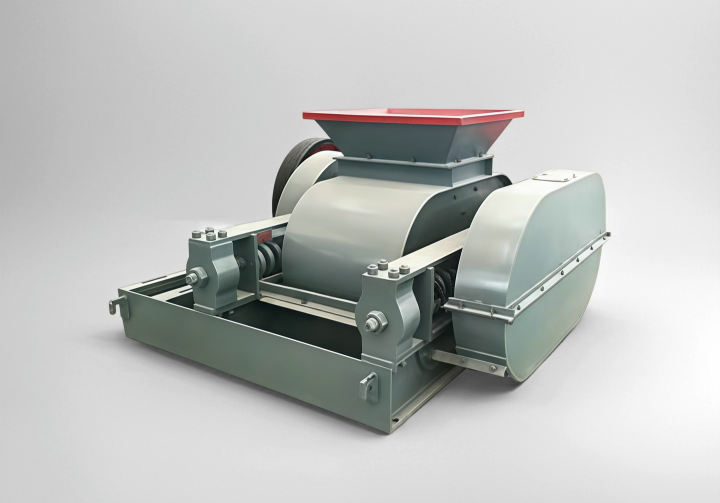
Roller Crusher Video Showcase
How Does a Roller Crusher Work and What Are Its Main Components?
Understanding the working principle of it helps in appreciating its operation. The product draws material into the space between two counter-rotating rolls. As the rolls turn, friction pulls the feed into the crushing chamber. The material is then subjected to pressure, which compresses and fractures it. The crushed product falls out from the bottom of the machine.
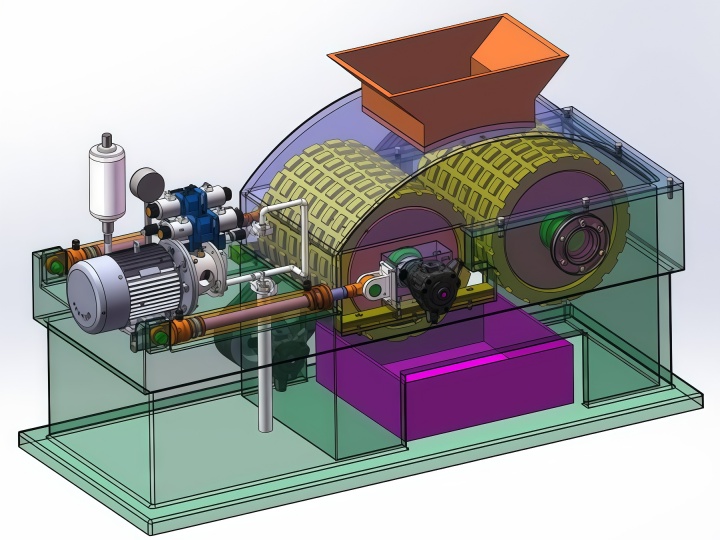
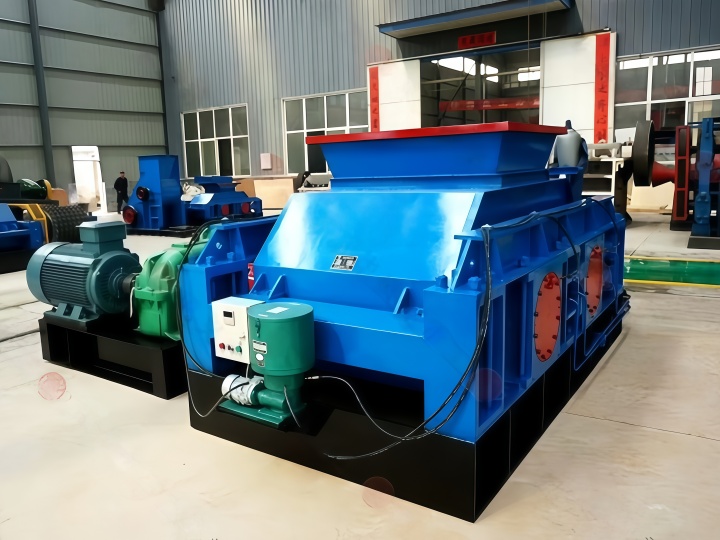
The structure of it includes several key parts that work together to achieve crushing. These components ensure the equipment operates smoothly and can be adjusted for different production requirements.
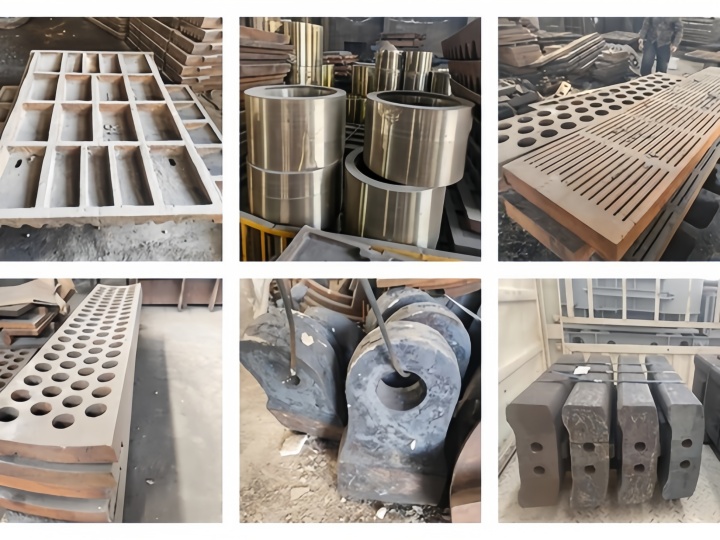
Crushing Rolls: The main working elements, typically fitted with durable roller skins for extended service life.
Adjustment Mechanism: This allows you to change the gap between the rolls, which directly controls the output size. Common types include wedge or shim adjustments.
Spring or Hydraulic System: This serves as a safety feature. If an unbreakable object enters the product, this system allows the movable roll to shift, letting the object pass and preventing damage to the machine.
Drive System: A motor and gears provide the power for the rolls to rotate.
The Technical Specifications of a Roller Crusher
The performance of a roller crusher can be understood through its technical parameters. The right model for your operation depends on your desired output and material type. Below is a sample table illustrating common specifications for this equipment.
| Model | Feed Max (mm) | Output (mm) | Capacity (t/h) | Power (kW) | Weight (t) | Dimensions (mm) |
|---|---|---|---|---|---|---|
| 2PG-400×250 | ≤25 | 1-8 | 5-10 | 11 | 1.5 | 2100×1200×900 |
| 2PG-610×400 | ≤85 | 0.5-30 | 13-40 | 30 | 3.5 | 2600×1800×1400 |
| 2PG-700×400 | ≤100 | 0.5-30 | 10-100 | 60 | 5.8 | 3000×1900×1450 |
| 2PG-750×500 | ≤100 | 1-40 | 20-100 | 75 | 7.2 | 3500×2000×1550 |
| 2PG-900×500 | ≤100 | 1-40 | 30-150 | 110 | 9.5 | 3800×2200×1650 |
This table provides a reference point. The specific output size of your machine is adjustable to meet your production needs.
Why Choose a Roller Crusher for Your Operation?
This equipment offers several advantages that stem from its robust design and crushing action.
Product Uniformity: It produces materials with consistent shape and size, which is important for processes like coal combustion or cement production.
Operational Simplicity: With fewer major components, this machine is straightforward to operate and maintain, which contributes to lower running costs.
Equipment Protection: The safety system on this model protects the device from damage by hard, unbreakable objects, supporting its reliability.
Material Versatility: The roller crusher can process a range of materials, including sticky and wet feeds, which can clog other types of crushers.
Energy Consideration: The compression-based crushing of this device often requires less power compared to impact-based crushers for the same output.
Roller Crusher vs. Hammer Crusher: How to Choose?
Choosing the right crusher for your operation depends on your material characteristics and production goals. Understanding the differences between a roller crusher and a hammer crusher can help you make an informed decision.
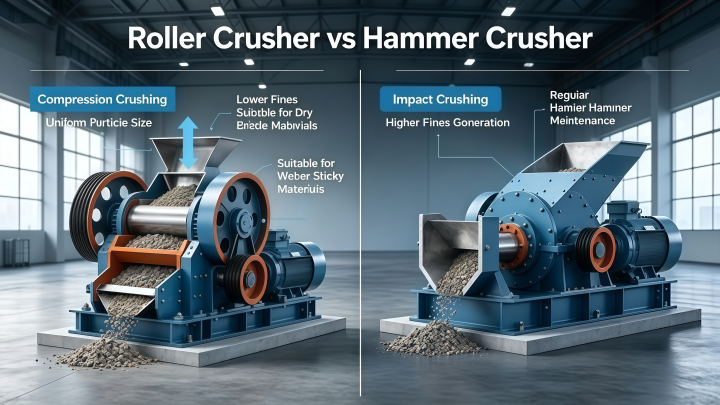
Working Principle: This machine uses compression between two rolls to fracture material, while a hammer crusher relies on impact from rotating hammers to break particles.
Suitable Materials: It excels at processing medium-hard to soft materials, especially those that are wet or sticky. The hammer crusher is better suited for dry, brittle materials with higher hardness.
Product Shape: This equipment produces a more uniform and cubical product shape. The hammer crusher tends to generate more fines and elongated particles.
Maintenance Cost: The device has fewer wear parts and generally requires less frequent maintenance. The hammer crusher often needs more regular replacement of hammers and impact plates.
Overload Handling: This model features a safety system that allows the roll to give way when encountering unbreakable objects. The hammer crusher may suffer more damage from tramp metal.
Where Can You Use a Roller Crusher?
The roller crusher finds application in numerous fields because of its effective and consistent crushing action. Its versatility makes it a useful tool across various industrial sectors.
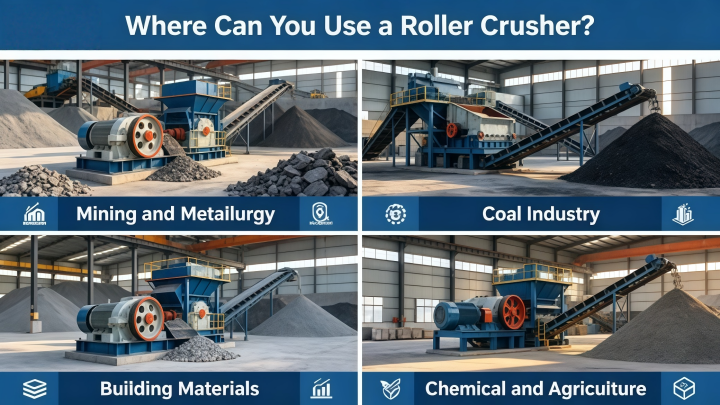
Mining and Metallurgy: This equipment is suitable for secondary crushing of ores like iron ore and copper ore, providing a uniform feed for downstream grinding.
Coal Industry: A primary application area, the machine prepares coal for power generation and coking, ensuring even particle size for combustion.
Building Materials: It is used to crush limestone, gypsum, and clinker, which are critical in cement production and creating construction aggregates.
Chemical and Agriculture: In the chemical industry, this device processes fertilizers and pigments, while in agriculture, it crushes feed ingredients and biomass.
Frequently Asked Questions About Roller Crushers
How do I adjust the output size of my roller crusher?
You can adjust the gap between the rolls. On most models, this is done by adding or removing shims behind the bearing housing or by turning an adjustment bolt on a wedge mechanism.
How often do the roller skins need to be replaced?
The replacement interval depends on the abrasiveness of the material being processed. For medium-hard materials like limestone, roller skins may last several thousand hours. For more abrasive materials like slag, more frequent inspection and replacement are recommended.
What is the maximum moisture content my roller crusher can handle?
Many designs can process materials with moisture content up to a certain level. The exact limit varies by model, but this equipment generally handles wetter feeds better than hammer crushers, which are prone to clogging.