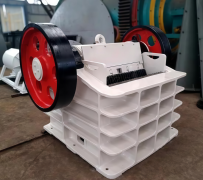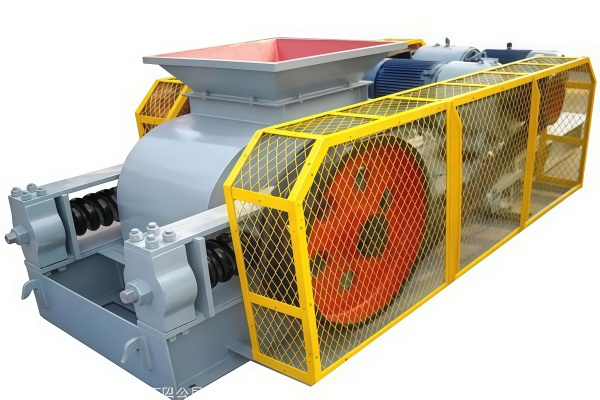
Double Roll Crusher
Double Roll Crushers are used for medium and fine crushing of brittle materials, producing uniform cubical finished aggregates with minimal fine powder for use in mining, sand‑making, chemical, building‑materials and coal‑processing industries. Prices typically range from $8,000 to $120,000. Feed opening size: ≤400mm Production capacity: 5‑100 tons/hour Discharge opening adjustment range: 2‑50mm Spindle speed: 100‑300 rpm Motor power: 7.5‑90kW
What is Double Roll Crusher?
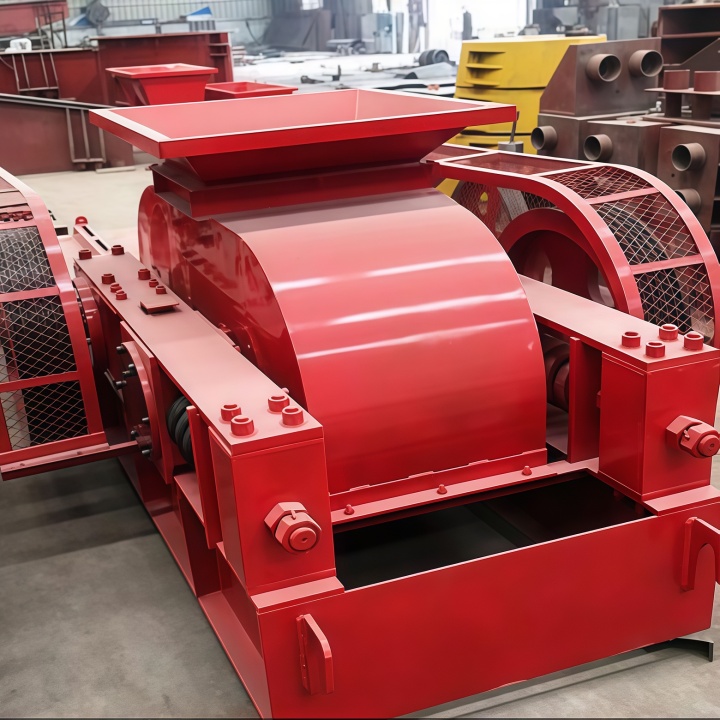
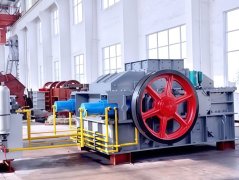
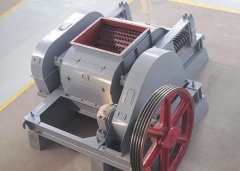
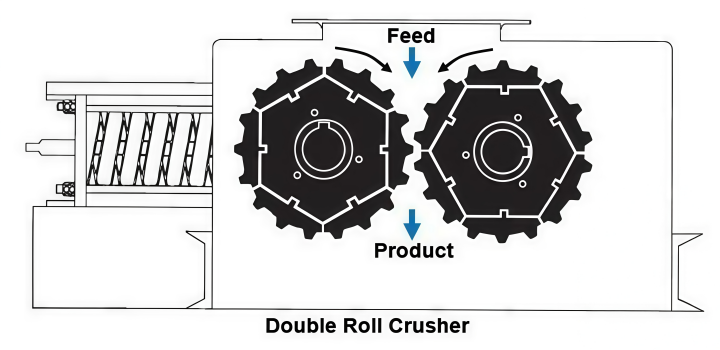
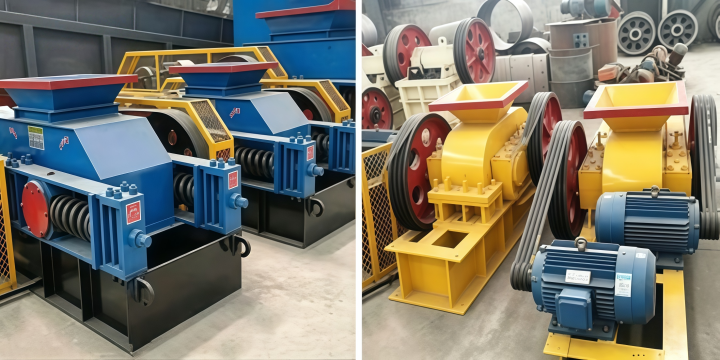
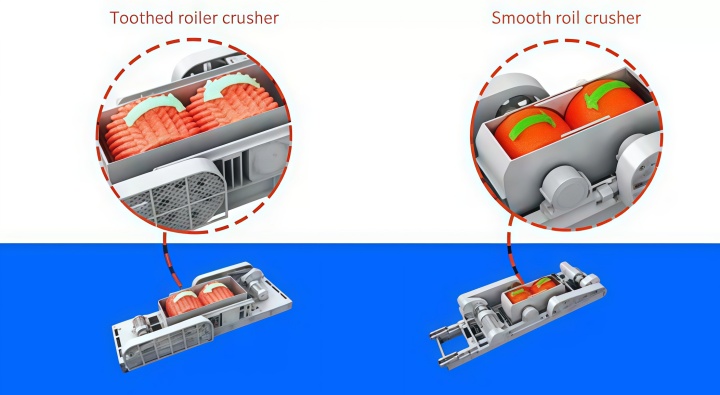
Double Roll Crusher consists of two parallel-mounted cylindrical rollers driven independently by separate motors to rotate in opposite directions. Material falls from the upper feed port into the crushing chamber between the two rollers, where it is broken down to the target size under extrusion and shearing.
Typical processed materials include coal, limestone, coke, clay, salt, and potash. Double Roll Crusher is distinguished by its controllable discharge size, as the gap between the two rollers can be adjusted according to production requirements, with the gap directly determining the maximum discharge size. The equipment features a simple structure with few moving parts, making it suitable for prolonged continuous operation.
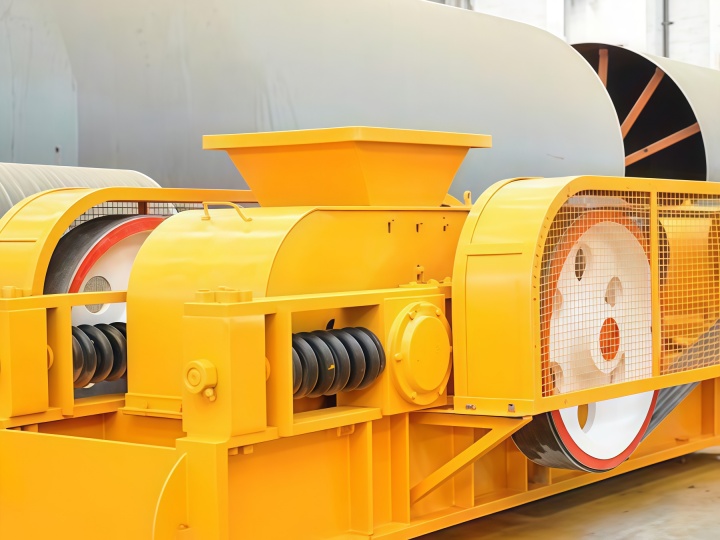
Double Roll Crusher Video Showcase
How Does Double Roll Crusher Work?
The working process is divided into three stages: feeding, crushing, and discharging. Material entering the crushing chamber is subjected to the nip force generated by the rotating rollers and is forced into the roller gap. Within this area, the material undergoes extrusion and shearing, fracturing when stress exceeds its compressive strength. Smaller particles pass through the gap, while oversized particles are repeatedly crushed until they can pass. The roller gap is controlled through hydraulic or mechanical devices, which is key to size adjustment.
The product is equipped with overload protection, allowing the rollers to automatically retract when uncrushable objects enter, letting them pass and then resetting to prevent damage. Crushed material is continuously discharged by gravity without stopping. The equipment is typically used with screening equipment, where classified material can be returned for re-crushing, forming a closed-loop circuit.
The Core Technical Parameters of Double Roll Crusher
The technical parameters for model are as follows:
| Model | Roll Diameter × Roll Length (mm) | Max Feed Particle Size (mm) | Discharge Particle Size (mm) | Processing Capacity (t/h) | Motor Power (kW) | Equipment Weight (kg) | Overall Dimensions (mm) |
|---|---|---|---|---|---|---|---|
| 2PG400×250 | φ400×250 | ≤100 | 2-10 | 5-10 | 11×2 | 1200 | 2200×1100×1300 |
| 2PG610×400 | φ610×400 | ≤120 | 2-15 | 10-20 | 15×2 | 2800 | 2800×1300×1500 |
| 2PGC600×900 | φ600×900 | 300-600 | 30-150 | 80-120 | 37 | 7800 | 4500×1900×1350 |
| 2PG0806 PT | φ800×600 | <60 | 0.5-20 | 10-100 | 18.5×2 | 5200 | 3800×1600×1200 |
| 2PGC800×1050 | φ800×1050 | 500-800 | 30-150 | 100-160 | 45 | 12600 | 2550×2050×1100 |
| 2PG900×900 | φ900×900 | 600-900 | 30-200 | 150-200 | 55 | 15000 | 5200×2200×1600 |
| 2PG1008 PT | φ1000×800 | <80 | 0.5-30 | 15-130 | 30×2 | 6800 | 4200×1800×1400 |
| 2PG1208 PT | φ1200×800 | <90 | 0.5-30 | 30-250 | 45×2 | 9500 | 4800×2000×1500 |
| 2PG1212 PT | φ1200×1200 | <90 | 0.5-30 | 40-350 | 55×2 | 13500 | 5500×2200×1600 |
| 2PG1612 PT | φ1600×1200 | <110 | 0.5-40 | 60-500 | 75×2 | 18000 | 6200×2500×1800 |
What Core Advantages Does Double Roll Crusher Offer?
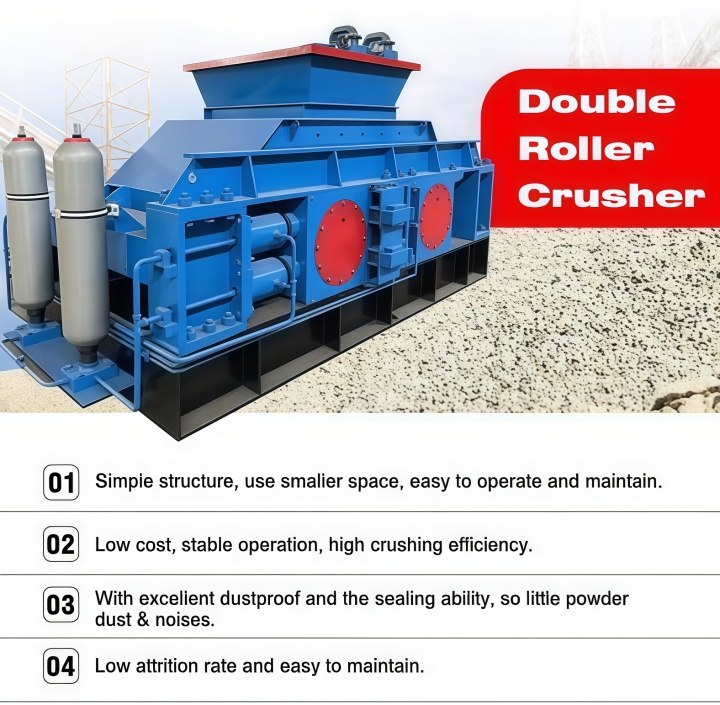
Double Roll Crusher offers multiple practical advantages in discharge accuracy, energy consumption, protection, and maintenance.
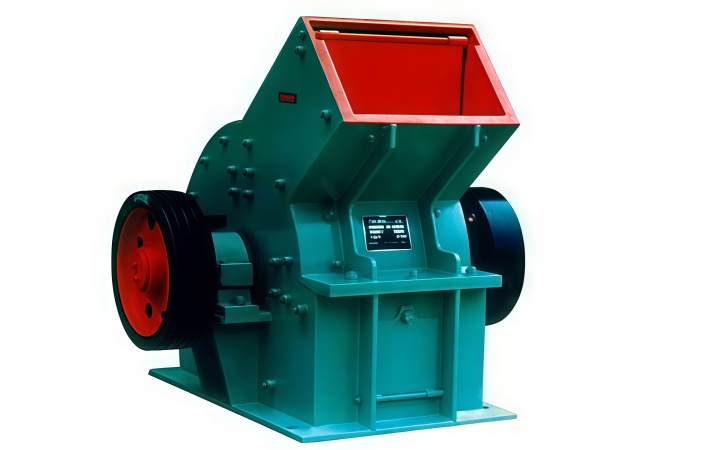
Particle Size Control: The roller gap is adjusted mechanically or hydraulically, resulting in concentrated discharge size distribution. Production data shows the discharge size standard deviation is reduced by thirty to forty percent compared to hammer crushers, with over-fine particles below five percent, making it suitable for materials sensitive to over-crushing. This makes Double Roll Crusher a common choice for coke sizing and potash crushing.
Energy Performance: The extrusion principle uses energy for compression rather than high-speed impact. Under the same conditions, unit energy consumption is about twenty percent lower than impact crushers, helping control per-ton processing costs.
Operational Longevity: Rollers are made from wear-resistant alloy, with roller surface life exceeding two thousand hours under typical conditions. Vibration and noise are within controllable ranges, with long intervals between failures, meeting twenty-four-hour continuous operation requirements.
Overload Protection: When uncrushable materials enter, one roller automatically retracts to enlarge the gap, then resets. This prevents jamming or damage to critical components, reducing production line interruptions.
Maintenance Costs: Roller surface wear can be repaired through field build-up welding without removing the entire roller. Repair costs are approximately thirty to forty percent of complete roller replacement, reducing spare parts expenditure and downtime.
What Application Scenarios Is Double Roll Crusher Suitable For?
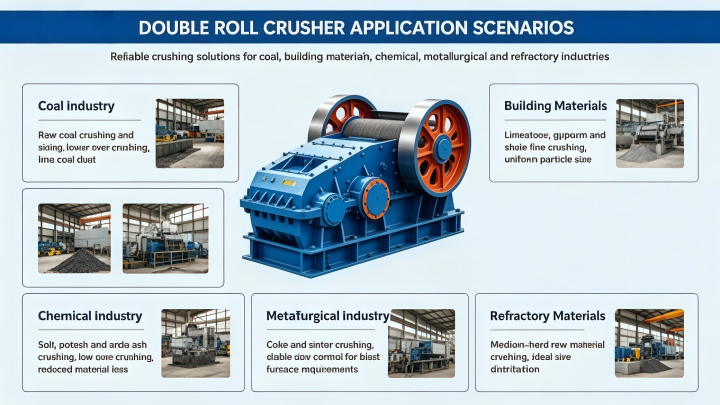
Double Roll Crusher is applied in material crushing across multiple industrial sectors.
Coal Industry: Used for raw coal crushing and sizing. Discharge size meets washing or combustion requirements, with lower over-crushing reducing coal dust generation. The equipment performs stably with lower-moisture coal.
Building Materials: Used for fine crushing of limestone, gypsum, and shale in cement and brick production. Crushed material has good size uniformity, benefiting subsequent grinding. The equipment has mature applications in limestone crushing.
Chemical Industry: Suitable for salt, potash, and soda ash. These materials are sensitive to over-crushing, and the low over-crushing characteristics match process requirements, reducing material loss and ensuring yield.
Metallurgical Industry: Used for coke and sinter crushing in steel production. Coke particle size must meet strict blast furnace standards, and the equipment's size control capability suits this process.
Refractory Materials: Used for crushing medium-hard refractory raw materials, achieving ideal size distribution and lower over-crushing ratios.
What Results Can Double Roll Crusher Achieve in Practice?
Application data shows Double Roll Crusher achieves stable crushing results across different materials, with reliability and economy verified in multiple fields.
Coal Case. A coal plant processed material below fifty millimeters, requiring discharge below eight millimeters. After three thousand hours, particles larger than eight millimeters were below three percent, wear was acceptable, and no unscheduled downtime occurred.
Coke Case. A coking plant used the equipment for coke sizing, requiring concentration in the twenty-five to sixty millimeter range. Production yield within the target range remained above eighty percent, with over-fine particles at approximately six percent, meeting blast furnace requirements.
Limestone Case. A cement line crushed limestone below eighty millimeters, requiring all discharge below six millimeters. After four thousand hours, discharge qualification remained above ninety-five percent, with operating costs lower than the previous hammer crusher.
Choose the Right Double Roll Crusher Model
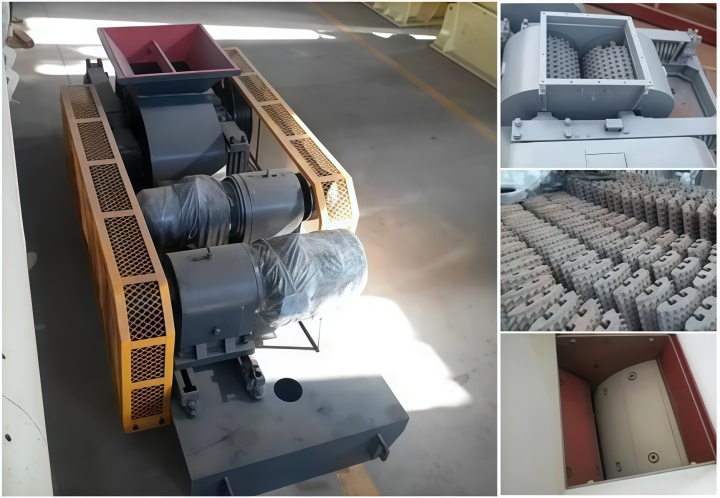
Selection is based on material characteristics and production requirements.
Material Hardness: The equipment suits materials with compressive strength below one hundred fifty megapascals. If hardness exceeds this range, roller surface wear resistance must be evaluated.
Feed Size: Maximum feed size determines minimum roller diameter. Feed size should not exceed one-third of roller diameter; otherwise, material cannot be properly nipped.
Discharge Size: Target discharge size determines gap setting and directly affects capacity. Finer discharge results in lower capacity, requiring balance.
Processing Capacity: Different models vary in diameter, length, and power. Select based on production requirements. Trial crushing with representative samples is recommended to verify results and determine optimal gap and speed.
Installation and Maintenance Points
Installation requires concrete foundation reaching design strength, with surface flatness within specified limits. After positioning, use a level to calibrate, ensuring both roller axes remain parallel and horizontal. Drive system alignment must meet specifications, and the feeding device should ensure even distribution across the full roller length.
Routine maintenance includes regular roller surface wear inspection and recording. Bearing lubrication should follow scheduled intervals using specified lubricants. Before each startup, check fastening bolts and belt or chain tension.
Periodic overhaul requires comprehensive inspection of bearing clearance, gear meshing, and hydraulic sealing after certain operating hours. Dynamic balance testing is needed after build-up welding repair. The electrical control system requires regular calibration of overload protection sensitivity.
Frequently Asked Questions
Difference from single-roll crusher?
Double Roll Crusher has both rollers participating in crushing, providing greater force and more uniform stress distribution. A single-roll crusher has only one active roller, with both efficiency and uniformity inferior to this product, while the latter offers more flexible gap adjustment.
How is roller surface wear repaired?
Build-up welding with wear-resistant rods can be performed on site without roller removal, typically requiring two to three days of downtime. Repair frequency depends on material abrasiveness.
Low-temperature operation?
Use lubricants with good low-temperature performance and prevent material from freezing in the feed port by preheating or adding heat tracing. No-load running is recommended before first startup in low temperatures.
When to readjust gap?
When discharge becomes coarser or oversized particles increase, the gap has enlarged due to wear and requires adjustment. Regular discharge size testing is the direct method for determining whether gap adjustment is needed.
What is the price range of a double roll crusher?
The price depends on the model, capacity, and configuration, typically ranging from ¥16,500 to ¥660,000. Contact us with your material type and required throughput, and we will match the right model and provide a customized quote.
How long is the delivery time for a double roll crusher?
Standard models are usually delivered within 15–20 working days. Custom‑built units may take 30–45 working days depending on specifications. Contact our sales team for exact delivery timelines based on your order.