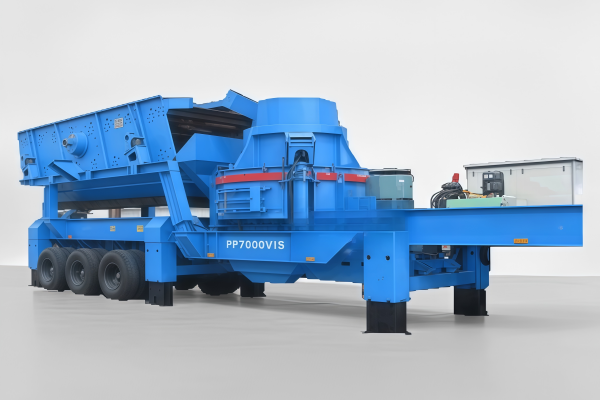
Mobile Impact Crusher
Mobile Impact Crusher is suitable for medium‑hard material crushing, widely used in quarrying, construction waste recycling, road construction aggregate production, producing high‑quality cubical finished aggregates. Prices typically range from $28,000 to $420,000. Feed opening size: ≤650mm Production capacity: 30‑550 tons/hour Discharge opening adjustment range: 15‑120mm Spindle speed: ≤520 rpm Motor power: 55‑315kW
What Is a Mobile Impact Crusher and How Does It Differ from Stationary Crushers?
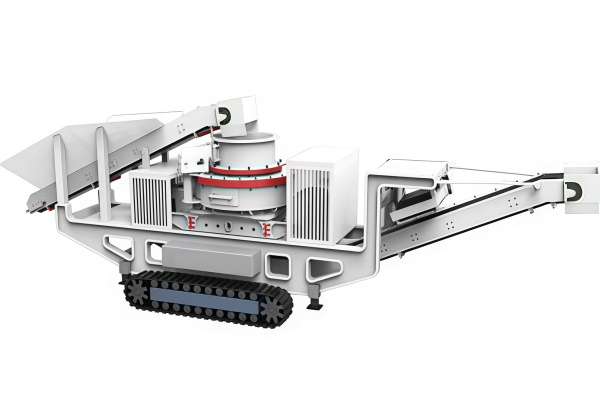
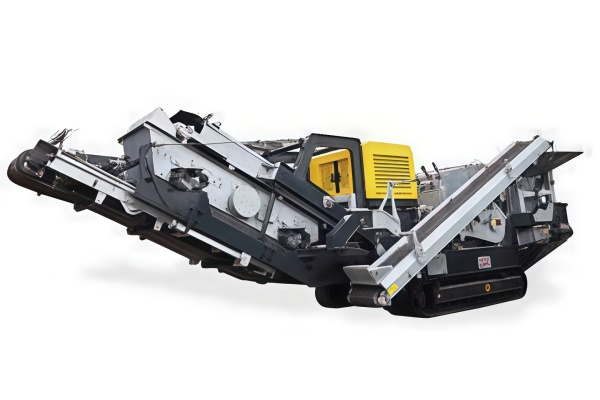
This equipment is a self-contained crushing plant with feeder, crusher, conveyors, and power unit all mounted on a tracked or wheeled chassis. Unlike stationary crushers that require concrete foundations and permanent power connections, this equipment arrives on site and becomes operational within 30 minutes. No disassembly is required when relocating between job sites. These machines weigh between 38 and 67 tonnes, with processing capacities ranging from 150 to 500 tonnes per hour depending on the model and application.
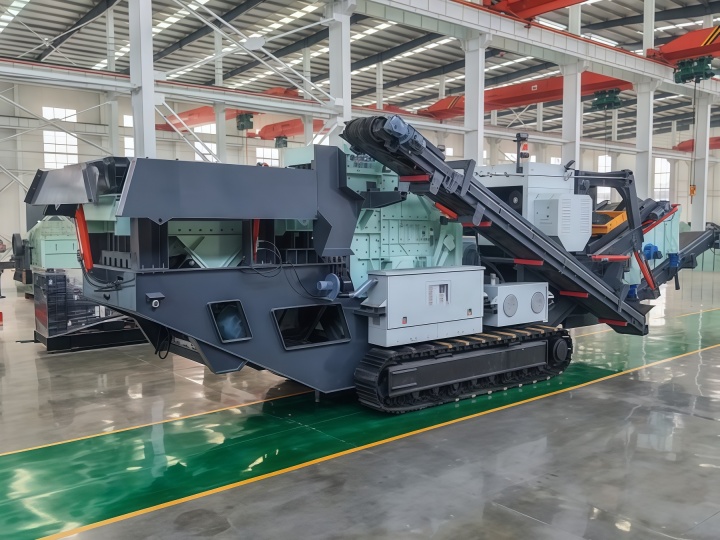
Mobile Impact Crusher Video Showcase
How Does a Mobile Impact Crusher Work?
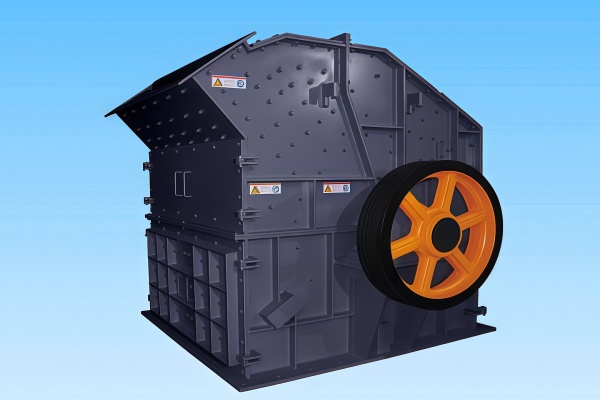
The unit uses impact energy rather than compression to fracture material. Material enters the crushing chamber and contacts rotor blow bars rotating at 45 to 60 meters per second, equivalent to 162 to 216 kilometers per hour. The blow bars fracture the material in milliseconds. Undersized particles pass through, while larger pieces are thrown against adjustable impact plates for secondary breakage. The impact plate angle can be adjusted hydraulically during operation without stopping the machine.
Under identical feed conditions, the Mobile Impact Crusher achieves a 25-30% higher first-pass yield compared to jaw crushers. For limestone below 150 MPa, the reduction ratio reaches 30:1, versus 4:1 to 6:1 for jaw crushers. This means this equipment can often replace two to three stages of crushing with a single unit, reducing both equipment investment and operating costs.
An important operational detail often overlooked: energy consumption is highest during startup. Full-load operation is actually more energy-efficient than partial loads, and maintaining consistent feed can reduce unit energy consumption by 10-15% compared to intermittent feeding.
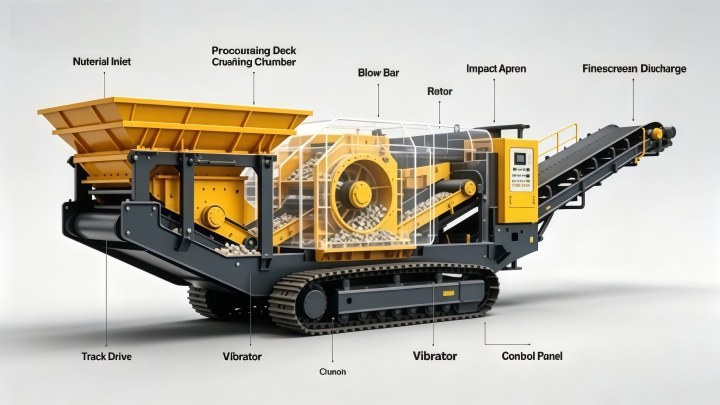
Mobile Impact Crusher Key Technical Specifications
The following table presents verified technical data for Mobile Impact Crusher models from leading manufacturers. Specifications vary by configuration.
| Parameter | SANY SCIM1213RC9 | SANY SCIM1213SEC6 | Sandvik QI341 | Sandvik QI353 | Sandvik QI442 |
| Max Feed Size | 600 mm | 600 mm | 500 mm | 700 mm | 800 mm |
| Capacity | 150–350 t/h | 150–350 t/h | 300 t/h | 400 t/h | 500 t/h |
| Engine Power | 368 kW | 96 kW | — | — | — |
| Operating Weight | 67 t | 66 t | 40.3 t | 46 t | 56.9 t |
| Transport L×W×H | 21.8×3.4×3.9 m | 21.8×3.4×3.9 m | — | — | — |
| Drive System | Diesel direct | Electric | Direct | Direct | Direct |
| Crushing Strength | <150 MPa | <150 MPa | — | — | — |
Sources: Technical specifications for Sany SCIM1213 series and Sandvik QI series products; some data have been verified through on-site operations.
What Are the Main Advantages of a Mobile Impact Crusher?
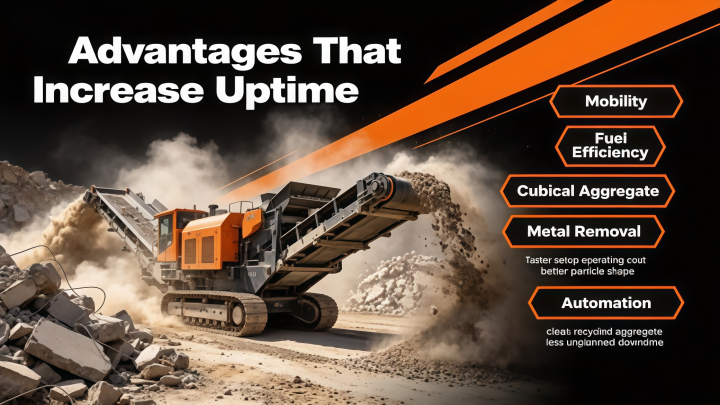
The Mobile Impact Crusher delivers five key operational benefits that lower cost per tonne, increase uptime, and improve product quality.
Mobility. The entire unit moves as a single assembly, eliminating disassembly when relocating. Most models are operational within 10 to 30 minutes of arrival. Remote-controlled tracking allows repositioning without shutting down the crusher. In real projects, this mobility typically increases annual equipment utilization by 15-20%.
Direct drive fuel efficiency. Most models use clutch-driven direct drive systems. Compared to hydraulic drives, direct drive reduces parasitic power loss by 15-20%, saving 3-5 liters of fuel per hour when processing limestone. Over 1,500 operating hours annually, this translates to 4,500-7,500 liters saved per year. Fuel costs account for 25-35% of total operating costs, making this saving meaningful to project profitability.
Cubical product shape. The impact action produces cubical particles with low flat and elongated content. In actual operations, flakiness index is typically below 8%. In multiple road base projects, aggregate produced by this equipment has reduced cement consumption due to its gradation and particle shape.
Integrated screening and metal removal. Many models include pre-screening decks that remove fines before crushing, reducing blow bar wear. Overband magnets extract approximately 95% of steel rebar from crushed concrete, producing clean recycled aggregate. In demolition recycling projects, this enables finished aggregate to be used directly for backfill without secondary processing.
Automation and remote monitoring. Modern units feature load-sensing hydraulic controls, automatic overload protection, and remote diagnostics. The continuous feed system automatically adjusts feeder speed to maintain chamber fill. In multiple mining projects, remote diagnostics have helped operators identify blow bar wear in advance, reducing unplanned shutdowns.
Mobile Impact Crusher Field Performance Data
The following data comes from actual job site records.
At a limestone mine in Southeast Asia, a Mobile Impact Crusher operated for 18 months, processing over 800,000 tonnes with one blow bar change. At an urban demolition site in North America, the unit processed approximately 2,500 tonnes of concrete daily, with deployment to production taking 22 minutes. On a European highway expansion project, the unit tracked along the work face while crushing, achieving a single-day peak of 420 tonnes per hour with no downtime for one week.
Blow bar life: 3,000-6,000 hours for limestone; 2,000-3,500 hours for recycled concrete; 800-1,500 hours for abrasive basalt
Full-load fuel consumption: 15-25 liters per hour, depending on material hardness and feed consistency
Site deployment time: Approximately 18 minutes average from arrival to production
Steel separation rate: Over 95% in demolition recycling applications
Where Can a Mobile Impact Crusher Be Used?
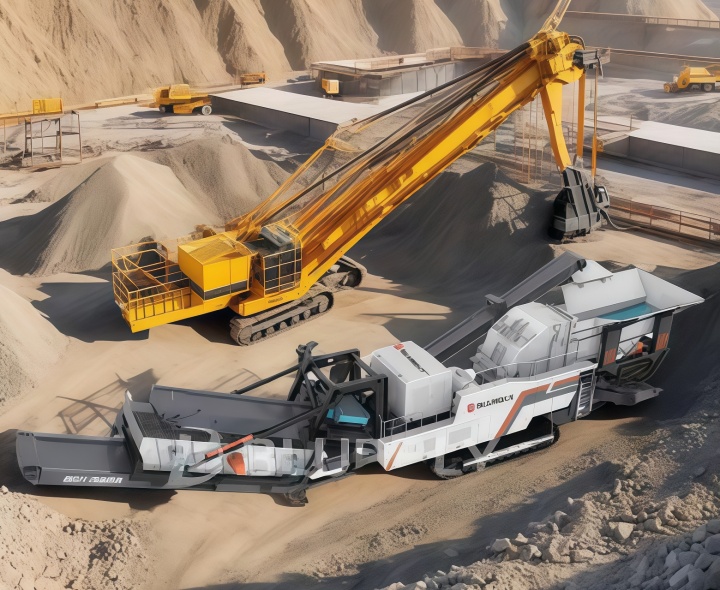
The Mobile Impact Crusher adapts to various processing environments. Each application presents unique material challenges that influence rotor speed settings, blow bar selection, and screen configurations.
Building and demolition recycling. This equipment processes concrete rubble, asphalt millings, and mixed C&D waste into specification aggregate for backfill and subbase. With a closed-circuit screen, it produces 0-32 mm base material in a single pass.
Natural stone processing. The unit processes limestone, dolomite, and medium-hard rock into construction aggregates. Adjustable impact plates allow product size fine-tuning to meet gradation requirements. The equipment is not recommended for hard rock above 150 MPa compressive strength.
Infrastructure and road construction. The Mobile Impact Crusher produces base course and subbase aggregate directly at the project site. The ability to track while crushing allows continuous production as the work face advances, eliminating round-trip haulage and reducing material costs by 40-60%.
How to Choose the Right Mobile Impact Crusher for Your Operation?
Selecting the right equipment requires evaluating four key factors in priority order. Material hardness is the primary decision factor, with the 150 MPa threshold being the critical dividing line between impact crusher and cone crusher selection.
Feed material characteristics. Measure compressive strength and abrasiveness. The Mobile Impact Crusher performs well below 150 MPa. At equivalent throughput, the impact crusher consumes 1.2-1.5 kWh per tonne versus 1.8-2.2 kWh for a cone crusher, representing a 15-20% energy saving. For a 500,000 tonne per year quarry, this saves $30,000-50,000 annually in electricity costs. However, blow bar wear costs $0.08-0.12 per tonne versus $0.05-0.07 for cone crusher liners. Below 150 MPa, the impact crusher offers better overall cost; above 150 MPa, the cone crusher becomes more economical.
Production targets. Match capacity to your hourly tonnage requirement. Oversizing increases fuel costs; undersizing creates bottlenecks.
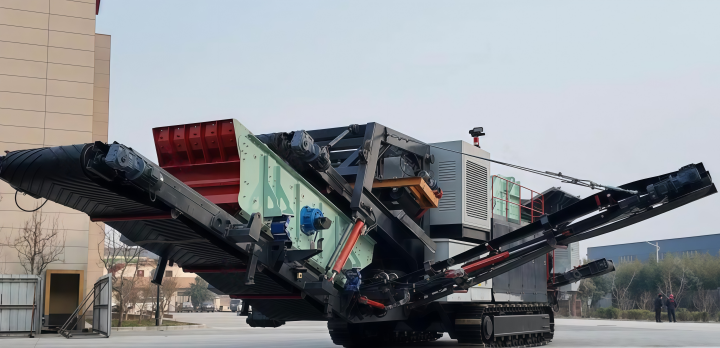
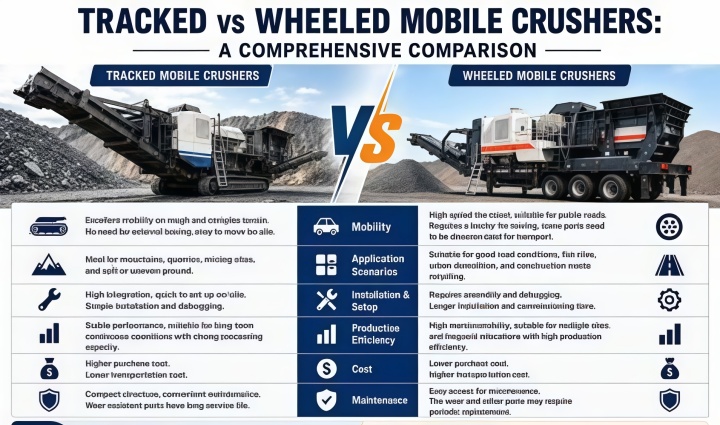
Site conditions. Assess access roads, working space, and mobility needs. Tracked models suit rough terrain; wheeled models suit paved sites with frequent road moves.
Power availability. Diesel-direct drive offers greater mobility. Electric-drive models reduce operating costs by 40-60% where grid power is available.
Mobile Impact Crusher Model Comparison
| Model | Drive | Capacity | Weight | Best For |
| SANY SCIM1213RC9 | Diesel direct | 150–350 t/h | 67 t | Remote sites without grid power |
| Sandvik QI353 | Diesel direct | 400 t/h | 46 t | Medium-scale quarrying and recycling |
| Sandvik QI442 | Diesel direct | 500 t/h | 57 t | Large-scale quarrying and high-volume recycling |
Frequently Asked Questions About the Mobile Impact Crusher
What is the fuel consumption of this equipment at full load?
Full-load fuel consumption ranges from 15 to 30 liters per hour depending on model and material hardness. Direct drive models consume 15-20 L/h for limestone and 22-30 L/h for harder recycled concrete. Electric-drive models consume no fuel when grid power is available.
What is the typical payback period for this equipment?
Most operators achieve payback within 5 to 7 years based on a cost-per-tonne model. Primary savings come from eliminated haulage and disposal costs—typically $8-15 per tonne saved versus off-site processing. A unit processing 150 tonnes per hour for 1,500 hours annually can save $1.8-3.4 million in transport costs over five years.
For concrete recycling, does this equipment outperform a cone crusher?
Yes. It is designed for concrete and asphalt recycling because impact action breaks material along existing cracks and produces cubical particles. A cone crusher uses compression and is better suited for producing uniform aggregates from hard rock. For rebar-containing recycled materials, the impact chamber and magnet system are purpose-built.
Does a Mobile Impact Crusher require a concrete foundation?
No. This equipment operates directly on stable ground without concrete foundation or anchoring. The tracked chassis provides stability during crushing, and hydraulic legs offer additional support. This eliminates foundation costs typically ranging from $20,000-50,000 for stationary installations.
What is the maximum feed size a Mobile Impact Crusher can accept?
Maximum feed size ranges from 500 mm to 800 mm depending on the model. The SANY SCIM1213 series accepts 600 mm, Sandvik QI353 accepts 700 mm, and Sandvik QI442 accepts 800 mm. Feed material larger than these specifications requires primary jaw crushing before entering the crusher.
How difficult is it to operate a Mobile Impact Crusher? Does it require special training?
Modern units feature touchscreen interfaces and automated control systems. An operator can work independently after 2-3 days of on-site training. In actual projects, most operators master feed speed adjustment, discharge setting, and daily maintenance procedures within one week. Compared to stationary crushing plants, this equipment offers a more straightforward interface with higher automation, reducing both training requirements and operational complexity.