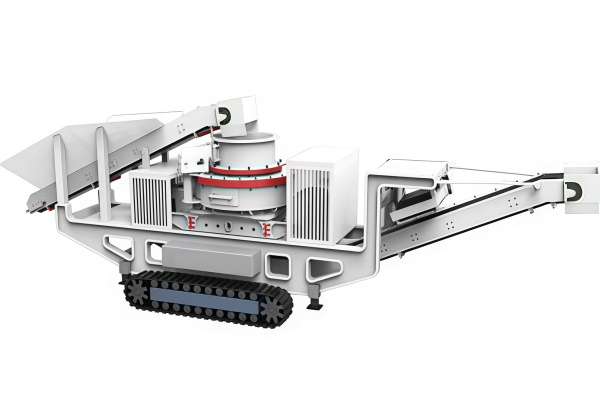
Tracked Impact Crusher
Tracked Impact Crusher are used for mobile primary and secondary crushing of rock and construction waste, producing high‑quality cubic aggregates for quarry, mining, road construction and construction waste recycling industries. Prices typically range from $85,000 to $420,000. Feed opening size: ≤650mm Production capacity: 80‑450 tons/hour Discharge opening adjustment range: 20‑120mm Travel speed: ≤3.5 km/h Motor power: 160‑315kW
What Exactly Is a Tracked Impact Crusher?
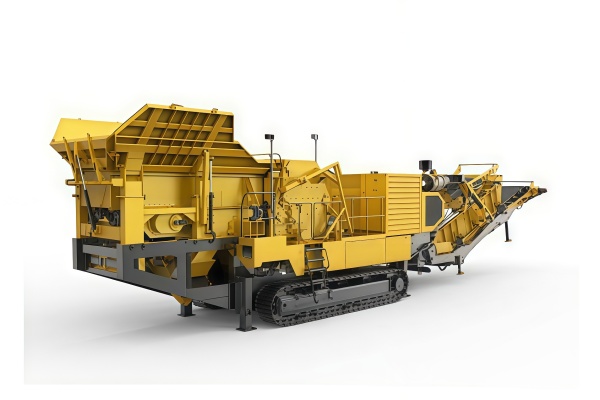
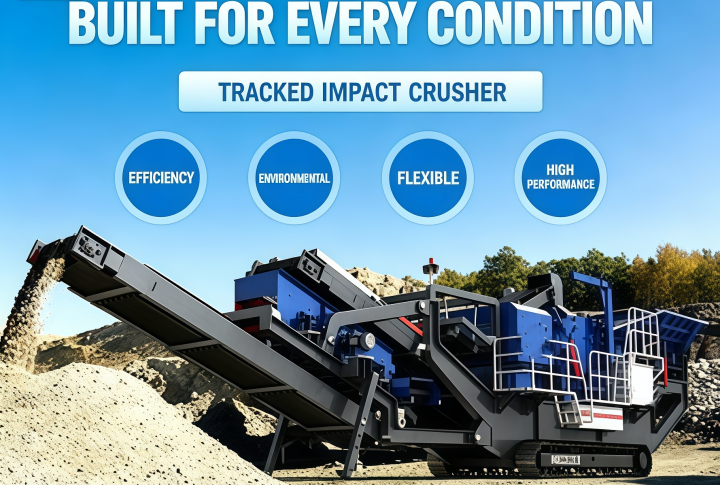
Tracked Impact Crusher is a self-propelled crushing unit that integrates a horizontal shaft impact crusher with a tracked undercarriage, allowing it to move freely across job sites under its own power. Unlike stationary crushers that require concrete foundations and permanent installation, this equipment uses high-speed rotors and blow bars to fracture material through impact force, producing cubical-shaped aggregates. The unit typically processes 150 to 450 tons per hour and serves as secondary or tertiary crushing equipment in production lines.
The global market for this equipment reached USD 314 million in 2024 and is projected to grow at a compound annual rate of 2.5 percent through 2031. The tracked undercarriage provides stable operation on slopes up to 20 degrees, allowing the machine to maintain full crushing capacity while repositioning.
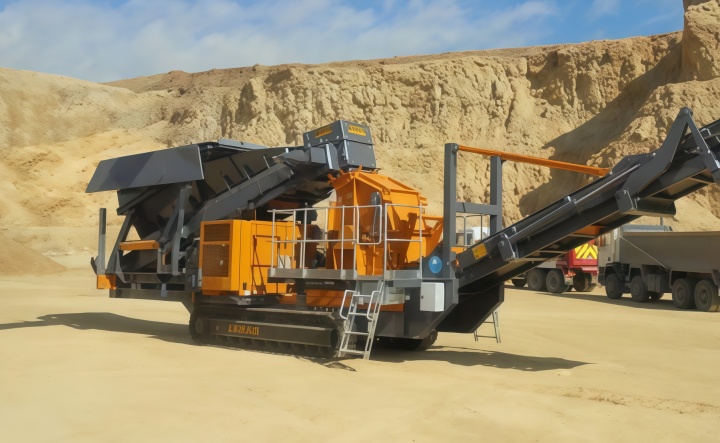
Tracked Impact Crusher Video Showcase
How Material Breaks Inside a Tracked Impact Crusher?
The equipment operates on the principle of impact reduction rather than compression. Material enters through the feed hopper into the crushing chamber, where a heavy rotor fitted with blow bars spins at 600 to 900 revolutions per minute. The blow bars strike the material with force exceeding 50 G-forces, shattering it along natural fracture lines. The fractured pieces are thrown against breaker plates at speeds up to 60 metres per second, causing secondary breakage, while particles collide with each other for further size reduction.
An optional pre-screen removes particles smaller than 30 millimetres before they enter the chamber, improving efficiency by approximately 15 percent. The hydraulic system allows operators to remotely adjust the gap between impact plates and the rotor, enabling real-time product size control without stopping production. When processing 200-millimetre reinforced concrete slabs, a single pass of the machine produces 80 percent product passing through a 40-millimetre screen, while simultaneously separating concrete from rebar and reducing magnetic separation workload by nearly half.
Field experience shows that when processing construction waste with high moisture content, adjusting the gap between blow bars and impact plates from 25 millimetres to 35 millimetres helps prevent wet material clogging. Daily pre-start checks, including visual inspection of blow bars, hydraulic oil level verification, and belt tension inspection, take less than 10 minutes. This inspection procedure has been adopted as standard operating practice by an Australian mine operation.
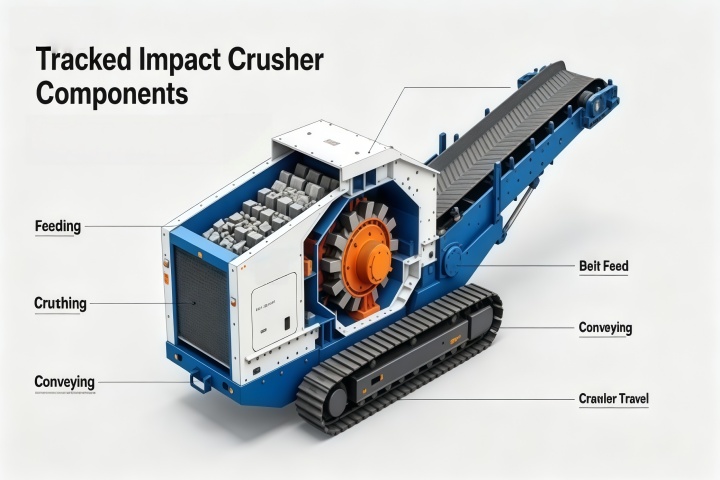
What Technical Data Defines a Tracked Impact Crusher?
The performance of this crusher depends on several key technical parameters. The table below presents official data for four mainstream models from 2024 to 2026.
| Parameter | Finlay I-100 | Keestrack R5 | Rockster R1000S | Kleemann MR 170 Z |
| Rotor Diameter | 860 mm | 1260 mm | 1040 mm | 1330 mm |
| Throughput Capacity | 250 tph | 350-400 tph | 280 tph | 700 tph |
| Max Feed Size | — | — | 600 mm | 1500×800 mm |
| Engine Power | 186-205 kW | 352-382 kW | 235-250 kW | 489 kW |
| Operating Weight | 26,200 kg | 45,500-55,800 kg | 30,400 kg | 95,000 kg |
The Kleemann MR 170 Z handles large quarry feed sizes. The Rockster R1000S offers compact design for frequent moves. The Keestrack R5 provides electric drive. Throughput, feed size, and weight are the key selection factors. Actual capacity varies by material and operation.
Choose the Right Tracked Impact Crusher for Your Operation
Selecting the right unit requires balancing material hardness, throughput requirements, site logistics, and budget to avoid mismatches between equipment capability and operational needs. These four factors are interrelated and must be evaluated based on actual job conditions.
Material hardness: The equipment performs well on medium-hard materials with compressive strength below 150 MPa. Granite exceeding 200 MPa accelerates blow bar wear and makes operating costs higher than cone crushers.
Throughput and gradation: 250 tons per hour requires a rotor diameter of at least 1000 millimetres, while 500 tons per hour requires over 1200 millimetres. Manufactured sand production requires higher rotor speeds, while base course aggregate production requires lower speeds.
Site conditions and budget: Urban demolition sites require machines with transport width under 2.55 metres and weight under 30 tonnes. The budget must account for fuel, wear part replacement costs, and the risk of downtime due to lack of local dealer support.
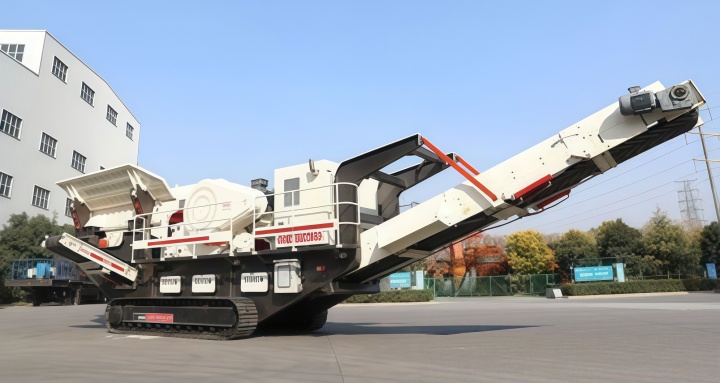
Why Tracked Impact Crusher Outperforms Stationary Crushers in Real-World Conditions?
This crushing equipment delivers four core operational advantages, with field data showing material handling cost reductions of 25 to 40 percent.
Mobility and deployment speed advantage: The tracked unit relocates across job sites without crane assistance. Stationary crusher relocation takes four hours, while this machine completes the same move in under 20 minutes. It starts production within 20 minutes of arrival, whereas stationary crushers require two to three days for installation.
Product quality and crushing efficiency advantage: The equipment produces aggregates with flakiness index below 15 percent, compared to 25 to 30 percent for jaw crushers. It reduces 600-millimetre feed to 40-millimetre product in a single pass with a reduction ratio of 15 to 1, eliminating the secondary cone crushing stage and reducing equipment investment by approximately 30 percent.
Intelligent control and equipment protection advantage: The machine features an automation system that continuously monitors feed rate and load, automatically adjusting to prevent overload. The hydraulic overload protection releases uncrushable objects within 0.3 seconds, helping prevent rotor damage that could cost USD 20,000 to 50,000 to repair.
Where Does a Tracked Impact Crusher Deliver the Greatest Value?
This equipment creates maximum value where mobility, product quality, or production flexibility outweigh stationary plant advantages. Common characteristics include wide-area material distribution, restricted site access, or short project duration.
Demolition and construction recycling: The machine processes concrete, bricks, and asphalt into reusable aggregates meeting ASTM D2940 and AASHTO M147 specifications. The impact action separates concrete from reinforcing steel, recovering over 95 percent of material for reuse from sites handling 10,000 to 50,000 tonnes of debris.
Quarry operations: The equipment processes limestone, dolomite, and gypsum into 19-millimetre and 9.5-millimetre aggregates with cubical shape preferred by asphalt producers, positioning directly at the quarry face to eliminate haul truck transport.
Infrastructure and urban demolition: Highway and airport projects use the machine to produce manufactured sand and well-graded aggregates meeting California DOT specifications. Compact dimensions and noise levels below 75 decibels allow operation in city centres without special permits.
Mining and specialised applications: The equipment handles secondary crushing of ores up to 350 MPa compressive strength, following the ore body as mining progresses. Additional applications include railway ballast production to AREMA specifications and drainage materials requiring precise gradation.
Real Project Case Studies
The following four case studies are sourced from publicly reported projects, demonstrating the equipment's performance across different operating environments.
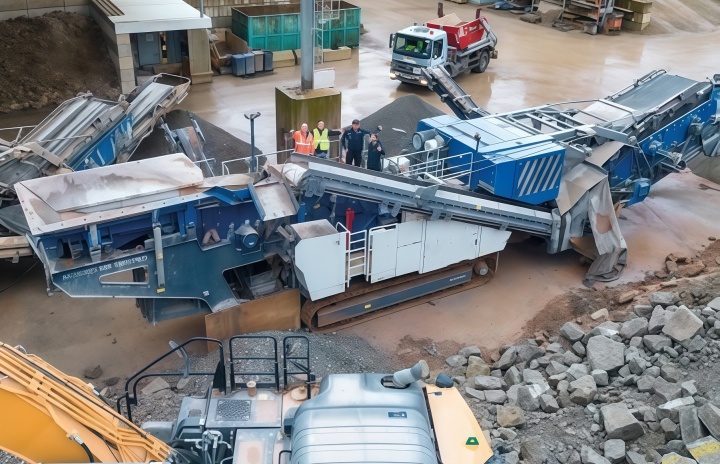
Demolition and recycling case: Feess GmbH in Germany used a Kleemann MR 130i PRO to process office building demolition waste, achieving over 90 percent on-site recycling rate with a maximum daily throughput of 1,800 tonnes. The unit achieved 20 percent higher capacity than the previous model while eliminating the need for additional fuel consumption for a separate screening machine.
Aggregate production case: Woitzel GmbH in Germany used a Keestrack R3 to produce RC-1 certified recycled aggregates from construction and demolition waste, processing approximately 160 tonnes per hour with better fuel economy than previously used jaw and impact crushers.
Mining application case: Tasmania Mines faced clogging issues with their existing production line due to wet fine materials, achieving only 50 to 75 percent of required capacity. After trialling a Kleemann MR 122 Z equipped with an independent double-deck pre-screen that effectively separated wet fines, capacity increased by 100 to 150 percent, and the mine purchased the unit after the trial.
Common Questions About Tracked Impact Crusher Operation and Maintenance
Based on field feedback from operators with over 500 cumulative operating hours.
What is the typical fuel consumption of a Tracked Impact Crusher per hour?Fuel consumption ranges from 30 to 46 litres per hour. The Metso LT1110 averages 30 to 35 litres per hour, while the SBM REMAX 600 consumes 38 to 50 litres per hour. Diesel-electric hybrid drive models save up to 25 percent fuel compared to conventional designs.
How does material moisture affect a Tracked Impact Crusher operation?
Moisture content above 10 percent can cause clogging and reduce capacity by up to 30 percent. Using a pre-screen to remove wet fines before they enter the crushing chamber helps maintain stable performance. Running the machine empty for 15 minutes can clear moisture buildup.
What is the noise level of a Tracked Impact Crusher during operation?
With soundproofing equipment, the unit operates below 75 decibels at 15 metres. This meets most municipal noise ordinances, allowing daytime operation in residential areas.
How often do blow bars need replacement on a Tracked Impact Crusher?
Blow bar lifespan ranges from 50 to 500 hours. Processing clean limestone achieves 300 to 500 hours, while processing abrasive materials like river gravel reduces lifespan to 50 to 100 hours. Daily visual inspection and weekly wear measurement are recommended.
How Tracked Impact Crusher Compares to Jaw and Cone Crushers?
The tracked impact model differs from jaw crushers and cone crushers in several aspects.
| Feature | Tracked Impact Crusher | Tracked Jaw Crusher | Tracked Cone Crusher |
| Primary Function | Secondary/Tertiary | Primary | Secondary/Tertiary |
| Feed Material Suitability | Medium-hard, low abrasion | Hard, high abrasion | Hard, high abrasion |
| Reduction Ratio | Up to 20:1 | Up to 8:1 | Up to 12:1 |
| Product Shape | Excellent cubical | Poor flaky | Good cubical |
| Operating Cost | Medium | Low | High |
The tracked impact unit offers the best product shape among the three and is frequently selected for concrete aggregates and asphalt production. For applications requiring a reduction ratio exceeding 10 to 1, combining this machine with a jaw crusher in a two-stage train can provide a balanced approach to cost and product quality.