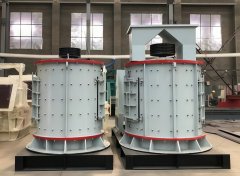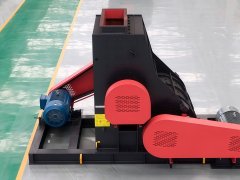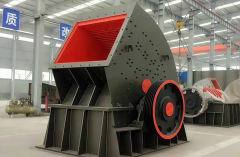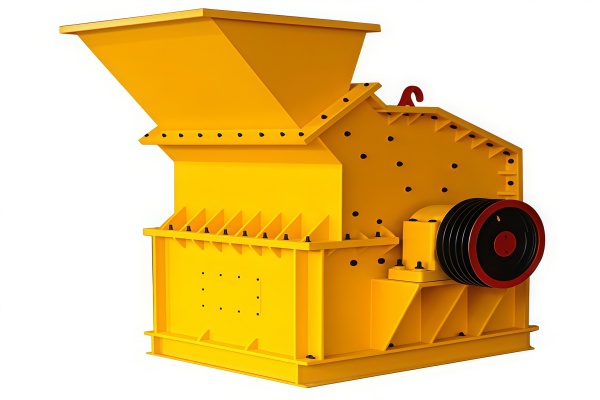
Limestone Crusher
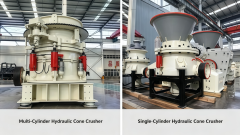
Limestone cone crushers are used for secondary and fine crushing of large limestone blocks, producing high‑quality aggregates of varying particle sizes for use in the construction, building materials, cement and decorative industries. Prices typically range from $25,000 to $450,000. Feed opening size: ≤520mm Production capacity: 30‑1,950 tons/hour Discharge opening adjustment range: 3‑60mm Spindle speed: ≤510 rpm Motor power: 75‑710kW
A limestone crusher is a heavy-duty industrial machine designed to crush limestone rock into smaller aggregates or powder for cement production, road construction, and FGD systems. Our models handle feed sizes up to 750mm with capacities from 50 to 450 tons per hour.
What Is a Limestone Crusher?
A Limestone Crusher is a specialized machine engineered to reduce large limestone rocks into smaller, uniform particles for various industrial applications. This equipment plays a fundamental role in processing one of the most widely used natural materials on earth. Limestone, with its compressive strength generally around one hundred fifty megapascals, belongs to the category of soft rock that responds well to mechanical crushing .
The Limestone Crusher addresses the core challenge faced by industries ranging from cement manufacturing to construction: transforming raw, oversized limestone into usable material with consistent particle size . Without a reliable Limestone Crusher, operations would struggle with inconsistent feed material, leading to inefficiencies in downstream processes such as calcination, blending, or road base preparation.
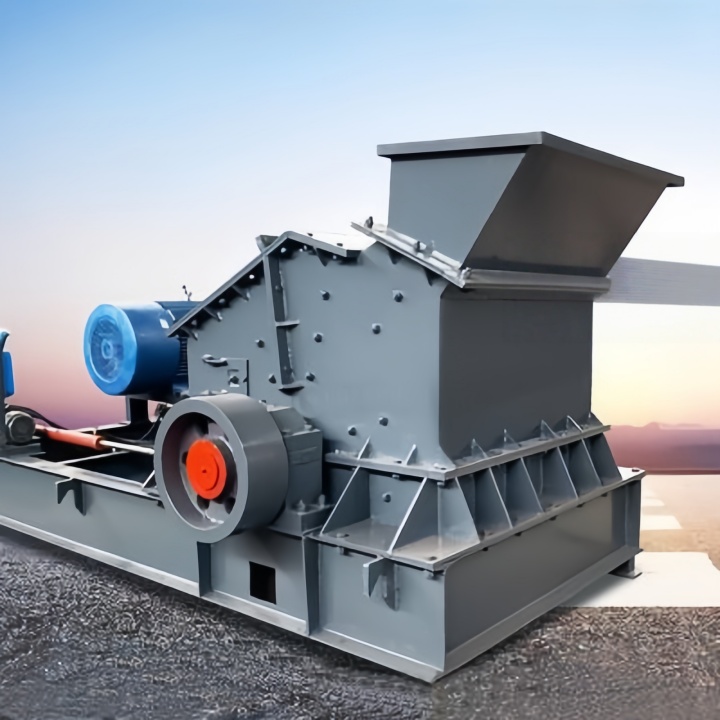
Limestone Crusher Video Showcase
How Does a Limestone Crusher Work?
The Limestone Crusher operates through a combination of mechanical forces that break down the rock structure. Depending on the crusher type, these forces include compression, impact, shearing, or attrition, all working to fracture the limestone along its natural cleavage planes.
Compression force: In jaw crushers, the Limestone Crusher uses a fixed jaw and a moving jaw to create compressive pressure that breaks the rock, with the motor driving the eccentric sleeve to generate the crushing action .
Impact force: In impact crushers and hammer mills, the Limestone Crusher relies on high-speed rotors equipped with hammers or blow bars that strike the feed material, throwing fragments against breaker plates for secondary crushing .
Shearing and attrition: Some Limestone Crusher designs incorporate grinding surfaces that rub against each other, gradually refining the limestone as particles pass through progressively narrower gaps .
Classification and recirculation: Advanced Limestone Crusher systems include screening mechanisms that separate particles by size, returning oversized material to the crushing chamber for additional processing to ensure uniform output .
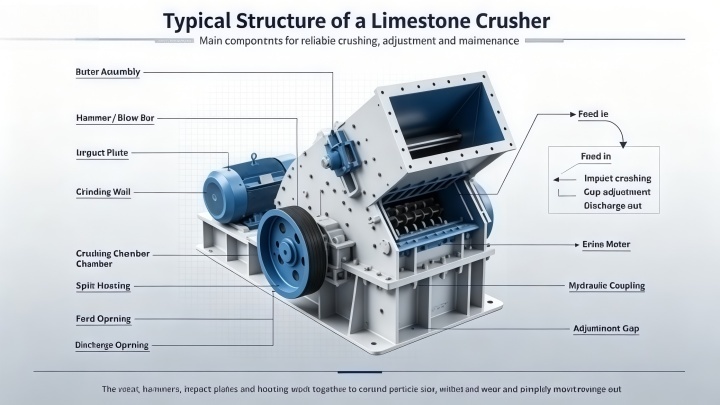
What Is the Typical Structure of a Limestone Crusher?
The Limestone Crusher features a methodically engineered structure designed for durability, accessibility, and efficient material flow. Each component plays a specific role in the crushing process, contributing to the machine's overall reliability.
Rotor assembly: The rotor consists of a forged steel shaft with integral discs or key-fitted discs, with hammers arranged around the circumference, balanced statically to ensure smooth operation .
Grinding wall and breaker plates: These components are arranged symmetrically around the rotor, carrying wear-resistant grinding plates that work with the hammers to achieve size reduction, with adjustable distance between plates and hammers for product size control .
Housing and frame: The Limestone Crusher housing is typically of split construction, fabricated from welded steel plates with suitable stiffening, providing maximum accessibility for inspection and maintenance .
Hammer design: The Limestone Crusher employs a two-part hammer consisting of a head and arm, with the head made of wear-resistant steel that can be replaced separately when worn, extending the service life of the assembly .
Drive system: The Limestone Crusher is driven through an electric motor, often with a scoop-type hydraulic coupling and gearbox, providing smooth power transmission and overload protection .
What Are the Common Types of Limestone Crusher Equipment?
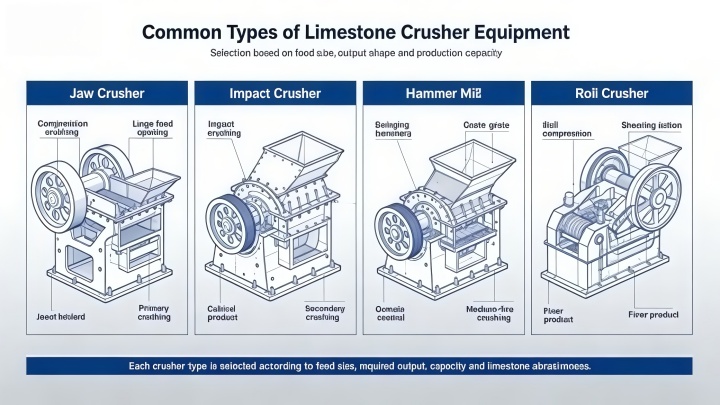
The Limestone Crusher comes in multiple configurations, each suited to specific stages of size reduction and material characteristics. Selection depends on factors such as feed size, desired output, production capacity, and the abrasiveness of the limestone.
Jaw crusher: This Limestone Crusher type serves as primary crushing equipment, handling large feed openings and producing a coarse product, ideal for the first stage of reduction .
Impact crusher: This Limestone Crusher variant excels at secondary or tertiary crushing, delivering high reduction ratios and producing cubical-shaped products with minimal flats or slivers .
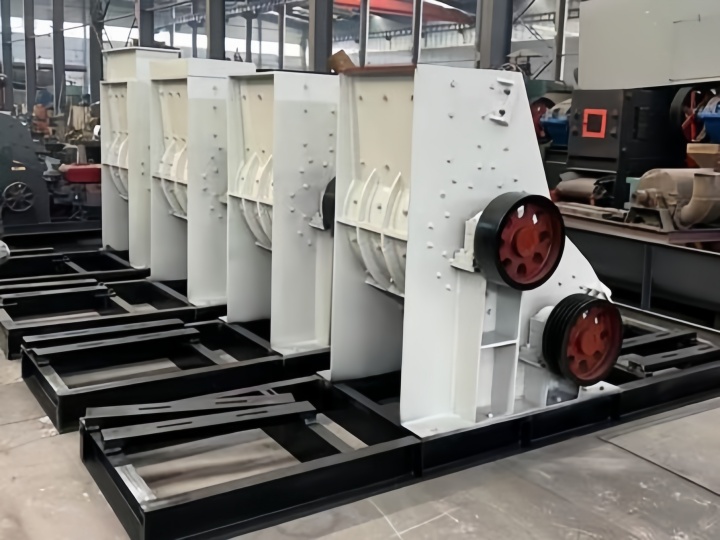
Hammer mill: This Limestone Crusher design uses swinging hammers to impact the material against breaker plates, often featuring a grate at the outlet to control maximum particle size .
Roll crusher: This Limestone Crusher configuration uses two counter-rotating rolls to compress and shear the material, suitable for producing finer products from softer limestone .
How to Choose the Right Type?
Jaw Crusher is ideal for primary crushing of large limestone blocks (feed size up to 750mm). Suitable for mines and quarries with high output requirements.
Impact Crusher is best for secondary crushing to produce cubic‑shaped aggregates for concrete and asphalt. Suitable for aggregate plants and cement factories.
Hammer Crusher is a cost‑effective choice for small to medium production lines (below 100 t/h) with low abrasion requirements.
What Advantages Does the Limestone Crusher Offer?
The Limestone Crusher delivers tangible benefits that enhance production efficiency and product quality across processing operations. These advantages stem from its robust design, adaptability, and consistent performance in demanding environments.
High reduction capability: The Limestone Crusher can accept feed material with lump sizes up to one meter and deliver a product with a maximum size of about twenty-five millimeters in a single pass .
Uniform product shape: The Limestone Crusher produces cubical particles with few elongated or flat pieces, which is essential for construction aggregates and cement raw material preparation .
Operational flexibility: The Limestone Crusher can be configured for primary, secondary, or tertiary crushing roles, with adjustable settings to control product size without major modifications .
Reliable performance with damp material: The Limestone Crusher is designed to handle limestone with varying moisture content without clogging or material buildup on crushing elements .
Simplified maintenance: Many Limestone Crusher designs feature split housings, hinged access doors, and replaceable wear parts that facilitate routine inspection and component replacement .
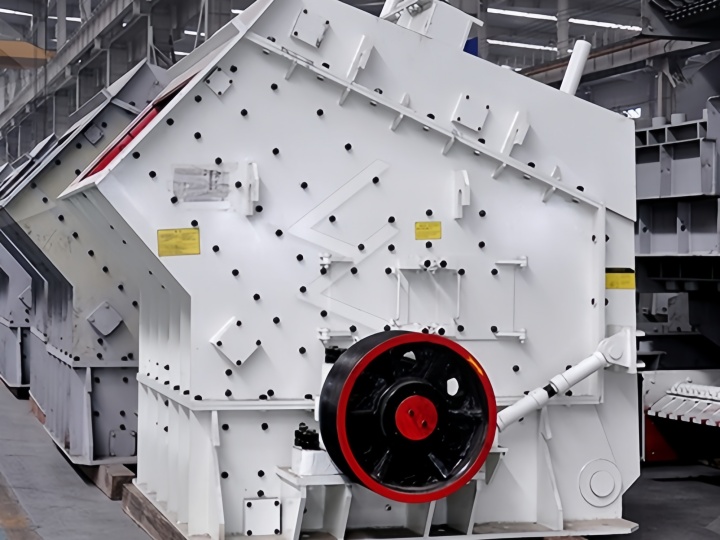
Limestone Crusher Technical Specifications
A comprehensive technical specification overview is presented below to assist in selecting the appropriate Limestone Crusher model based on capacity, feed size, and output requirements. This data provides a reference for matching equipment capabilities to operational needs.
| Model | Feed Opening | Max Feed | Capacity | Power |
| PE-250x400 | 210 mm | 210 mm | 5-20 t/h | 15 kW |
| PE-400x600 | 340 mm | 340 mm | 16-60 t/h | 30 kW |
| PE-500x750 | 425 mm | 425 mm | 40-110 t/h | 55 kW |
| PE-600x900 | 500 mm | 500 mm | 50-180 t/h | 75 kW |
| PE-750x1060 | 630 mm | 630 mm | 110-320 t/h | 90 kW |
| PE-900x1200 | 750 mm | 750 mm | 220-450 t/h | 160 kW |
For feed size ≤ 550mm and capacity 50‑150 t/h → choose PE‑750×1060
For feed size ≤ 630mm and capacity 100‑200 t/h → choose PE‑900×1200
For large‑scale mines with feed size ≤ 750mm and capacity 200‑400 t/h → choose PE‑1200×1500
Not sure which model fits your site? Contact our engineers for a free workflow analysis.
Where Can You Apply a Limestone Crusher?
The Limestone Crusher serves as an essential tool across multiple industries where processed limestone is a critical raw material. Its versatility makes it indispensable in operations ranging from heavy construction to specialized chemical applications.
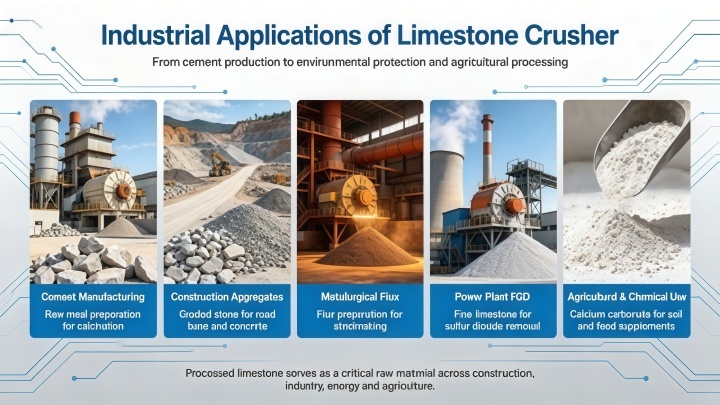
Cement manufacturing: The Limestone Crusher provides the primary size reduction step for raw material preparation, breaking quarried limestone to the fineness required for the calcination process in cement kilns .
Construction aggregates: The Limestone Crusher produces graded stone products for road base, concrete aggregate, and railway ballast, with the ability to control particle shape and size distribution .
Metallurgical industry: The Limestone Crusher processes limestone for use as a flux in steelmaking and other metallurgical operations, where consistent particle size is critical for proper furnace performance .
Flue gas desulfurization: The Limestone Crusher supplies finely ground limestone for dry sorbent injection systems in power plants, producing the precise particle size distribution required for efficient sulfur dioxide removal .
Agricultural and chemical applications: The Limestone Crusher prepares material for soil amendments, animal feed supplements, and various chemical processes where calcium carbonate content is essential .
What Are Our Manufacturing Advantages for the Limestone Crusher?
Our dedication to Limestone Crusher manufacturing excellence is demonstrated throughout the entire production chain, from raw material procurement to final quality verification. Our extensive engineering knowledge and industrial experience inform the design and construction of every machine we produce.
Superior materials selection: Our Limestone Crusher uses high-grade wear-resistant alloys for hammers and liners, ensuring extended service life and reduced replacement frequency.
Precision engineering: Each Limestone Crusher undergoes rigorous balancing and alignment procedures during assembly, guaranteeing smooth operation and minimal vibration.
Quality manufacturing processes: Our Limestone Crusher benefits from modern fabrication facilities with strict quality control at every production stage, from casting to final assembly.
Comprehensive testing: Every Limestone Crusher is subjected to performance testing before shipment, verifying capacity, power consumption, and product size specifications.
Application expertise: Our team provides Limestone Crusher selection guidance based on broad experience across diverse industries and material types, ensuring the right match for each unique processing requirement.
FAQ
What is the maximum feed size for a limestone crusher?
Our limestone jaw crusher handles feed sizes up to 750mm, while impact crushers handle up to 500mm. For larger feed sizes, we recommend a primary jaw crusher as the first stage.
How long do wear parts last for limestone crushing?
Limestone (Mohs hardness 3‑4) is relatively soft. Jaw plates typically last 6‑12 months with proper maintenance. Blow bars and hammers usually last 3‑6 months depending on throughput and feed material characteristics.
Can the crusher handle wet or sticky limestone?
For wet or sticky limestone (moisture >8%), we recommend a jaw crusher or roll crusher over impact crushers to avoid clogging. Consult our engineers for site‑specific advice.
How much does a limestone crusher cost?
Prices range from approximately $6,500 for small models up to $60,000 for large‑scale industrial units. Final price depends on capacity, configuration, and customization. Contact us for a precise quote based on your specific requirements.