Hydraulic Crusher Machine
What Is a Hydraulic Crusher Machine?
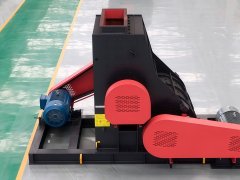
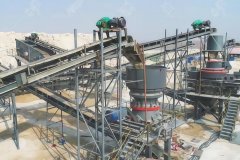
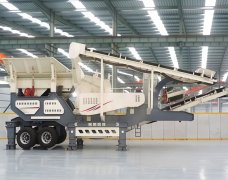
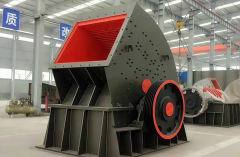
The Hydraulic Crusher Machine uses a hydraulic system as its core drive and adjustment mechanism for secondary and tertiary crushing across mining, metallurgy, building materials, and chemical industries. The equipment drives the crushing mechanism through a hydraulic power unit to squeeze and crush materials, with both discharge opening adjustment and overload protection handled by the hydraulic system.
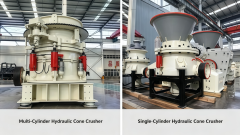
This equipment is divided into single-cylinder and multi-cylinder types. Single-cylinder models offer a compact structure, while multi-cylinder units deliver greater processing capacity. In hard rock crushing applications, cone-type crushers handle over 80% of secondary and tertiary crushing tasks.
How Does a Hydraulic Crusher Machine Work?
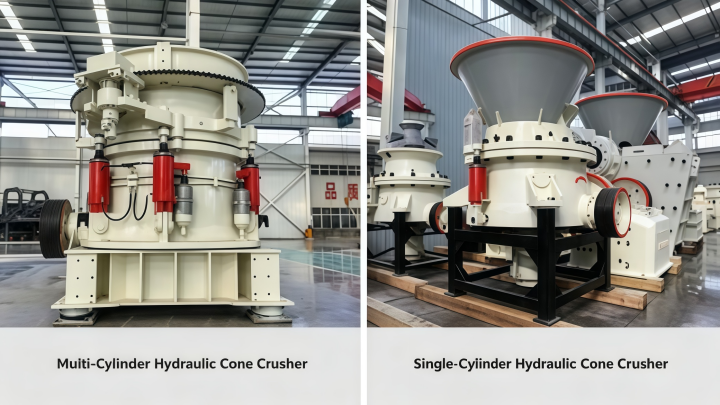
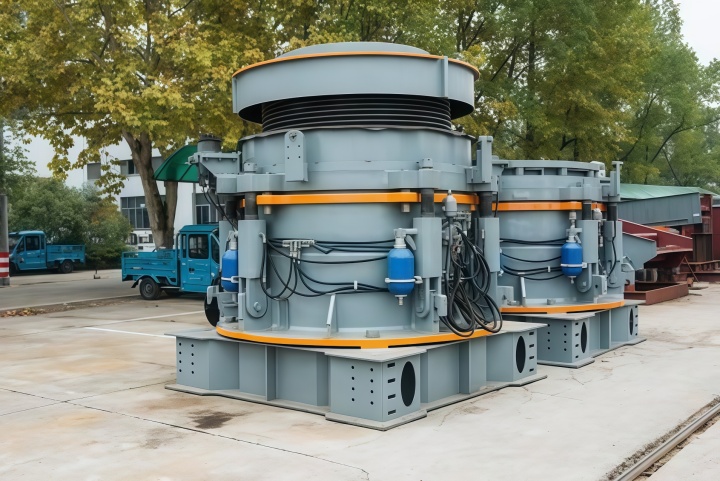
A Hydraulic Crusher Machine consists of a frame, drive train, eccentric sleeve, mantle, concave liners, and a hydraulic power unit. The electric motor drives the eccentric sleeve to rotate, which causes the mantle to perform a gyratory motion. The mantle and concave periodically move toward and away from each other, continuously squeezing and impacting the material entering the crushing chamber. Material is crushed repeatedly until it reaches the desired size and discharges through the opening.
The hydraulic system of this equipment adjusts the discharge opening steplessly by pushing the main shaft up and down via hydraulic cylinders, achieving millimeter-level precision. When an uncrushable object enters the crushing chamber, the hydraulic system automatically retreats and resets to protect the equipment.
Hydraulic Crusher Machine Technical Specifications
| Model |
Cone Diameter mm |
Max Feed mm |
Discharge Opening mm |
Capacity t/h |
Power kW |
Weight t |
|---|---|---|---|---|---|---|
| Single-Cylinder 900 | 900 | 150 | 10-22 | 90-180 | 90 | 6.0 |
| Single-Cylinder 1200 | 1200 | 220 | 12-25 | 150-250 | 160 | 10.6 |
| Multi-Cylinder 1200 | 1200 | 180 | 6-20 | 200-350 | 160 | 18.5 |
| Multi-Cylinder 2200 | 2200 | 320 | 10-32 | 500-800 | 400 | 45.0 |
For the 2200 multi-cylinder model, capacity is approximately 320 tons per hour with a 10mm discharge opening and 650 tons per hour with a 22mm opening. Actual capacity is affected by material hardness and moisture content, with fluctuations of plus or minus 15%. A safety factor of 1.2 should be applied to the target capacity during selection.
Key Advantages of a Hydraulic Crusher Machine
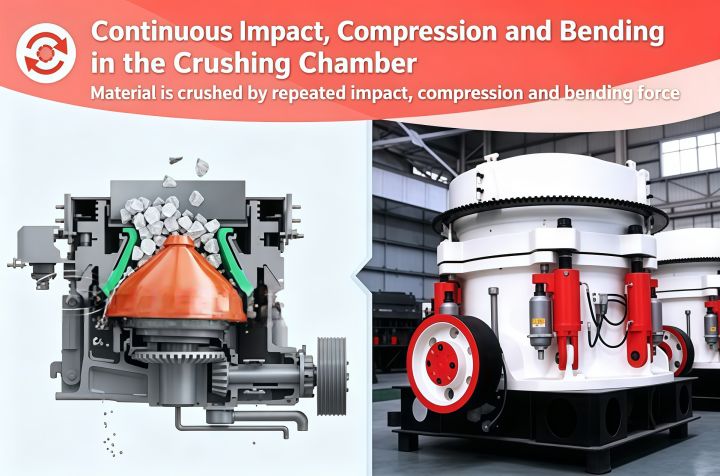
This equipment offers significant improvements over traditional spring cone crushers in capacity, product shape, and operating costs.
Processing Capacity. The single-cylinder 1200 model delivers a stable throughput of 180 to 200 tons per hour when processing granite with a 16mm discharge opening, representing a 35% to 60% capacity increase over conventional equipment. Power consumption is only 1.5 to 1.8 kWh per ton, which is 15% to 20% lower than traditional units. Total five-year operating costs range from 82% to 88% of those for spring cone crushers, with liner replacement accounting for approximately 35% of that expense.
Product Shape. A Hydraulic Crusher Machine produces cubic-shaped final products through inter-particle compression crushing. When processing basalt with a multi-cylinder unit, the flakiness index can be kept below 5%, compared to 12% to 15% for traditional equipment.
Overload Protection. The hydraulic system instantly retracts and automatically resets when uncrushable materials enter the chamber, preventing equipment damage.
Adjustment and Cost Efficiency. The discharge opening of a Hydraulic Crusher Machine can be adjusted online with 1mm precision. Composite liners last over 40% longer under highly abrasive conditions compared to standard configurations.
Materials Suitable for a Hydraulic Crusher Machine
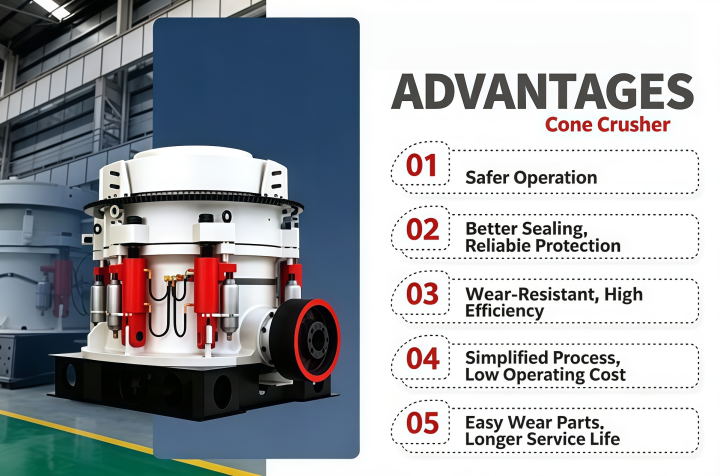
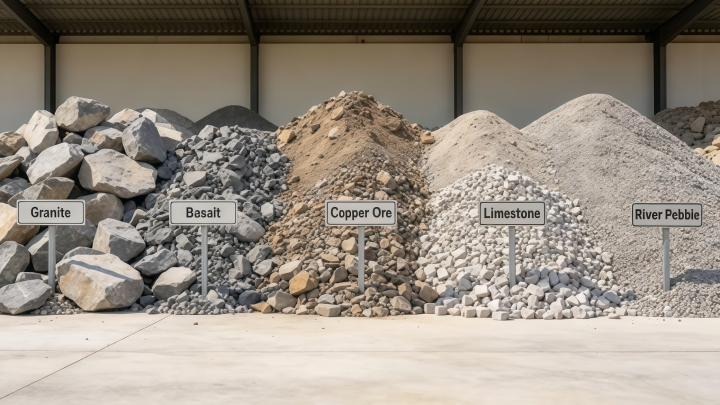
This equipment can process most ores and rocks with compressive strengths below 300 MPa and abrasion index values below 0.6. In granite crushing applications, with feed sizes of 150 to 200mm, liners can run continuously for over 8,000 hours while maintaining a flakiness index below 5%. In copper ore secondary crushing, with a hardness coefficient of f=12 to 14, a single unit maintains processing capacity above 90% of its design value, achieving a product size P80 below 12mm. This equipment is also suitable for limestone, river pebbles, and other construction aggregates, with a single unit capable of meeting aggregate demands exceeding 5,000 tons per day.
Liner wear reference for different material hardness levels: when processing limestone with 150 MPa compressive strength, liner wear is approximately 8 to 12mm per 100,000 tons processed. For granite with 250 MPa compressive strength, the same throughput causes 18 to 25mm of wear. A liner thickness inspection schedule should be established based on material hardness, with inspections recommended every 50,000 tons processed.
How to Select a Hydraulic Crusher Machine?
Selecting a Hydraulic Crusher Machine requires evaluation across three dimensions: material characteristics, capacity requirements, and installation conditions.
Material hardness determines the model. Hard rock with compressive strength exceeding 200 MPa calls for a multi-cylinder configuration. Processing capacity equals design capacity multiplied by a 1.2 safety factor. For every 50 MPa increase in compressive strength, the equipment specification should be upgraded by one tier. Limestone at 150 MPa can be processed with a 900 single-cylinder model, while granite at 250 MPa requires a 1200 multi-cylinder unit.
Installation conditions must be verified, including foundation load capacity and lifting capability. Multi-cylinder equipment can weigh up to 45 tons, with foundations recommended at 3 to 5 times the equipment weight.
Hydraulic Crusher Machine Maintenance Guidelines
Daily maintenance includes hydraulic system oil temperature and pressure checks, lubricating oil quality monitoring, and liner wear inspections. Hydraulic oil should be replaced and filters cleaned every 500 operating hours.
High Oil Temperature. Cause: clogged cooler or low oil level. Solution: inspect cooler fins and refill hydraulic oil to the marked level every 200 hours.
Discharge Opening Fails to Lock. Cause: insufficient nitrogen pressure in the accumulator. Solution: check accumulator pressure monthly.
Loose Liners. Cause: torque relaxation in fastening bolts. Solution: verify bolt torque during every scheduled maintenance shutdown.
Degraded Lubricating Oil. Cause: water or contaminants entering the oil. Solution: take oil samples every 200 hours for testing and replace immediately if moisture content exceeds 0.1%.
Hydraulic Crusher Machine Typical Applications
In hard rock aggregate production, the 2200 multi-cylinder Hydraulic Crusher Machine handles secondary crushing. With feed sizes of 150 to 200mm and a 22mm discharge opening, processing capacity reaches 500 to 800 tons per hour while maintaining a flakiness index below 5%.
In copper ore processing plants, the 1200 single-cylinder Hydraulic Crusher Machine is used for secondary and tertiary crushing. With a hardness coefficient of f=12 to 14, the unit maintains stable capacity above 90% of its design value, achieving a product size P80 below 12mm.
Frequently Asked Questions About Hydraulic Crusher Machine
What is the maximum feed size for a Hydraulic Crusher Machine?
Different models range from 150mm to 320mm, depending on specifications and cavity configuration.
Can a Hydraulic Crusher Machine handle wet materials?
The equipment uses a screenless design, preventing material buildup at the bottom. It maintains stable throughput even when processing materials with up to 20% moisture content.
How do you calculate the selection parameters for a Hydraulic Crusher Machine?
For every 50 MPa increase in compressive strength, upgrade the equipment specification by one tier. Multiply the target capacity by a 1.2 safety factor.
What is the liner replacement cycle for a Hydraulic Crusher Machine?
Under highly abrasive conditions, liners typically last 8,000 to 12,000 hours. Regular thickness monitoring and replacement record-keeping are recommended.