Horizontal Shaft Impact Crusher
What Is a Horizontal Shaft Impact Crusher?
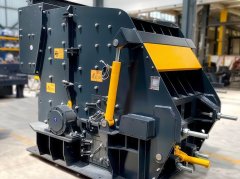
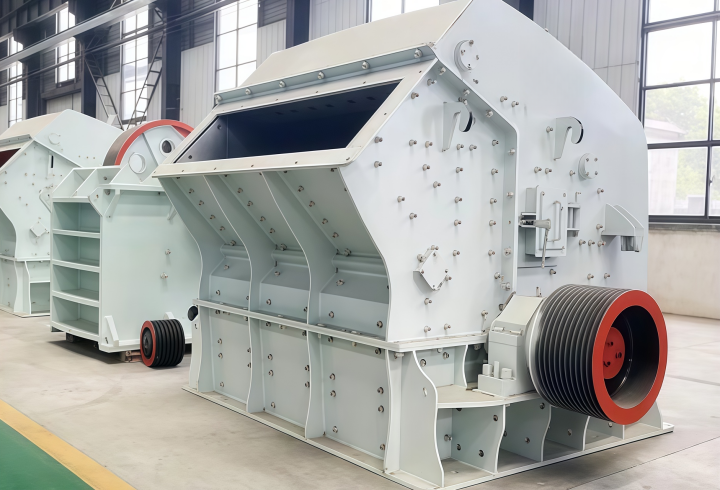
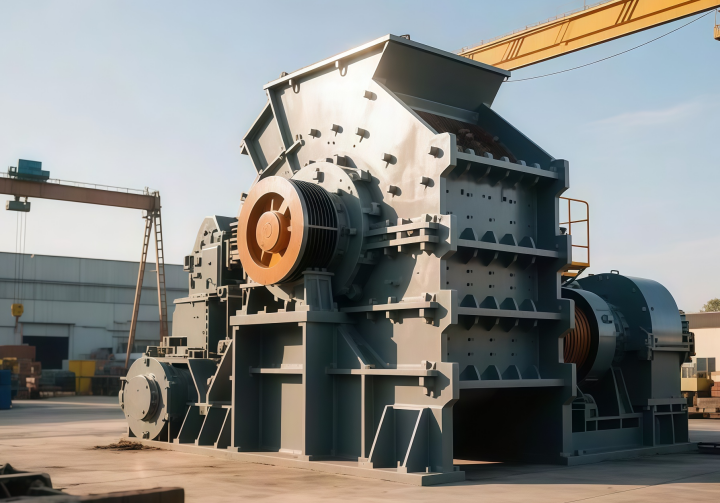
Horizontal Shaft Impact Crushers use high-speed impact rather than compression to reduce material size. Unlike jaw or cone crushers that rely on squeezing and grinding, this equipment achieves breakage through high-velocity collisions between the blow bars and feed material.
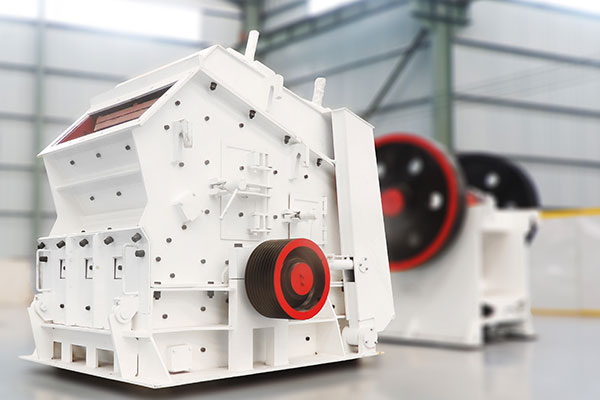
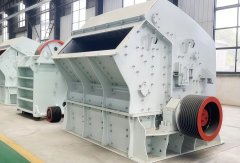
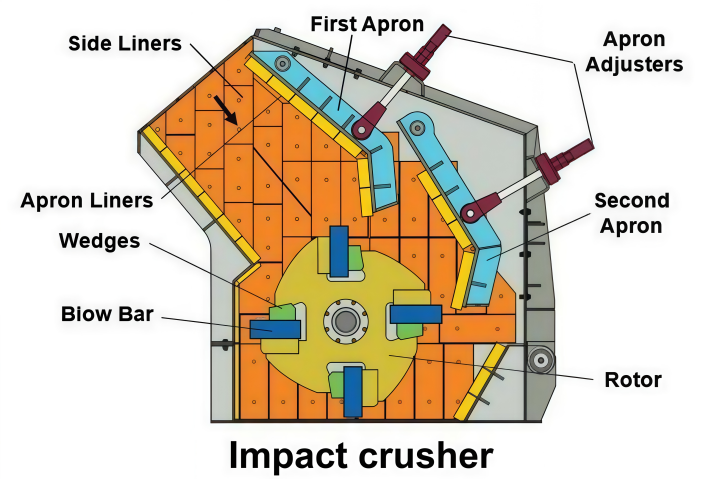
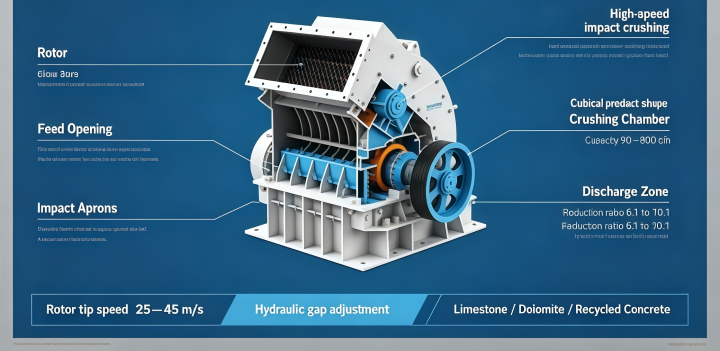
The rotor is mounted horizontally on the main shaft with replaceable blow bars attached to its outer circumference, rotating at tip speeds of 25 to 45 meters per second. Material enters the crushing chamber where the blow bars strike it repeatedly and propel it against the impact aprons for multiple stages of breakage. This impact action produces a cubical end product with low flakiness content. The equipment delivers capacities from 90 to over 800 tons per hour, achieving reduction ratios of 6:1 to 10:1 in a single pass.
How Does a Horizontal Shaft Impact Crusher Work?
Material falls from the top feed opening onto the high-speed rotor. The blow bars deliver the primary impact that fractures the material along natural cleavage planes. Fragments are thrown against the primary impact apron for secondary breakage. Bouncing particles return to the rotor and are propelled toward the secondary apron for a third stage of reduction. Particles also collide with each other during high-speed motion, achieving autogenous breakage. Through repeated collisions between rotor, aprons, and particles, material is progressively reduced in size.
Discharge size is controlled by adjusting the apron-to-rotor gap hydraulically, and this adjustment can be performed while the Horizontal Shaft Impact Crusher remains in operation. Field data shows that reducing the gap from 40mm to 10mm increases circulation cycles by approximately 2.5 times, with capacity decreasing nearly by half—a pattern observed across different models.
Technical Specifications of the Horizontal Shaft Impact Crusher
These parameters align with mainstream Horizontal Shaft Impact Crusher units globally and comply with EU CE and ISO 9001 standards. Capacity data is based on processing medium-hard limestone at a 40mm discharge setting. Actual throughput varies with material hardness, feed size, and moisture content.
| Model | Rotor Dia.×Width mm | Max Feed mm | Capacity t/h | Power kW | Weight kg |
|---|---|---|---|---|---|
| MIC102092 | 1,020 × 914 | 350 | 90 – 150 | 55 – 75 | 10,300 |
| MIC102115 | 1,020 × 1,143 | 400 | 120 – 200 | 90 – 110 | 11,500 |
| TI4143 | 1,035 × 1,100 | 480 | 90 – 300 | 130 | 9,940 |
| IP1316 | 1,270 × 1,625 | 865 | 250 – 400 | 300 | 17,465 |
| IP1516 | 1,550 × 1,625 | 865 | 600 – 800 | 450 | 25,260 |
Rotor tip speed typically ranges from 25 to 45 m/s, balancing crushing efficiency with wear rates. The IP1316, with a 1,270mm rotor diameter, covers the 200 to 400 t/h range and is frequently selected in this capacity class.
Performance Data of the Horizontal Shaft Impact Crusher
The following Horizontal Shaft Impact Crusher performance data is based on standard conditions processing limestone with compressive strength of 120 to 150MPa.
The TI4143 delivers approximately 150 t/h at a 40mm discharge setting, increasing to 220 t/h at 60mm. The IP1516 produces 450 t/h and 650 t/h respectively under the same settings. At 40mm discharge, the industry average for comparable imported equipment is approximately 130 to 140 t/h, while measured data reaches 185 t/h—approximately 30% higher. Every 5mm reduction in discharge setting reduces capacity by 12% to 15%.
At 40mm discharge, particles below 40mm account for 85% to 90% of product, with the 5 to 20mm fraction representing 50% to 55%. New blow bars maintain 100% of rated capacity for the first 200 hours, dropping to 85% to 90% when worn to 70% of original thickness.
Field Performance Data of the Horizontal Shaft Impact Crusher
Field data for the Horizontal Shaft Impact Crusher comes from multiple actual projects:
A quarry in East China processed limestone at 40mm discharge from May to August 2025, achieving 185 t/h with blow bar life of 427 hours.
A construction waste site in Central China processed reinforced concrete with 3% rebar at 50mm discharge, with the hydraulic overload protection activating 12 times over six months without rotor damage.
A sand plant in Southwest China processed dolomite at 10mm discharge, delivering 95 t/h with sand fineness modulus of 2.6 to 2.8.
These three projects cover limestone, concrete recycled material, and dolomite—common material types globally. The capacity difference between the East and Southwest projects is attributed to discharge settings—reducing the gap from 40mm to 10mm increases circulation cycles by 2.5 times, reducing throughput. Adding a pre-screening device ahead of the crusher can boost throughput by 25% to 30% in fine-discharge applications. This equipment is also applicable in similar operations across Southeast Asia, the Middle East, and Africa.
Advantages of the Horizontal Shaft Impact Crusher
The Horizontal Shaft Impact Crusher offers advantages in crushing efficiency, product shape, material adaptability, maintenance, and operating costs.
High reduction ratio: At a Jiangxi limestone mine, 500mm feed processed through a single unit achieved 88% passing 40mm, eliminating secondary crushing and reducing equipment investment by 30% to 40%.
Product shape: Impact crushing produces cubical aggregate. A Guangxi asphalt plant recorded flakiness of 8.7% with this equipment, below the 15% national standard and 10% highway project requirement.
Material adaptability: A Guangxi cement plant processed 12% moisture clay-rich limestone for three months without blockage, while a cone crusher at the same site required cleaning every seven days.
Maintenance: Standard Cr26 blow bars lasted 427 hours at the Jiangxi project. Cr30 bars extend life to approximately 600 hours, and ceramic composite bars exceed 680 hours. Hydraulic opening reduces change time from 4-6 hours to under 1.5 hours.
What Competitors Don't Tell You About the Horizontal Shaft Impact Crusher?
Most manufacturers promote the broad applicability of impact crushers, but there is a boundary condition: when material compressive strength exceeds 200MPa, blow bar wear accelerates rapidly. When processing granite, blow bar life is typically 15% to 20% of that achieved with limestone—a physical principle of impact crushing.
Before selecting a Horizontal Shaft Impact Crusher, obtaining accurate compressive strength test data is recommended. This information is often overlooked during the Horizontal Shaft Impact Crusher selection process but affects long-term operating costs.
Application Fields of the Horizontal Shaft Impact Crusher
Horizontal Shaft Impact Crushers are suitable for medium-soft materials below 200MPa compressive strength:
For materials below 150MPa (limestone, gypsum, shale), standard configuration meets requirements, processing 450 to 865mm feed down to below 40mm in one pass.
For 150 to 200MPa materials (dolomite, dense limestone), heavy-duty configuration with upgraded blow bars and liners is recommended.
Fixed mines use standard stationary units. Urban demolition sites use mobile or track-mounted versions for rapid relocation. Remote areas without grid power use diesel-powered versions. When processing high-moisture materials, the open discharge design offers advantages over compression crushers. When processing rebar-containing concrete, the hydraulic overload protection retracts automatically. When combined with a vibrating screen in closed-circuit operation, precise product control is achieved.
Selection Guide for the Horizontal Shaft Impact Crusher
Selecting the right model requires considering material hardness, target capacity, feed size, and site conditions.
Material hardness is the primary reference: standard configuration suits materials below 150MPa, heavy-duty configuration for 150 to 200MPa, and other crusher types should be evaluated above 200MPa.
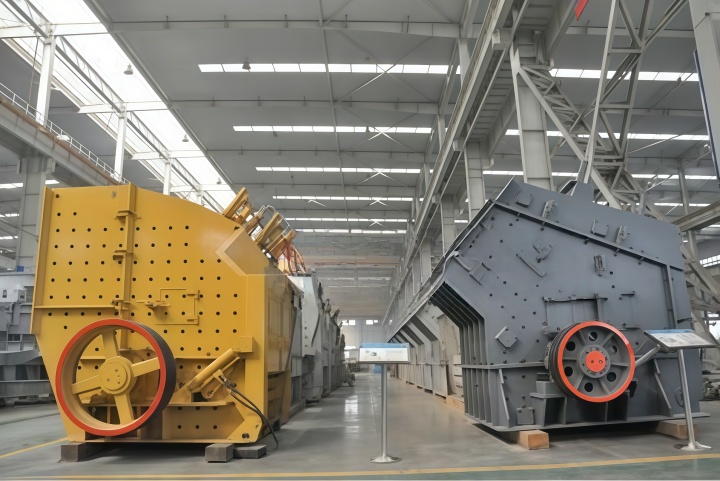
For capacity: TI4143 or MIC102115 below 200 t/h, IP1316 for 200 to 400 t/h, and IP1516 above 400 t/h. For feed size exceeding 450mm, models with larger openings such as IP1316 or IP1516 are recommended.
For site conditions: stationary plants use standard units, frequent relocation sites use mobile or track-mounted versions, and remote sites with unstable power use diesel-powered versions.
Frequently Asked Questions About the Horizontal Shaft Impact Crusher
Energy consumption vs. cone crusher?
Approximately 0.5 to 2 kWh/t when processing limestone, slightly higher than a cone crusher. However, the single-stage high reduction ratio eliminates subsequent stages, resulting in lower total plant energy consumption.
When should blow bars be replaced?
Consider rotation or replacement when wear reaches 40% to 50% of original thickness. Scheduling maintenance based on cumulative tonnage processed is recommended.
What factors affect blow bar life?
Material abrasiveness, rotor tip speed, and blow bar metallurgy are the primary factors. Limestone yields hundreds of hours of life, while granite significantly reduces that interval.
Can it process wet materials?
More resistant to blockage than cone crushers, but moisture above 15% may still cause build-up. Installing a pre-screening device ahead of the crusher is recommended.