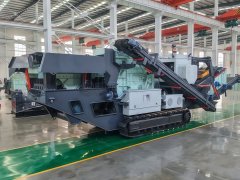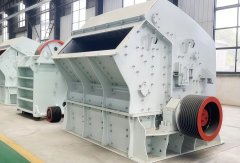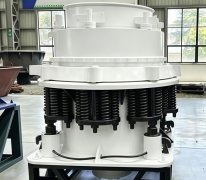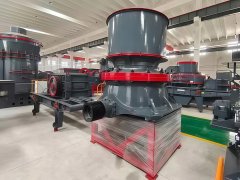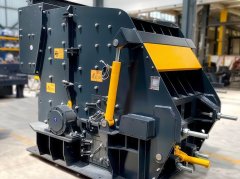
Secondary Impact Crusher
What Is a Secondary Impact Crusher?
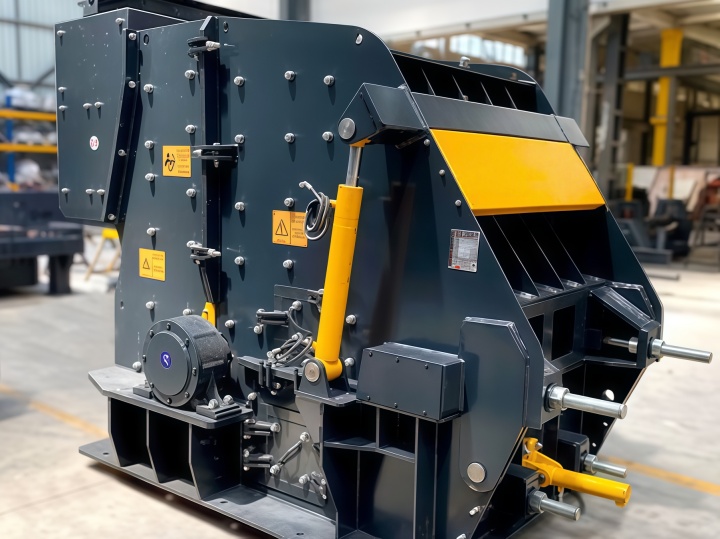
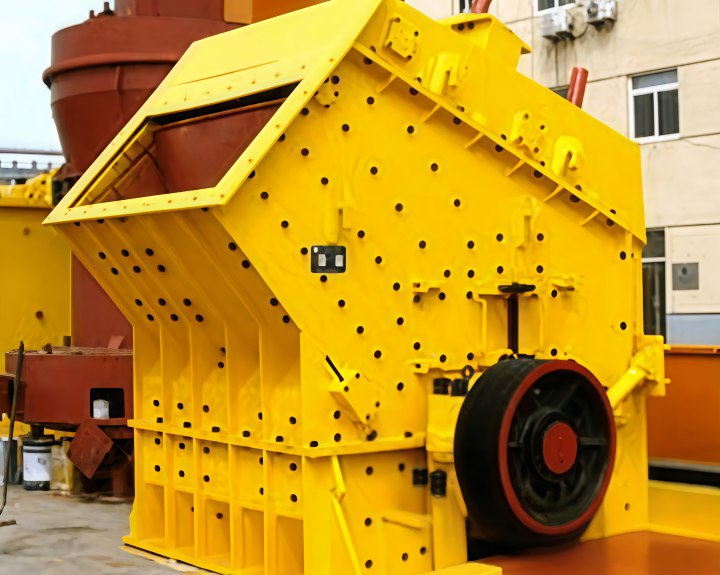
A Secondary Impact Crusher is a machine designed for the second stage of the crushing process, reducing material that has already undergone primary crushing. This equipment features a heavy-duty rotor with a torsion-free rotor body that provides high moment of inertia to handle the impact loads of secondary crushing. It can reduce feed material from 300 to 400mm down to 0 to 60mm, 0 to 40mm, or 0 to 35mm in a single pass.
The defining characteristic of a Secondary Impact Crusher is its high reduction ratio, with some models achieving 30:1 in a single pass. Secondary Impact Crusher is commonly used in processing medium-hard materials such as limestone and dolomite, as well as in recycling concrete and asphalt.
How Does a Secondary Impact Crusher Work?
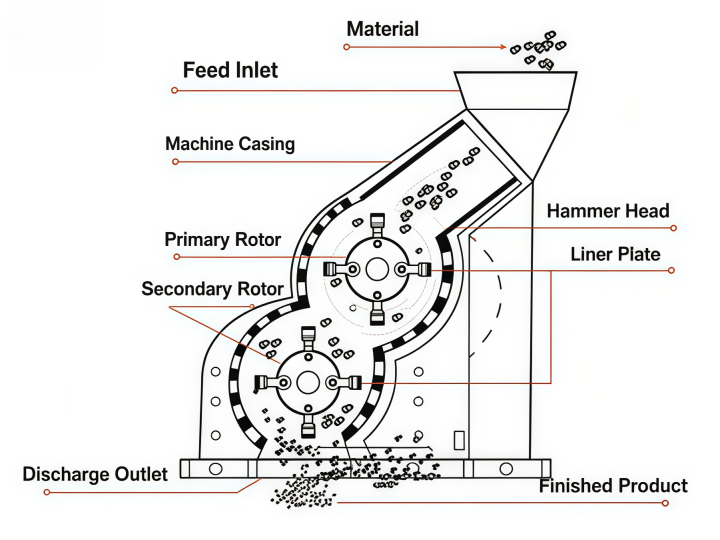
A Secondary Impact Crusher operates on the principle of high-speed impact crushing. Material enters from the top of the crushing chamber and first contacts the high-speed rotor, where the blow bars deliver the primary impact that fractures the material along natural cleavage planes. The fractured fragments are then thrown against the primary impact apron for secondary breakage.
After initial reduction in the primary chamber, material passes through the gap in the front breaker plate and enters the secondary chamber for final reduction. The breaker plates of it are shaft-suspended, allowing continuous gap adjustment as wear progresses to maintain product size stability. Some Secondary Impact Crusher models are equipped with a third crushing path, which can further refine the product size down to 0 to 1.5 inches.
Rotor speed is typically slightly higher than that of primary crushers to achieve finer product gradation.
Technical Specifications of the Secondary Impact Crusher
The following technical parameters are compiled from publicly available specifications from major manufacturers. Capacity data is based on processing medium-hard limestone under standard conditions. Actual throughput varies with material hardness, feed size, and moisture content.
| Model | Rotor Dia.×Width mm | Feed Opening mm | Max Feed mm | Capacity t/h | Power kW | Weight kg |
|---|---|---|---|---|---|---|
| ODH0907-2 | 900 × 670 | 380 × 670 | 200 | 30-70 | 45-75 | - |
| ODH0910-2 | 900 × 996 | 380 × 996 | 200 | 60-120 | 75-110 | - |
| ODH1110-2 | 1,100 × 1,000 | 550 × 1,000 | 250 | 110-200 | 110-200 | - |
| ODH1313-2 | 1,300 × 1,324 | 705 × 1,324 | 250 | 200-300 | 200-315 | - |
| ODH1616-2 | 1,600 × 1,655 | 850 × 1,655 | 300 | 350-550 | 315-500 | - |
| PI DK 906 S | - | - | - | 50-100 | 37 | 8,300 |
| PI DK 1316 S | - | - | - | 250-350 | 250 | 30,000 |
| GS4860 | - | - | 400 | 180-300 | 220-335 | - |
| GS5490 | - | - | 400 | 350-600 | 370-520 | - |
A Secondary Impact Crusher typically accepts feed sizes ranging from 200 to 400mm, with some models handling up to 500mm. Capacities range from 50 tons per hour to over 700 tons per hour, depending on rotor size and configuration.
Performance and Advantages of the Secondary Impact Crusher
The equipment delivers quantifiable performance characteristics across reduction ratio, product shape, capacity balance, operational reliability, and maintenance convenience. The following data is based on field measurements and actual operating conditions.
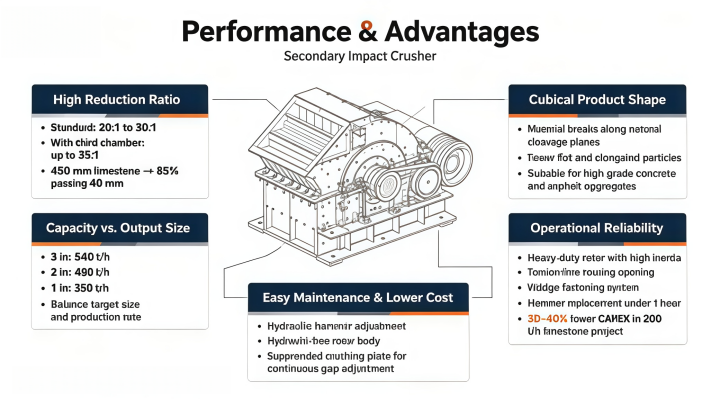
Reduction ratio: A standard unit achieves reduction ratios of 20:1 to 30:1, with models featuring a third crushing chamber reaching 35:1. In limestone processing, 450mm feed processed through a single crusher achieves over 85% passing 40mm, eliminating the need for tertiary crushing in most applications.
Product shape: The impact crushing action fractures material along natural cleavage planes, producing aggregate with a high proportion of cubical particles and lower flakiness content than compression-style crushers. This particle shape meets the aggregate requirements for high-grade concrete and asphalt pavements.
Capacity and discharge size relationship: Capacity and discharge size have an inverse relationship. Field data from one model in closed-circuit operation shows: at a 3-inch discharge setting, capacity is 540 tons per hour; reducing to 2 inches drops capacity to 480 tons per hour; further reducing to 1 inch drops capacity to 350 tons per hour. Selection requires balancing target particle size against capacity requirements.
Field Performance Data of the Secondary Impact Crusher
The following data comes from an actual 1.2-million-ton-per-year aggregate project.
A quarry in East China used this equipment to process limestone with an average feed size of 350mm at a 40mm discharge setting. Over four months of continuous operation, measured capacity reached 185 tons per hour, with 88% of finished product passing 40mm. The production line operated without tertiary crushing—only a jaw crusher and this impactor comprised the entire crushing stage, with product going directly to screening.
Operating records show that under the 40mm discharge condition, blow bar life reached approximately 3,200 hours, processing about 590,000 tons. No unscheduled downtime occurred due to blockage or overload during the operating period.
Application Scenarios of the Secondary Impact Crusher
This equipment is suitable for processing medium-hard materials with compressive strength up to 350MPa.
In limestone and dolomite processing, the machine can reduce 450mm feed material to below 40mm in a single pass, producing aggregate directly usable for concrete and road base applications.
In construction and demolition waste recycling, it effectively processes crushed concrete and asphalt millings, recovering them into usable aggregate.
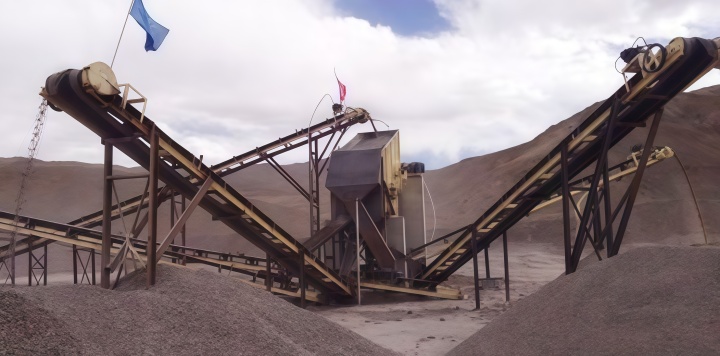
In the cement industry, the crusher is used for limestone mid-crushing and fine-crushing to ensure stable mill feed size. In manufactured sand production, the equipment shapes 5 to 40mm intermediate particles to improve fine aggregate gradation. The unit can be combined with a vibrating screen in closed-circuit operation for precise product size control. It is suitable for both stationary crushing plants and mobile crushing configurations.
Selection Guide for the Secondary Impact Crusher
Selecting the right model requires considering material hardness, target capacity, and site conditions. The following guidance is organized across material hardness, target capacity with feed size, and site conditions.
Material hardness
For soft to medium-hard materials with compressive strength below 200MPa such as limestone and gypsum, a standard configuration is sufficient.
For harder materials with compressive strength between 200 and 350MPa such as granite and basalt, a heavy-duty configuration with high-chromium blow bars and thicker liners is recommended.
For materials exceeding 350MPa compressive strength, this type is not the optimal choice and other crushing methods should be evaluated.
Target capacity and feed size
The matrix below cross-references target capacity and maximum feed size to help users quickly identify recommended models.
| Target Capacity | Max Feed ≤200mm | Max Feed 200-400mm |
|---|---|---|
| Below 100 t/h | ODH 0907-2 or PI DK 906 S | Evaluate feed opening, consult recommended |
| 100-250 t/h | ODH 1110-2 or PI DK 1208 S | ODH 1313-2 |
| Above 250 t/h | ODH 1616-2 or PI DK 1316 S | ODH 1616-2 |
For maximum feed sizes below 200mm, most standard models are suitable. For feed sizes between 200 and 400mm, models with larger feed openings are required. The feed should not contain material exceeding the feed size specification of the equipment, as this may cause rotor damage or blockage.
Site conditions
Stationary crushing plants can use standard stationary units with complete feeding and conveying systems.
Applications requiring frequent relocation can use mobile or track-mounted versions.
Remote sites with unstable power supply can use diesel-powered versions.
Frequently Asked Questions About the Secondary Impact Crusher
Secondary Impact Crusher vs cone crusher—which one should I choose?
Impact crushers produce more cubical aggregate with lower flakiness content. Cone crushers handle harder materials more efficiently and have longer wear part life. For materials with Mohs hardness below 5, an impact crusher can be considered; above 5, a cone crusher can be considered.
How long do blow bars typically last on a Secondary Impact Crusher?
Blow bar life depends on feed material abrasiveness. For limestone, blow bars can last several thousand hours; for highly abrasive granite, life is significantly shorter. When capacity drops or return load increases, it may be time to flip or replace the blow bars.
Can a Secondary Impact Crusher handle wet or sticky materials?
It handles wet materials better than cone crushers because the impact action flings material off the blow bar surface. However, moisture above 15% may still cause build-up on aprons and blow bars, so pre-screening is recommended for high-moisture feed.
What particle shape does a Secondary Impact Crusher produce?
It produces cubical aggregate with lower flakiness content compared to cone crushers. This makes it a common choice for concrete and asphalt aggregate production—better particle shape often improves concrete workability and asphalt pavement durability.