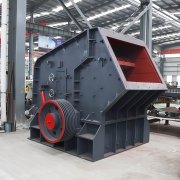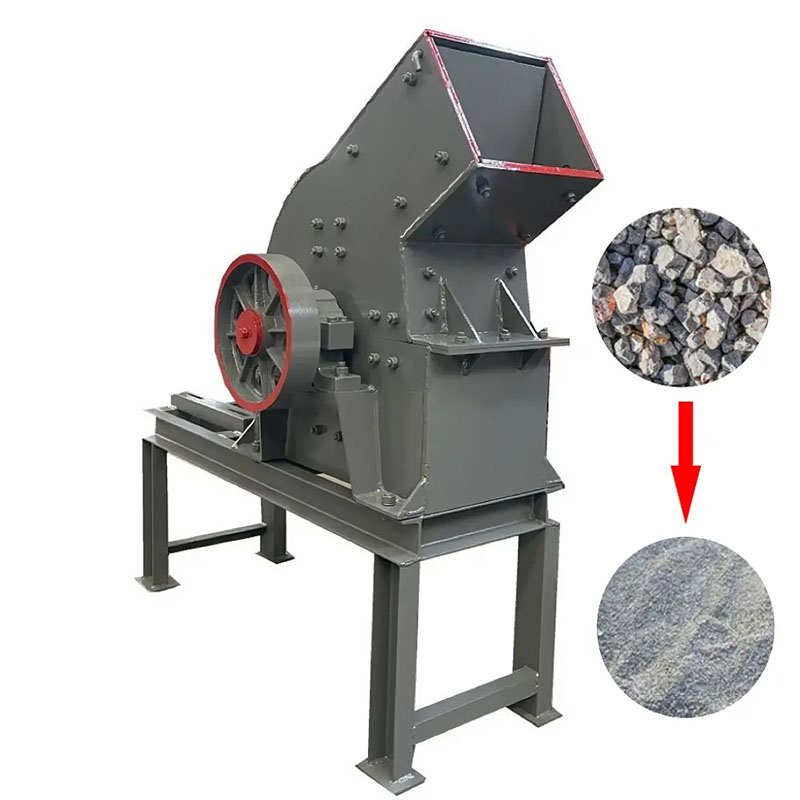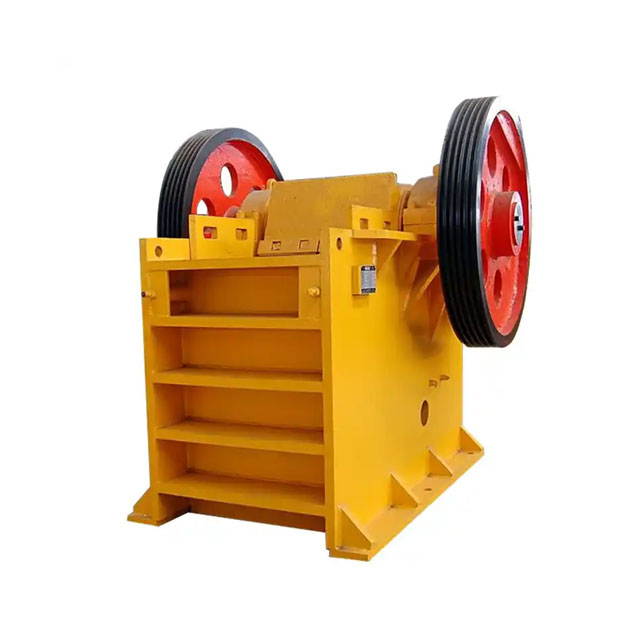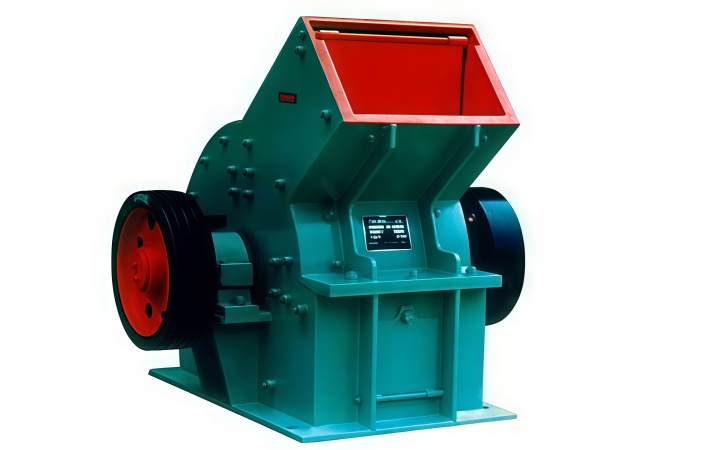
Hammer Crusher Machine
Hammer Crusher Machine are used for primary and medium crushing of large stone and ore blocks, producing high‑quality aggregates of varying particle sizes for use in the construction, building materials, and mining industries. Prices typically range from $8,000 to $120,000. Feed opening size: ≤450mm Production capacity: 5‑320 tons/hour Discharge opening adjustment range: 5‑40mm Spindle speed: ≤980 rpm Motor power: 15‑160kW
What Is a Hammer Crusher Machine?
Hammer Crusher Machine is impact-type crushing equipment named after its core working component—the high-speed rotating hammer head. This crusher uses impact energy to reduce feed size from up to 600 mm to below 25 mm in a single pass. The crushing ratio ranges from 10 to 25, significantly higher than a jaw crusher at 3 to 6, making it well-suited for medium and fine crushing applications.
Field data from multiple production lines shows that when processing limestone at 70 MPa compressive strength, its capacity stays between 92% and 97% of rated value. The machine is available in single-rotor and double-rotor configurations. Its maximum compressive strength limit is 100 MPa, and it requires moisture content below 15%.
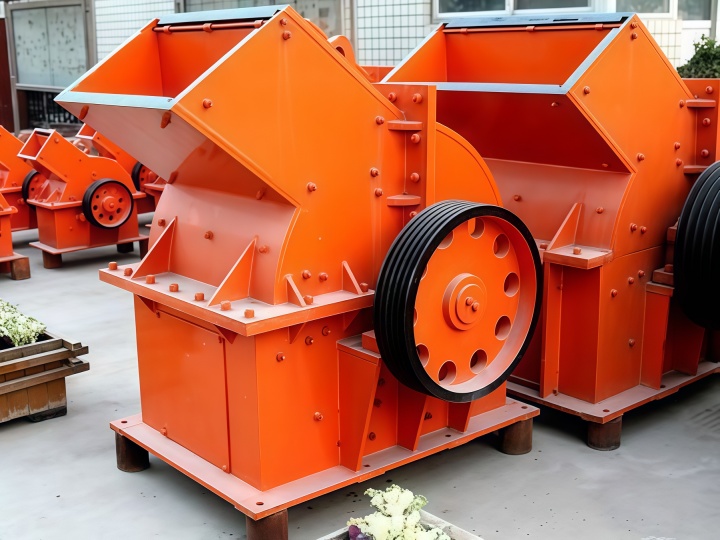
Hammer Crusher Machine Key Technical Parameters
| Model | Max Feed (mm) | Discharge Size (mm) | Capacity (t/h) | Power (kW) | Speed (r/min) | Weight (t) |
|---|---|---|---|---|---|---|
| PC400×300 | ≤100 | <15 | 3-10 | 11 | 1500 | 0.8 |
| PC600×400 | ≤120 | <15 | 8-15 | 22 | 1000 | 1.8 |
| PC800×600 | ≤150 | <20 | 10-40 | 55 | 980 | 4.8 |
| PC1000×800 | ≤200 | <30 | 16-65 | 110 | 800 | 8.1 |
| PC1300×1200 | ≤280 | <40 | 50-200 | 240 | 750 | 14.8 |
| PC1600×1600 | ≤350 | <50 | 100-350 | 480 | 600 | 37.5 |
Processing above 80 MPa increases power consumption by 12% to 18% over nameplate rating. Selecting a motor one size up is recommended.
Hammer Crusher Machine Video Showcase
What Are the Core Components of a Hammer Crusher Machine?
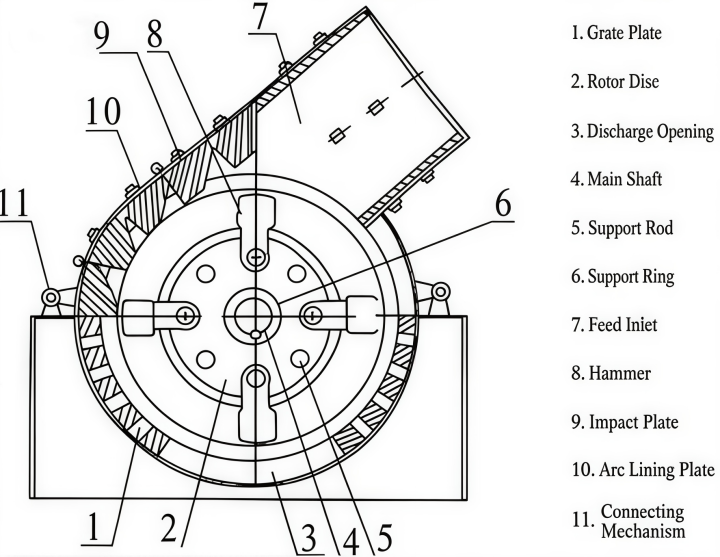
Hammer Crusher Machine has five main parts: frame, rotor, hammers, sieve bars, and liners, with hammer material having a greater impact on operating costs.
The rotor, composed of the main shaft, discs, pins, and hammers, is the core. Tracking from 12 limestone lines shows high-manganese steel hammers last 420 hours on medium limestone; high-chromium cast iron lasts 960 hours on coke, 2.3 times longer; alloy composite hammers extend life by 55%, processing about 18,000 tons per set. Sieve bars control discharge size; liners protect the frame. Both require regular inspection.
How Does a Hammer Crusher Machine Complete the Crushing Process?
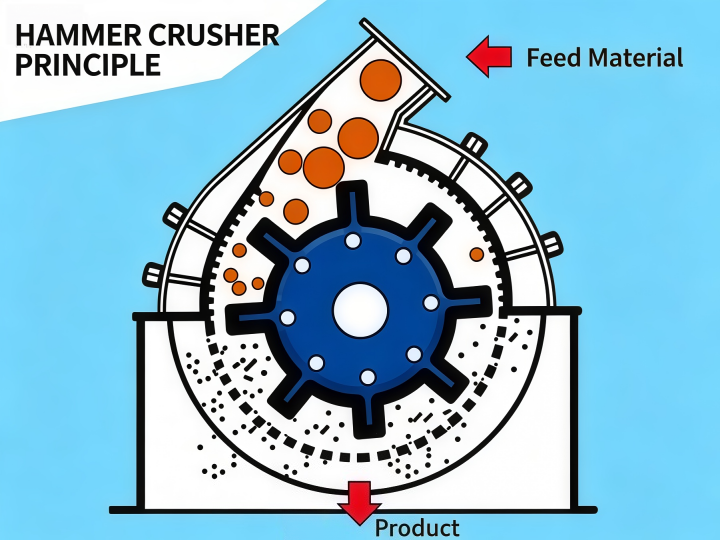
The process has three stages: impact, counter-attack, and grinding, with material residence time directly affecting discharge size and efficiency.
The motor drives the rotor at high speed. Material entering the chamber is crushed by striking, impact, and shearing. At 48 to 52 m/s rotor linear speed, efficiency is highest for limestone, with residence time of 4 to 6 seconds. Material then strikes liners and sieve bars for secondary crushing. Particles smaller than the gap discharge as finished product; oversized material remains for further impact and grinding. Discharge size adjusts by modifying the sieve bar gap. For dry applications, dust collectors can reduce dust from 120 mg/m³ to below 25 mg/m³.
Hammer Crusher Machine Applications by Industry
Limestone Crushing in Cement Plants
Widely used in cement production lines for primary and secondary crushing. Handles limestone with compressive strength up to 100 MPa, delivering 50‑200 t/h with uniform discharge size of 30‑80 mm. Energy consumption is approximately 0.7 kWh/t.
From the field: A cement plant in Southeast Asia replaced their old impact crusher with our PC1300×1200. Throughput increased 25%, energy cost dropped 15% per ton. The plant now processes 180 t/h consistently, even during the rainy season when limestone moisture rises.
Coal Crushing in Power Plants
Essential for reducing raw coal (up to 300mm feed size) to 25mm or smaller for boiler feeding. Capacities range from 10‑200 t/h. Handles coal with moisture content up to 15%. Routine hammer replacement takes only 4‑6 hours every 3‑6 months.
From the field: A coal preparation plant in India processing 120 t/h of high‑ash coal extended their hammer life from 600 to 950 hours after switching to our wear‑resistant alloy hammers. Maintenance downtime cut by 40% over 12 months.
Mineral Processing in Mining
Used for secondary and tertiary crushing of gold ore, copper ore, iron ore, and bauxite. Processes medium‑hard ores up to 120 MPa, handling 30‑150 t/h with output size from 30‑150 mm. Hammer life averages 800‑1,200 hours for medium‑abrasive ores.
From the field: A copper mine in Zambia running our PC800×600 at 85 t/h reported 1,100 hours of hammer life on medium‑abrasive ore—12% above our standard estimate. The operation now schedules maintenance around their quarterly shutdowns, eliminating unplanned downtime.
Hammer Crusher Machine Measured Energy and Maintenance Data
Processing 70 MPa limestone, specific energy consumption of it is 0.7 kWh/t versus 1.1 kWh/t for an impact crusher. Annual maintenance hours are 80 versus 140. The product has 200 components versus 400 for an impact crusher, meaning lower failure rates. In one case, replacing a jaw-plus-impact two-stage setup with a single unit reduced feed size from 42 mm to 23 mm, increased downstream mill throughput by 11%, and cut procurement costs by 1.3 million RMB. Screen changes complete within 25 minutes.
Hammer Crusher Machine Measured Data for Different Materials
The product shows lower operating costs at 60 to 80 MPa limestone. For every 10 MPa increase in hardness, throughput drops about 7% on average. Performance varies by material type as follows.
Limestone. A PC1600×1600 unit on a 5,000 t/d clinker line kept feed below 23 mm, saving 1.3 million RMB.
Coal and Coke.Crushing to below 10 mm improves combustion efficiency by 5% to 8%.
Gypsum. Low hardness means lower hammer wear.
Slag.Processed slag serves as cement blend; unburned coke particles accelerate wear, so enhanced iron removal is recommended.
Aggregates.Flakiness content below 9%, better uniformity than jaw crusher products.
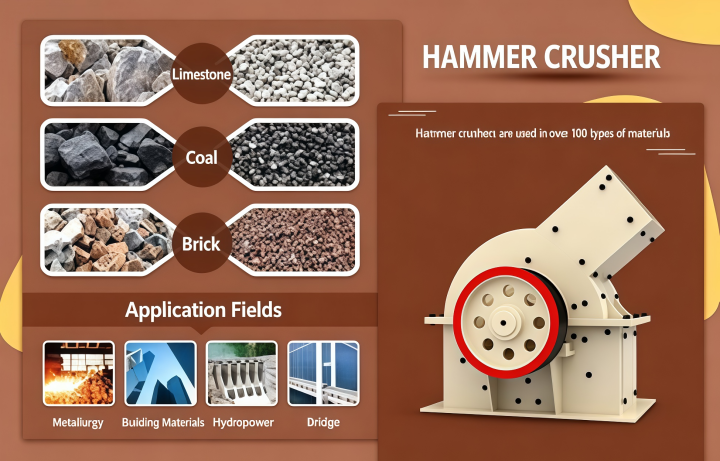
Hammer Crusher Machine Hammer Wear Rate and Maintenance
Field measurements show hammer wear rate at 0.08% to 0.11% per hour on limestone. Initial weighing at 200 hours establishes a baseline. Order spares when wear reaches 18%, as lead time is 3 to 5 days. Key maintenance items are as follows.
Hammer Inspection and Replacement.Replace hammers in pairs, keeping weight difference within 50 grams.
Bearing Lubrication Management. Bearings should stay below 70°C. Fill grease to 50% of bearing space. Lubricate every two weeks in winter, weekly in summer.
Sieve Bar and Liner Inspection. Inspect sieve bars every 400 hours; replace when aperture increases over 2 mm. Replace liners when wear exceeds 60% of original thickness.
What Factors to Consider When Selecting a Hammer Crusher Machine?
Selection balances material properties, capacity requirements, and discharge size. The specific criteria are as follows.
Material Properties.Above 15% moisture raises blockage risk; consider wet-type or pre-drying.
Capacity. For 3-15 t/h, choose PC400×300 or PC600×400. For 50-350 t/h, choose PC1300×1200 or PC1600×1600. Leave 15% to 20% margin for hardness fluctuations.
Discharge Size.Below 15 mm requires 12-14 mm screens; below 30 mm requires 25-28 mm screens.
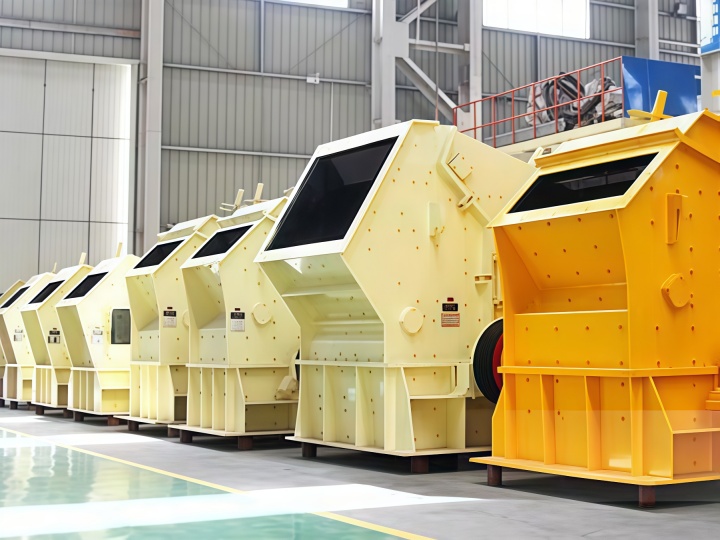
How Does a Hammer Crusher Machine Differ from Other Equipment?
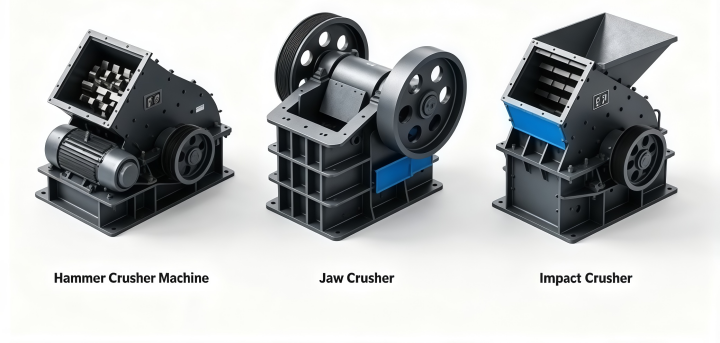
Compared to jaw crushers and impact crushers, Hammer Crusher Machine differs in crushing method, material range, and maintenance costs.
A jaw crusher uses compression, suits materials up to 300 MPa, but has a ratio of only 3 to 6. An impact crusher produces better particle shape but has more components. Under identical 70 MPa limestone conditions, annual maintenance for the machine is 80 hours versus 140 hours for an impact crusher. For brittle materials below 100 MPa, Hammer Crusher Machine offers higher cost-effectiveness.
Common Faults and Troubleshooting Methods for Hammer Crusher Machine
Four common faults exist: rotor imbalance, blockage, oversized discharge, and bearing overheating. Each has identifiable causes and corresponding corrective measures.
Rotor Imbalance. Replace hammers in pairs with weight matching within 50 grams and perform static balance testing.
Blockage.Caused by excessive feed or moisture above 15%; install an iron remover.
Oversized Discharge. Caused by hammer wear above 20% or broken sieve bars; replace worn parts.
Bearing Overheating. When temperature exceeds 80°C, check lubrication. Fill grease to 50% of bearing space.
Hammer Crusher Machine Frequently Asked Questions
How long do the hammers of a Hammer Crusher Machine last?
At 60 to 80 MPa limestone, high-manganese steel lasts 400 to 600 hours, high-chromium cast iron 3 to 6 months. Replace when wear exceeds 20%.
Can a Hammer Crusher Machine process wet materials?
Moisture must stay below 15%. For high-moisture material, increase sieve bar gap and shorten cleaning intervals.
How to determine when the hammers of a Hammer Crusher Machine need replacement?
When discharge coarsens or capacity drops over 15%, weigh the hammers. Also monitor the ammeter.
What is the maintenance interval for a Hammer Crusher Machine?
Inspect hammers every 200 hours, sieve bars and liners every 400 hours. Lubricate bearings every two weeks in winter, weekly in summer. Clean residue after each shutdown.