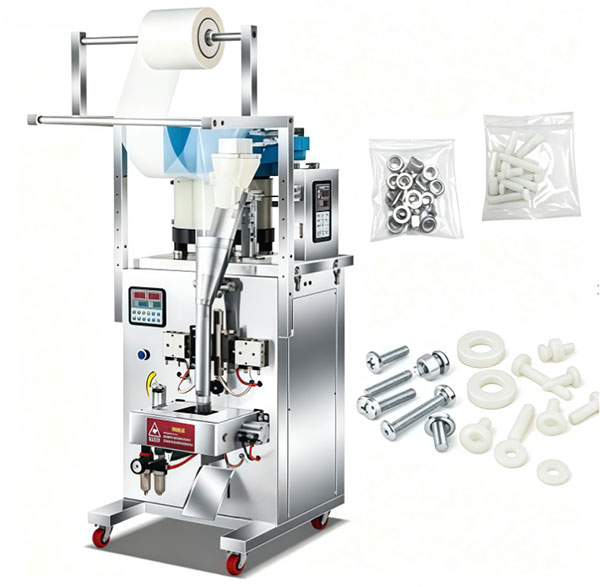
Hardware Packing Machine
Hardware Packing Machine Overview
In the final stages of furniture parts, automotive fasteners, and electronic plastic parts production, manual bagging is not only slow, but also puts considerable pressure on production management due to rising labor costs and high employee turnover. Hardware Packing Machines offer a fully automated alternative, integrating material arrangement, counting, bag making, and sealing. These machines typically pack 20 to 60 bags per minute and can accommodate various bag types, including three-side seals, pillow bags, and multi-bags, helping companies establish standardized, continuous production line packaging operations.
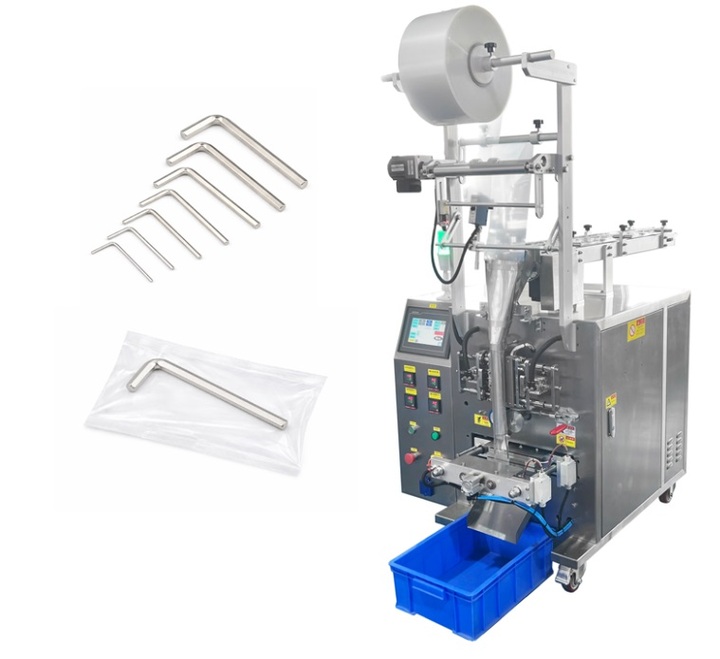
Application Scenarios
Hardware packaging machines can be used in furniture manufacturing, hardware manufacturing plants, and electronics industries. For example, they can be used to assemble screws, corks, eccentric parts, and small hex wrenches into accessory packages; to bag single-specification nuts, washers, or expansion bolts in large quantities; and to package finished products such as terminal blocks, plastic clips, and faucet accessories. Whether it's continuous packaging of single materials or mixed packaging of multiple parts, it can be customized to meet specific production line requirements.
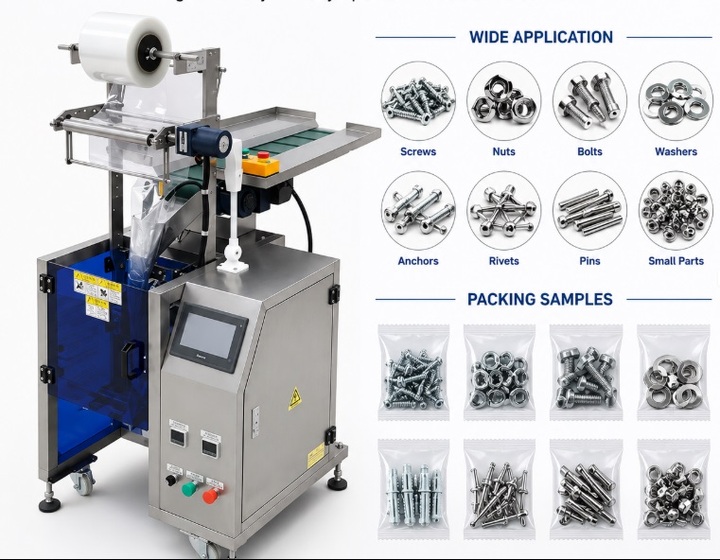
What are the benefits of a Hardware Packing Machine?
Hardware packaging machines can operate continuously 24 hours a day with a stable output speed, making production capacity planning clear and controllable. In terms of counting error control, it uses technical means to keep quantity errors within an extremely low range, reducing the cost of reissues and customer complaints caused by missing parts. The fully automatic mechanical sealing is smooth and tight, isolating air and moisture, reducing the risk of oxidation and rust on iron hardware during long-term storage and long-distance sea transport, and improving the overall quality of the final delivered product.
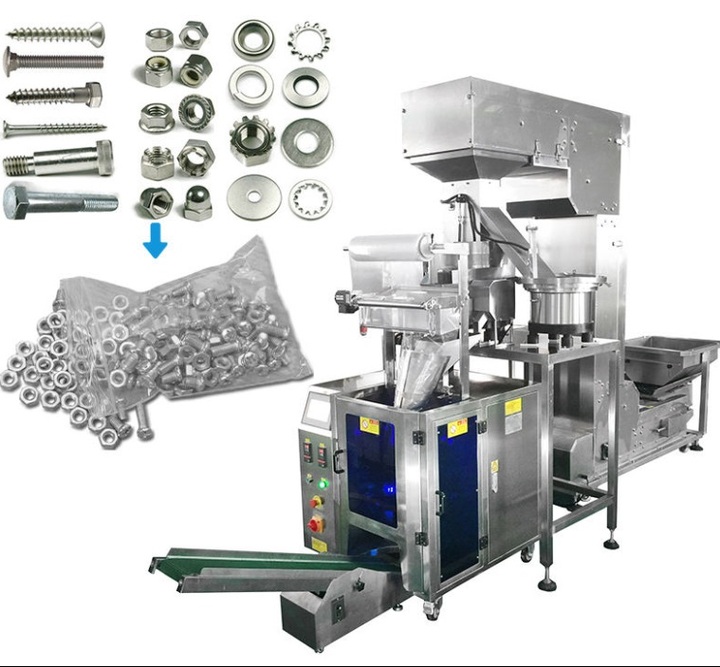
Model Parameter Table
The above specifications are for standard models. Since hardware kits vary in size and shape, every machine configuration is tailored to your specific samples.
| Parameter Item | Technical Specification |
| Model | MP-320V / MP-420V |
| Number of Vibratory Bowls | 1 - 12 Bowls (Customized based on kit types) |
| Packing Speed | 20 - 60 bags / min (Depends on material & count) |
| Counting Range | 1 - 9999 pcs / bag |
| Bag Size Range | L: 50-200mm ; W: 40-150mm |
| Max Film Width | 320mm / 420mm |
| Film Thickness | 0.04 - 0.08mm |
| Film Material | OPP, CPP, PET/PE, and other heat-sealable films |
| Bag Sealing Type | Pillow Seal (Back Seal), 3-Side Seal, Link Bags |
| Air Consumption | 0.6 - 0.8 MPa, 0.3 m³/min |
| Power Supply | AC 220V, 50Hz/60Hz, 2.5 kW |
| Machine Weight | 450 kg - 1200 kg (Varies with bowl numbers) |
| Machine Dimension | 1400mm × 1200mm × 1650mm (Standard) |
Hardware Packing Machine Structure
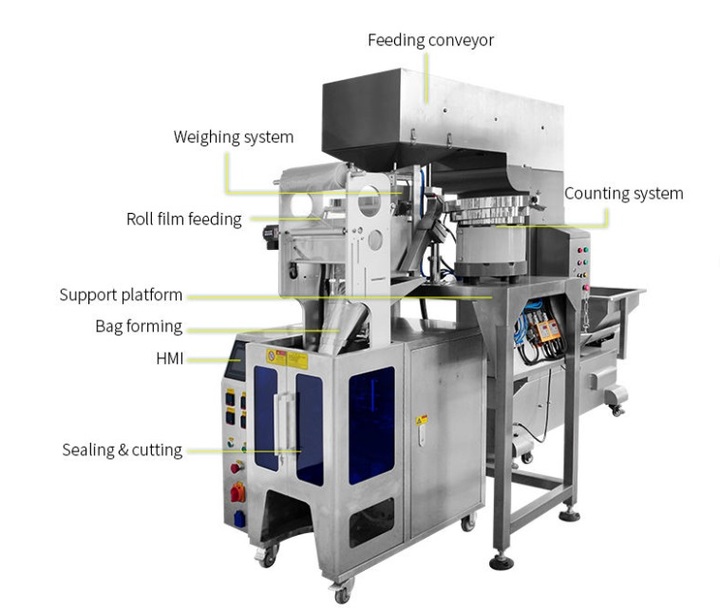
From a structural perspective, a hardware packaging machine is composed of several important mechanical modules. The vibrating hopper uses electromagnetic vibration to orient and transport scattered hardware parts along a track. Typically, a photoelectric sensor or light curtain scanning sensor is installed below the discharge port; when material passes through, the light is blocked, and the system records the quantity. The vertical forming bag-making machine head folds the roll packaging film through a forming device, heat-seals it using longitudinal and transverse sealing heating rollers, and then cuts it into individual bags by a cutter. The finished product conveyor belt transports the packaged bags to a collection box.
Frequently Asked Questions
Q: If I need to package screws of different sizes, do I need to replace the entire vibratory feeder?
A: This depends on the size difference. If the screw diameter and length vary slightly, it can be accommodated by adjusting the width of the vibratory feeder track or the height of the baffle. If the size difference is too large, the corresponding vibratory feeder surface needs to be replaced, which usually takes 15 to 20 minutes.
Q: How does the hardware packaging machine solve the problem of material jamming when dealing with burrs or irregularly shaped hardware parts?
A: During the design phase, the vibratory feeder track will be widened according to the burr situation, or a pneumatic unblocking device will be added to the hopper to periodically spray compressed air to disperse accumulated material and prevent blockage.
Q: What are the specific requirements for the packaging film material of the machine?
A: Hardware packaging machines generally use the heat-sealing principle and are suitable for various heat-sealable composite films such as OPP/CPP and PET/PE. The recommended film thickness is typically between 0.04 and 0.08 mm.
Q: What is the price of a customized Hardware Packing Machine?
A: The price of a basic, non-standard customized model with a single vibratory feeder usually ranges from $2,300 to $5,000. If multi-material mixing with 4 or 6 vibratory feeders is required, the price will increase. The price is calculated based on the size of the hardware sample and the specific testing plan.
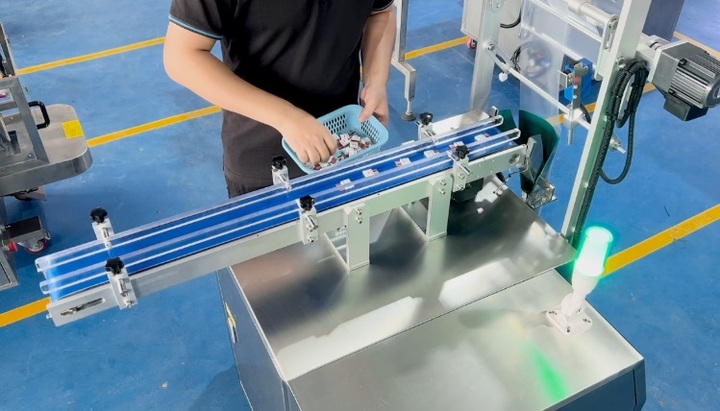
Hardware Packing Machines, through the modular combination of vibratory feeder arrangement, photoelectric counting, and automatic bag making and sealing, have changed the traditional hardware industry's reliance on manual packaging of multiple items. With a stable number of packages per minute and a low error rate, it helps factories achieve digitalization and standardization in the parts packaging process. Because the specifications, weights, and mixed packaging types of hardware vary, the equipment usually needs to be customized in terms of tracks and parameters based on the company's actual material samples to match the operating conditions of the production line.