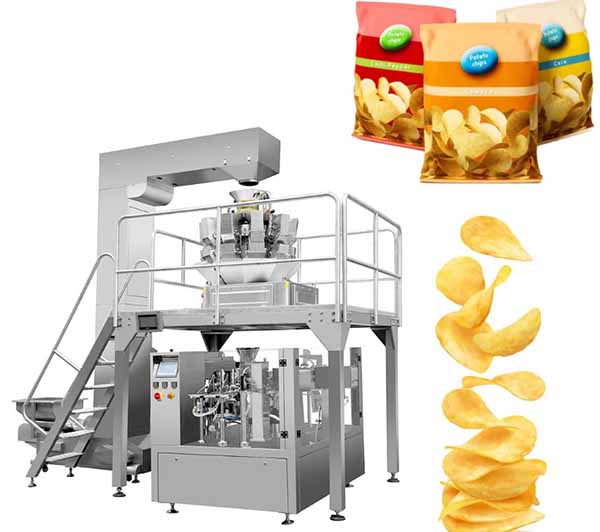
Multihead Weigher Packing Machine
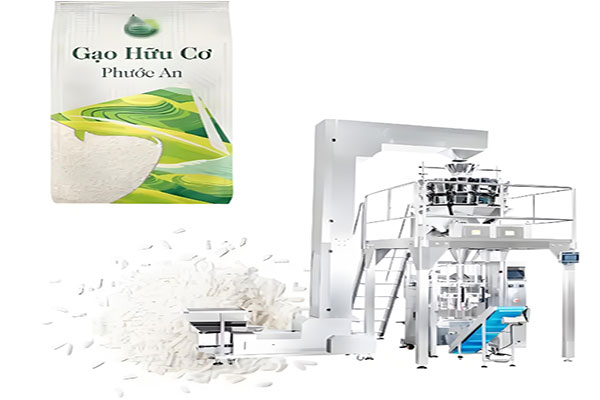
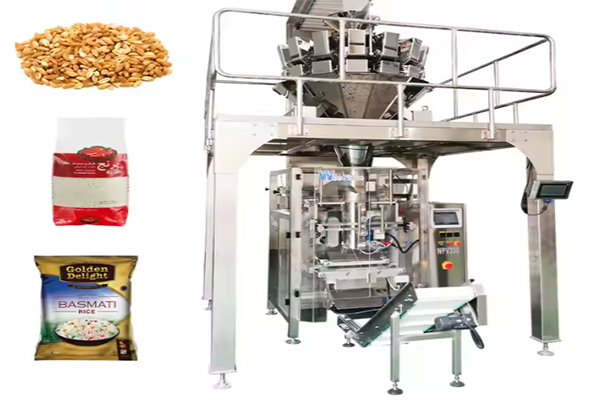
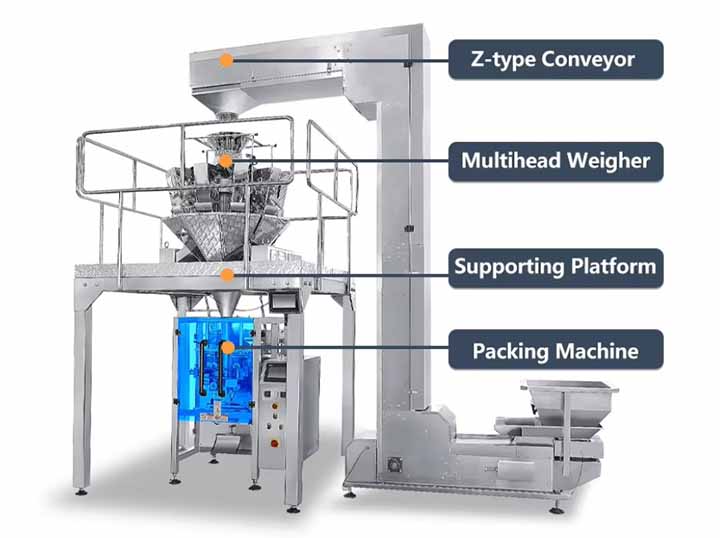
A multi-head weighing machine is a quantitative weighing device that uses a microcomputer to control multiple weighing units for combined calculations. It typically consists of multiple independent weighing hoppers, such as 10, 14, 16, or 24 hoppers. In actual operation, a multi-head weigher packing machine can handle packaging quantities ranging from 10g to 3000g per package, suitable for various granular and lumpy materials.
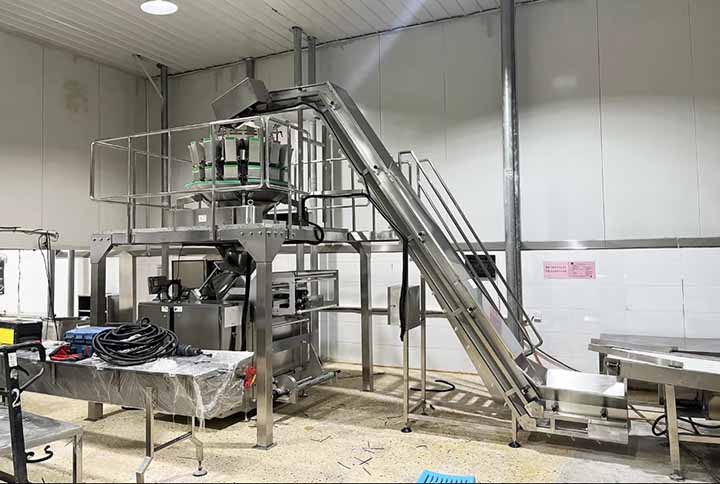
In terms of speed, a 10-head weigher typically packages around 60 packages per minute, while systems with 14 or more hoppers can reach a production speed of 120 packages per minute. It uses high-frequency, rapid screening to feed materials meeting the set tolerances and target weights into the forming mechanism below.
How does a packing machine work?
The automated operation of a multi-head weigher packaging machine can be broken down into the following continuous time points.
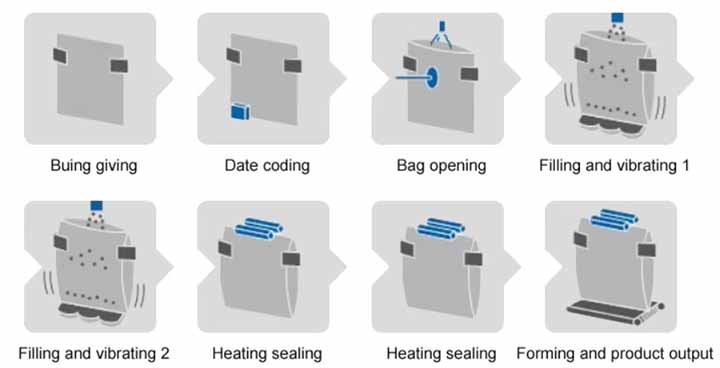
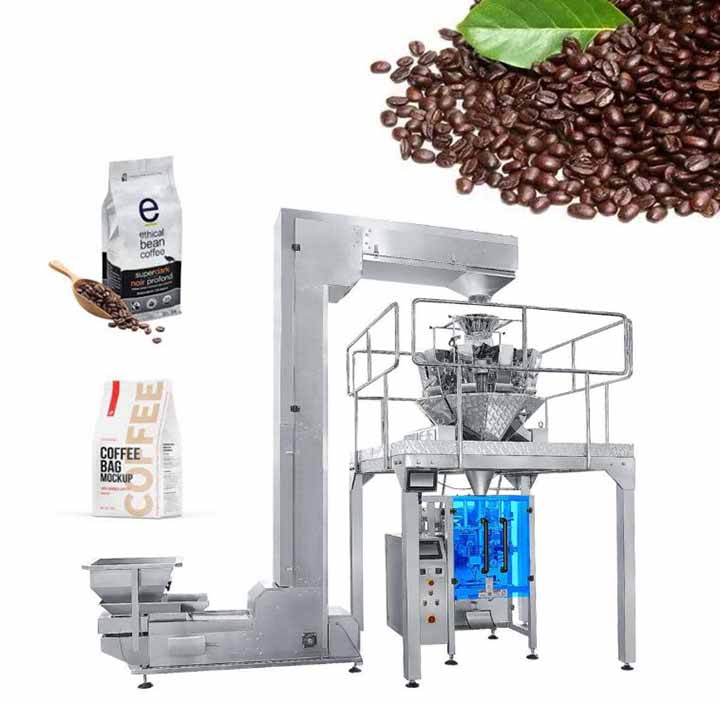
0.0 seconds (mechanical feeding): The elevator pours bulk material into the top vibrating plate, and the central cone rotates to evenly distribute the material into each vibrating plate. 0.5 seconds (Linear Conveying): The vibrating disc generates high-frequency vibration, pushing the material forward into the feed hopper. The feed hopper then opens, sending the material into the weighing hopper below.
1.2 seconds (Static Weighing): Pressure sensors inside the weighing hopper collect static weight data and convert analog signals into digital signals, transmitting them to the central microprocessor.
1.5 seconds (Microcomputer Combination): A computer algorithm arranges and combines the weights from a dozen weighing hoppers, selecting several hoppers whose sum is close to a set target.
1.8 seconds (Unloading and Dropping): The selected weighing hoppers simultaneously open their discharge gates, and the material collects in the collecting hopper and flows down the discharge chute towards the vertical packaging machine.
2.2 seconds (Film Forming): The packaging machine simultaneously starts the film winding belt, pulling the flat composite film through the forming device to form a cylindrical shape.
2.8 seconds (Filling and Sealing): The material falls into the bag, the heat-sealing horizontal sealing knife closes, and the top of the bag and the bottom of the next bag are heated and pressed together. 3.2 seconds (cut-off output): The cutter severs the bag's connection, and the finished packaged bag falls onto the conveyor belt, transported to the next link in the packaging line.
What are the benefits of the Multihead Weigher Packing Machine?
Using this automated equipment directly optimizes the processing plant's operational data, primarily in the following three dimensions.
Reducing hidden material losses: Traditional weighing often results in 2-5g of excess material per bag due to errors. This machine, relying on a microcomputer, can control the tolerance of a single bag within ±0.3-1.2g, saving large-volume enterprises a significant amount of raw material costs.
Freeing up production line manpower: Automated filling and sealing eliminates four manual positions: opening bags, weighing, filling, and sealing. A single production line can reduce 3 to 5 operators.
Increasing production line throughput: A stable output of thousands of bags per hour enables uninterrupted operation in the downstream packing and palletizing stages, improving the overall plant's turnover efficiency.
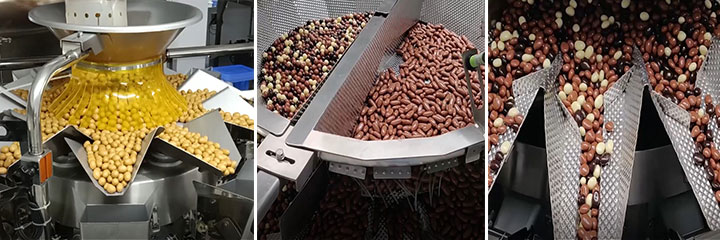
Combination Weighing System Parameter Table
| Items | 10-Head Multihead Weigher | 14-Head Multihead Weigher | 16-Head Multihead Weigher | 24-Head Multihead Weigher |
| Hopper Volume | 1.6L / 2.5L | 1.6L / 2.5L | 0.5L / 1.6L | 0.5L / 1.6L |
| Weighing Range | 10g - 1000g | 10g - 1500g | 5g - 500g | 5g - 500g |
| Weighing Accuracy | ± 0.3g - 1.5g | ± 0.2g - 1.0g | ± 0.1g - 0.8g | ± 0.1g - 0.5g |
| Max Weighing Speed | 60 bpm | 120 bpm | 140 bpm | 180 bpm |
| Drive System | Stepper Motor | Stepper Motor | Stepper Motor | Stepper Motor / Servo Motor |
| Control Panel | 7-inch / 10-inch Touch Screen | 10-inch Touch Screen | 10-inch Touch Screen | 10-inch / 12-inch Touch Screen |
| Material in Contact with Product | SS304 Stainless Steel | SS304 Stainless Steel | SS304 Stainless Steel | SS304 Stainless Steel |
| Waterproof Grade | IP65 | IP65 | IP65 | IP65 |
Matching Vertical Packaging Machine Parameter Table
| Items | Model MR-420 (Standard Type) | Model MR-520 (Medium Type) | Model MR-720 (Large Type) |
| Max Film Width | 420mm | 520mm | 720mm |
| Bag Length | 80mm - 300mm | 100mm - 350mm | 150mm - 450mm |
| Bag Width | 60mm - 200mm | 90mm - 250mm | 120mm - 350mm |
| Packing Speed | 5 - 60 bpm | 5 - 55 bpm | 5 - 50 bpm |
| Max Film Diameter | 320mm | 320mm | 400mm |
| Composite Film Thickness | 0.04mm - 0.09mm | 0.04mm - 0.12mm | 0.05mm - 0.15mm |
| Film Pulling Drive | Single / Dual Servo Motor | Dual Servo Motor | Dual Servo Motor |
| Horizontal Sealing Drive | Pneumatic / Servo Drive | Pneumatic / Servo Drive | Servo Drive |
Application Scenarios
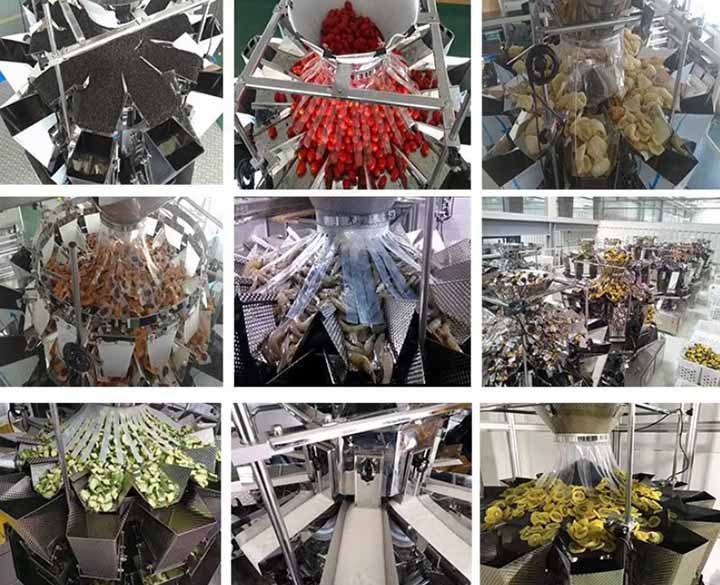
Multi-head weighing and packaging machines can package potato chips, nuts, gummy candies, frozen dumplings, and pet food. They are commonly used in snack food filling, frozen fresh food quantitative packaging, and automatic pet food packaging.
Snack Food Industry: Potato Chip Fragility Issue
Challenge: Puffed potato chips are brittle and easily break when dropped from a height onto the weighing hopper, feeding chute, and bottom of the packaging bag.
Solution: Lower the opening angle of the weighing hopper and collecting hopper (e.g., from 60 degrees to 45 degrees) to shorten the material throwing distance, and install a silicone buffer pad inside the feeding port to allow the potato chips to slide down the slope, reducing the breakage rate.
Frozen Food Industry: Dumpling Adhesion and Water Ingress into the Machine Body
Challenge: Frozen dumplings easily thaw at room temperature, producing water and sticking together, and the processing workshop needs to wash the equipment with water daily.
Solution: The vibratory feeder and weighing hopper surfaces in contact with the material are made of patterned stainless steel to reduce the contact area between the dumplings and metal; the machine casing achieves an IP65 waterproof rating, and the electrical box uses double-layer sealing rings.
Candied Fruit and Dried Fruit Industry: Slow Feeding of Sticky Materials
Challenge: Raisins and candied fruits have syrup on their surface, which easily sticks to the inner wall of the weighing hopper, causing uneven feeding and leading to weighing errors.
Solution: The inner walls of the vibratory feeder, feeding hopper, and weighing hopper are coated with a Teflon anti-stick coating, and the amplitude of the vibratory feeder is increased to facilitate the smooth sliding of sticky materials.
Supported Bag Types & Packaging Materials
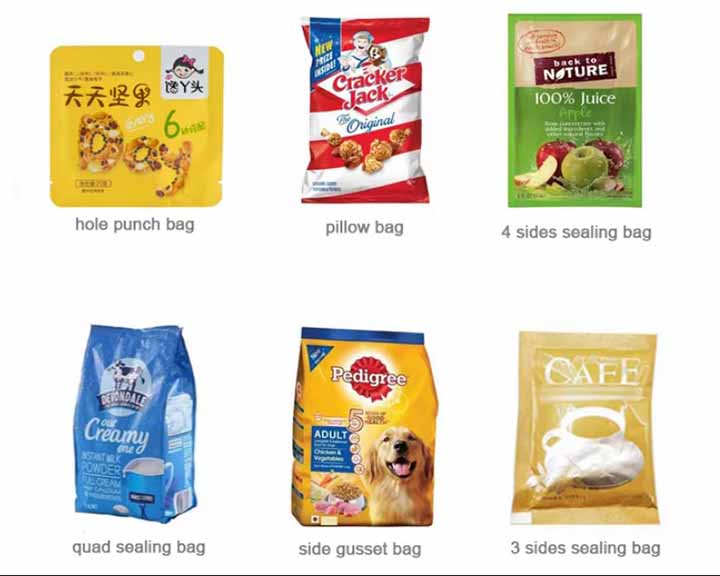
Multi-head weighing and packaging machines can be adapted to various bag types and packaging film rolls by changing different rear packaging mechanisms.
| Common Compatible Bag Types | Supported Laminated Roll Film Materials |
| Pillow Bag | OPP/CPP Laminated Film (For Puffed Food) |
| Gusset Bag | PET/PE Laminated Film (For Coffee, Nuts) |
| Quad Seal Bag | PA/PE Nylon Laminated Film (For Frozen Seafood) |
| Doypack | Pure Aluminum Foil Laminated Film / Metallized Film (For Pet Food) |
What is the price of the Multihead Weigher Packing Machine?
The price of this machine system varies depending on the customized configuration. Its pricing is primarily influenced by the following four parameters and hardware factors:
Number of Weighing Heads: The price of 10-head, 14-head, and 24-head scales follows a tiered distribution. More heads mean a significantly increased number of stepper motors and load cells, thus raising the overall system price.
Surface Finish and Material Treatment: A standard configuration using ordinary mirror-finish stainless steel is the standard price. Replacing it with patterned steel, Teflon anti-stick coating, or corrosion-resistant 316 stainless steel will increase material processing costs.
Compatible Packaging Machine Model: A system paired with a vertical roll wrapping machine (VFFS) is relatively affordable. However, if paired with an automated bag feeder (using pre-made bags or zippered stand-up pouches), the system price will increase due to the more complex bag opening and opening mechanisms.
Component Brand Specifications: If specific imported brands are specified for cylinders, PLC controllers, touchscreens, and weight sensors, the hardware procurement cost will be directly reflected in the total equipment price.
FAQ
Q: What are the differences between a 10-head and 14-head combination scale when selecting a model?
A: The difference lies in the number of weighing combinations and the operating speed. A 14-head scale has four more weighing units than a 10-head scale, increasing the number of possible combinations from 1023 to 16383. While maintaining the same weight deviation, the 14-head scale operates at a higher speed.
Q: Will the size of the material and the weight of a single package affect the selection of the single hopper capacity?
A: Yes. Small particles and small packages of materials can be weighed using small-capacity hoppers of 0.5L or 1.6L; for large pieces of frozen meat, whole walnuts, or fluffy popcorn, large-capacity hoppers of 2.5L or 5.0L are required.
Q: What adjustments need to be made to the packaging machine when changing to different bag widths?
A: For vertical roll-to-roll packaging machines, the bag former needs to be replaced with one of the corresponding width, and the stroke of the horizontal sealing knife and the spacing of the film-pulling belt need to be adjusted.
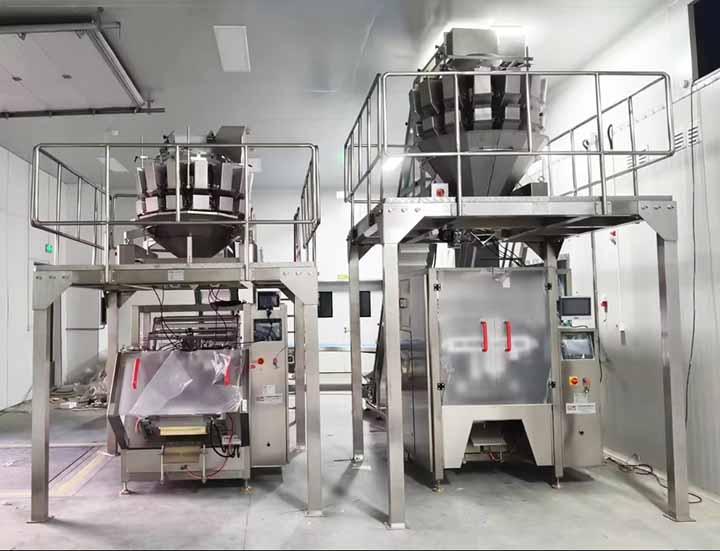
Multi-head combination weighing packaging machines achieve fully automated operation from bulk material supply and static combined weighing to automatic bag forming. Through modular selection of the number of weighing heads, contact surface materials, and bag types, processing plants can solve the quantitative packaging problems of granular materials in industries such as food and hardware. For system configuration solutions and detailed quotations for specific materials, please provide material characteristics and target speeds so that engineers can provide technical drawings.