Powder Single Lane Stick Pack Machine
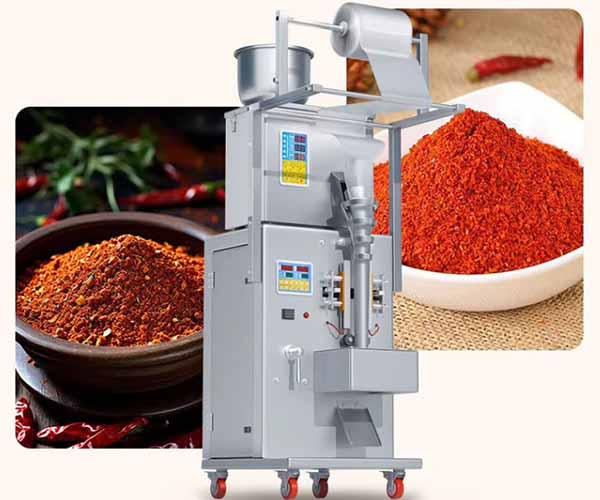
This automated system transforms roll film into long, thin stick-shaped packaging bags and fills them with powder. It can handle various material states, including fine particles with poor flowability, crystals, and granular mixtures. Filling volumes typically range from 1 gram to 50 grams per bag, depending on the material density and the metering cylinder configuration. The machine operates at a speed of 20 to 60 bags per minute, continuously performing vertical forming, filling, and lateral sealing actions within a single lane.
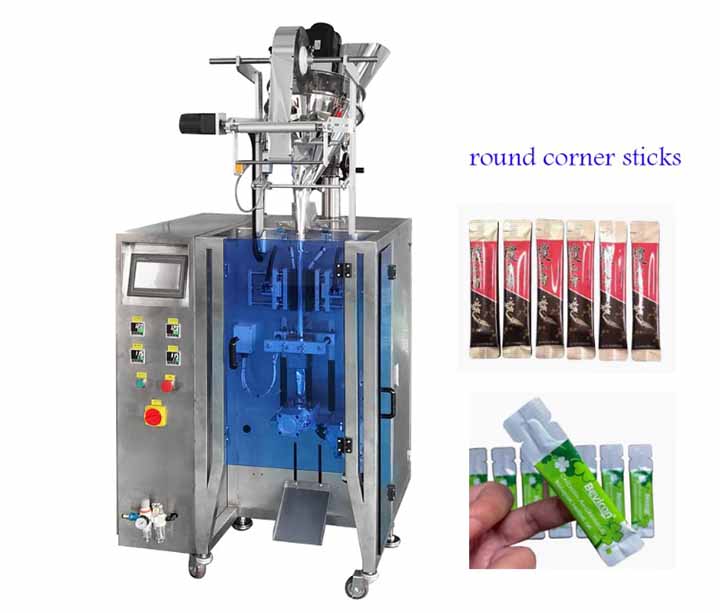
Problems the Machine Can Solve
| Operational Challenge | Machine Solution with Technical Details | Realized Outcome |
| Powder leakage during sealing | Synchronized mechanical shutter cuts off material flow instantly before horizontal bars close. | Clean seal area without powder contamination, stopping channel leakers. |
| Time-consuming product changeover | Split-hopper construction with quick-release toggle clamps requires no hand tools for disassembly. | Washdown and product switch completed within 15 minutes, increasing uptime. |
| High initial capital barrier | Compact single-lane footprint utilizes a simplified mechanical linkage and one set of forming dies. | Reduced initial machinery investment, fitting small-scale production facilities. |
Applications
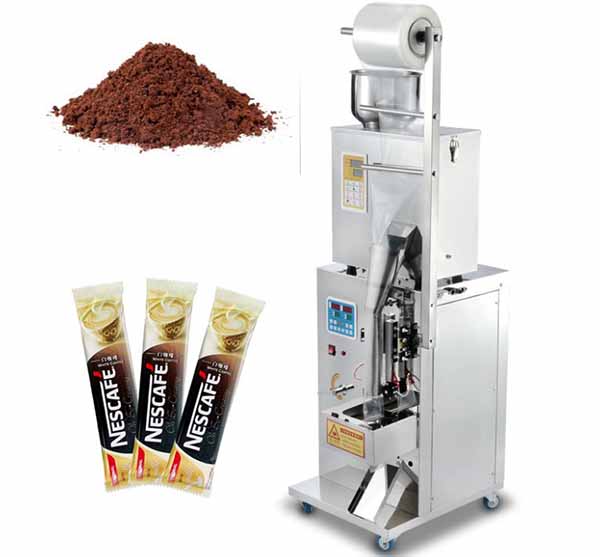
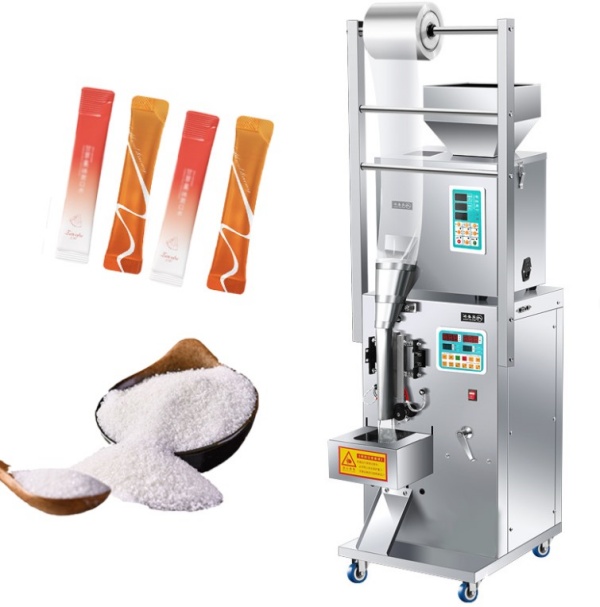
This machine operates in various manufacturing sectors requiring small-dose, portable packaging. In the food industry, it can package instant coffee granules, matcha powder, non-dairy creamer mixtures, and fine sugar into single-serving formats. It can also package collagen powder, freeze-dried probiotics, fruit enzyme powder, and multivitamin blends. In the daily chemical industry, it can package single-use concentrated laundry detergent, bath salts, and beauty mud powder.
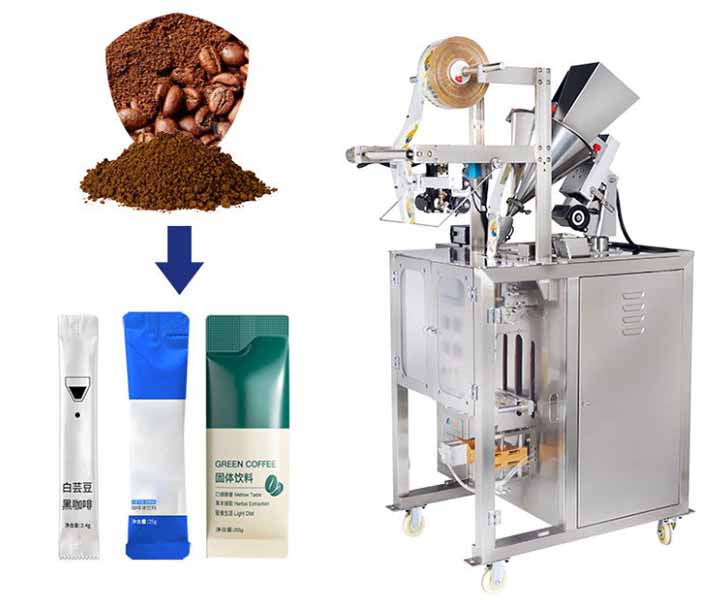
Benefits of the Equipment
Introducing this single-lane equipment changes the production model by reducing manual operations. The vertical design occupies less than 1.5 square meters, allowing deployment in space-constrained facilities. Packaging material costs are reduced by approximately 30% compared to manual filling methods by using roll-to-roll packaging film instead of pre-made bags. An integrated PLC controls the roll film tension via color-mark photoelectric sensors, ensuring the printed pattern remains centered on each strip.
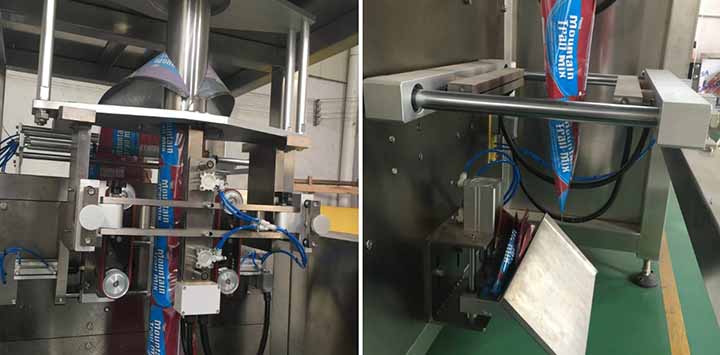
How does the single-lane powder strip packaging machine work?
The single-lane powder strip packaging machine completes automated packaging through five structured mechanical cycles. An electric unwinding shaft pulls out the composite film, which is then smoothed and wrinkle-free by a tension swing arm. The packaging film is then shaped into a vertical tube by a metal forming die at the neckline, and the overlapping edges are pressed together by a heated longitudinal sealing assembly to form a back seal. Next, a filling mechanism feeds the predicted powder volume into the bag through the center of the forming tube. Heated transverse sealing jaws then close on the film tube, simultaneously sealing the top of the current bag and the bottom of the next. Finally, a pneumatic cutter cuts the finished product laterally in the sealing area, and the strip falls into the discharge chute.
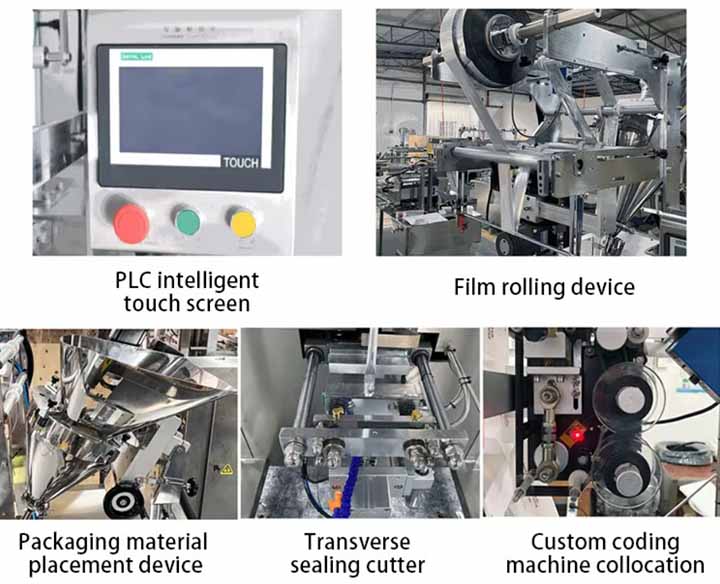
Model Selection
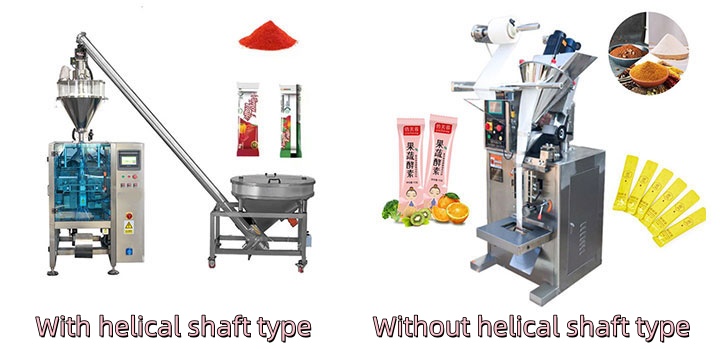
Two single-channel powder strip packaging machine models are available: one with a screw shaft and one without. The correct configuration depends on the physical flow characteristics of the powder material.
Model with Screw Shaft: This variant uses an electric vertical screw inside the hopper to drive the material downwards. This model is suitable for powders with poor flowability, such as milk powder, flour, or finely ground coffee powder. These materials are prone to clumping, bridging, or dusting. The mechanical rotation of the screw shaft controls the discharge volume by adjusting the total number of rotations of the shaft.
Model without a screw shaft (measuring cup type): This version uses a rotating disc with an adjustable cavity, relying on its own gravity for filling. This model is suitable for free-flowing powders and small particles, such as granulated sugar, salt, or coarse chemical microparticles. Because these materials slide easily without sticking, gravity filling achieves stable metering, reducing the mechanical complexity and cost of the screw system.
Frequently Asked Questions
Q: What is the cost of a powder packing machine?
A: The purchase price of a standard single-row strip packing machine typically ranges from $3,600 to $11,000. The final cost varies depending on whether a screw filling system or a measuring cup filling system is selected, whether a date-encoding printer is included, and the specific brand of pneumatic valves and PLC components chosen.
Q: What is a powder filling machine?
A: A powder filling machine is used to dispense a specific weight or volume of dry granular material into designated containers, bags, or bottles. It operates as a sub-component in a larger packaging line or as a standalone unit to automate material handling.
Q: What are the components of a strip packing machine?
A: A strip packing machine consists of four main components: an unwinding shaft with a tension bar, a vertical forming die, heated sealing grippers, and a metering drive.
Q: Which machine is used for packing?
A: To dispense small doses of dry powder into long, narrow bags, a vertical forming fill and seal (VFFS) single-row strip packing machine is required. For pre-made bags, a pre-filled bag packing machine is selected; while pillow packing machines are used for solid items such as chocolate bars.
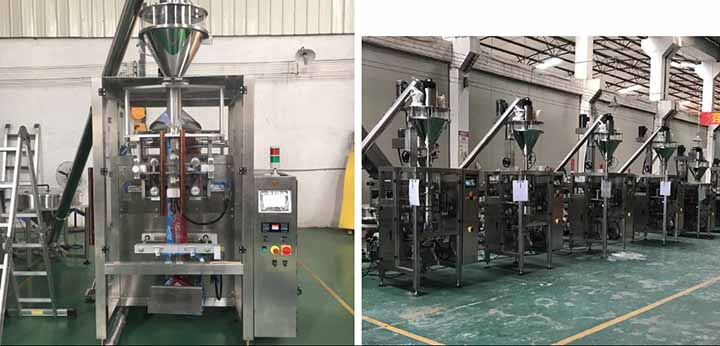
Single-row powder strip packing machines provide small and medium-sized enterprises with an automated means of producing single-serving powder bags. By matching the filling mechanism (screw shaft or measuring cup) to the specific flow characteristics of the material, operators can maintain bag weight and seal integrity. This machine serves as an entry point into automated packaging, upgrading manual production lines through structured mechanical operation.