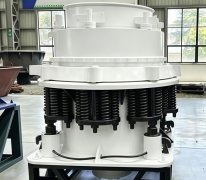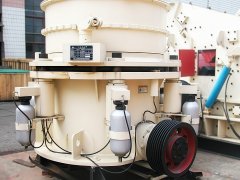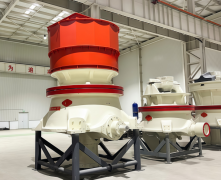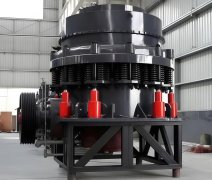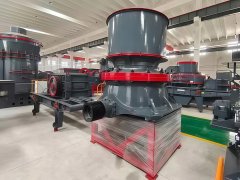
Secondary Cone Crusher
What is a Secondary Cone Crusher?
The Secondary Cone Crusher is a medium-fine crushing device used in the secondary crushing stage, processing material from primary crushers into uniformly fine particles. Its performance affects the final aggregate shape and gradation, as well as the energy consumption of downstream grinding or sand-making processes.
Field tests at a limestone quarry in Guangxi showed that the GP200S Secondary Cone Crusher, operating with feed material at 6% moisture content and a discharge opening set at 28 mm, steadily produced 0–5 mm fine aggregates with flakiness content below 8%. The unit maintained full capacity throughout 480 hours of continuous operation. When feed moisture exceeds 10%, it is advisable to widen the discharge opening to 32 mm and reduce feed rate; otherwise, material packing may occur inside the crushing chamber of the unit.
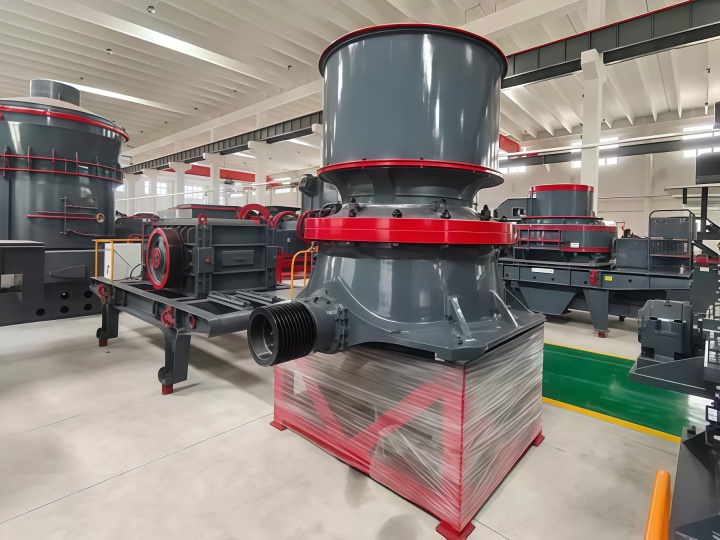
Working Principle and Operating Tips for the Secondary Cone Crusher
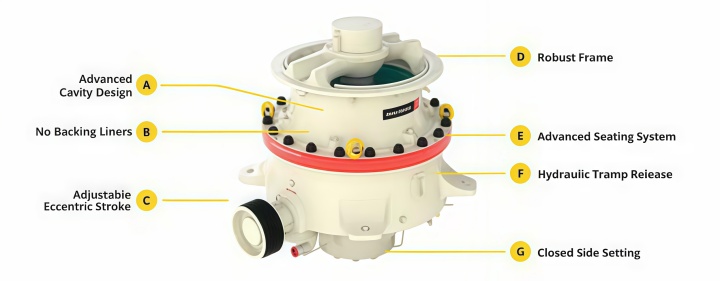
The equipment relies on the gyratory motion of the mantle against the concave to crush material. Eccentric stroke and the hydraulic discharge adjustment system are the two key factors affecting operational stability.
Eccentric stroke: An oversized eccentric stroke can cause excessive fluctuation in motor current. At the Guangxi site, reducing the stroke from 32 mm to 25 mm lowered current fluctuation from ±12% to ±6%.
Discharge adjustment: The hydraulic system responds within 3 to 5 seconds, which is sufficient for normal variations in feed rate. If feed fluctuation exceeds ±20%, it is better to install a surge hopper at the feed end rather than relying on frequent hydraulic adjustments to the machine.
Secondary Cone Crusher Technical Specifications
| Parameter | GP100S | GP200S | GP500S |
| Max feed size | 236 mm | 320 mm | 392 mm |
| Motor power | 75 – 90 kW | 132 – 250 kW | 200 – 355 kW |
| Discharge opening range | 19 – 35 mm | 25 – 50 mm | 30 – 65 mm |
| Capacity | 80 – 180 t/h | 135 – 300 t/h | 240 – 590 t/h |
| Weight | 17,100 kg | 32,000 kg | 34,300 kg |
Actual field comparison: The GP200S unit achieved 265 t/h at the Guangxi project, approximately 10% higher than the midpoint of its nominal capacity range.
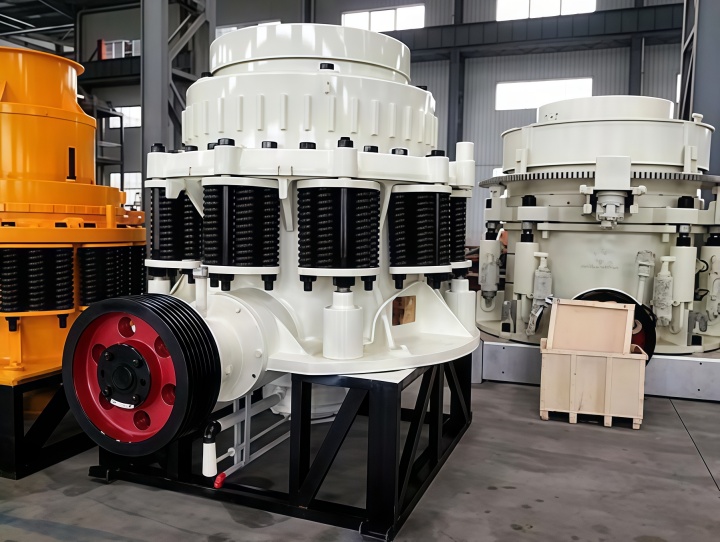
Operational Stability Advantages of the Secondary Cone Crusher
With its large feed opening relative to machine weight, steep crushing chamber, and automated monitoring system, the crusher maintains stable operation even when feed fluctuates or material properties vary.
Throughput capacity: The large feed opening allows the primary crusher to operate with a wider closed side setting. In practice, increasing the primary crusher discharge setting from 100 mm to 150 mm nearly doubled the jaw crusher throughput while reducing specific energy consumption.
Material adaptability: The steep vertical cavity effectively handles wet, slabby, or slippery materials. Even with intermittent feed or feed fluctuations, the unit continues to run at high availability.
Service life: The automation system continuously monitors load and operating parameters, enabling remote adjustments and reducing personnel exposure to hazardous areas. It also prevents damage from overloading.
Field Test Data for the Secondary Cone Crusher
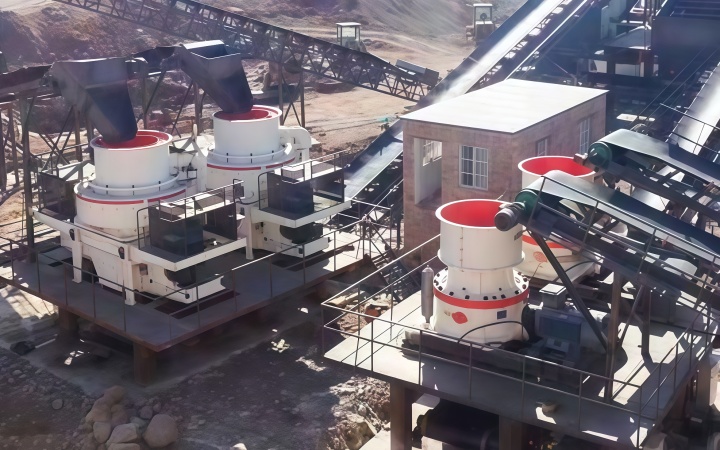
During 480 hours of continuous operation at a limestone quarry in Guangxi, the GP200S unit processed feed material sized 180–220 mm at 6% moisture content, with a 28 mm discharge setting. Steady capacity reached 265 t/h, about 3% above the nominal rating. When feed fluctuated by ±15%, motor current variation was contained within ±8%, proving that the hydraulic control system responds quickly enough to handle intermittent feed. The same set of liners was flipped after 520 hours and is projected to last a total of 980 hours, representing a 22% extension over the nominal wear life.
Application Scenarios for the Secondary Cone Crusher
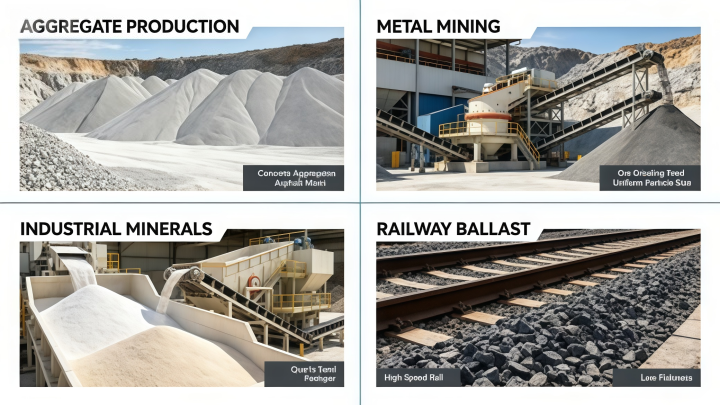
The machine is used across four main sectors, delivering well-shaped and properly graded finished products.
Aggregate production: Producing high-grade concrete aggregates and asphalt mixes. Data from the Guangxi project shows flakiness content consistently between 7% and 9%, meeting high-speed railway ballast standards.
Metal mining: As a secondary or tertiary crusher, it reduces iron ore and copper ore to suitable sizes for downstream grinding.
Industrial minerals: Processing non-metallic minerals such as quartz sand and feldspar to provide uniform feed.
Railway ballast: Producing high-standard ballast with controlled flakiness content.
How to Choose the Right Secondary Cone Crusher Model
Selecting the appropriate unit depends on actual site conditions. Feed material hardness, target capacity, and final product size are the three deciding factors.
Material hardness: For limestone with compressive strength below 200 MPa, a standard cavity is sufficient. For granite or basalt above 300 MPa, choose a model with high-manganese steel liners.
Capacity requirements: Under 100 t/h, choose the GP100S; for 200–300 t/h, select the GP200S; for large-scale mining projects, the GP500S is recommended.
Final product size: To produce 0–5 mm fine aggregate, set the discharge opening between 19 and 25 mm. For 10–20 mm coarse aggregate, the opening can be widened to 30 mm or more.
On-Site Installation and Commissioning Tips for the Secondary Cone Crusher
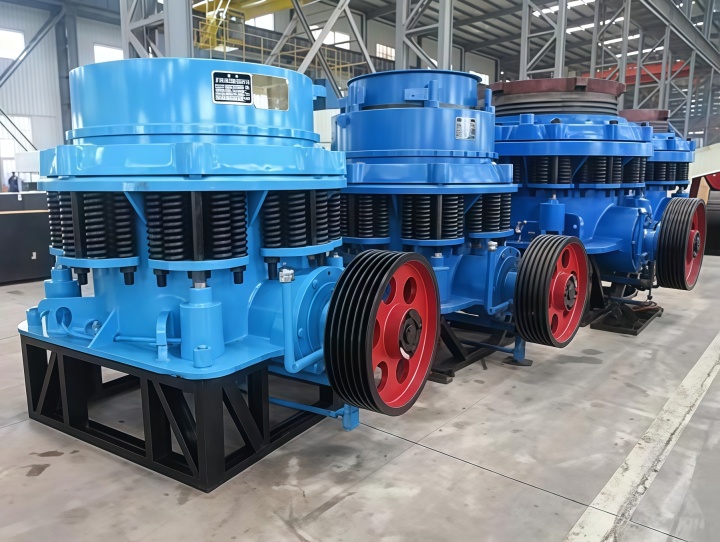
Proper installation of the crusher directly affects its long-term reliability. Foundation flatness, no-load current, and feed distribution are the three critical checkpoints during commissioning.
Foundation flatness: The foundation must be level within 2 mm; otherwise, excessive vibration will occur during operation.
No-load current: During commissioning, ensure that no-load current is stable below 30% of rated value and that the hydraulic system shows no leakage.
Feed distribution: The feed distributor plate must be perfectly horizontal. At the Guangxi project, a 3 mm tilt caused uneven feed distribution; after correction, the unit's capacity increased by about 8%. The crusher is available in both mobile and stationary configurations.
Frequently Asked Questions About the Secondary Cone Crusher
Q: What should I do if the feed to the Secondary Cone Crusher contains too much fine material?
A: When fines exceed 25%, they fill the voids between particles and reduce inter-particle crushing efficiency. Install a vibrating screen at the feed end to remove material smaller than the discharge setting, or choose a short-stroke configuration for the equipment.
Q: What causes sudden severe vibration in the Secondary Cone Crusher during operation?
A: At the Guangxi site, this was traced to a metallic object larger than 40 mm that had entered the feed and became wedged in the upper crushing chamber, causing uneven mantle loading. After stopping the machine and removing the object, the crusher returned to normal operation. Install a metal detector or magnetic separator at the feed end; if vibration is accompanied by a sudden current spike, stop immediately.
Q: How long do the liners of the Secondary Cone Crusher last?
A: Typically between 400 and 800 hours, depending on the abrasiveness of the feed material. For highly abrasive materials like granite, choose liners with manganese content above 18%. Flipping the liners can extend service life by more than 20%.
Q: How can I tell if the Secondary Cone Crusher is choke-fed?
A: The feed material should form a layer 100–150 mm above the distributor plate, acting as a natural buffer. Motor current should be steady at above 85% of rated current; continuous fluctuation indicates inconsistent feed.