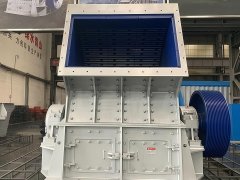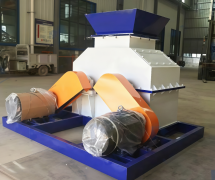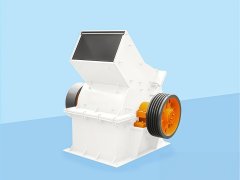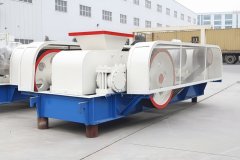
Ring Hammer Crusher
What Exactly Is a Ring Hammer Crusher?
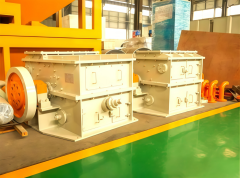
Ring Hammer Crusher features ring-shaped hammers that rotate with the rotor and spin around their own pivot pins, designed for medium and fine crushing. It combines impact and grinding, achieving a crushing ratio of 10 to 25.
The equipment processes brittle materials with compressive strength up to 100MPa and surface moisture up to 15%. It is available in models from PCH0402 to PCH1616, with capacities from 8 to 900 tons per hour. This product is widely used in coal crushing at thermal power plants, with over 500 plants worldwide using this equipment.
How Does a Ring Hammer Crusher Work?
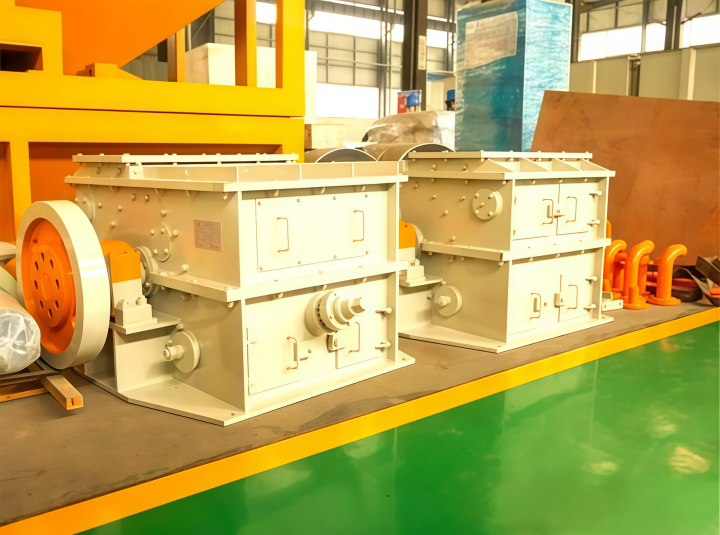
The product operates through three stages: impact crushing, counterattack crushing, and grinding discharge.
During impact crushing, the motor drives the rotor at high speed. Material enters the crushing chamber and is struck by the rotating ring hammers for initial breakage.
During counterattack crushing, material gains kinetic energy from the ring hammers and strikes the breaker plates for secondary breakage.
During grinding discharge, material falls onto the screen plate. Oversized particles are retained and ground until they pass through the screen openings. Uncrushable debris enters the metal trap and requires periodic cleaning.
The ring hammer gap and grate gap are adjustable. The product performs dry or wet crushing and remains stable at 15% moisture content.
Core Structural Components of a Ring Hammer Crusher
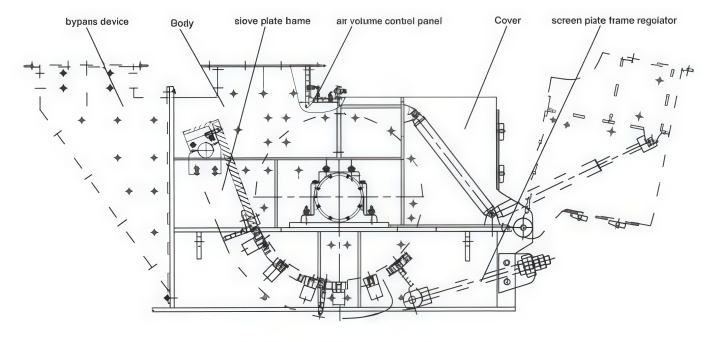
The product has five core components. The housing is the frame, welded from steel plates with wall thickness of 16 to 25 millimeters. The rotor is the power core, mounted on a 40Cr alloy steel shaft. The ring hammer is the key crushing component, made of high-chromium cast iron. The screen plate controls discharge size, made of Mn13Cr2 high manganese steel with hardness of HB200 to 230. The screen plate adjuster regulates the rotor-to-screen gap from 5 to 30 millimeters. These components determine the overall performance of this product.
Key Technical Parameters of a Ring Hammer Crusher
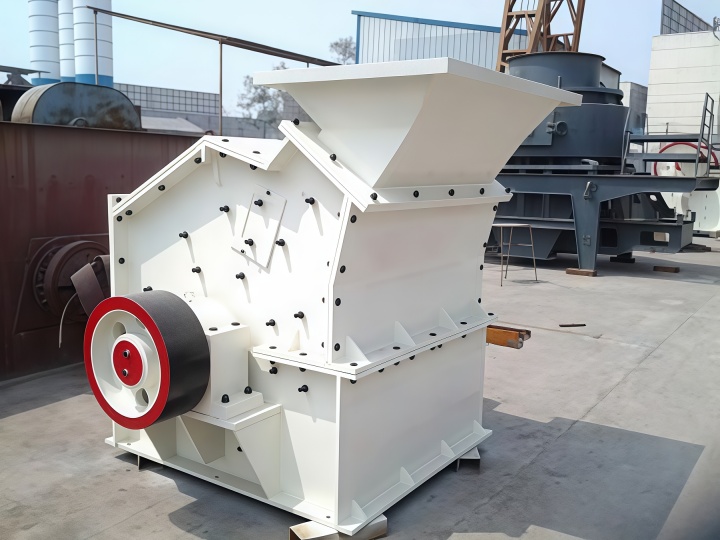
Technical parameters vary by model. The table below shows complete data for PCH series models:
| Model |
Rotor Size (mm) |
Max Feed (mm) |
Discharge (mm) |
Capacity (t/h) |
Speed (r/min) |
Motor Model |
Power (kW) |
Dimensions (mm) |
Weight (t) |
| PCH0402 | 400×200 | ≤200 | ≤30 | 8-12 | 960 | Y132M2-6 | 5.5 | 810×890×560 | 0.8 |
| PCH0404 | 400×400 | ≤200 | ≤30 | 16-25 | 970 | Y160L-6 | 11 | 980×890×570 | 1.05 |
| PCH0604 | 600×400 | ≤200 | ≤30 | 22-33 | 970 | Y180L-6 | 15 | 1050×1270×800 | 1.43 |
| PCH0606 | 600×600 | ≤200 | ≤30 | 30-60 | 980 | Y225M-6 | 30 | 1350×1270×820 | 1.77 |
| PCH0808 | 800×800 | ≤250 | ≤30 | 70-105 | 740 | Y280M-8 | 45 | 1750×1620×1080 | 3.6 |
| PCH1010 | 1000×1000 | ≤300 | ≤30 | 160-200 | 740 | Y315M2-8 | 90 | 2100×2000×1340 | 6.1 |
| PCH1016 | 1000×1600 | ≤300 | ≤30 | 300-350 | 740 | JS128-8 | 155 | 2700×2000×1350 | 9.2 |
| PCH1216 | 1200×1600 | ≤350 | ≤30 | 620-800 | 740 | Y450-8 | 355 | 4965×2500×1680 | 15.0 |
| PCH1616 | 1600×1600 | ≤400 | ≤30 | 700-900 | 740 | YKK5001-8 | 400 | 5365×2500×1680 | 19.3 |
Feed size ranges from 200 to 400 millimeters. Discharge size is ≤30 millimeters across all models. Weight ranges from 0.8 to 19.3 tons. Motor power ranges from 5.5 to 400 kW. The PCH1616 achieves up to 900 tons per hour.
Real-World Advantages of a Ring Hammer Crusher
This product has proven its performance across multiple global projects.
Processing Capacity. A state-owned power plant in Barranquilla, Colombia, adopted a PCH1010 in 2024. It crushes 100-millimeter feed to below 20 millimeters at 200 tons per hour and has operated for 14 months at 91% availability.
Operational Efficiency. Data from a coal preparation plant in Zhengzhou shows the product consumes 1.8 kWh per ton of limestone, a 21.7% reduction compared to 2.3 kWh for two-stage crushing, saving approximately $42,000 annually.
Production Increase. A mining company in Queensland, Australia, introduced this product in 2023, increasing capacity from 1.2 to 1.56 million tons per year, a 30% gain. A cement manufacturer in Bavaria, Germany, achieved 20% better particle uniformity, 25% higher production, and 18% lower maintenance costs after replacing its equipment.
Reliability. A coal preparation plant in Jakarta purchased a PCH1010 in 2024 to crush 200-millimeter material to below 13 millimeters at 100 tons per hour. The metal trap discharges 5 to 8 kilograms of tramp iron monthly. Standardized maintenance can extend the overhaul interval beyond 8,000 hours.
Materials and Scenarios Suitable for a Ring Hammer Crusher
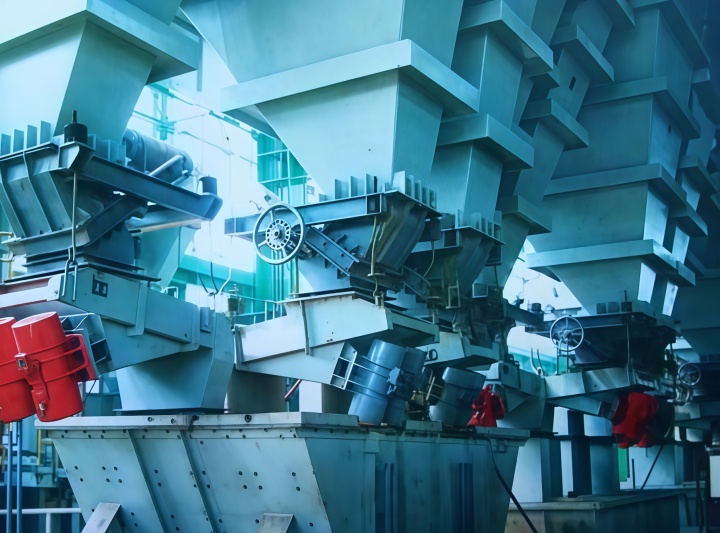
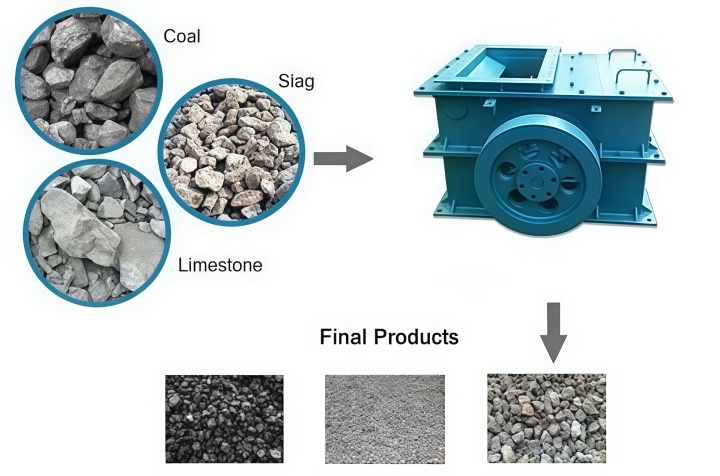
The product is suitable for limestone, raw coal, coal gangue, coke, gypsum, shale, red sandstone, slag, fertilizer materials, and soda ash.
When crushing raw coal, feed size reaches 400 millimeters and fines content exceeds 85%. When crushing limestone, material under 5 millimeters accounts for up to 60% of discharge, meeting power plant desulfurization requirements. When crushing coke, particle uniformity is better than roller crushers. When crushing fertilizer materials and soda ash, over-crushing is kept within 10%. A single unit can meet the coal crushing needs of 300MW to 600MW thermal power units. Ring Hammer Crusher is not suitable for materials with Mohs hardness above 6, such as granite and basalt, as these reduce ring hammer life to under 400 hours.
How to Select the Right Ring Hammer Crusher?
Selecting this product requires considering material characteristics and capacity needs.
For material characteristics, confirm compressive strength (within 100MPa), moisture content (above 10% requires wider screen gaps), and abrasiveness.
For capacity needs, multiply peak capacity by 1.18 as the selection benchmark to accommodate feed fluctuations and mid-term wear.
For drive power, calculate based on the Bond Work Index. For materials with an index of 8 to 12 kWh per ton, the PCH1016 can use a 155 kW motor.
For wear parts, abrasive materials should use bimetallic composite hammers instead of standard high-chromium cast iron hammers, increasing service life by up to 40%. Testing 5 to 10 kilograms of material sample is recommended.
Daily Maintenance of a Ring Hammer Crusher
Maintenance includes daily inspections and scheduled servicing.
Before startup, check the crushing chamber for foreign objects and verify bolt torque. During operation, check bearing temperature every two hours—if it exceeds 65°C, improve cooling. After every 60 operating hours, add No. 2 lithium grease to the bearing housing. Inspect ring hammer wear weekly—replace when worn to 85% of original weight, ensuring weight difference between symmetric pairs is within 0.1 kilograms. Inspect screen plate wear monthly—replace when worn to 60% of original thickness. Perform quarterly inspections including rotor balancing, bearing clearance, and shaft straightness. Standardized maintenance can extend the overhaul interval beyond 8,000 hours.
Frequently Asked Questions About Ring Hammer Crusher
How long do the ring hammers of a Ring Hammer Crusher last?
Under medium-hardness limestone conditions, high-chromium cast iron ring hammers typically last 3,000 to 4,000 hours. Material abrasiveness may cause variation between 2,000 and 6,000 hours. Weekly wear measurement is recommended.
Why do the screen plates of a Ring Hammer Crusher frequently fracture?
Fractures are mainly caused by tramp iron or oversized objects in the feed. Install a magnetic separator on the feed belt and a grizzly screen on the chute. Replace the screen plate when cracks exceed 30 millimeters or thickness reduces to 50% of original.
What if a Ring Hammer Crusher falls below nameplate capacity?
Check ring hammer wear and screen gap—severe wear can reduce capacity by over 30%. Also verify feed size is within limits. If both are normal, check for screen plate blockage.
What is the approximate cost of a Ring Hammer Crusher?
Using the PCH1016 as an example, the unit price is approximately $32,000 with domestic motor and standard wear parts, and approximately $45,000 with imported motor and bimetallic hammers.