Hammer Crusher Machine Price 2026: How to Choose the Right Manufacturer for Your Budget
Thursday August-20 2026 13:52:41
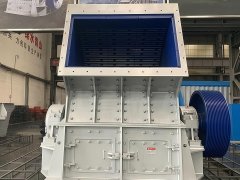
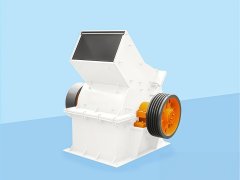
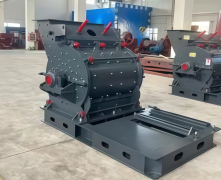
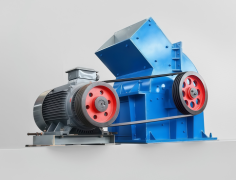
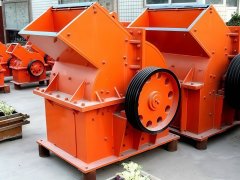
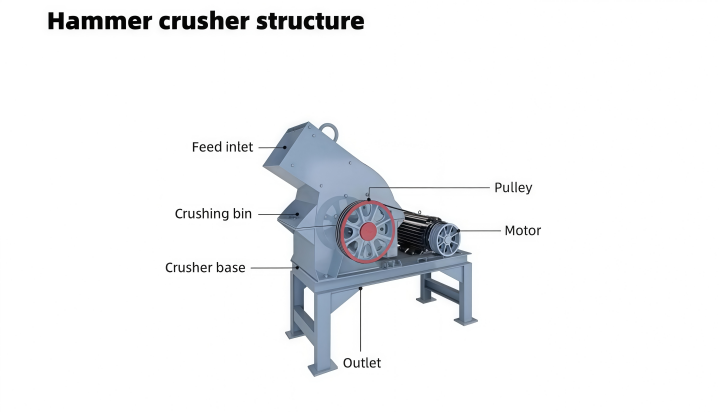
Hammer Crusher Machine uses a high‑speed rotor with hammers to impact and crush materials. It has a simple structure, a large crushing ratio, and competitive efficiency.
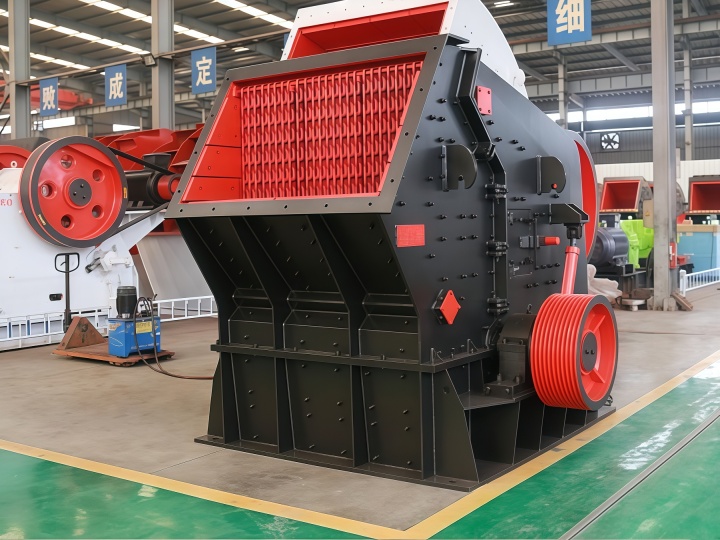
According to LP Information, the global single‑stage hammer crusher market is expected to grow from $1.886 billion in 2025 to $2.7 billion in 2032, at a compound annual growth rate of 5.3%. Global sales in 2025 reached 41,000 units, with an average price of $47,000.
In 2026, the new national energy efficiency standards for mining crushing and screening equipment officially took effect, raising the overall energy efficiency access threshold by 15% to 18%. Inefficient equipment has been banned from sale. Industry competition has shifted from price competition to technical compliance and energy efficiency standards.
Why Do Low‑Cost Equipment Cost You More? Real Test Data Reveals the Truth?
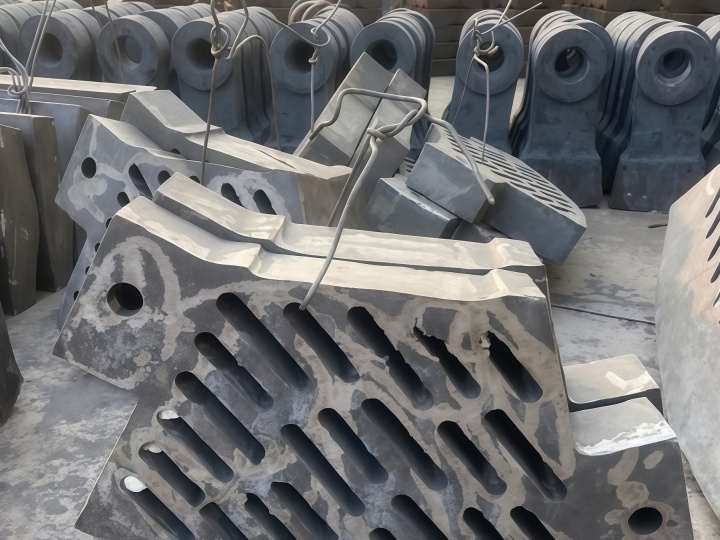
In 2025, our factory, in cooperation with a third‑party testing institution, conducted random sampling hardness tests on hammer products from five major domestic Hammer Crusher Machine manufacturers. The testing standard was GB/T 230.1‑2018. Three finished hammers from the same batch were randomly selected from each manufacturer, and the average of surface hardness and core hardness was recorded.
Table 1: 2025 Hardness Test Comparison of Five Domestic Hammer Manufacturers
| Manufacturer Type | Surface Hardness (HRC) | Core Hardness (HRC) | Casting Process |
| 3 Leading Companies | 61‑64 | 54‑58 | Vacuum Melting + Centrifugal Casting |
| 2 Low‑Cost Manufacturers | 50‑55 | 45‑48 | Medium Frequency Furnace + Sand Casting |
The surface hardness of low‑cost manufacturers is more than 10 HRC units lower than that of leading companies. This difference directly affects operating costs. Every 5 HRC decrease in surface hardness increases the wear rate of hammers under the same conditions by approximately 20% to 30%.
The electricity cost difference is equally striking. For crushing 100 tons of limestone per hour, compliant equipment consumes about 1.1 kWh per ton, while low‑cost equipment exceeds 2 kWh. Based on a daily output of 1,000 tons, 300 operating days per year, and an industrial electricity price of $0.12/kWh, low‑cost equipment costs an extra $32,000 per year in electricity — nearly $100,000 more over three years. As for hammers, low‑cost options wear out in one to two months, while high‑hardness hammers can last more than six months. The purchase price difference of over $20,000 is eaten up by electricity and hammer replacement costs in less than half a year. Complete test reports are available upon request.
Under the 2026 new standards, non‑compliant low‑cost equipment also faces the risk of failing project acceptance inspections. Energy efficiency certificates have become a mandatory requirement for project acceptance and must be requested during procurement.
How to Screen Manufacturers — Use This Checklist
Check the third‑party hammer hardness test report first. Skip any manufacturer with surface hardness below 58 HRC. Next, examine the casting process — vacuum melting plus centrifugal casting is superior to medium frequency furnace plus sand casting. Finally, request on‑site operation videos and skip any manufacturer whose current fluctuation exceeds ±15%.
Our factory has been manufacturing crushing equipment for many years and our products meet ISO9001 and CE standards. In serving domestic and international customers, we have found that the common blind spot for many buyers is not understanding equipment parameters, but not knowing how to verify the authenticity of what manufacturers claim. Hammer hardness and unit energy consumption are the key indicators that reflect the true quality of equipment.
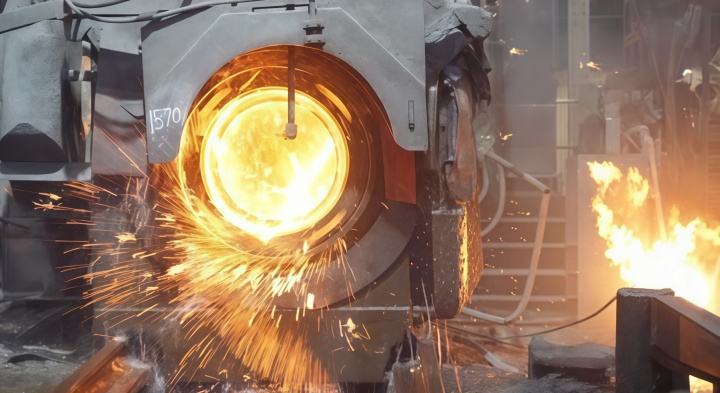
Hammer Crusher vs Impact Crusher — Choose Based on Your Material
| Your Condition | Choose This | Reason |
| Limestone, coal gangue, gypsum, hardness <200MPa, need one‑stage output, limited space | Hammer Crusher Machine | Processes up to 1000mm feed in a single pass to under 25mm, eliminates jaw crusher and secondary crushing, saves ~40% on initial investment, occupies less space |
| Granite, basalt, hardness >200MPa, need high‑quality aggregate shape | Impact Crusher | Better particle shape, no internal cracks, suitable for concrete aggregates, can be paired with a jaw crusher upstream |
| High material moisture content or long rainy seasons | Impact Crusher | Hammer crusher has a grate at the bottom that can easily clog with wet material; impact crusher has better discharge flow |
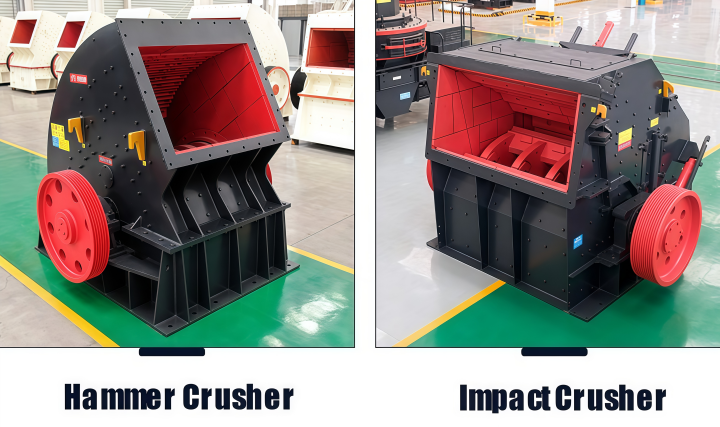
Total Cost of Ownership — The Initial Quote Is Just the Beginning
At the Huizhou Tapai Cement 5000t/d production line in Guangdong, the original system suffered from low throughput and large output particle size. After upgrading to a new dual‑rotor hammer crusher and optimizing the grate clearance, throughput reached 1200t/h. After the retrofit, the vertical mill throughput increased from 390t/h to 410t/h, power consumption dropped by 1.3 kWh per ton, saving $119,200 per year across electricity, labor, and spare parts, with the investment recovered in 3 years. See Cement Technology 2025, Issue 2.
When requesting quotes, you must ask for two documents: a third‑party hammer hardness test report and a unit energy consumption test report. Without these, any total cost of ownership calculation is meaningless.
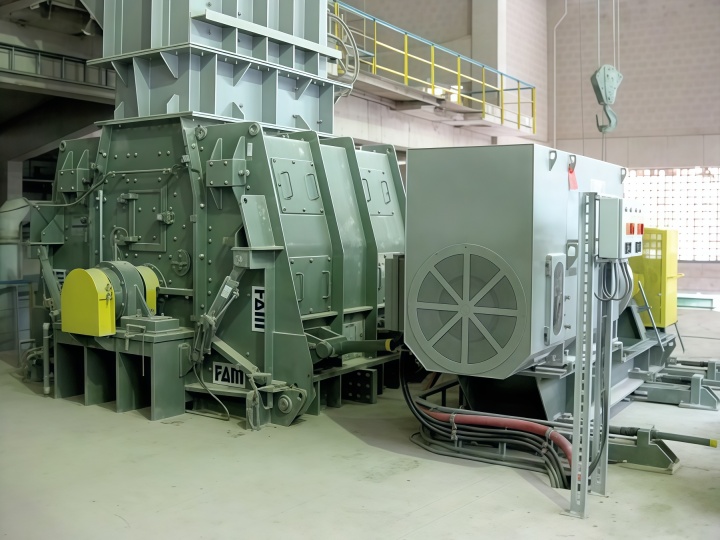
Hammer Material Selection for Different Operating Conditions
| Operating Condition | Recommended Material | Estimated Replacement Cycle |
| Limestone, gypsum, medium hardness, low silica content | High Manganese Steel Mn13 | ~30‑45 days |
| Limestone, medium‑hard to hard | Ultra‑High Manganese Steel Mn18 | ~40‑60 days |
| Iron ore, cement clinker, highly abrasive | High Chrome Cast Iron | ~20‑35 days |
| Extremely abrasive, heavy impact | Bimetal Composite | ~15‑30 days |
Frequently Asked Questions
Q: What types of materials is Hammer Crusher Machine suitable for crushing?
A: Materials with compressive strength below 200MPa, such as limestone, coal gangue, and gypsum. Granite is too hard and not suitable. For materials with high moisture content, an impact crusher is recommended instead.
Q: How can I tell if a Hammer Crusher Machine manufacturer is reliable?
A: Request a third‑party hammer hardness test report and check whether the surface hardness reaches 58 HRC or above. Also, visit the casting workshop to see the process and request on‑site operation videos. If the manufacturer meets at least two of these three conditions, they are worth further consideration.
Q: What impact do the 2026 new standards have on purchasing Hammer Crusher Machine?
A: Inefficient crushers that do not meet energy consumption standards have been banned from sale. When purchasing, you must request an energy efficiency certificate; otherwise, the equipment may fail project acceptance inspections.
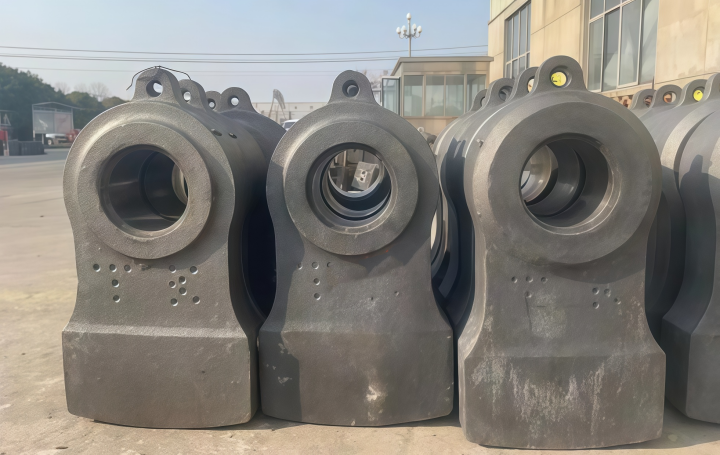
When choosing a Hammer Crusher Machine, the data points worth focusing on are hammer hardness and unit energy consumption. With the 2026 new national standards now in effect, energy‑inefficient equipment is already out of the game. Before requesting quotes, prepare your material test reports and capacity requirements, and ask manufacturers to provide actual test data based on your specific material conditions before they give you a price.