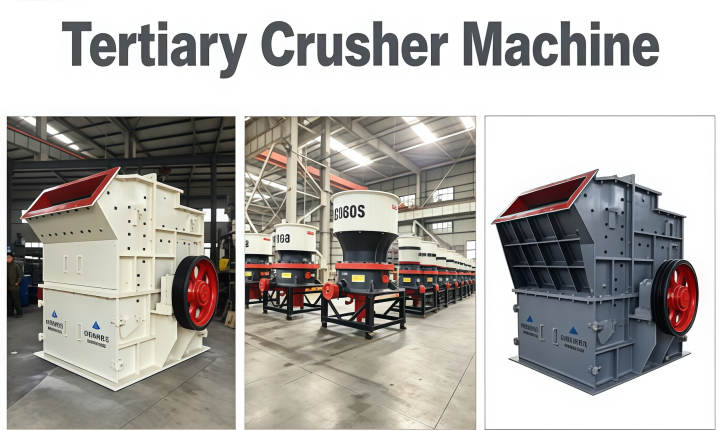
Tertiary Crusher Machine
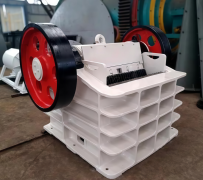
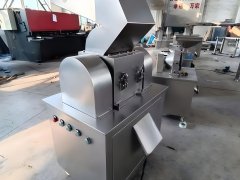
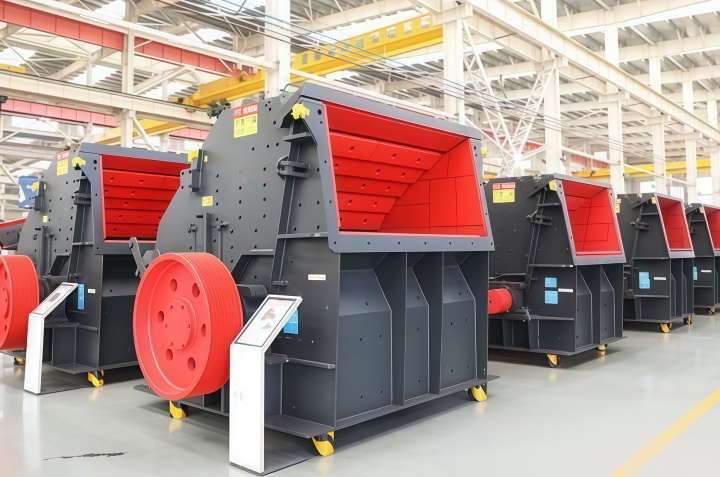
Tertiary Crusher Machine reduces 50mm feed from secondary crushing to below 5mm in a single pass, serving as a key control point for particle size and shape in the aggregate production line. The equipment accepts a maximum feed size of 150mm, discharges at 5mm and below, runs at a rotor speed of 800 to 900 RPM, and produces cubical-shaped aggregates.
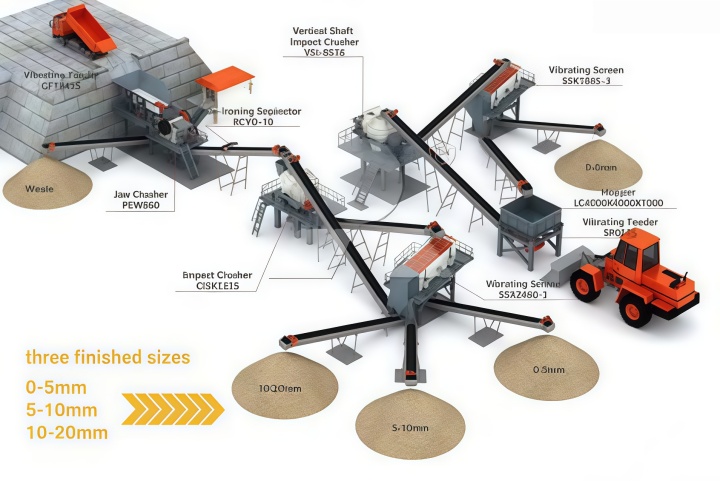
Where Does a Tertiary Crusher Machine Fit in the Crushing Process?
The equipment is positioned after secondary crushing and before screening, handling final product sizing and particle shaping. Primary crushing reduces run-of-mine material to approximately 200mm, secondary crushing further reduces it to around 50mm, and the Tertiary Crusher Machine processes it down to below 5mm. Unshaped aggregates contain high levels of flat and elongated particles, which reduce concrete strength.
A Vietnamese customer compared both approaches and found that limestone processed through a Tertiary Crusher Machine had a flakiness index of 8%, while the untreated sample measured 23%. Concrete cube strength tests showed the former achieved roughly 15% higher strength at 7 days.
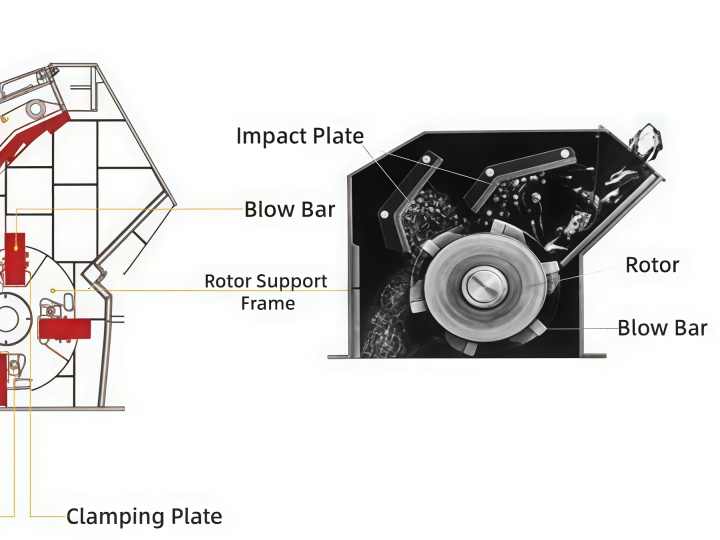
What Is the Operating Principle of a Tertiary Crusher Machine?
The device uses kinetic energy generated by high-speed rotation to break material. Feed enters the crushing chamber and contacts the blow bars mounted on the rotor, which spins at 800 to 900 RPM.
The crushing process can be understood with reference to the following component numbers: 1-Feed inlet, 2-Rotor, 3-Blow bars, 4-Breaker plates, 5-Breaker plate liners, 6-Hydraulic adjustment system, 7-Discharge outlet.
The HTI 1110 reaches a rotor tip speed of approximately 49 meters per second at 850 RPM. Across multiple project sites, we have monitored limestone processing and observed that material takes about 5 seconds on average from inlet to discharge, undergoing at least three effective impacts.
The machine operates in two stages: primary impact crushing for new feed and secondary grinding refinement for material already in the chamber. The rotor is manufactured from high-strength cast steel, and the blow bars are made of high-chrome iron, with utilization rates exceeding 50%. The rotor supports bi-directional rotation. An Indonesian customer reported that using this feature extended effective blow bar service life from 800 to 1,600 hours per set, reducing annual replacement costs by approximately half.
Tertiary Crusher Machine Technical Specifications by Model
The equipment is available in two rotor configurations: VR2 with two rows of blow bars and a 70mm max feed, suited for manufactured sand production; and VR4 with four rows of blow bars and a 150mm max feed, suited for chipping production.
| Model | Rotor Size (mm) | Configuration | Max Feed (mm) | Capacity (t/h) | Power (kW) | Weight (kg) |
|---|---|---|---|---|---|---|
| HTI 1005 | 1010×500 | VR2/VR4 | 70-150 | 40-60 | 90-200 | 6,900-7,800 |
| HTI 1010 | 1010×1000 | VR2/VR4 | 70-150 | 60-120 | 160-315 | 10,000-11,900 |
| HTI 1014 | 1010×1340 | VR4 | 150 | 120-160 | 200-315 | 13,500 |
| MTI 1105 | 1100×500 | VR2 | 150 | 100-120 | 110 | 8,750 |
| MTI 1110 | 1100×1000 | VR4 | 150 | 220-250 | 200-250 | 14,000 |
| MTI 1115 | 1100×1500 | VR4 | 150 | 280-320 | 315 | 17,470 |
One customer in Shandong Province processing limestone with an HTI 1110 recorded a stable throughput of approximately 230 tons per hour, close to the upper end of the rated range. Model selection should account for material type and site-specific conditions.
What Are the Main Advantages of a Tertiary Crusher Machine?
The main advantages of the product lie in its high reduction ratio and particle shape control. It reduces 150mm feed to below 5mm in a single pass, with flakiness index controlled within 10%, which contributes to concrete strength.
High reduction ratio: The HTI 1110 produces more than 85% of output below 5mm when processing limestone in a single pass, reducing downstream screening and recirculation loads.
Particle shape control: A plant manager in Guangdong reported that using aggregate produced by this machine reduced concrete slump loss by approximately 12% and improved pumpability.
Energy performance: Power consumption is roughly 15% lower than conventional hammer crushers. At a 200 t/h throughput, this saves approximately 45 kWh per hour, or about 270,000 kWh annually based on 6,000 operating hours.
Maintenance convenience: The hydraulic access door design allows a single operator to complete blow bar replacement in about 2.5 hours.
Bi-directional rotation: A mining customer in Hebei processing iron ore extended blow bar replacement intervals from 600 to 1,100 hours using this feature.
Compared to vertical shaft impact crushers, the Tertiary Crusher Machine accepts a 150mm feed, approximately twice the capacity. A customer in Fujian operated both equipment types side-by-side processing river pebbles and found that the Tertiary Crusher Machine consumed about 20% less energy per ton than the VSI, though the VSI showed less wear when processing highly abrasive materials.
What Materials and Applications Are Suitable for a Tertiary Crusher Machine?
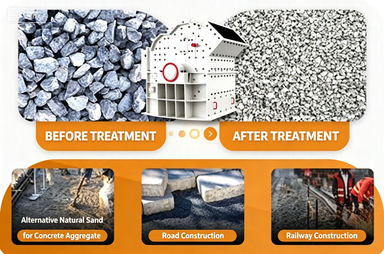
Limestone processing. The unit reduces limestone with Mohs hardness of approximately 3 to 0-5mm cubical aggregates. One customer in Anhui with an annual output of 800,000 tons ran a Tertiary Crusher Machine continuously for six months, producing approximately 2,600 tons of finished sand per day with a 0-5mm product yield of 88%.
Granite and basalt. Materials with Mohs hardness of 6-7 also produce good cubical aggregates. A customer in Sichuan reported that blow bar life when processing basalt was approximately 40% of that achieved with limestone, recommending high-chrome iron blow bars for such applications.
River pebbles and quartz. Manufactured sand produced by the equipment has a fineness modulus of 2.8, close to 2.7 for natural sand. A sand processing plant in Jiangxi has replaced natural sand with manufactured sand from a Tertiary Crusher Machine for commercial concrete production.
How to Maintain a Tertiary Crusher Machine?
Blow bars are among the faster-wearing components on the equipment. We recommend inspecting thickness every 500 operating hours and replacing when wear exceeds 40% of original thickness. Breaker plate liners should be inspected every 800 hours.
Bearings require weekly oil level checks and oil changes every 500 hours. A customer in the Philippines experienced bearing temperatures rising to 85°C on a Tertiary Crusher Machine due to using low-viscosity oil. After switching to ISO VG 320 industrial gear oil, temperatures stabilized at 65°C and no further issues have been reported.
Rotor balance should be checked monthly using a vibration monitor. If radial vibration exceeds 4.5 mm/s, the machine should be stopped for inspection. The large access door operates hydraulically, and one operator reported completing blow bar replacement in about 2.5 hours. A comprehensive inspection every six months is recommended.
Tertiary Crusher Machine FAQ
What are the feed moisture requirements for a Tertiary Crusher Machine?
Feed moisture above 8% can cause chamber blockage and reduced discharge. We recommend installing a vibrating screen or drying equipment ahead of the crusher to keep moisture within 5%.
Why does the discharge particle size suddenly become coarser when operating a Tertiary Crusher Machine?
This typically results from an increased gap between the breaker plates and rotor, which may be caused by insufficient hydraulic system pressure or worn breaker plate liners. Check the hydraulic system pressure immediately and measure the actual gap between breaker plates and rotor.
Is large fluctuation in motor current normal for a Tertiary Crusher Machine?
Minor fluctuations are normal, but fluctuations exceeding 15% of rated current require attention. Common causes include uneven feed, uneven blow bar wear, or rotor imbalance.
How much clearance is needed below the discharge outlet of a Tertiary Crusher Machine?
At least 1.5 meters of vertical clearance is required for the discharge conveyor belt below the outlet. We also recommend installing a buffer chute between the outlet and conveyor belt to reduce impact on the belt.