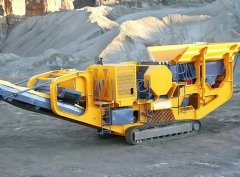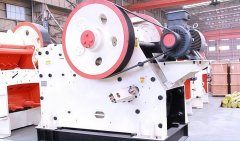
Hydraulic Jaw Crusher
What Is a Hydraulic Jaw Crusher?
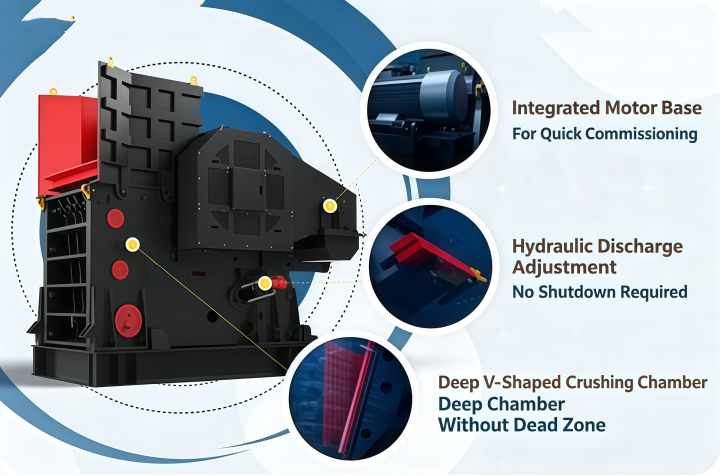
A Hydraulic Jaw Crusher is a crushing device launched in 2024 that uses a fully hydraulic operating system. Its core features include intelligent discharge port adjustment and automatic overload protection.
Compared with traditional jaw crushers, the key differences are: the eccentric shaft and flywheel are connected via a hydraulic segmented start, the safety device is mounted on the connecting rod and operated by the hydraulic cylinder, and the discharge port adjustment is performed entirely by the hydraulic cylinder.
The equipment has an hourly output ranging from one hundred five to one thousand two hundred eighty tons, making a Hydraulic Jaw Crusher suitable for mining, metallurgy, construction, highways, railways, water conservancy, chemicals, refractory materials, and ceramics.
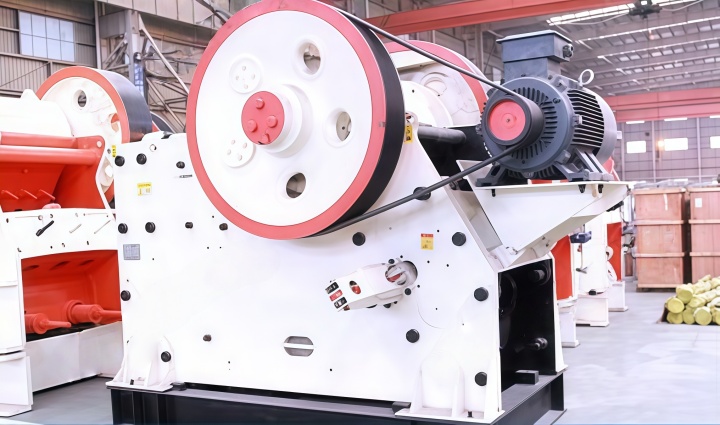
How Does a Hydraulic Jaw Crusher Work?
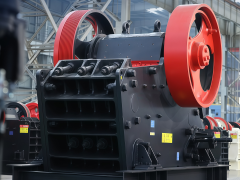
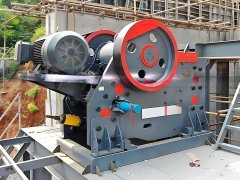
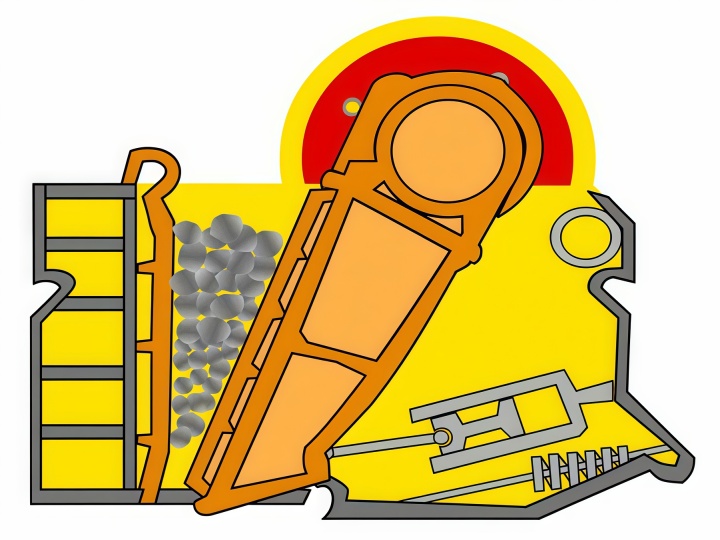
The working parts of a Hydraulic Jaw Crusher consist of a fixed jaw plate and a movable jaw plate, forming a crushing chamber that is wider at the top and narrower at the bottom. The motor drives the eccentric shaft through a belt pulley, causing the movable jaw to perform a periodic reciprocating swing motion. When the movable jaw approaches the fixed jaw, the material is crushed by compression, bending, and impact; when it moves away, the crushed material is discharged from the bottom opening.
The hydraulic system serves two primary functions: controlling the discharge port size to determine the final product particle size, and acting as an overload protection device. In field operations, the overload protection response time of a Hydraulic Jaw Crusher is within 0.3 seconds, which is faster than traditional toggle-plate fracture protection and helps prevent damage to the main frame.
Technical Parameters of a Hydraulic Jaw Crusher?
Multiple models of the Hydraulic Jaw Crusher are available to meet different production requirements. The table below lists the main parameters for the standard series. Actual capacity may vary depending on material characteristics.
| Model | Feed Opening (mm) | Max Feed Size (mm) | Discharge Range (mm) | Capacity (t/h) | Motor Power (kW) | Weight (t) |
|---|---|---|---|---|---|---|
| PE250×400 | 250×400 | 200 | 20-50 | 5-20 | 15 | 2.9 |
| PE400×600 | 400×600 | 350 | 40-100 | 15-60 | 30 | 6.8 |
| PE500×750 | 500×750 | 425 | 50-100 | 40-100 | 45 | 11.2 |
| PE600×900 | 600×900 | 500 | 65-160 | 60-140 | 55 | 16.5 |
| PE750×1060 | 750×1060 | 630 | 80-150 | 90-230 | 90 | 29 |
| PE900×1200 | 900×1200 | 750 | 95-165 | 150-350 | 110 | 54.5 |
| PE1000×1200 | 1000×1200 | 850 | 105-185 | 180-400 | 132 | 56.5 |
| PE1200×1500 | 1200×1500 | 1020 | 150-300 | 400-800 | 220 | 99.6 |
Actual vs. Theoretical Capacity of a Hydraulic Jaw Crusher
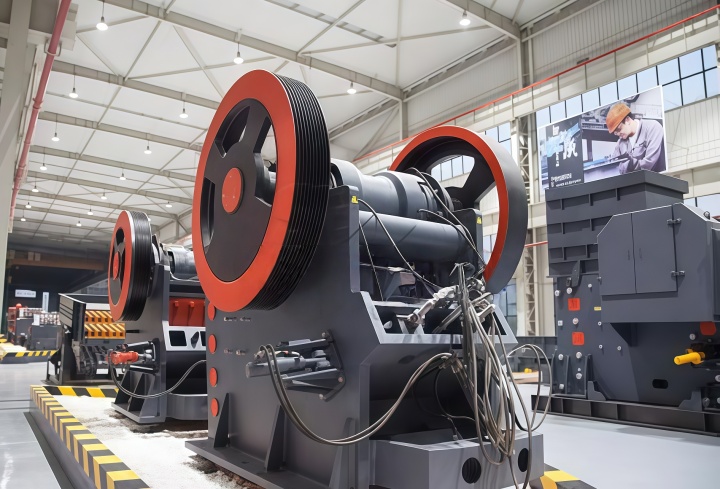
The theoretical capacity of a Hydraulic Jaw Crusher is calculated based on medium-hardness limestone under standard conditions. However, in actual mining operations, factors such as material hardness, moisture content, feed size distribution, and discharge setting all affect throughput.
Based on tracking data from multiple mine projects, the actual capacity of a Hydraulic Jaw Crusher when crushing granite is approximately 70% to 80% of the theoretical value; for iron ore, it is 65% to 75%; and for limestone, it reaches 85% to 95%. When processing high-moisture materials, the clogging rate of a Hydraulic Jaw Crusher is about 40% lower than traditional models, due to the hydraulic system's quick response and automatic discharge adjustment.
Core Advantages of a Hydraulic Jaw Crusher
Compared with conventional jaw crushers, a Hydraulic Jaw Crusher offers the following improvements.
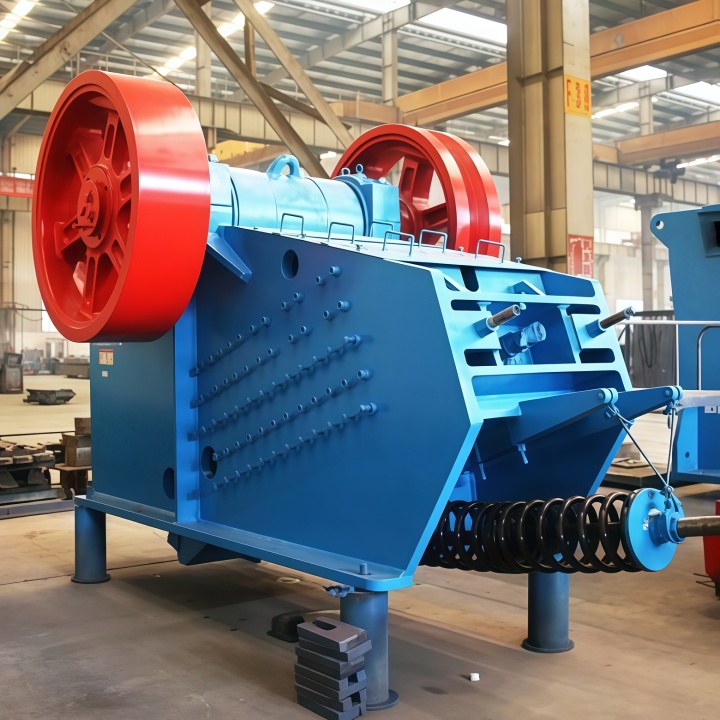
Fully Hydraulic Intelligent Control System: the discharge port can be adjusted during operation without stopping, and overload protection automatically retracts to protect the main frame. The response time for discharge adjustment is within three seconds.
Structural Durability: the frame is welded from Q345B steel plates and annealed as a whole at 600 to 650°C for over four hours to reduce welding stress. The eccentric shaft is forged from 42CrMo alloy steel and finished to a surface hardness of HRC 52 to 58.
Operational Stability and Maintenance: equipped with heavy-duty spherical roller bearings and a forced circulating oil lubrication system, this machine maintains bearing temperature rise within 45°C and consumes less than 2.5 liters of oil per hour, based on maintenance records.
Crushing Performance: the feed opening is 15% to 20% wider than traditional models, and the crushing chamber depth allows material to receive compression three to five times per crushing cycle, which improves particle shape.
Application Scenarios for a Hydraulic Jaw Crusher
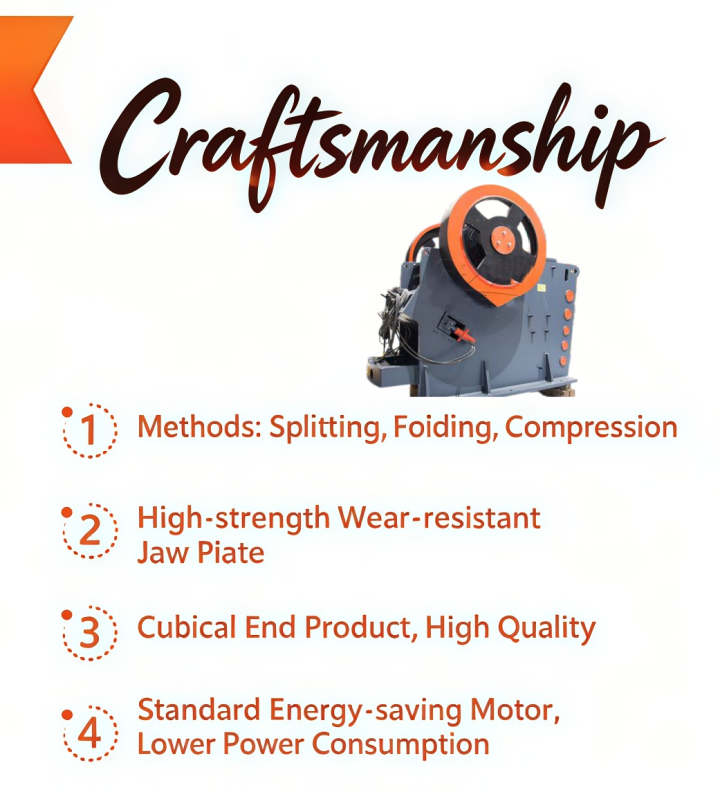
A Hydraulic Jaw Crusher is used as primary crushing equipment across several industries.
Mining and Metallurgy: for coarse and medium crushing of ores such as iron ore, copper ore, granite, and basalt, handling materials with compressive strengths up to 320 MPa.
Infrastructure Construction: the machine processes large stones for railways, highways, and water conservancy projects. Its large feed opening is suitable for oversized feed materials.
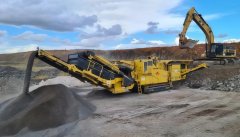
Building and Cement Industries: used in concrete aggregate production, cement raw material crushing, and construction waste recycling, adaptable to stationary, semi-mobile, and mobile crushing plants.
Chemical and Refractory Materials: a Hydraulic Jaw Crusher also serves the primary crushing of various chemical raw materials and refractories. The fully hydraulic system makes parameter switching quick for different material hardness levels.
Frequently Asked Questions
What causes vibration during operation?
Unbalanced flywheel counterweights, loose foundation bolts, or worn bearings can cause vibration. Stop the machine and check the relevant components.
What should I do if the product particle size is uneven?
Uneven jaw plate wear or fluctuating hydraulic pressure may lead to unstable discharge opening. Inspect the jaw plates and recalibrate the hydraulic control system.
How do I handle high hydraulic oil temperature?
Check the oil level, clean the cooler, and replace dirty filters. Keep the oil temperature below 70°C.
When should the jaw plates be replaced?
Replace them when the tooth height wears beyond 60% of the original height, or when the product remains coarse even with the discharge opening set to the minimum.