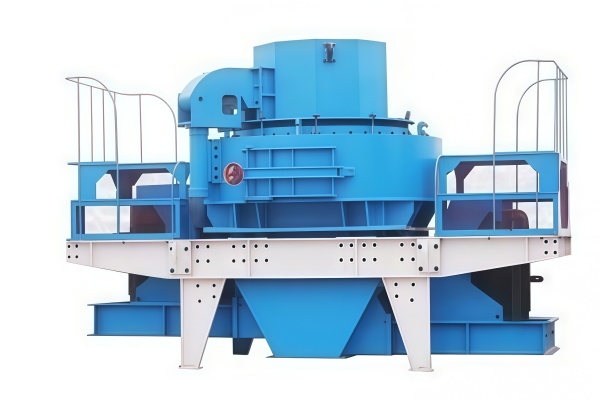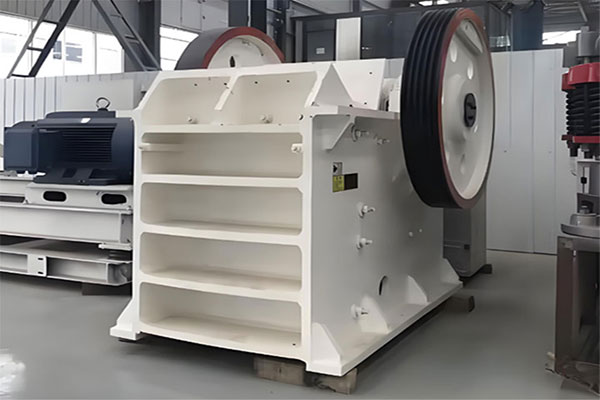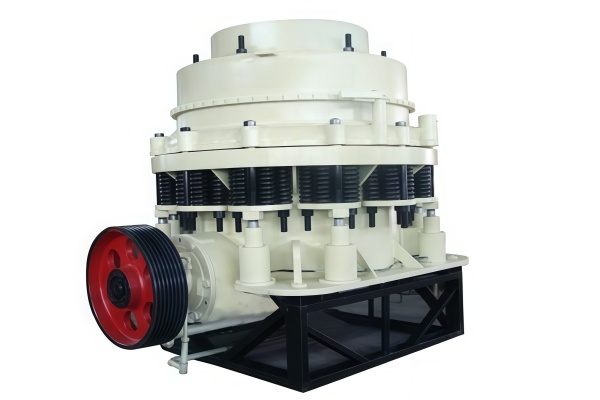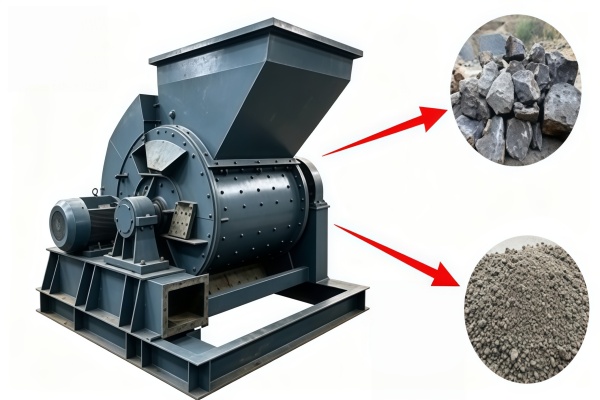
Chrome ore impact mill for foundry sand mix
Chrome Ore Impact Mill for Foundry Sand Mix is engineered for fine grinding and uniform mixing of chrome‑ore materials, delivering qualified foundry molding sand for casting industry, widely applied in foundry workshops and chrome ore processing plants. Prices typically range from $22,000 to $320,000. Feed opening size: ≤420mm Production capacity: 25‑1560 tons/hour Discharge opening adjustment range: 2‑45mm Rotor speed: ≤620 rpm Motor power: 55‑560kW
Chrome Ore Impact Mill for Foundry Sand Mix is designed for grain shape shaping and gradation adjustment of casting sand. This article covers DZF series technical parameters, working principle, selection basis, and operation and maintenance tips.
Excessive Sand Grain Edges Directly Reduce Casting Quality – Chrome Ore Impact Mill for Foundry Sand Mix Tackles the Root Cause from Grain Shape
If you encounter poor flowability of molding sand, long shooting and filling time, and frequent blowholes and sand inclusion on casting surfaces in your casting sand mixing line, the root cause may not lie in the mixing process itself, but in the shape of the sand grains. Traditional ball mills can grind sand finer, but they cannot optimize grain shape – the sand remains just as angular as before.
Chrome Ore Impact Mill for Foundry Sand Mix is not just a simple crusher. This equipment does three things simultaneously: breaks down coarse sand, rounds off sharp edges, and separates fine from coarse particles. The equipment covers the complete path from coarse crushing to grain shaping for casting sand, providing the mixer with raw material that meets both grain shape and size distribution requirements.
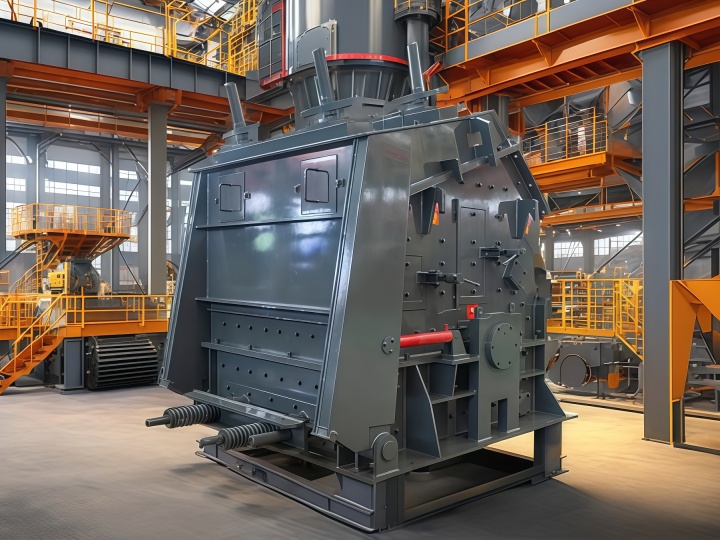
Chrome Ore Impact Mill for Foundry Sand Mix Video Showcase
Chrome Ore Impact Mill for Foundry Sand Mix Combines Impact Crushing and Air Classification to Complete Two Processes in One Step
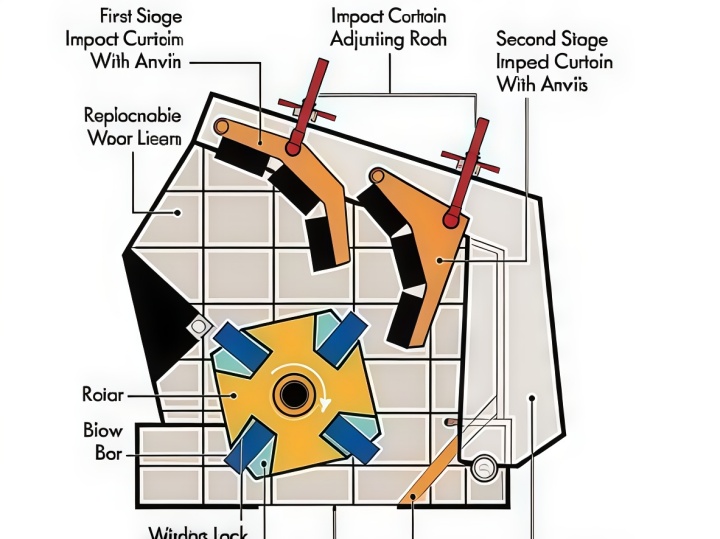
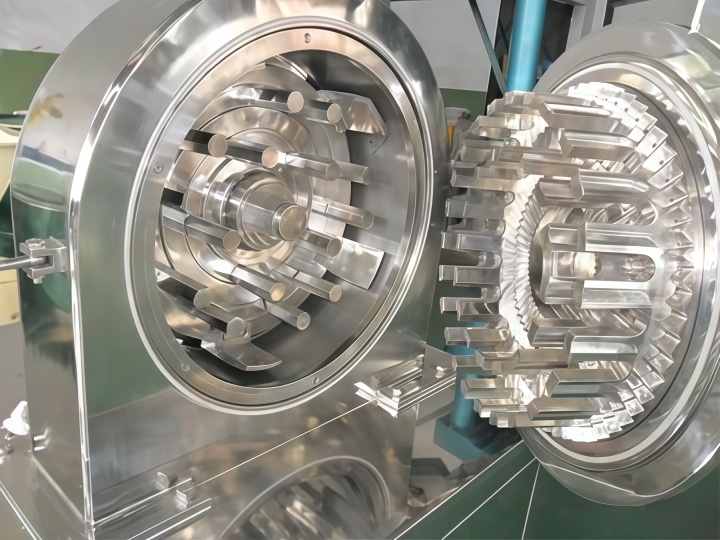
The working logic of Chrome Ore Impact Mill for Foundry Sand Mix is straightforward: use high-speed impact to break down material and use airflow to separate qualified from unqualified particles. After material enters the crushing chamber, the high-speed rotor with hammers directly strikes the sand grains, which are then thrown against the chamber wall liners by centrifugal force, while particles also collide intensely with each other.
The key effect of this series of impacts is that the sharp edges of sand grains are preferentially broken off while the core particle body remains intact. Unlike the slow grinding action of ball mills, the product uses instantaneous impact, which achieves more selective removal of protruding surfaces on sand grains.
After crushing, the rising airflow carries material into the classification zone, where the variable-frequency classifier wheel returns coarse particles to the crushing zone for further processing, while qualified fine powder is discharged with the airflow. This closed-loop circulation ensures stable discharge particle size.
Chrome Ore Impact Mill for Foundry Sand Mix – Three Common Models with Parameters and Selection Guidance
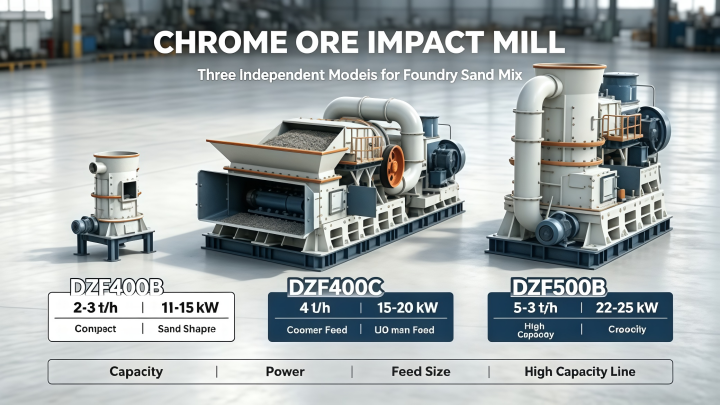
Chrome Ore Impact Mill for Foundry Sand Mix has three common models with different capacity and power configurations. The following parameters are based on actual measured data from casting sand mixing operating conditions.
| Parameter | DZF400B | DZF400C | DZF500B |
| Throughput Range | 2-3 t/h | 4 t/h | 3-5 t/h |
| Max Feed Size | <10 mm | <20 mm | <10 mm |
| Product Fineness Range | 80-400 mesh | 80-400 mesh | 80-400 mesh |
| Main Motor Power | 11-15 kW | 15-20 kW | 22-25 kW |
| Classifier Drive | Variable-frequency drive | Variable-frequency drive | Variable-frequency drive |
With feed size below 10 mm, most casting sands can be fed directly into it without an additional fine crusher. The 80 to 400 mesh fineness range covers most gradation requirements from ordinary gray iron castings to precision castings. For model selection, determine power rating by hourly output requirement, then match the upstream feeding system accordingly.
Chrome Ore Impact Mill for Foundry Sand Mix – Model Selection Differences Among Three Common Models
The three common models of Chrome Ore Impact Mill for Foundry Sand Mix each have their own application focus. DZF400B offers 2 to 3 tons per hour throughput with 11 to 15 kW power, making it suitable for small to medium-sized casting sand production lines or retrofit projects with space and energy constraints.
DZF400C provides 4 tons per hour throughput with feed size up to 20 mm and 15 to 20 kW power, capable of accepting slightly coarser feed and suitable for lines with simpler upstream crushing equipment configurations. DZF500B delivers 5 to 3 tons per hour throughput with 22 to 25 kW power, representing the higher capacity tier among the three models and suitable for medium to large production lines with specific hourly output requirements.
Chrome Ore Impact Mill for Foundry Sand Mix – Three Quantifiable Technical Parameter Performances
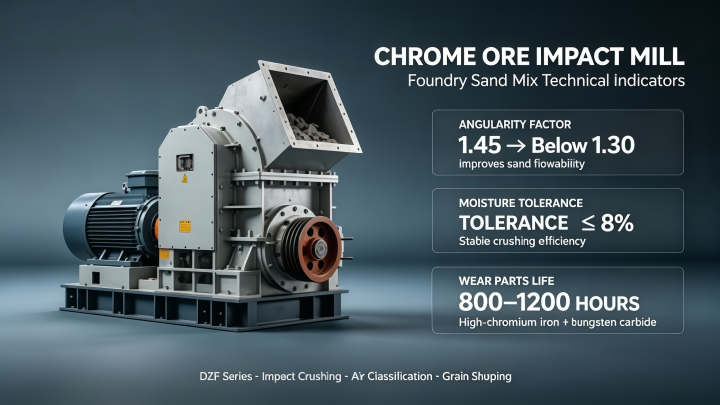
Chrome Ore Impact Mill for Foundry Sand Mix can reduce casting sand angularity factor from 1.45 to below 1.30, operate stably under moisture content not exceeding 8%, and achieve wear parts service life of 800 to 1,200 hours. The following are detailed descriptions of three quantifiable technical indicators.
According to GB/T 9442-2010 national standard for foundry silica sand, the upper limit of angularity factor for natural silica sand is 1.45. After impact shaping by the product, the angularity factor of discharged sand can be reduced to below 1.30. With the same binder addition rate, molding sand flowability improves and shooting and filling time decreases.
The moisture content tolerance limit is well-defined. Casting sand stored in open yards typically has moisture content fluctuating between 5% and 8%. The equipment maintains stable crushing and classification efficiency under moisture content not exceeding 8%.
The crushing chamber hammers and liners are made of high-chromium cast iron with tungsten carbide hardfacing. When processing casting sand with Mohs hardness below 6, a set of wear parts has a continuous service life of 800 to 1,200 hours. Higher quartz content takes the lower end of the range, while higher chromite content takes the upper end.
Chrome Ore Impact Mill for Foundry Sand Mix – Specialized Processing Effects on Chromite Sand and Zircon Sand
Chrome Ore Impact Mill for Foundry Sand Mix demonstrates different targeted effects when processing chromite sand and zircon sand, two high-value-added casting sand materials.
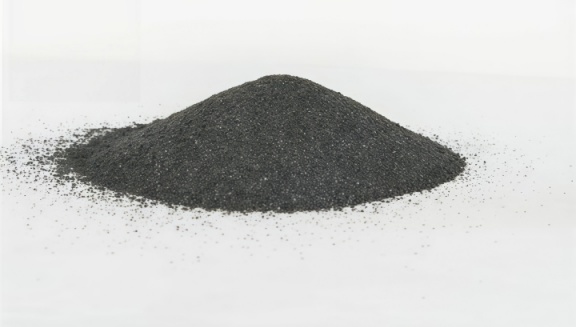
Chromite sand particles are dense and relatively hard. After processing by the product, the particle size distribution narrows from a broad distribution to a more concentrated one, with fine powder content below 200 mesh significantly reduced. This is particularly important for chromite sand molding processes that require precise permeability control.
Precision casting face coat slurries have strict requirements for the upper and lower particle size limits of zircon sand. The variable-frequency classification system of this equipment can control the upper and lower size limits of finished sand within the target range, ensuring slurry suspension stability and coating performance meet process standards.
Chrome Ore Impact Mill for Foundry Sand Mix – Industry Reference Case of Equipment Replacement in Precision Casting Sand Processing Lines
After replacing a ball mill with Chrome Ore Impact Mill for Foundry Sand Mix in a precision casting sand processing line, measured data comparison shows improvements across multiple indicators. The original ball mill discharged reclaimed silica sand with an angularity factor around the natural sand upper limit of 1.45, resulting in significant fluctuation in molding sand compactability after mixing and casting surface defect rates above 5%.
After replacement with the product and completion of commissioning, the discharged sand angularity factor dropped below 1.30, molding sand permeability fluctuation range narrowed by 30% to 40%, and casting surface blowhole and sand inclusion defect rates fell to the 2% to 3% range. Under continuous 16-hour daily operation, the equipment maintains running current at approximately 85% of rated current, with no shutdown failures when material moisture content fluctuates between 6% and 8%.
Selecting a Chrome Ore Impact Mill for Foundry Sand Mix for Your Production Line – Three Key Criteria
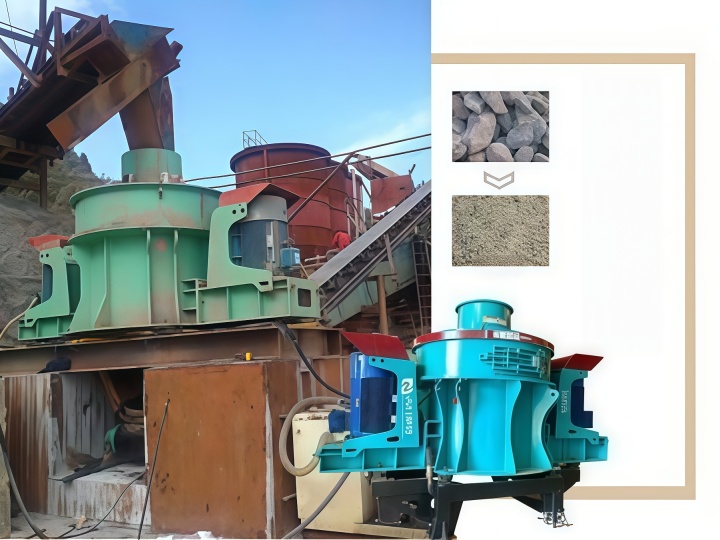
Model selection is based on three core criteria: hourly output determines power rating, feed particle size determines upstream configuration, and classification precision determines optional components. Hourly output is the primary consideration.
Hourly output ranks first. The equipment achieves optimal overall energy efficiency when operating continuously within 80% to 90% of rated power. Overloading or prolonged low-load operation reduces overall economy.
Maximum feed particle size ranks second. When feed material occasionally contains particles exceeding 20 mm, the upstream must be equipped with a scalping screen or jaw crusher pretreatment; otherwise, hammer service life will be shortened by more than 30%.
Classification precision requirement ranks third. For high-end castings with strict particle size distribution requirements, it is recommended to select a higher-precision classifier wheel and install an online laser particle size monitor.
Chrome Ore Impact Mill for Foundry Sand Mix – Four Maintenance Tips from the Maintenance Crew
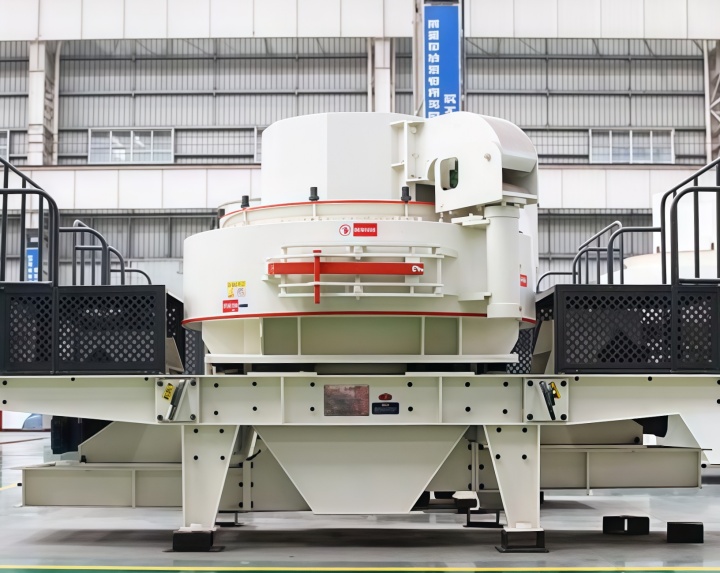
For daily maintenance of Chrome Ore Impact Mill for Foundry Sand Mix, the maintenance crew has summarized four practical tips covering pre-startup clearance inspection, hammer inspection after 200 operating hours, dust collection system airflow matching, and maintenance records and spare parts management.
The classifier wheel clearance must be checked before each startup. When clearance wear exceeds 0.5 mm, adjustment or replacement should be made promptly. Excessive clearance shifts the particle size peak of finished sand toward the coarse end.
Open the crushing chamber every 200 operating hours to inspect hammer wear. When hammer edge wear reaches one-third of the original thickness, replacement is mandatory. Delaying replacement reduces impact efficiency and increases energy consumption.
The dust collection system airflow must match the discharge diameter of the product. Insufficient airflow causes turbulence in the classification zone, resulting in coarse particles contaminating the finished sand.
Establish a wear parts replacement log to track the actual service life of each set of hammers and liners. Different batches of sand material have significantly different effects on wear rate. Recording data helps predict the next replacement time accurately and avoid unplanned downtime.
Chrome Ore Impact Mill for Foundry Sand Mix – Four Frequently Asked Questions
Can the sand grain roundness after Chrome Ore Impact Mill for Foundry Sand Mix meet the requirements of resin-coated sand process?
Yes. With proper coordination of classifier speed and feed rate, the angularity factor of discharged sand can be stably maintained below 1.3, which fully meets the roundness requirements of the resin-coated sand process for sand grain substrates.
What are the housing temperature and noise level after 8 hours of continuous operation of Chrome Ore Impact Mill for Foundry Sand Mix?
Under ambient temperature of 25°C and continuous operation for 8 hours, the housing surface temperature rise does not exceed 40°C, and the measured noise level at one meter from the equipment is 82 to 85 dB, comparable to other power equipment in the workshop.
Can casting sand with moisture content exceeding 8% be fed directly into Chrome Ore Impact Mill for Foundry Sand Mix?
Direct feeding is not recommended. When moisture content exceeds 8%, fine powder tends to adhere to the classifier wheel and chamber walls, reducing classification accuracy and throughput. Natural drying or hot-air drying pretreatment should be performed before feeding.
How much lower is the energy consumption per ton of casting sand processed by Chrome Ore Impact Mill for Foundry Sand Mix compared to a ball mill?
For producing silica sand finished product with the same particle size specification, the product typically consumes 55% to 65% of the energy per ton compared to a ball mill, as impact crushing has higher energy utilization efficiency than grinding-type crushing.