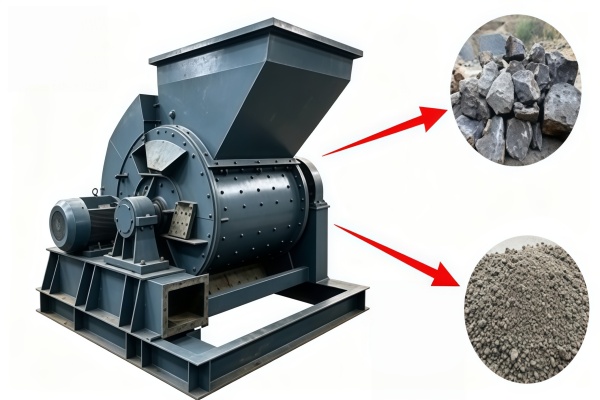
Chrome Ore Impact Mill for Foundry Sand Mix – How Much Does It Cost?
Saturday August-29 2026 09:58:37
Quick Answers
Q: What is the price of a basic configuration Chrome Ore Impact Mill for Foundry Sand Mix?
A: The basic economic model starts at around 50,000 RMB, with a processing capacity of 1‑3 tons per hour and manual control.
Q: What is the typical spending range for a Chrome Ore Impact Mill for Foundry Sand Mix?
A: Most foundries spend between 100,000 and 250,000 RMB, corresponding to standard models with a processing capacity of 3‑8 tons per hour.
Q: What is the price of a high‑end Chrome Ore Impact Mill for Foundry Sand Mix?
A: High‑end intelligent models can range from 200,000 to 500,000 RMB, with a processing capacity of 8‑15 tons per hour and fully automatic control.
This article is compiled by our foundry equipment technical team based on follow‑up visits with over twenty foundry clients regarding their equipment usage, as well as recent first‑hand quotation data from twelve domestic suppliers, providing quantifiable reference information for foundries during equipment selection.
A mid‑sized Chrome ore impact mill for foundry sand mix typically costs between 50,000 and 500,000 RMB, with most foundries spending in the 100,000 to 250,000 RMB range. For every 1 ton per hour increase in processing capacity, the equipment price rises by approximately 20,000 RMB on average. Differences in material grade and automation configuration can cause price variations of more than double for the same specification.
Global chrome ore resources are concentrated in South Africa, Kazakhstan, and India, which together account for over 87% of proven total reserves. South Africa ranks first with approximately 320 million tons of reserves, representing 54% of the global total (USGS, 2025). The Chrome Ore Impact Mill for Foundry Sand Mix plays a central role in the foundry sand preparation process as a core crushing and shaping device, and its selection directly impacts the foundry's raw material utilization rate and finished casting quality.
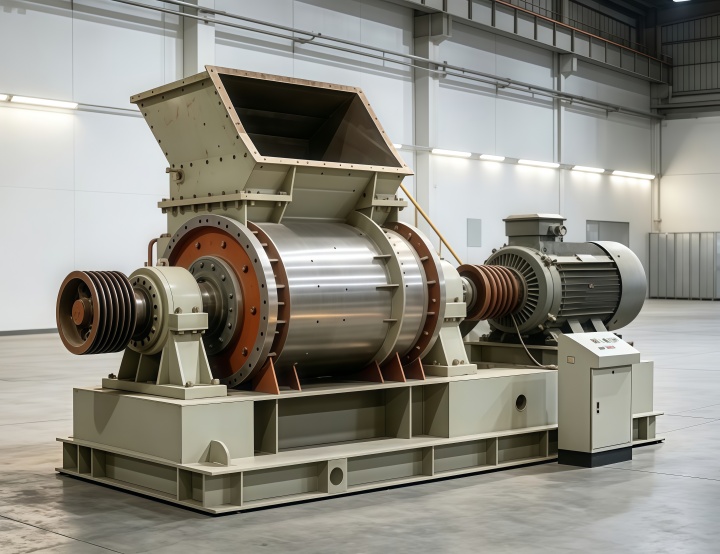
Cost Composition of the Chrome Ore Impact Mill for Foundry Sand Mix
When disassembling the equipment, the rotor assembly is the most valuable component, accounting for 30% to 40% of the total machine cost. It is made of Cr26 high‑chromium cast iron. Based on disassembly comparisons of equipment from five mainstream suppliers, the service life of a Cr26 high‑chromium cast iron rotor is approximately 2.4 times that of a Cr15 low‑chromium alloy rotor. The liner plate is a frequently worn component whose material grade is closely related to replacement cycles. Motor power corresponds to processing capacity—higher power means higher cost—while the PLC and variable frequency control system accounts for 10% to 15% of the total machine cost.
A standard model with a processing capacity of 3‑8 tons per hour, equipped with PLC and a quality domestic motor, typically sells in the market for 100,000 to 180,000 RMB; the same configuration with an imported motor can reach 250,000 to 350,000 RMB.
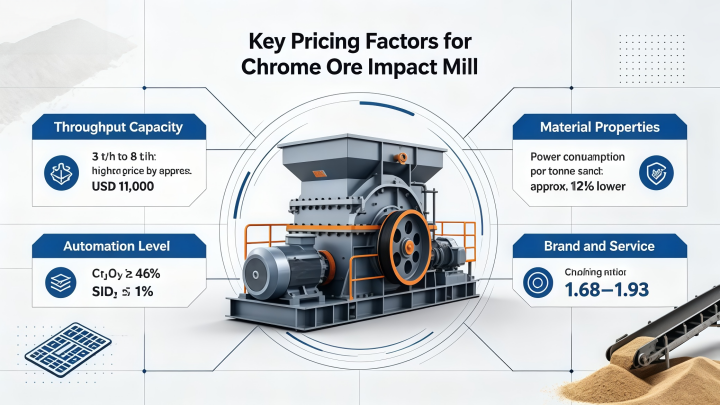
Key Factors Affecting the Price of the Chrome Ore Impact Mill for Foundry Sand Mix
There are four main variables affecting the final quotation: processing capacity, material characteristics, automation level, and brand service. Increasing processing capacity from 3 tons per hour to 8 tons per hour raises the price by about 80,000 RMB, but the power consumption per ton of sand decreases by approximately 12%, because larger equipment operates more efficiently when running near full load.
Foundry‑grade chrome sand requires a Cr₂O₃ content of no less than 46% and a SiO₂ content of no more than 1%. Academic research shows that the breakage ratio of South African chrome sand ranges between 1.68 and 1.93 (International Journal of Metalcasting, 2023), indicating high wear‑resistance demands on the equipment. In terms of automation, fully automatic intelligent models are more expensive than manual models but reduce labor costs. Brands and after‑sales networks also drive up prices while reducing long‑term risks.
Lifecycle Cost of the Chrome Ore Impact Mill for Foundry Sand Mix
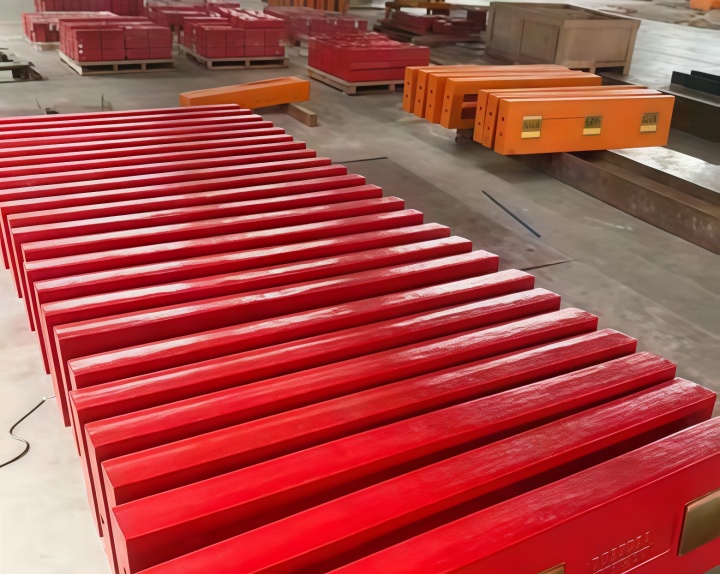
The lifecycle cost includes energy consumption, wear parts, and maintenance. These three components often account for a larger share of total investment than the initial purchase price. Motors with lower energy consumption can save 10% to 20% on electricity bills. High‑quality high‑chromium alloy blow bars have a service life two to three times that of ordinary materials, resulting in lower cost per ton of processed sand. Equipment with hydraulic opening housings requires only 30 minutes for wear parts replacement, while traditional bolted designs can take several hours, creating a significant difference in labor costs.
Price Reference for Different Configurations
Different configuration levels of the Chrome Ore Impact Mill for Foundry Sand Mix vary significantly in production capacity, drive power, and intelligence level. Foundries should select the appropriate tier based on their production scale and automation requirements.
| Configuration Level | Processing Capacity | Motor Power | Control System | Reference Price |
| Basic Economic | 1‑3 t/h | 30‑55 kW | Manual start/stop | 50,000‑100,000 |
| Standard | 3‑8 t/h | 55‑110 kW | PLC basic | 100,000‑200,000 |
| High‑End Intelligent | 8‑15 t/h | 110‑200 kW | Full auto + remote | 200,000‑500,000 |
The global chrome ore mining market reached 47.3 million tons in 2025 (IMARC Group). Actual transaction prices fluctuate based on material, brand, and region. When requesting quotations, buyers should ask suppliers to clearly specify the main body material, motor brand, and wear parts list.
Five Common Misconceptions in Purchasing the Chrome Ore Impact Mill for Foundry Sand Mix
Purchasing decisions often fall into five typical misconceptions, which primarily stem from cognitive biases regarding configuration, installation, spare parts, power supply, and capacity matching. Reviewing each point can help mitigate selection risks. When selecting a Chrome Ore Impact Mill for Foundry Sand Mix, the following five aspects deserve special attention.
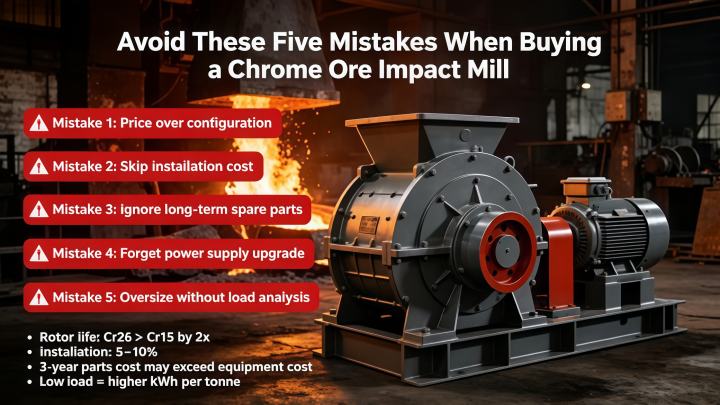
First, looking only at the total price without considering configuration. Cr26 and Cr15 rotors differ by more than double in service life, and tracking data shows that over 60% of premature equipment failures are closely related to substandard rotor material. Second, overlooking installation and commissioning costs, which account for approximately 5% to 10% of the total equipment price and should be clarified during inquiry. Third, underestimating long‑term spare parts costs—three‑year spare parts expenses may exceed the entire machine price. Fourth, ignoring power supply renovation costs. Fifth, blindly choosing high‑capacity equipment, as low‑load operation actually increases unit energy consumption.
Actual Selection Case of a Foundry in Limpopo Province, South Africa
A foundry in Limpopo Province, South Africa, with an annual output of approximately 25,000 tons of castings, experienced two stoppages per week with its original equipment. The company had previously purchased a low‑cost unit for trial operation, but within three months, the rotor suffered severe wear. Testing revealed that the blow bar's actual chromium content was below 12%, far lower than the Cr26 standard, resulting in replacement and downtime losses exceeding 70,000 RMB.
Later, when replacing the Chrome Ore Impact Mill for Foundry Sand Mix, the company compared five suppliers and selected a standard model priced at approximately 280,000 RMB, featuring a high‑chromium rotor, imported bearings, PLC control, and a processing capacity of 6 tons per hour. After ten months of operation, power consumption dropped by about 15%, wear parts replacement cycles extended from monthly to quarterly, and sand processing cost per ton of castings decreased by approximately 20%. Choosing the low‑cost option would have saved about 100,000 RMB upfront, but spare parts and electricity costs over two years would have exceeded that amount by more than 180,000 RMB. Purchasing decisions should be based on lifecycle cost analysis.
Purchasing Decision Weight Reference for the Chrome Ore Impact Mill for Foundry Sand Mix
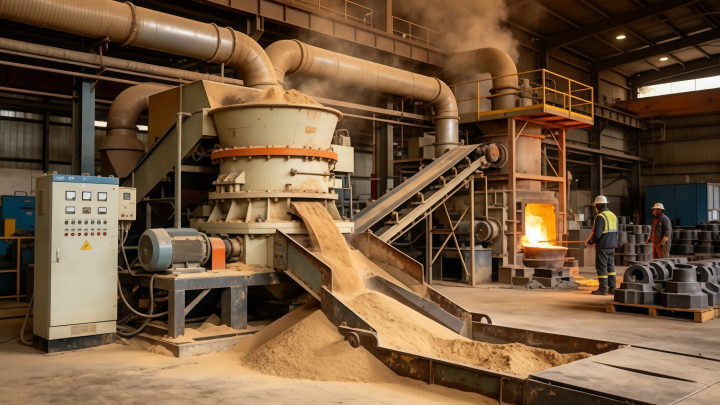
After following up with purchasing decision‑makers at twelve foundries, the distribution of reasons for supplier selection was as follows: equipment material and durability accounted for 32%, after‑sales service response speed accounted for 28%, initial quotation accounted for only 19%, and brand awareness accounted for 21%. Most foundries, after completing lifecycle cost calculations, do not choose the lowest‑priced equipment but instead prioritize long‑term operational stability and after‑sales support. Material durability is ranked first in the selection decision for the Chrome Ore Impact Mill for Foundry Sand Mix.
Selection Checklist for the Chrome Ore Impact Mill for Foundry Sand Mix
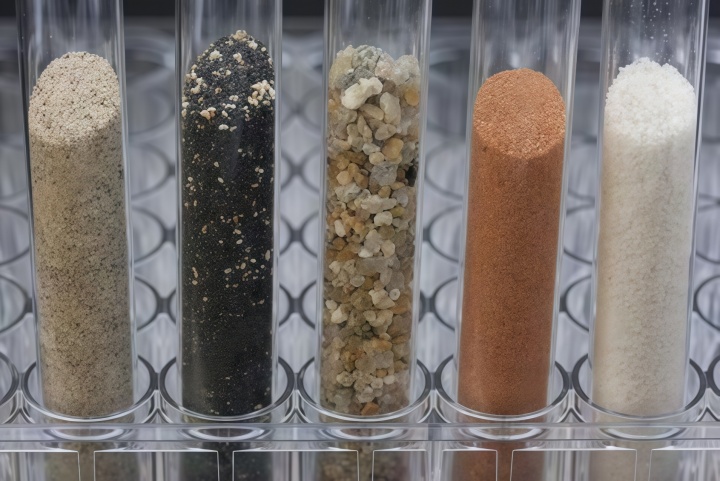
The selection checklist covers ten key areas: material matching, capacity suitability, power supply conditions, after‑sales service, and spare parts availability. Checking each item can effectively mitigate post‑installation risks.
Whether feed particle size falls within the equipment's allowable range
Whether finished sand fineness requirements match the equipment's output adjustment range
Whether daily processing volume falls within 70% to 90% of rated capacity
Whether motor power meets on‑site power supply capacity
Whether the control system interface supports Chinese or English
Whether wear parts are available in stock and the delivery lead time
Whether the supplier provides on‑site installation guidance and operation training
Whether the equipment warranty period and coverage are clearly defined
Whether successful cases in the same industry can be visited on‑site
Whether spare parts pricing is transparent and whether long‑term supply agreements exist
Frequently Asked Questions About the Chrome Ore Impact Mill for Foundry Sand Mix
Q: What should be done when the Chrome Ore Impact Mill for Foundry Sand Mix experiences clogging when processing chrome sand with high moisture content?
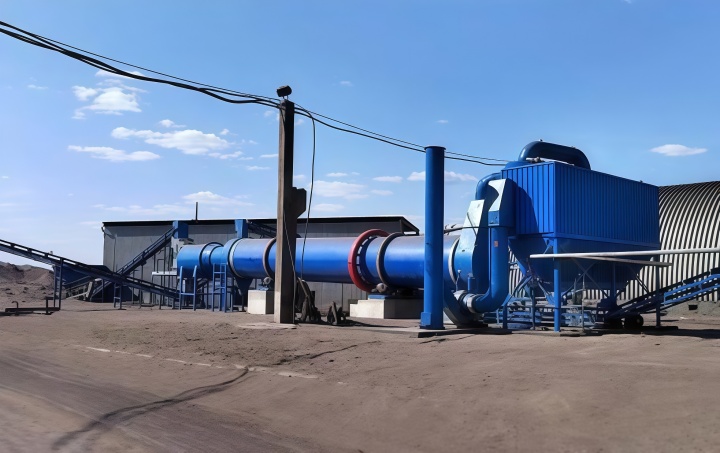
A: Install a drying process at the feed end to control moisture content below 5%, or install a dispersion device to effectively prevent clogging.
Q: What causes abnormal vibration in the Chrome Ore Impact Mill for Foundry Sand Mix during operation?
A: Abnormal vibration is typically caused by uneven blow bar wear or poor bearing lubrication. Regular replacement of wear parts and checking spindle straightness can resolve the issue.
Q: How can the finished sand particle shape be improved when needle‑like and flaky particles are excessive in the Chrome Ore Impact Mill for Foundry Sand Mix?
A: Keeping blow bar wear below one‑third of thickness and adjusting the impact plate angle can improve sand particle morphology.
Q: How often should wear parts be replaced in the Chrome Ore Impact Mill for Foundry Sand Mix?
A: High‑chromium alloy blow bars should be replaced every three to six months under normal operating conditions. Quarterly wear inspections with timely replacement are recommended.
Q: Which is more cost‑effective: upgrading an old Chrome Ore Impact Mill for Foundry Sand Mix or purchasing a new one?
A: If the spindle radial runout does not exceed 0.05 mm and the housing deformation does not exceed 3 mm, upgrading the rotor assembly and control system can save 30% to 50% of the cost. If core components are severely worn, purchasing a new Chrome Ore Impact Mill for Foundry Sand Mix is more economical.
Closing Remarks
When calculating total costs, consider this formula: five‑year total cost equals purchase price plus five‑year electricity costs plus spare parts cost multiplied by replacement frequency plus labor cost multiplied by maintenance hours. Using this formula to compare quotations from different suppliers is more reliable than just looking at price alone. The global chrome ore market continues to expand, and the selection of the Chrome Ore Impact Mill for Foundry Sand Mix directly impacts raw material utilization and casting quality.
For customized selection recommendations based on your foundry's specific operating conditions, please provide your daily production volume, feed particle size, and finished sand fineness requirements, and our team will offer a tailored solution.