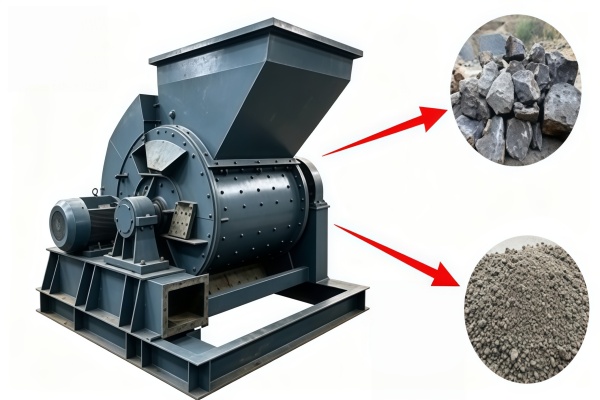
Chrome Ore Impact Mill for Foundry Sand Mix vs Ball Mill – Which Wins?
Saturday August-29 2026 10:00:24
A foundry in South Africa processes 30 tons of chromite sand per day. After switching to a Chrome ore impact mill for foundry sand mix , its monthly electricity bill dropped from 42,000 ZAR to 28,000 ZAR. The plant had been using a conventional tumbling mill for five years and always assumed the high power costs were due to rising electricity tariffs. It was not until the new equipment had been running for three full months and they compared the meter readings that they realized equipment selection affects operating costs more than tariff negotiation does.
The choice between an impact mill and a conventional mill is not about which technology is more advanced, but which one fits your specific operating conditions. For high‑volume production of general castings, the Chrome Ore Impact Mill for Foundry Sand Mix delivers better efficiency and lower operating costs. For precision casting that requires tight control over particle size distribution, the alternative remains irreplaceable. The selection process comes down to three questions: what type of castings do you produce, what does your power cost structure look like, and how much particle size variation can your process tolerate?
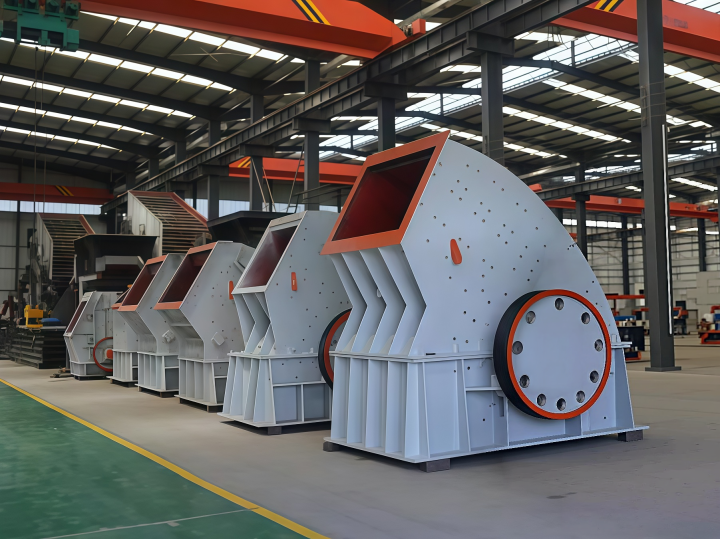
Key Differences at a Glance
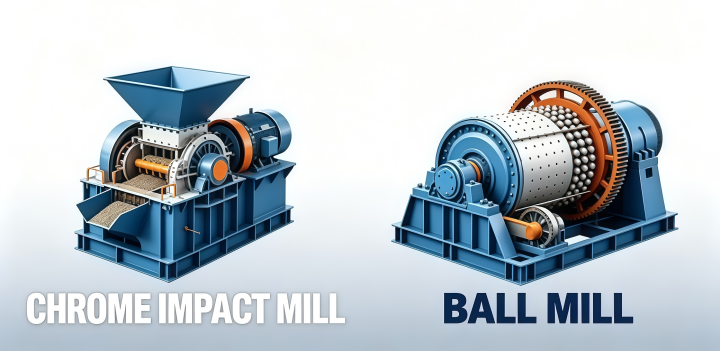
| Comparison Dimension | Chrome Ore Impact Mill for Foundry Sand Mix | Conventional Mill |
| Grinding Principle | High‑speed impact + counter‑attack crushing | Steel ball dropping impact + friction grinding |
| Single‑pass Efficiency | High, short process flow | Low, requires closed‑circuit circulation |
| Unit Energy Consumption | Relatively low | Relatively high, approx. 25‑30% of total plant energy |
| Product Particle Size Distribution | Wider, slightly higher fines content | Narrower, more uniform |
| Maintenance Complexity | Low, wear parts replacement is straightforward | High, requires regular ball replenishment and liner changes |
| Operator Skill Requirement | Lower, parameter adjustments are simple | Higher, needs experienced operators |
Can a Chrome Ore Impact Mill for Foundry Sand Mix Handle Material with Over 5% Moisture Content
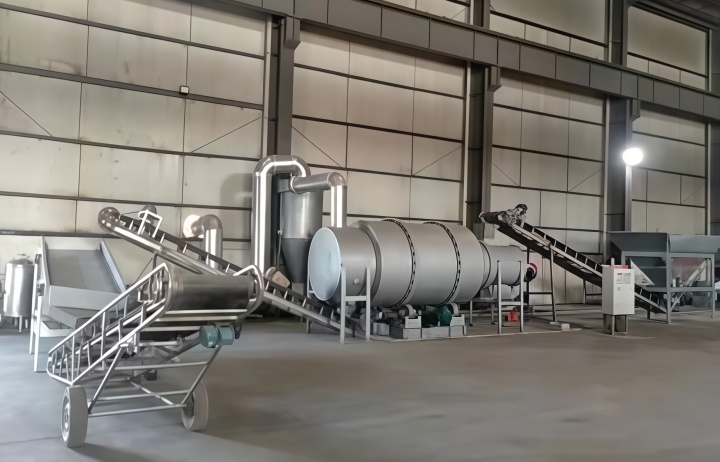
This is a common question from customers. When material with moisture content exceeding 5% enters an impact mill, internal wall adhesion is almost inevitable. A customer in Southeast Asia encountered this issue—during the rainy season, raw material moisture frequently exceeded 7%, and the Chrome Ore Impact Mill for Foundry Sand Mix would clog after just two hours of operation, with each cleaning taking four hours. The problem was only resolved after installing a hot‑air drying system to bring the moisture content down below 3%.
The conventional mill has slightly higher tolerance for moisture, but when pulp density exceeds 75%, the cascading effect of steel balls drops noticeably. Audit data from the Sukinda chromite concentrator in India shows that pulp density, particle residence time, and media size are three critical parameters affecting coarse grinding performance in tumbling mills. When any of these deviates from the optimal range, energy consumption increases.
How Long Does It Take to Change the Hammers on a Chrome Ore Impact Mill for Foundry Sand Mix
Two skilled workers can replace a full set of hammers, from shutdown to restart, in about two hours. The procedure requires wearing protective gloves, using a specialized torque wrench to tighten bolts in a diagonal sequence, and finally manually rotating the rotor to confirm flexibility. If the proper tools are not available, the time can double. The ease of hammer replacement on the Chrome Ore Impact Mill for Foundry Sand Mix is a worthwhile advantage in production scheduling.
Changing the liners on the other equipment is an entirely different matter. All steel balls must first be emptied from the drum, then old liners are removed one by one, and new liners are transported in and installed piece by piece. A single shutdown takes at least eight hours, and for large mills, it can require two full days of downtime. While liner changes are less frequent than hammer changes on the impact mill, each shutdown has a much greater impact on production rhythm.
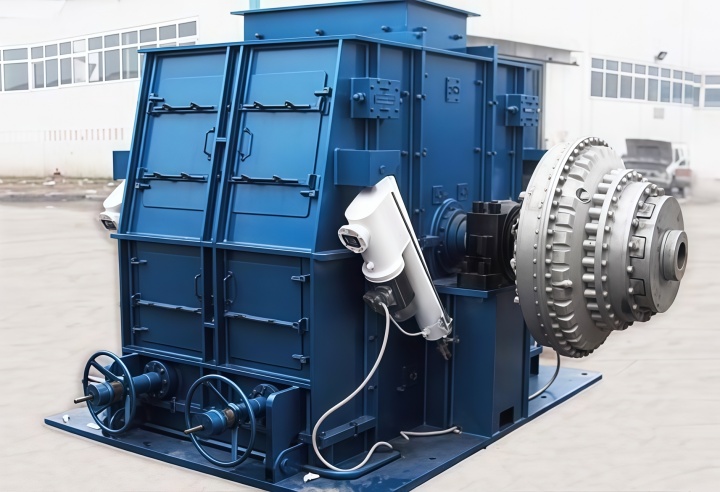
How Much Better Is the Particle Size Uniformity of the Conventional Mill Compared to an Impact Mill
Academic data provides insight. Research on the breakage ratio of South African chromite sand shows that when using a rod mill to simulate the mechanical recovery process, the breakage ratio of South African chromite sand after 9 minutes of grinding ranges from 1.68 to 1.93, according to data published in the International Journal of Metalcasting.
In actual production, the D50 of chromite sand produced by the conventional tumbling mill typically falls between 180 and 220 micrometers, with a narrow distribution span. The D50 of the Chrome Ore Impact Mill for Foundry Sand Mix generally ranges from 150 to 300 micrometers, with a distribution span roughly twice as wide. A precision foundry in Germany evaluated both technologies side by side. With the impact mill, sand particle fluctuation required constant readjustment of the binder addition rate, while the alternative's output was stable enough to use a fixed formulation. In contrast, an agricultural casting foundry using the impact mill never experienced rejects due to particle size variation. The difference is real, but whether it matters depends entirely on your product positioning.
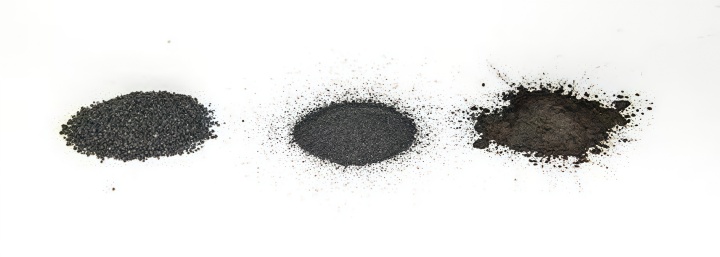
Where Does the High Power Consumption of the Conventional Mill Actually Go
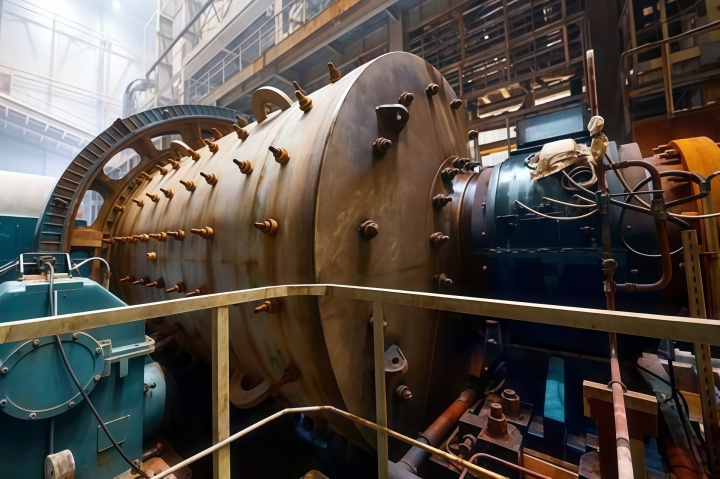
The Journal of the Southern African Institute of Mining and Metallurgy published an energy audit of the Tata Steel Sukinda chromite concentrator in India, which found that tumbling mills consume 25% to 30% of total plant electricity. A significant portion of this electricity is lost to friction between steel balls and liners, with only a relatively small share actually used for breaking particles.
A separate optimization study at the same concentrator showed that by adjusting grinding media size, particle residence time, and pulp density, the conventional mill's unit energy consumption dropped from 6.5 kWh/t to 3.6 kWh/t—a reduction of nearly half. This demonstrates that high energy consumption is not purely a design issue; operational management has a substantial impact. The Chrome Ore Impact Mill for Foundry Sand Mix, by contrast, has no grinding media to generate additional energy losses, so its baseline energy consumption is naturally lower. Metso's high‑pressure grinding roll field data shows that comparable impact‑type equipment consumes 40% to 50% less energy than traditional equipment in manufactured sand production.
The 3 Most Common Mistakes Foundries Make When Selecting Grinding Equipment
Selection errors typically originate not from the equipment itself, but from three easily underestimated areas: operating condition fit, cost structure alignment, and quality control integration. The following lessons come from real‑world plant experiences.
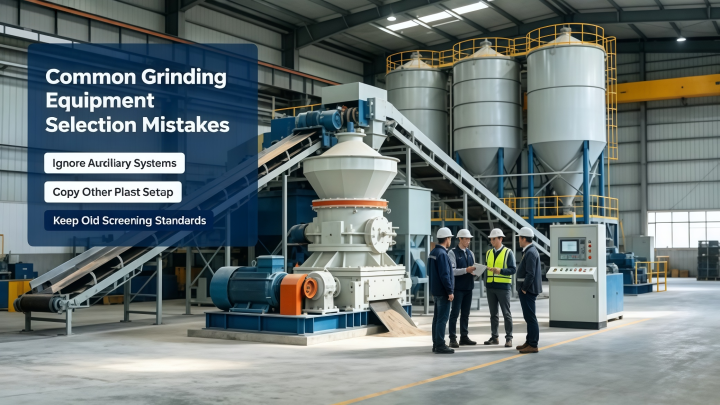
First, focusing only on main equipment specifications while ignoring auxiliary systems and water handling space.A foundry in South Africa created a detailed production capacity plan but never considered water consumption and recovery in the screening process. By the third week of operation, environmental authorities issued a warning—the equipment was installed, but there was nowhere for the wastewater to go.
Second, copying another plant's configuration without evaluating your own conditions.An Indian foundry saw that a competitor was saving power with the Chrome Ore Impact Mill for Foundry Sand Mix and purchased the same equipment at significant cost. But their plant operated under time‑of‑use electricity pricing and frequently switched product specifications. Because impact mills have higher proportional energy consumption at no‑load, the frequent start‑stop operation resulted in electricity bills 12% higher than continuous production, and even more expensive than their previous conventional mill.
Third, using the old screening standards after switching to new equipment. The particle size distribution curves of conventional mills and impact mills are completely different. A foundry that switched from a tumbling mill to an impact mill kept its old acceptance standards, and the reject rate for the first two batches exceeded 30%. It was not that the new equipment was inadequate—the acceptance standards had not been updated to match it.
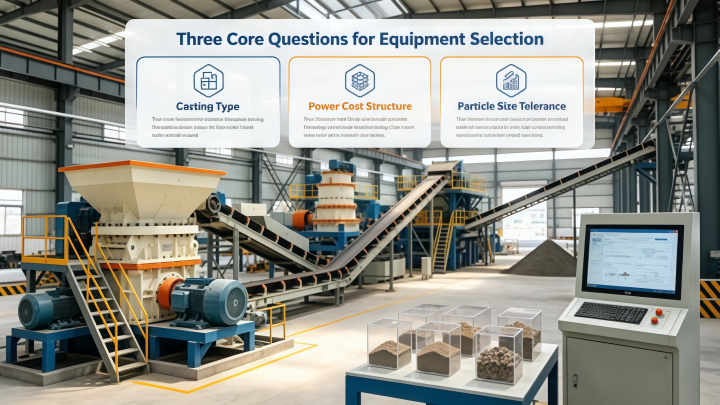
The Three Core Questions for Equipment Selection
Based on the comparative analysis above, the selection process can be simplified to three questions. What type of castings do you produce—for general carbon steel and alloy steel castings, the Chrome Ore Impact Mill for Foundry Sand Mix is sufficient, while precision castings, hydraulic components, and aerospace parts with high consistency requirements are better served by the conventional mill. What does your power cost structure look like—for continuous flat‑rate electricity, choose the impact mill; with time‑of‑use pricing and the ability to schedule large batches during off‑peak hours, the conventional mill's higher energy consumption may be offset by lower electricity rates. How much particle size variation can your process tolerate—general castings allow some deviation, precision casting requires a fixed formulation, the other equipment delivers stable output, and impact mills have some fluctuation. When uncertain, run small‑scale material tests and let measured data guide your decision instead of subjective judgment.
Frequently Asked Questions
Does the Chrome Ore Impact Mill for Foundry Sand Mix have moisture content requirements for feed material?
Impact mills are prone to internal wall adhesion when processing high‑moisture materials. Feed moisture content should be kept below 3% to ensure stable operation.
How wide is the particle size distribution of chromite sand from a conventional mill?
Ball mills typically produce chromite sand with a particle size distribution concentrated between 100 micrometers and 1 millimeter, while the Chrome Ore Impact Mill for Foundry Sand Mix produces a wider distribution with a higher proportion of fines.
Is there a significant difference in operating noise between the two technologies?
The impact mill generates noticeably higher impact noise during operation, but the conventional mill produces more persistent noise from continuous drum rotation and steel ball cascading. Both require sound insulation measures.
Does the Chrome Ore Impact Mill for Foundry Sand Mix experience rapid hammer wear when processing high‑hardness chromite?
Chromite is a highly abrasive material. Impact mill hammers wear relatively quickly and require high‑chromium alloy materials, with regular inspection and replacement schedules.
Closing Thoughts
The choice between an impact mill and a conventional mill ultimately comes down to balancing management cost and product precision. The Chrome Ore Impact Mill for Foundry Sand Mix achieves low energy consumption through its structural design, requiring minimal management effort to maintain lower electricity costs—making it suitable for high‑volume general casting production and power‑cost‑sensitive operations. The other equipment's particle size uniformity comes from the extended contact between steel balls and material, making it suitable for precision casting and large‑scale continuous production. Based on academic data and real‑world cases, clarifying your casting type, power cost structure, and particle size tolerance before selection will naturally lead you to the right answer.