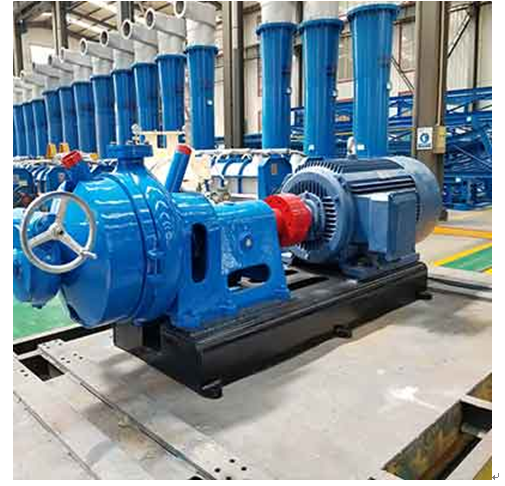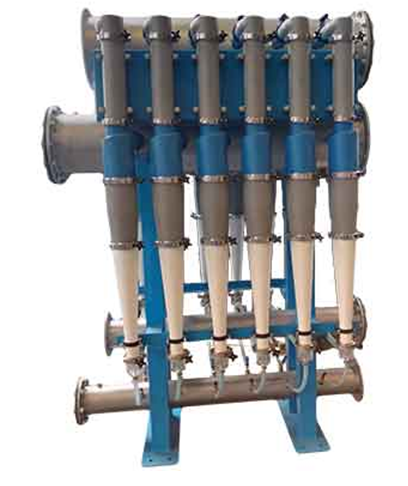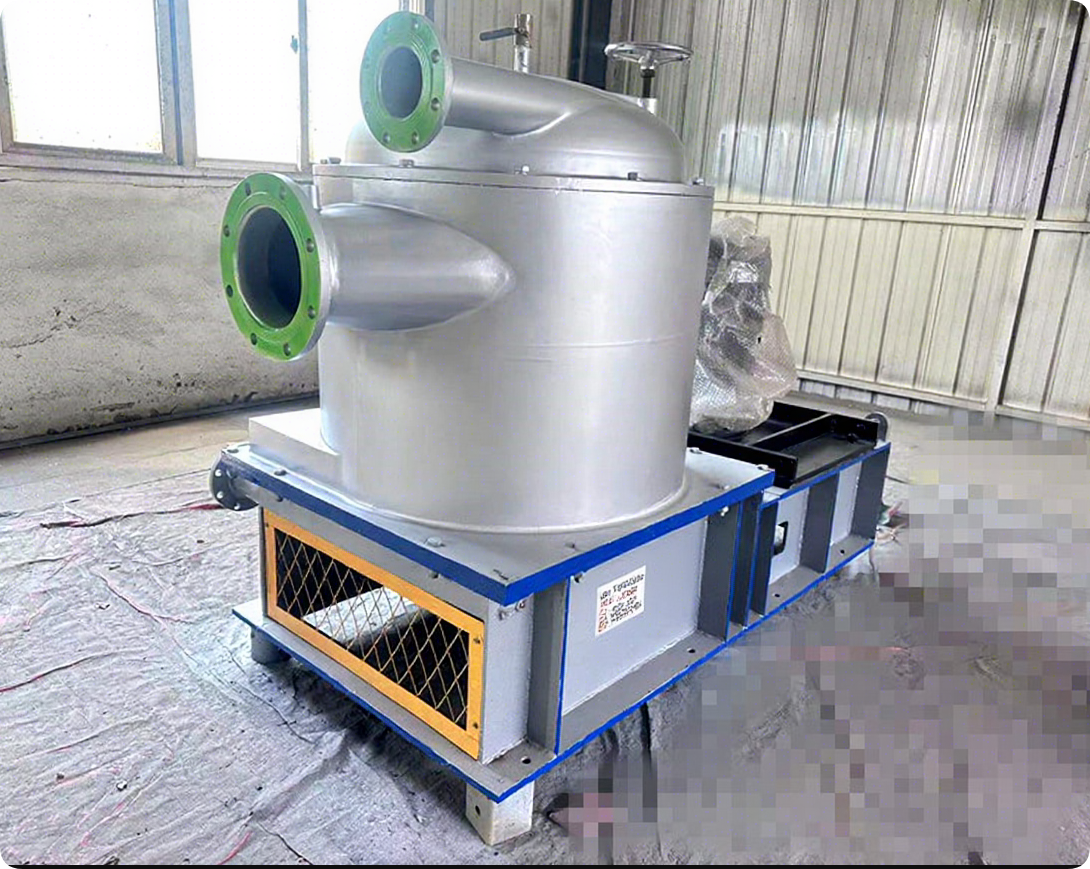
ZNS Series Medium-Concentration Pressure Screen
What is a ZNS Series Medium-Concentration Pressure Screen?
A medium-concentration pressure screen is a technologically advanced and widely used piece of equipment. It is primarily used for screening and purifying pulp at relatively high concentrations (typically 3%-5%), and is a key piece of equipment connecting pulping and subsequent fine processing stages.
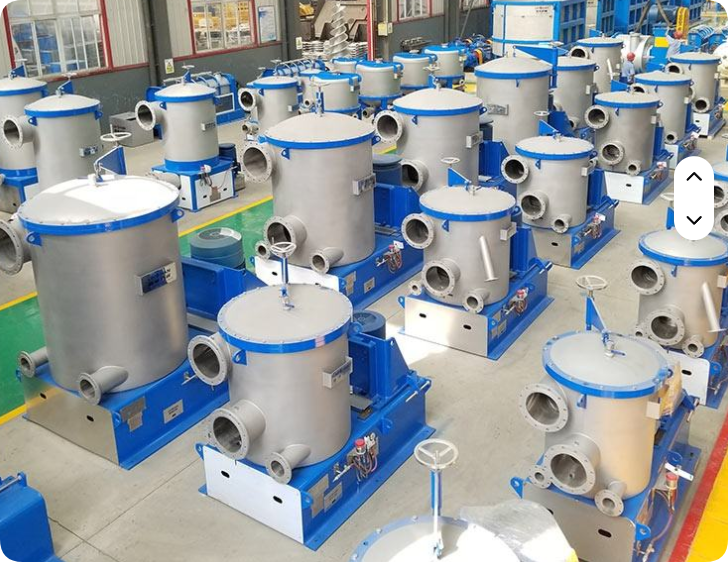
What are the applications of the ZNS Series Medium-Concentration Pressure Screen?
The core purpose of the medium-concentration pressure screen is to continuously and efficiently screen pulp under completely sealed pressure, separating impurities and incompletely disintegrated fiber bundles to obtain clean, qualified pulp. It has a wide range of applications, suitable for coarse screening of chemical pulp, waste paper pulp, and mechanical pulp, as well as for fine screening.
How does the ZNS Series Medium-Concentration Pressure Screen work?
Tangential feed and heavy residue separation: Unscreened pulp enters the separation chamber at the top of the equipment tangentially. Under centrifugal force, heavier impurities such as sand and metal are separated first, settling into the heavy residue collection tank and then periodically discharged.
Overflow and Screening: The pre-purified slurry overflows through the internal annular weir plate and enters evenly into the screening zone, which consists of a screen drum and a high-speed rotating rotor (or vortex drum).
Good Slurry Passage and Tailings Discharge: Qualified fibers (good slurry) pass through the holes or gaps of the screen drum under pressure difference and are drawn out from the good slurry outlet. Long fiber bundles, plastic flakes, and other impurities (tailings) are trapped by the screen drum, move downwards, and are discharged from the bottom discharge pipe.
Screen Drum Anti-Clogging: The high-speed rotating rotor surface has specially designed blades or protrusions. During rotation, a local negative pressure is generated behind each blade, creating a periodic suction force on the screen drum surface. This not only helps qualified fibers pass through but, more importantly, continuously purifies the screen holes and prevents the screen drum from clogging.
What are the advantages of the ZNS series medium-consistency pressure screen?
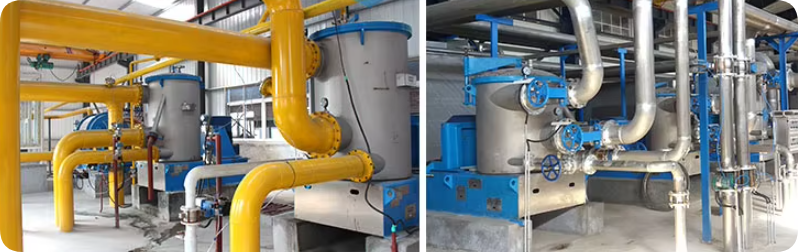
Compared with traditional low-consistency screening equipment, the medium-consistency pressure screen has the following significant advantages:
Energy saving and consumption reduction, cost reduction and efficiency improvement: This is one of its most prominent advantages.
Water Conservation and Emission Reduction: Increasing the screening concentration from below 1% to 3%-5% means a significant reduction in the amount of water required to process the same amount of oven-dry pulp. Correspondingly, subsequent wastewater treatment volume and energy consumption are also significantly reduced.
Significant Energy Savings: Application cases show that using medium-consistency screening technology reduces the electricity consumption per ton of pulp by 20% to 40% compared to traditional methods. Zhengzhou Leizhan Machinery's XZNS2.5 medium-consistency pressure screen is hailed as a new generation of energy-saving equipment due to its low energy consumption and high capacity.
Heat Recovery: Due to the reduced water consumption, the temperature loss of the pulp during the screening process is minimal, contributing to "closed-loop thermal screening" and better preserving the heat energy generated during pulping.
Improved Pulp Quality and Finished Paper Performance: Medium-consistency screening better preserves fiber length and strength.
In a reconstituted tobacco production application case, after using a medium-consistency pressure screen, the freeness of the finished pulp decreased by 26.1%, while the fiber wet weight increased by 32.3%. This directly improves the performance of the final product: the substrate's air permeability is increased by over 70%, and uniformity and absorbency are also significantly improved.
ZNS Series Medium Concentration Pressure Screen Models
| Model | Screening area (m²) | Screen hole spec (mm) | Screen slit spec (mm) | Production capacity (hole sieve) (t/d) | Production capacity (screen slit) (t/d) | Feed concentration (%) | Motor power (Kw) |
| ZNS0.3 | 0.3 | Φ1.6-Φ3.5 | 0.10-0.55 | 50-80 | 30-50 | 1-4 | 22-55 |
| ZNS0.6 | 0.6 | Φ1.6-Φ3.5 | 0.10-0.55 | 90-160 | 60-100 | 1-4 | 30-75 |
| ZNS0.9 | 0.9 | Φ1.6-Φ3.5 | 0.10-0.55 | 135-250 | 90-150 | 1-4 | 37-90 |
| ZNS1.2 | 1.2 | Φ1.6-Φ3.5 | 0.10-0.55 | 180-320 | 120-190 | 1-4 | 45-110 |
| ZNS1.5 | 1.5 | Φ1.6-Φ3.5 | 0.10-0.55 | 200-380 | 140-230 | 1-4 | 55-132 |
| ZNS2 | 2 | Φ1.6-Φ3.5 | 0.10-0.55 | 260-500 | 200-300 | 1-4 | 75-160 |
| ZNS3 | 3 | Φ1.6-Φ3.5 | 0.10-0.55 | 400-700 | 300-450 | 1-4 | 90-220 |
| ZNS4 | 4 | Φ1.6-Φ3.5 | 0.10-0.55 | 500-1000 | 320-730 | 1-4 | 132-280 |
| ZNS6 | 6 | Φ1.6-Φ3.5 | 0.10-0.55 | 800-1500 | 500-1100 | 1-4 | 250-400 |