Compound Cone Crusher Throughput: Granite vs Limestone
Thursday August-27 2026 10:26:14
Key Data at a Glance
| Comparison Dimension | Limestone | Granite |
| Mohs Hardness | 3 to 4 | 6 to 7 |
| Compressive Strength | 30 to 150 MPa | 100 to 250 MPa |
| Bond Work Index | 10 to 14 kWh/t | 15 to 18 kWh/t |
| Throughput Achievement Rate | 92% to 98% of rated | 80% to 90% of rated |
| Liner Service Life | 1,000 to 2,500 hours | 300 to 600 hours |
| Specific Energy Consumption | 7 to 9 kWh/t | 15 to 18 kWh/t |
Compound Cone Crusher achieves 92% to 98% of rated throughput when processing limestone, but drops to 80% to 90% when processing granite. Liner life ranges from 1,000 to 2,500 hours under limestone conditions, versus 300 to 600 hours under granite. The energy gap is even more direct – crushing granite consumes 15 to 18 kWh per tonne, while limestone requires only 7 to 9 kWh per tonne. This article presents real‑world performance differences of the equipment on these two materials across three dimensions: throughput, wear, and energy consumption, based on actual field data.
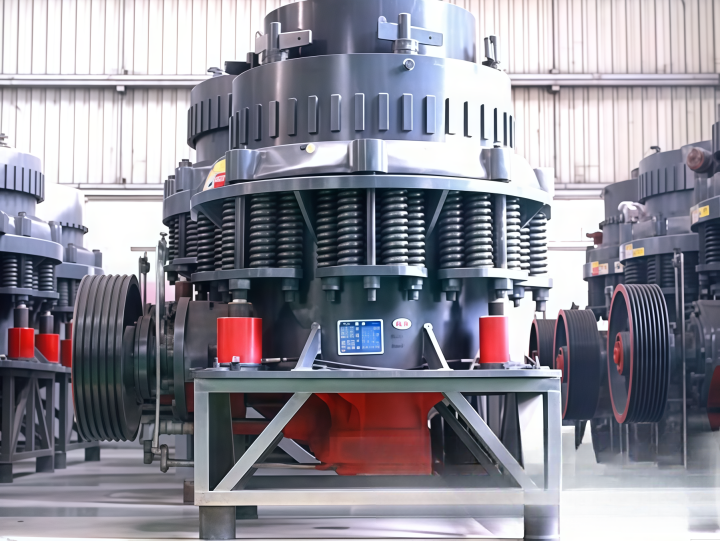
Throughput Comparison of Compound Cone Crusher on Granite vs. Limestone
Material compressive strength is the primary variable affecting capacity. Granite has a compressive strength of 100 to 250 MPa, while limestone ranges from 30 to 150 MPa. A unit rated at 300 t/h can produce 320 to 350 t/h when processing limestone, but falls to 260 to 300 t/h for granite. The roughly 15% to 20% gap is directly related to the difference in Bond Work Index – for each 1‑unit increase in the index, hourly output decreases by about 3%.
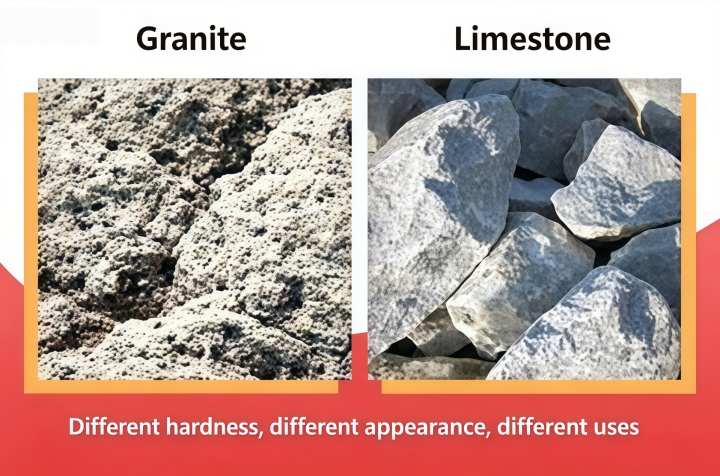
In practical selection, the ZX1650C2‑D model of Compound Cone Crusher delivers 280 to 610 t/h when processing granite at a discharge setting of 35 to 65 mm. The PYF1950 model of Compound Cone Crusher, when processing granite, produces 330 to 725 t/h, and reaches the same upper range when processing limestone. Narrowing the discharge setting from 22 mm to 16 mm raises power consumption by 18% to 22% while reducing throughput by only 8% to 10% – this trade‑off is worth considering for granite applications.
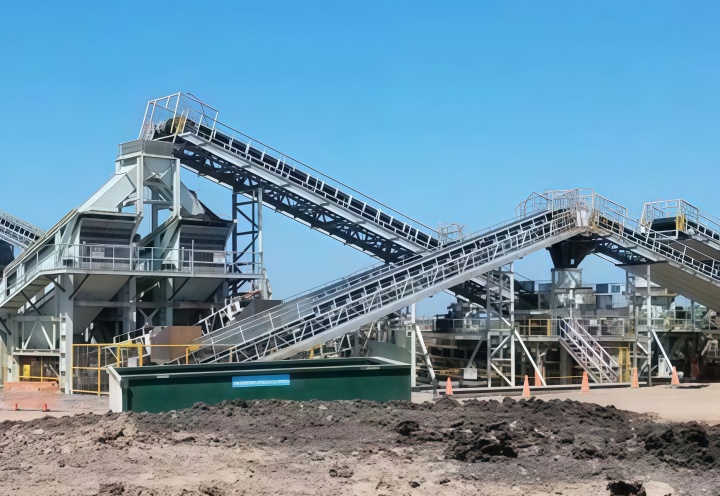
Liner Life Comparison of Compound Cone Crusher on Granite vs. Limestone
Free silica content is the main factor influencing wear rate. Limestone typically contains less than 5% free silica, while granite contains 65% to 75%. Over the same operating hours, liner wear when processing granite is more than five times that when processing limestone.
A North American granite quarry with an annual output of 2 million tonnes put its Compound Cone Crusher into secondary crushing service in August 2024. With a closed‑side discharge setting of 19 mm, the unit ran continuously for four months, producing 680,000 tonnes of granite aggregate. The liners were replaced after approximately 900 operating hours. During the same period, another identical‑model unit at the same quarry, processing limestone with the same liner type, had already run for 2,100 hours and still had not reached the replacement threshold. The liner life gap exceeds two‑to‑one, and this disparity becomes more pronounced in operations with higher free silica content.
A record from an iron‑ore‑associated granite crushing station in Western Australia shows that when processing granite, each set of manganese steel liners on the Compound Cone Crusher averaged 60,000 to 80,000 tonnes of throughput; after switching to limestone with the same chamber configuration, liner throughput increased to 280,000 to 350,000 tonnes. The multiplier relationship correlates positively with free silica content, and operators can predict liner replacement cycles by regularly testing feed material SiO₂ content.
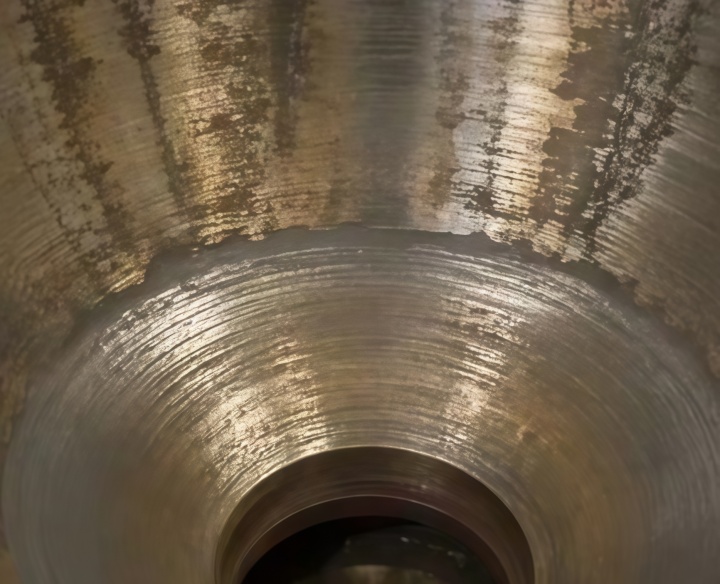
Energy Consumption Comparison of Compound Cone Crusher on Granite vs. Limestone
When Compound Cone Crusher processes granite, specific energy consumption is 15 to 18 kWh per tonne; for limestone it is 7 to 9 kWh per tonne – a gap of nearly double. At an industrial electricity price of USD 0.10 per kWh, the electricity cost per tonne of granite is USD 1.5 to 1.8, while limestone costs only USD 0.7 to 0.9 per tonne. For a 1‑million‑tonne‑per‑year production line, the annual electricity bill difference alone reaches USD 800,000 to 900,000.
A European engineering contractor compared power consumption under the two material conditions in its project report: the Compound Cone Crusher consumed a stable 8.2 kWh per tonne when processing local limestone in Spain, but rose to 17.6 kWh per tonne when processing granite in Norway – more than double. The contractor subsequently adjusted its bidding model, raising the power cost factor for granite projects to 2.1 times that of limestone projects.
Throughput Achievement Rate Under Actual Working Conditions
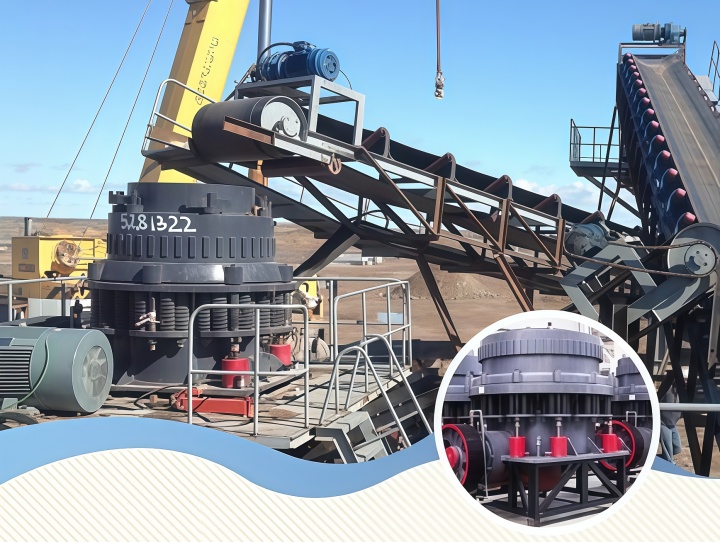
Rated capacity is determined under ideal feed conditions and standard discharge settings. In practice, the throughput achievement rate of the equipment ranges from 92% to 98% for limestone and 80% to 90% for granite. A unit rated at 300 t/h can steadily produce 320 to 350 t/h on a limestone line, but only 260 to 300 t/h on a granite line.
A South American aggregate company operates two production lines simultaneously in Minas Gerais, Brazil, processing local granite and limestone respectively, with the same model of main crusher. Data from six months of operation show that the limestone line averaged 95% of rated throughput, while the granite line averaged 86%. The company subsequently stipulated in its project tenders that for granite projects, the Compound Cone Crusher selection must include a 20% margin factor above the target capacity.
The yield of the 5‑20 mm fraction in single‑stage crushing also differs – 68% to 72% for granite versus 75% to 79% for limestone. Users with strict requirements for finished particle shape and gradation should take this difference into account when formulating product plans.
Closing Remarks
The performance differences of Compound Cone Crusher on granite versus limestone ultimately stem from the fundamental distinctions in material hardness and silica content. Under limestone conditions, the equipment delivers higher throughput, longer liner life, and lower energy consumption; under granite conditions, throughput drops by 15% to 20%, liner replacement frequency is three to five times higher, and specific energy consumption is nearly double. Selecting the right model and chamber should be based on actual material test data rather than relying solely on nameplate ratings to approximate real production expectations.
FAQ
Can the throughput drop of Compound Cone Crusher on granite be compensated by adjusting the discharge setting?
Yes. Narrowing the discharge from 22 mm to 16 mm increases power consumption by 18% to 22% but reduces throughput by only 8% to 10%, allowing improved product size with a relatively small capacity loss.
How much more frequently do liners need to be replaced on Compound Cone Crusher under granite versus limestone conditions?
Under granite, manganese steel liners last about 300 to 600 hours; under limestone, they can reach 1,000 to 2,500 hours or more – meaning replacement frequency on granite is three to five times higher.
How much higher is the specific energy consumption of Compound Cone Crusher on granite compared to limestone?
Crushing granite consumes 15 to 18 kWh per tonne, while limestone requires 7 to 9 kWh per tonne – granite’s energy consumption is roughly double that of limestone.
How do feed size and moisture content affect Compound Cone Crusher performance on both materials?
Oversized feed accelerates wear on the upper crushing chamber liners, and moisture exceeding 8% increases material compaction pressure and accelerates abnormal liner stress wear. Both materials require proper feed condition control to achieve stable throughput.