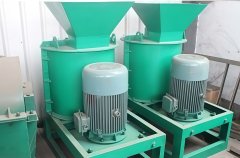
Limestone Chain Mill for Desulfurization Slurry
What Is a Limestone Chain Mill for Desulfurization Slurry?
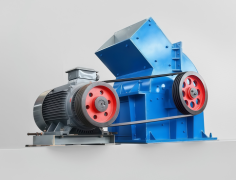
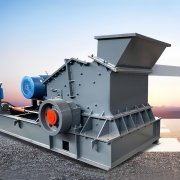
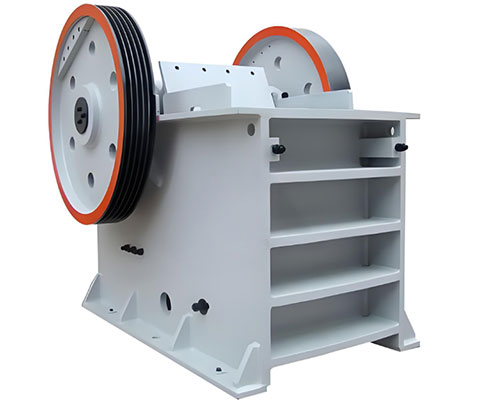
Limestone Chain Mill for Desulfurization Slurry is a grinding equipment specifically designed for limestone slurry preparation in wet flue gas desulfurization systems. The equipment drives high-chromium alloy chain hammers to rotate at high speed through a chain transmission structure, grinding the feed limestone particles to the fineness required for the desulfurization reaction, then mixing with water to produce limestone slurry for the absorption tower to remove sulfur dioxide. This equipment is the core slurry preparation component of the limestone-gypsum wet desulfurization process, which holds a significant share in the global desulfurization market.
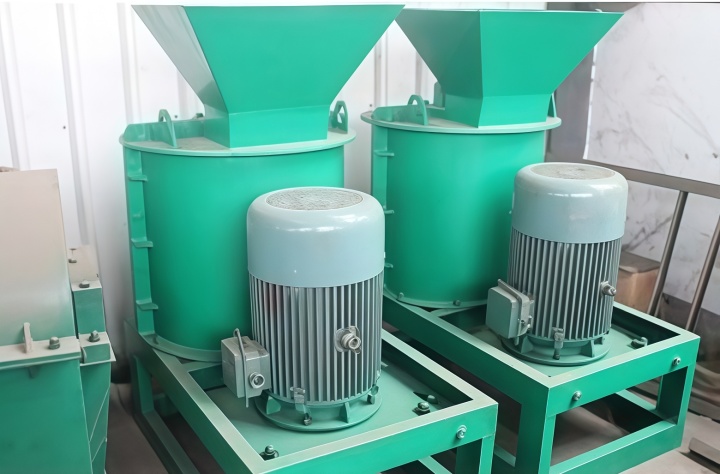
How Does a Limestone Chain Mill for Desulfurization Slurry Achieve Shorter Retention Time?
The grinding chamber of this equipment adopts a multi-layer stepped liner design, forming a gradually narrowing grinding channel between the chain hammers rotating at high speed and the liners. As the material moves from the feed end to the discharge end, the cross-sectional area of the channel gradually decreases, and the compressive force on the material increases progressively with the travel distance. This structure solves the problem that traditional grinding equipment cannot achieve continuous operation from coarse crushing to fine grinding to ultrafine classification within a single chamber.
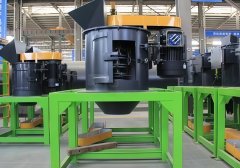
Under the same 325-mesh product requirement, this structure reduces the average retention time of material in the chamber by 40% compared to traditional ball mills, avoiding energy waste caused by over-grinding. After being ground to specification, the material enters the dynamic air classifier with airflow, where the qualified fines are collected and sent to the slurry tank, while the coarse particles return to the mill for continued circulating grinding.
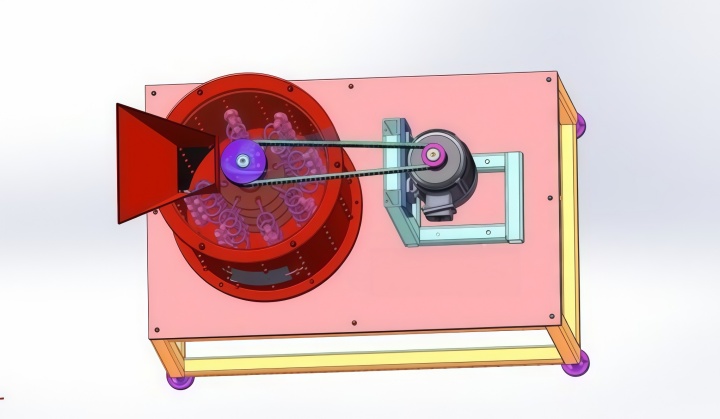
The Technical Parameters of a Limestone Chain Mill for Desulfurization Slurry
The parameters for the four specifications below are compiled based on actual project configuration data from the factory.
| Parameter | LCG-60 | LCG-80 | LCG-100 | LCG-120 |
|---|---|---|---|---|
| Feed Size | ≤10 mm | ≤12 mm | ≤12 mm | ≤15 mm |
| Product Fineness | 200 mesh D90 | 250 mesh D90 | 325 mesh D90 | 325 mesh D90 |
| Capacity | 5-8 t/h | 10-18 t/h | 20-30 t/h | 35-45 t/h |
| Main Motor Power | 75 kW | 132 kW | 220 kW | 315 kW |
| Number of Chain Hammer Groups | 24 sets | 36 sets | 48 sets | 60 sets |
| Classification Method | Dynamic air classifier | Dynamic air classifier | High-efficiency dynamic air classifier | High-efficiency dynamic air classifier |
| Equipment Weight | 12 t | 20 t | 32 t | 45 t |
| Overall Dimensions | 4.2×2.1×3.5 m | 5.6×2.8×4.2 m | 7.0×3.5×5.0 m | 8.5×4.2×5.8 m |
The above parameters are typical configurations for the four standard specifications, and actual selection should be based on the limestone Bond work index and slurry fineness requirements for matching calculations.
Why Choose a Limestone Chain Mill for Desulfurization Slurry Over a Ball Mill?
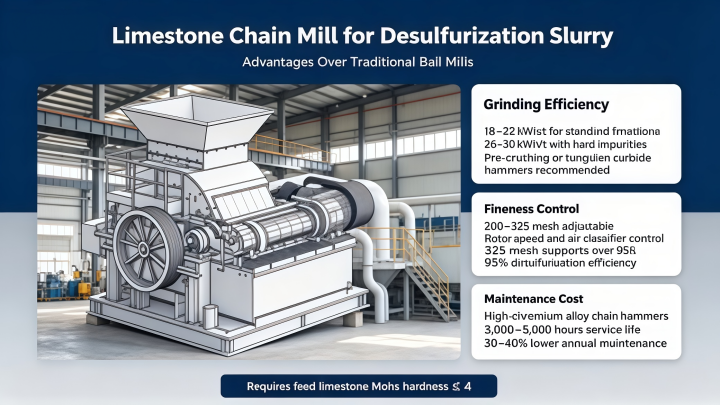
This product offers advantages over traditional ball mills in terms of grinding efficiency, fineness adjustment, and maintenance costs, but these advantages are predicated on the feed limestone having a Mohs hardness not exceeding 4.
In terms of grinding efficiency, The product consumes 18 to 22 kWh per ton. When the limestone contains hard impurities such as quartz veins or chert nodules, the power consumption may rise to 26 to 30 kWh per ton. When encountering such feed materials, it is recommended to add a pre-crushing step at the feed end to reduce the particle size from 12 mm to below 6 mm, or to use tungsten carbide hardfaced chain hammers.
In terms of fineness adjustment, by adjusting the rotor speed and classifier parameters, Limestone Chain Mill for Desulfurization Slurry can precisely control the product fineness within the range of 200 mesh to 325 mesh. 325-mesh limestone powder has a larger specific surface area, enabling a desulfurization efficiency of over 95%.
In terms of maintenance costs, high-chromium alloy chain hammers have a service life of 3,000 to 5,000 hours when processing limestone with a CaCO₃ content above 90%, and the annual maintenance cost is 30% to 40% lower than that of ball mills.
What Are the Limitations of a Limestone Chain Mill for Desulfurization Slurry?
This equipment is not suitable for all desulfurization slurry preparation scenarios. Its grinding efficiency depends on the feed limestone having a Mohs hardness not exceeding 4 and a SiO₂ content below 8%. When the feed contains hard components such as quartz veins or chert nodules, the chain hammer replacement cycle will shorten from the normal 4,000 hours to less than 2,000 hours. If the feed has a CaCO₃ content below 75% and a SiO₂ content exceeding 8%, the vertical roller mill is a more economical grinding method.
Real-World Performance Data of a Limestone Chain Mill for Desulfurization Slurry Deliver
Case 1: A 660MW Power Plant Under Henan Yuneng Holdings
In September 2025, a 2×660MW plant replaced two ball mills with one LCG-100 Limestone Chain Mill for Desulfurization Slurry. Power consumption for 25 t/h 325-mesh limestone dropped from 30.2 to 21.8 kWh/t, stable at 21.2-22.5 over 14 months. Desulfurization efficiency rose from 94.8% to 96.1%, limestone use fell from 1.42 to 1.31 tons per ton of SO₂ removed, saving 1,512,000 kWh annually.
Case 2: Drax Power Station, UK
Drax Power Station commissioned its 4,000MW FGD retrofit in 1993 as the UK's first large-scale wet limestone-gypsum desulfurization project. Its limestone grinding system has served as a reference for ultra-large thermal power units.
Case 3: TATA Steel, India
TATA Steel purchased 3 MTW138 mills in 2023 for its desulfurization agent line, processing 0-12mm limestone with feed CaO above 81.6%. The line achieves 30-35 t/h at 200 mesh D90, with stable operation reported.
Select the Right Limestone Chain Mill for Desulfurization Slurry
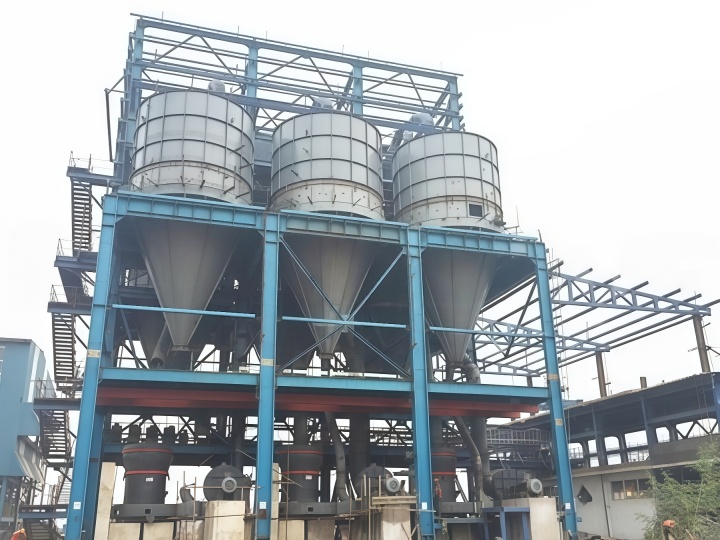
The selection of this product cannot be based solely on hourly capacity; the load fluctuation of the desulfurization system must also be analyzed. Many desulfurization systems are designed based on the boiler maximum continuous rating condition, but the actual operating load rate is only 70% to 80%. Selecting based on full load will result in long-term low-load operation of the equipment, and insufficient linear speed of the chain hammers will affect product fineness.
The correct approach is to take the actual operating load curve of the past 12 months and select based on the limestone demand corresponding to the 85th percentile load, rather than the design maximum. For example, if a power plant has a design limestone demand of 28 tons per hour but the actual maximum demand over the past year is only 22 tons per hour, the LCG-80 should be selected instead of the LCG-100, saving approximately 300,000 RMB in investment and avoiding fineness fluctuation issues caused by low-load operation. For the complete selection calculation method, please refer to the in-house selection guide.
What Materials Can a Limestone Chain Mill for Desulfurization Slurry Process?
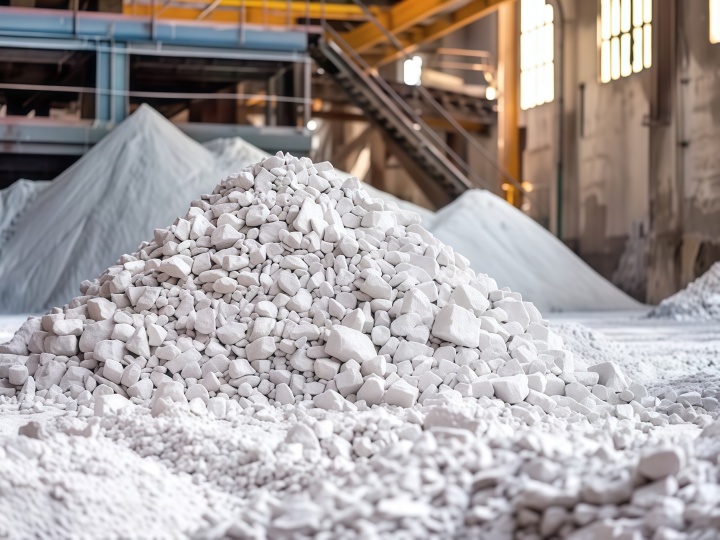
This equipment can process three types of materials: high-calcium limestone, medium-to-low-grade limestone, and desulfurization gypsum byproduct.
High-calcium limestone is the primary processing material, with a calcium carbonate content above 90% and Mohs hardness around 3. It can be stably ground to 325-mesh fineness for use in wet desulfurization systems of coal-fired power plants and large industrial boilers.
Medium-to-low-grade limestone, with a calcium carbonate content between 80% and 90%, can still produce qualified slurry by adjusting grinding parameters, but impurities may accelerate chain hammer wear, so reinforced chain hammers are recommended.
Desulfurization gypsum byproduct can be blended back into the slurry preparation step at a ratio not exceeding 10%, enabling resource recycling of the byproduct. For overall process configuration of desulfurization systems, please refer to the in-house desulfurization equipment related pages.
Frequently Asked Questions About Limestone Chain Mill for Desulfurization Slurry
Q: What should I do if the fineness of limestone powder ground by Limestone Chain Mill for Desulfurization Slurry is unstable?
Fineness fluctuation is usually related to uneven feed particle size or improper classifier speed settings. Check the feeding system uniformity and recalibrate the dynamic air classifier parameters.
Q: What causes abnormal vibration in a Limestone Chain Mill for Desulfurization Slurry?
Abnormal vibration is mostly caused by uneven wear of the grinding chain hammer groups or rotor imbalance. Shut down and inspect the weight differences of each chain hammer group, then replace severely worn hammers.
Q: What are the moisture content limitations for Limestone Chain Mill for Desulfurization Slurry?
Feed moisture should be controlled below 3%, as levels above 5% can cause material adhesion and classifier blockage. Consider adding a hot air drying device at the feed end if moisture exceeds the limit.
Q: What should be noted when restarting a Limestone Chain Mill for Desulfurization Slurry after long-term shutdown?
Inspect the grinding chamber for material accumulation and rust after a shutdown exceeding 72 hours. Perform manual barring to confirm free rotor rotation before power-on startup, and never start with load.
Q: How is the chain hammer replacement cycle determined for a Limestone Chain Mill for Desulfurization Slurry?
Replacement should consider product fineness trends rather than operating hours alone. When the 325-mesh passing rate fails three consecutive tests and classifier adjustment doesn't help, the hammers have reached end of life.