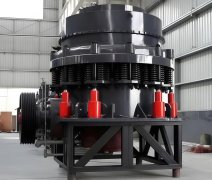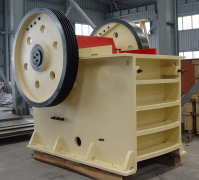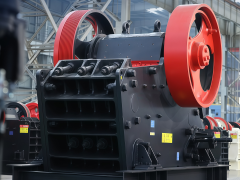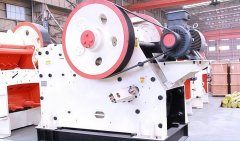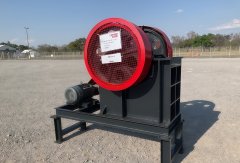
Small Jaw Crusher
What is Small Jaw Crusher?
Users purchase Small Jaw Crusher for three main purposes: crushing blasted ore for downstream mills, preparing core samples in laboratories, or breaking concrete from construction waste into reusable aggregate.
The equipment reduces materials from dozens to over one hundred millimeters down to a target size between ten and one hundred millimeters through the periodic squeezing action of two jaw plates. It processes ores, rocks, and brittle materials with compressive strength up to three hundred twenty megapascals, with discharge size adjustable without replacing components.
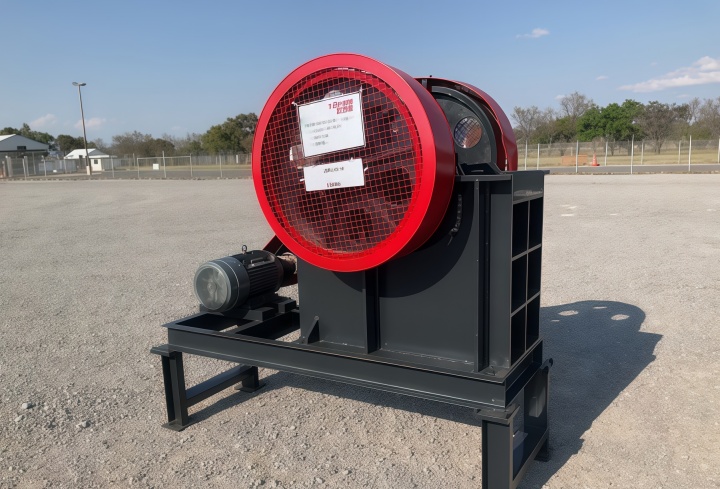
The Core Technical Parameters of Small Jaw Crusher
Key parameters for each model are listed below. Measured data come from actual project feedback.
| Model | Feed Opening (mm) | Max Feed Size (mm) | Discharge Range (mm) | Capacity (t/h) | Motor Power (kW) | Machine Weight (t) | Actual Capacity (t/h, crushing limestone) |
| PE150x250 | 150×250 | 125 | 10-40 | 1-3 | 5.5 | 0.7 | 2.5 |
| PE200x300 | 200×300 | 180 | 20-70 | 2-8 | 11 | 0.8 | 6 |
| PE250x400 | 250×400 | 210 | 20-60 | 5-20 | 15 | 2.8 | 16 |
| PE400x600 | 400×600 | 340 | 40-100 | 15-60 | 30 | 6.5 | 50 |
| PE500x750 | 500×750 | 425 | 50-100 | 40-100 | 55 | 11 | 85 |
The PE150x250 and PE200x300 weigh under one ton and can operate directly on the ground without foundations, suitable for field work. Models PE250x400 and above require concrete foundations. When feed size exceeds eighty percent of the feed opening width, bearing life shortens by about thirty percent.
What Advantages Does Small Jaw Crusher Offer?
The equipment's competitiveness comes from quantifiable energy use, easy adjustment, and flexible site adaptation.
Energy consumption: The PE250x400 reduces two hundred millimeter limestone to below forty millimeters in one pass. Power consumption is about one kilowatt-hour per ton, roughly twenty percent lower than hammer crushers of equivalent capacity.
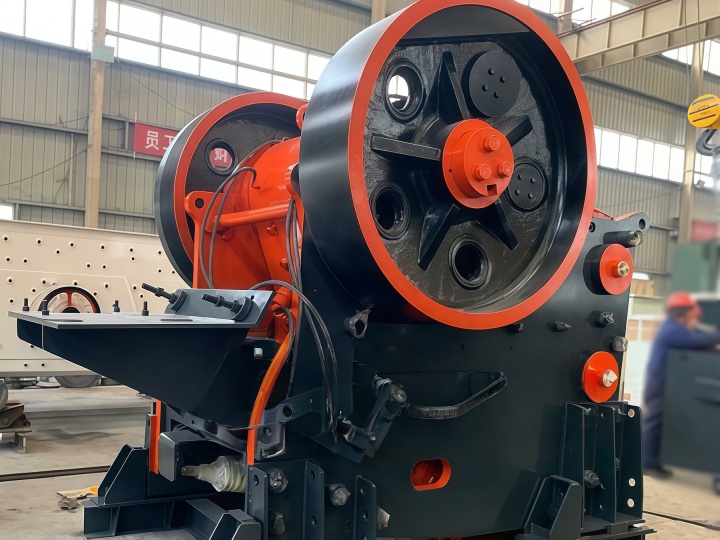
Operational adjustment: The hydraulic system allows changing discharge opening from twenty to sixty millimeters in about two minutes while running, reducing downtime for sites that switch between product sizes.
Site flexibility: Models under one ton require no concrete foundations, shortening installation from one week to half a day.
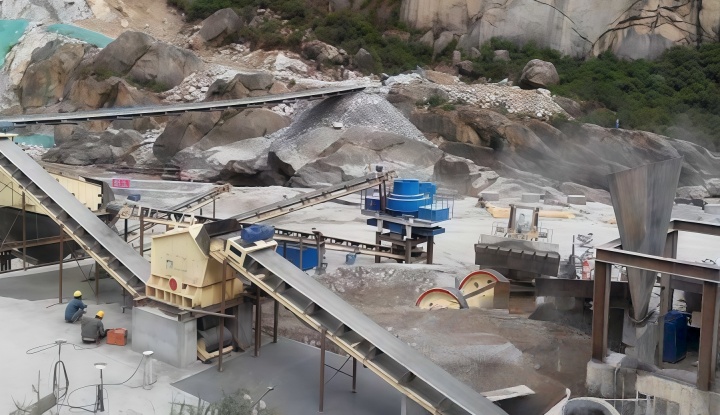
Maintenance: Main components are the eccentric shaft and bearings. Daily checks cover jaw plate wear, bearing grease, and belt tension, taking about twenty minutes per unit.
How Does Small Jaw Crusher Work?
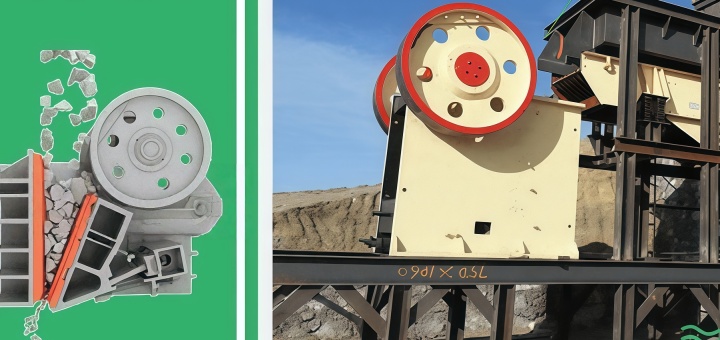
Small Jaw Crusher relies on the eccentric shaft to drive the moving jaw in a reciprocating motion. As the moving jaw approaches the fixed plate, material is squeezed and fractured; as it retreats, material falls by gravity. After multiple squeezing actions, particle size decreases until discharge.
For granite, feeding one hundred fifty millimeter stones into a PE400x600 reduces them to below sixty millimeters after three to five cycles. The crushing chamber is wider at the top and narrower at the bottom, with discharge uniformity within plus or minus five millimeters.
Which Scenarios Is Small Jaw Crusher Suitable For?
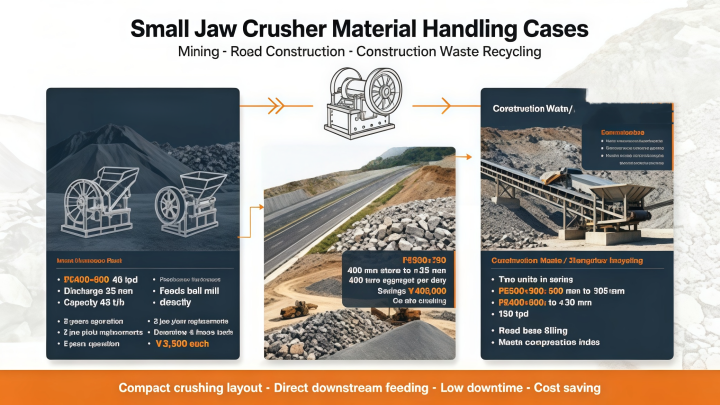
Small Jaw Crusher addresses specific material handling challenges across different industries. The following three cases come from actual operating projects.
Mining: A tungsten plant in Dayu County, Jiangxi, processes forty tons per day with a PE400x600. Discharge is set at thirty-five millimeters, capacity is forty tons per hour, and one hour of operation meets daily needs. The output feeds directly into a ball mill, eliminating screens and return conveyors. The equipment has run for three years with two jaw plate replacements, each costing three thousand five hundred yuan with four hours of downtime.
Road construction: The TJ3 section of the Huiqing Expressway in Guangdong uses excavated granite for concrete aggregate. A PE500x750 installed on temporary ground crushes four hundred millimeter stone to below twenty-five millimeters, producing about six hundred tons of aggregate daily. The project chief engineer reported savings of about four hundred thousand yuan in material purchase and transport.
Construction waste: A Zhengzhou recycling station processes concrete beams up to five hundred millimeters. Two units run in series: a PE600x900 reduces five hundred millimeter material to one hundred millimeters, then a PE400x600 reduces it to below thirty millimeters. The combined daily capacity is about one hundred fifty tons, with output used for road base filling, meeting compression index requirements.
Select the Right Small Jaw Crusher for Your Project
Selection errors often cost more than the equipment itself. Evaluate five factors based on actual project experience.
Hourly throughput: Divide daily requirement by operating hours, then select a model with capacity at least one point three times that value. For one hundred tons per day over ten hours, hourly need is ten tons. The PE250x400 (rated sixteen tons) is a suitable starting point; the PE400x600 (rated fifty tons) would be oversized, wasting electricity.
Material hardness: Below Protodyakonov coefficient eight, standard jaw plates are sufficient. Between eight and twelve, thicker plates are recommended, extending life by about one-third. Above twelve, capacity drops below fifty percent of rated value.
Feed size: Measure the largest ten rocks and average them. If the average exceeds eighty percent of feed opening width, jamming and bearing overload occur. Forced feeding can cause bearing cage fracture, with repair costs of five thousand to eight thousand yuan.
Power supply: Remote mines with only three-phase two hundred twenty volt supply cannot run motors above fifteen kilowatts. Only models up to PE250x400 can be used, or a step-down starter costing about two thousand yuan must be added.
Relocation frequency: For projects moving more than once per month, choose models under two tons that disassemble into three modules. Fixed sites can use larger models for lower unit costs.
How to Perform Daily Maintenance on Small Jaw Crusher?
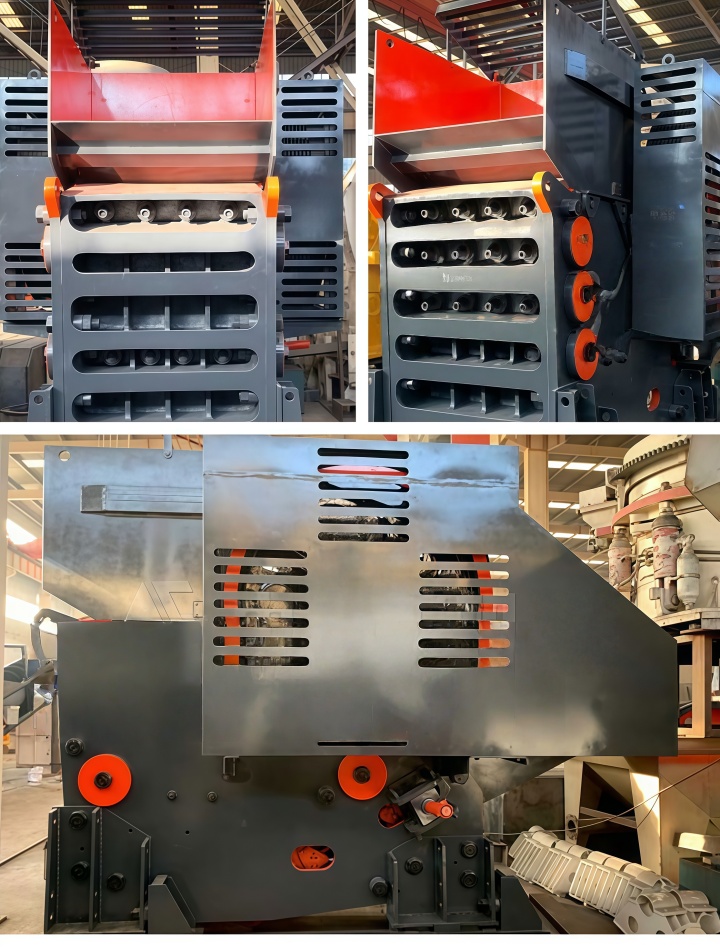
Based on maintenance records from multiple operating units, the following four tasks directly affect equipment mean time between failures and maintenance costs.
Bearing grease: The PE250x400's four bearing housings need about two hundred grams of No. 2 lithium grease every eighty operating hours. Every one thousand six hundred hours, clean and replace grease completely. One user who ran two thousand hours without a grease change experienced bearing seizure, costing eight thousand yuan in repairs.
Jaw plates: Measure tooth height each shift. Replace when wear exceeds two-thirds of original height. Under limestone, one set lasts about two thousand hours; for granite, about eight hundred hours. Keep spare plates to avoid emergency procurement delays.
Bolts: Torque all bolts every forty hours. At one site, a loose M30 jaw plate bolt caused detachment and chamber damage after two hours, requiring three days of repairs and losing about four hundred tons of production.
Discharge opening: Check weekly using the lead ball method. If deviation exceeds five millimeters, readjust. Worn shims can cause the opening to enlarge during operation, leading to product size deviation.
Frequently Asked Questions About Small Jaw Crusher
At what temperature should bearings of Small Jaw Crusher be shut down?
Normal rise is under thirty degrees. Stop at seventy degrees. Above that, internal clearance reduces and rolling elements may spall. One plant ran for thirty minutes after an alarm, causing bearing seizure and a two-day shutdown.
Why does Small Jaw Crusher produce a dull impact sound on startup?
Material remains in the crushing chamber. Run empty for two minutes before each shutdown to clear it. If the sound occurs, cut power and manually clean the chamber before restarting.
Why does discharge size of Small Jaw Crusher fluctuate randomly?
Usually due to loose wedges or slipping V-belts. Check that both sides of the discharge opening are within one millimeter of each other, and verify belt tension. With ten kilograms of force at the belt midpoint, deflection should be between fifteen and twenty millimeters.
How to handle winter starting difficulties of Small Jaw Crusher?
Cold increases grease viscosity. Use grease rated for minus twenty degrees Celsius, or manually rotate the pulley five to ten turns before starting to pre-lubricate the bearings.