Industrial Crusher Machine
What Is an Industrial Crusher Machine?
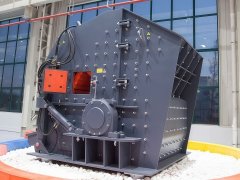
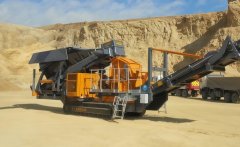
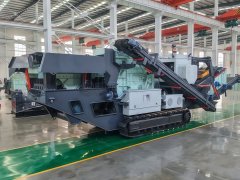
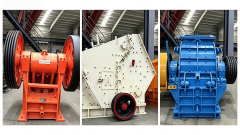
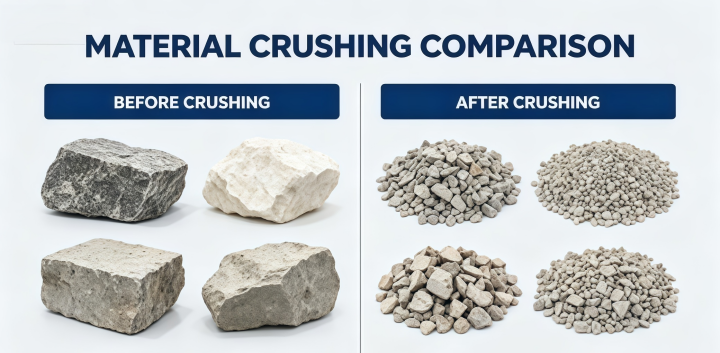
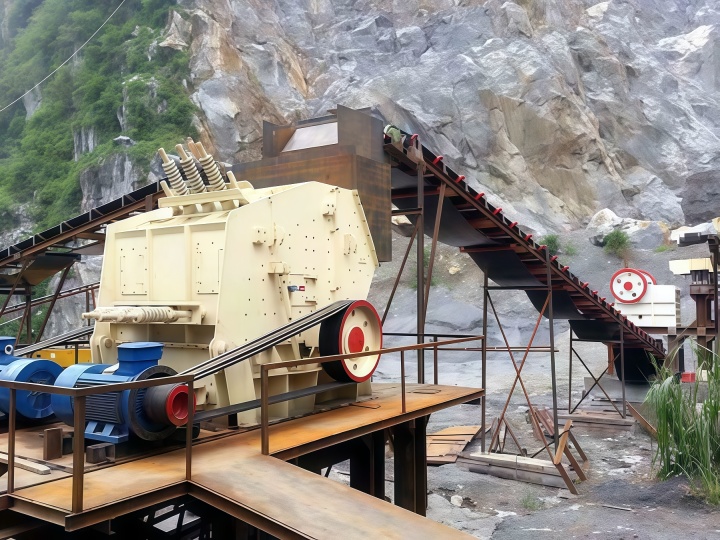
An Industrial Crusher Machine is a coarse crushing device used to break large rocks, ores, and concrete blocks into medium-sized particles. The equipment primarily uses compression and impact as its crushing methods, capable of handling hard materials with compressive strength up to 300 MPa, with a single-unit processing capacity ranging from 10 to 800 tons per hour. Common types include jaw crushers, impact crushers, and hammer crushers.
A jaw crusher breaks materials through the compression action between a fixed jaw plate and a moving jaw plate, suitable for processing various ores with compressive strength not exceeding 300 MPa. An impact crusher uses a high-speed rotor with blow bars to deliver impact force to materials, capable of handling materials with compressive strength up to 350 MPa. The function of the Industrial Crusher Machine is to reduce oversized materials from blasting or mining operations to a size range acceptable for downstream equipment, typically with an output particle size adjustable between 60 mm and 200 mm. When processing granite with compressive strength exceeding 280 MPa, the jaw-type configuration of this equipment shows a jaw plate wear rate of approximately 0.8 mm per thousand tons, while the impact-type configuration experiences a blow bar life reduction of about 40 percent under the same operating conditions.
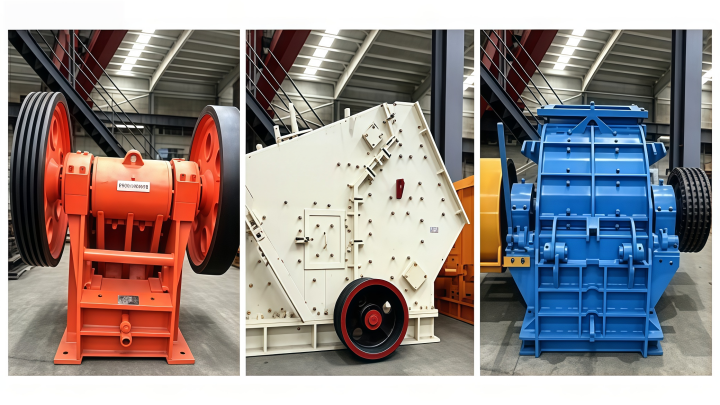
Two Core Working Principles of the Industrial Crusher Machine
The equipment is mainly divided into two types based on its force application method: compression crushing and impact crushing.
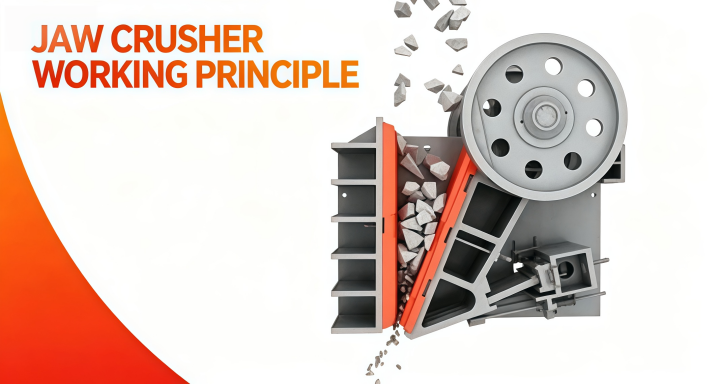
Compression crushing principle
Represented by the jaw crusher. The motor drives the eccentric shaft, causing the moving jaw to periodically approach and retreat from the fixed jaw, generating compression and rubbing actions on the material. The material is progressively reduced in size until it discharges from the discharge opening.
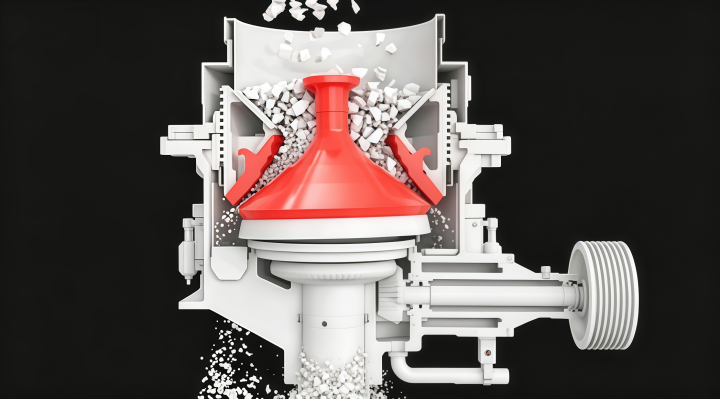
Impact crushing principle
Represented by the impact crusher. The high-speed rotor with blow bars strikes the material, which gains kinetic energy and impacts the impact plates for secondary breaking. This cycle repeats until the material is smaller than the discharge opening.
Applicability of the two principles: The compression type is suitable for hard materials with compressive strength above 200 MPa, while the impact type is suitable for medium-hard brittle materials with compressive strength between 100 and 200 MPa.
Quantifiable Core Advantages of the Industrial Crusher Machine
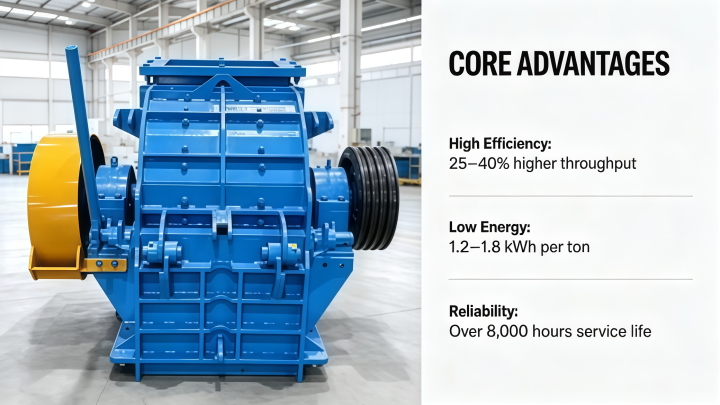
This equipment demonstrates multiple quantifiable performance advantages in actual operations, covering three key dimensions: crushing efficiency, energy consumption, and operational reliability.
Efficiency advantage: The new generation Industrial Crusher Machine offers a 25 to 40 percent increase in throughput compared to traditional equipment. The PE-750×1060 model, with a discharge opening set at 100 mm, achieves a measured processing capacity of 110 tons per hour, which is 28 tons higher than the previous generation of the same specification.
Energy consumption advantage: With dynamically optimized design, the power consumption per ton of material crushed can be controlled between 1.2 and 1.8 kWh.
Operational reliability advantage: The use of a forged main shaft and thickened wear-resistant steel plates extends the service life of key structural components to over 8,000 hours when crushing granite-type materials. The equipment is capable of restarting under load, and models equipped with hydraulic discharge adjustment systems can reduce adjustment time from several hours to 3 to 5 minutes.
Technical Parameters of the Industrial Crusher Machine
Technical parameters of the Industrial Crusher Machine vary by model and type. Jaw-type models are represented by the PE series, and impact-type models by the PF series.
Jaw-Type Technical Parameters
| Model |
Feed Opening mm |
Max Feed Size mm |
Discharge Adjustment mm |
Capacity t/h |
Motor Power kW |
| PE-400×600 | 400×600 | 340 | 40-100 | 10-40 | 30 |
| PE-500×750 | 500×750 | 425 | 50-100 | 28.5-62.5 | 55 |
| PE-600×900 | 600×900 | 500 | 65-160 | 30-75 | 55-75 |
| PE-750×1060 | 750×1060 | 630 | 80-140 | 72-130 | 110 |
| PE-900×1200 | 900×1200 | 750 | 95-165 | 87-164 | 110 |
| PE-1200×1500 | 1200×1500 | 1000 | 150-300 | 250-500 | 220 |
| PE-1500×1800 | 1500×1800 | 1200 | 220-350 | 281-625 | 280 |
The rated capacity values are based on test data for medium-hardness limestone under standard discharge opening conditions. In actual working conditions when processing granite, the throughput typically reaches 60 to 70 percent of the rated value. When selecting a model, it is advisable to estimate actual capacity at 70 to 80 percent of the rated value based on material hardness.
Impact-Type Technical Parameters
| Model |
Rotor Spec mm |
Feed Opening mm |
Max Feed Edge mm |
Capacity t/h |
Motor Power kW |
| PF-1007 | 1000×700 | 400×730 | 250 | 15-50 | 37-55 |
| PF-1010 | 1000×1050 | 400×1080 | 300 | 50-80 | 55-75 |
| PF-1210 | 1250×1050 | 400×1080 | 300 | 70-130 | 110-132 |
| PF-1214 | 1250×1400 | 400×1430 | 300 | 90-180 | 132-160 |
| PF-1315 | 1320×1500 | 860×1520 | 350 | 120-250 | 180-260 |
| PF-1320 | 1320×2000 | 860×2030 | 500 | 160-350 | 300-375 |
Application Scenarios of the Industrial Crusher Machine
The application scenarios of this equipment can be classified by material type, as differences in hardness, lump size, and abrasiveness directly affect the selection specifications and parameter settings of the Industrial Crusher Machine.
Processing high-hardness materials such as granite and basalt: These materials have compressive strengths between 250 and 300 MPa and are highly abrasive. A jaw-type configuration is typically selected for such materials, with manganese steel jaw plates.
Processing medium-hardness materials such as limestone and dolomite: These materials have compressive strengths between 100 and 180 MPa and can be processed by either jaw-type or impact-type configurations. The impact-type configuration offers higher crushing efficiency when processing limestone.
Processing metal ores such as iron ore and copper ore: These materials have high density and high unit weight, requiring higher demands on the feeding device and crushing chamber strength.
Real-World Operational Data of the Industrial Crusher Machine
Colorado Materials, Texas, USA, operates a Sandvik UJ640E track-mounted jaw crusher at its Hunter quarry for processing basalt. The unit is equipped with a 1500×1100 mm jaw crusher and achieves a processing capacity of up to 1,000 tons per hour. On-site feedback indicates that equipment reliability and throughput meet expectations, with good fuel economy.
Stentenberg quarry in Germany operates a Nordberg C150 jaw crusher for high-hardness limestone. Continuous operation yields over 400 tons per hour, with cumulative throughput exceeding 500,000 tons. The quarry manager reports that the equipment has never required additional maintenance services.
AfriSam South Africa installed a Metso C120 jaw crusher at its Pietermaritzburg quarry, with a processing capacity between 200 and 300 tons per hour. The unit is equipped with a self-damping system that reduces the dynamic load impact on the concrete foundation. The supplier provides an extended warranty of five years or 10,000 hours.
Frequently Asked Questions About the Industrial Crusher Machine
How do I select the right Industrial Crusher Machine model based on material characteristics?
Select based on three factors: max feed size determines feed opening, typically not exceeding 85 percent of opening width; hourly throughput determines model and motor power; material hardness determines type—jaw-type for compressive strength above 200 MPa, impact-type for below 200 MPa.
What is the most common selection mistake for the Industrial Crusher Machine?
Using an impact crusher for high-hardness materials like granite. Blow bar life under granite conditions is typically less than 800 hours, while a jaw plate under the same conditions can achieve 3,000 to 4,000 hours. Mismatched selection can increase wear parts replacement costs by three to five times.
What precautions should be taken when starting the Industrial Crusher Machine in low winter temperatures?
When ambient temperature drops below minus 10°C, lubricant viscosity increases. Preheat oil to 20-30°C before starting, run idling for 5 to 10 minutes, then gradually introduce material.
What is the relationship between the discharge opening setting and the product particle size of the Industrial Crusher Machine?
The discharge opening size correlates with the maximum product particle size. As the jaw plate wears, the opening gradually increases—measure each shift and adjust accordingly.