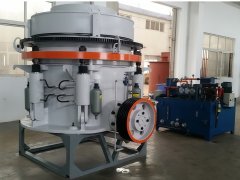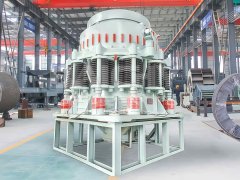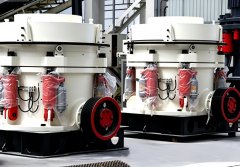
Hydraulic Cone Crusher
Ideal for secondary and tertiary crushing of hard stones and metal ores in aggregate and mining production lines.
Price:$8,000.00-$65,000.00/Set Consult now and enjoy a 10% discount High crushing efficiency | Hydraulic overload protection | Non-clogging design Feed opening size: 65mm-300mm, multiple models available Crushing cavity: coarse, medium, fine three optional types Capacity: 30-1200t/h Screen frame: single integrated crushing cavity Material: high manganese steel liner, cast steel main frame Motor power: 30Kw to 315Kw or customized Power supply: 220/240/380/415/450V, 50 or 60HZ. Application: Suitable for crushing hard & medium-hard materials such as granite, basalt, iron ore, copper ore, quartz stone, construction waste, limestone, etc. Commitment: Free technical layout design /7 Days Delivery for standard models/30-Day Returns/Support CustomizationThis article offers a complete guide to the hydraulic cone crusher, a vital machine for medium and fine crushing in mining and aggregate production. It explores the machine's laminating crushing principle and the operational benefits of its hydraulic system, such as high efficiency, excellent product shape, and low maintenance costs. The summary covers key technical parameters for selection, diverse applications from construction aggregates to metal ore processing, and answers common questions about maintenance and wear parts. It also underscores the equipment's customizability and reliability, providing essential insights for making an informed purchasing decision to ensure stable, long-term productivity.
What Exactly Is a Hydraulic Cone Crusher?
On a production line for mining and construction aggregates, turning large rocks into uniform small particles requires crushing equipment. A hydraulic cone crusher is a machine specifically designed for medium and fine crushing stages. It can handle various high-hardness ores and rocks, such as iron ore, granite, or river pebbles, breaking them down to sizes that meet subsequent engineering requirements. Compared with older spring-type cone crushers, it incorporates hydraulic technology, making the equipment more flexible to adjust and more reliable to operate. It is a common core piece of equipment in modern sand and aggregate production.
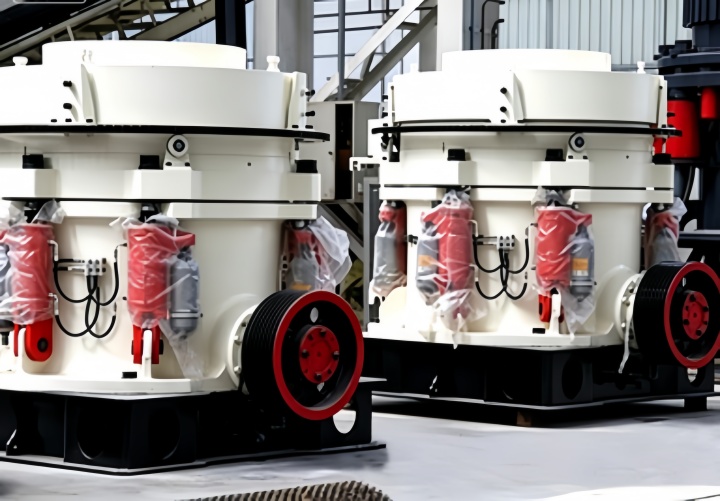
What Advantages Does the Hydraulic Cone Crusher's Hydraulic System Bring?
The advantages brought by the hydraulic system are reflected in increased production capacity, improved product particle shape, convenient equipment maintenance, and controlled operating costs. These benefits together determine the real value of the equipment in actual production.
Crushing efficiency is quite high. By optimizing the coordination between crushing stroke and speed, the equipment's processing capacity is significantly improved, producing more finished product with the same energy consumption.
The finished product has a good particle shape It uses the laminating crushing principle, where materials are squeezed from multiple directions within the crushing chamber. The final product takes on a cubic shape with a low content of flat and elongated particles, which is an important quality indicator for concrete and asphalt production.
Equipment maintenance is convenient. The discharge opening can be easily adjusted through the hydraulic device, and replacing wear parts like liners takes less time and effort, effectively reducing downtime.
Operating costs are controllable. The hydraulic system provides overload protection and automatic cavity clearing. When encountering uncrushable materials, the system automatically releases pressure and ejects the foreign objects, preventing equipment damage and thus reducing unexpected repair expenses.
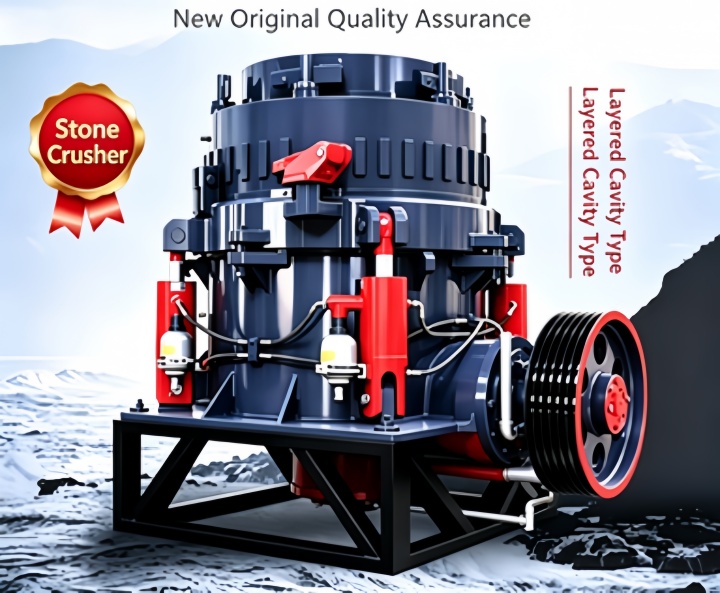
How Does the Crushing Process of a Hydraulic Cone Crusher Actually Work?
The entire crushing process can be understood as a series of physical actions that materials undergo from entering the crushing chamber to discharging qualified products. The laminating crushing principle and hydraulic adjustment system work together to ensure the continuity and controllability of the crushing operation.
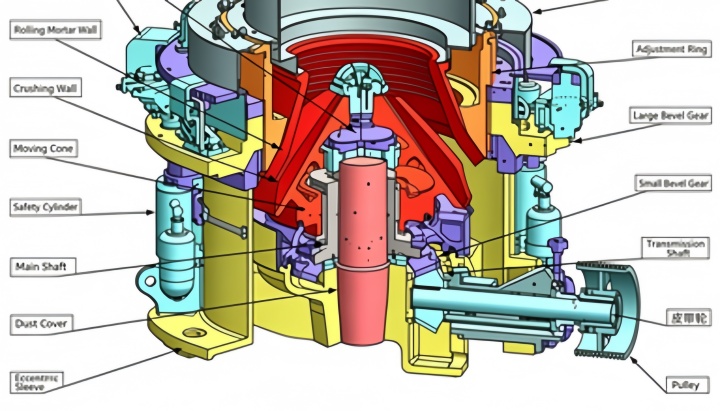
You can think of its working method as a stone mill with adjustable tightness. When the machine is running, the motor drives the eccentric sleeve through the transmission device, causing the moving cone to swing regularly under the drive of the main shaft. This swinging motion makes the crushing wall alternately approach and move away from the concave wall. When materials enter the crushing chamber between them from the top, they are subjected to strong squeezing and shearing forces.
Unlike simple squeezing, the crushing chamber design allows materials to squeeze and rub against each other during their descent, which is laminating crushing. This crushing method is gentler and breaks materials along their natural texture, resulting in more regular particle shapes. When the materials are crushed to a suitable size, they are discharged from the discharge opening at the bottom. The size of this discharge opening can be precisely adjusted by the operator simply by pressing buttons through the hydraulic system, which is very convenient.
The Key Technical Parameters of a Hydraulic Cone Crusher
| Model | Cavity Type | Max. Feed Size (mm) | Min. Outlet Dimension (mm) | Power (kW) | Capacity (t/h) | Weight (t) |
|---|---|---|---|---|---|---|
| PYY100 | A | 150 | 12 | 90 | 39-45 | 6.0 |
| B | 130 | 10 | 90 | 33-37 | 6.0 | |
| C | 100 | 7 | 90 | 33-35 | 6.0 | |
| D | 40 | 5 | 90 | 31-33 | 6.0 | |
| PYY200 | A | 220 | 18 | 160 | 35-40 | 10.6 |
| B | 150 | 15 | 160 | 35-38 | 10.6 | |
| C | 80 | 9 | 160 | 35-38 | 10.6 | |
| D | 40 | 6 | 160 | 35-38 | 10.6 | |
| PYY300 | A | 230 | 20 | 250 | 45-55 | 18.5 |
| B | 150 | 17 | 250 | 45-50 | 18.5 | |
| C | 80 | 10 | 250 | 40-45 | 18.5 | |
| D | 40 | 6 | 250 | 40-45 | 18.5 | |
| PYY500 | A | 230 | 22 | 315 | 50-65 | 22.5 |
| B | 150 | 19 | 315 | 48-55 | 22.5 | |
| C | 100 | 12 | 315 | 40-50 | 22.5 |
What core technical parameters should you focus on when selecting a hydraulic cone crusher?
When selecting equipment, you need to focus on several core indicators, including the maximum feed size, discharge opening setting, processing capacity, and motor power. These parameters together determine whether the equipment can meet the requirements of your specific production scenario.
| Parameter | Description |
|---|---|
| Maximum Feed Size | Determines the largest size of raw material the equipment can accept. |
| Discharge Opening Setting (Closed Side Setting, CSS) | Directly relates to the fineness of the final product. |
| Processing Capacity (tons per hour) | A core indicator of efficiency, influenced by various factors such as material hardness and discharge opening size. |
| Motor Power | Provides the power foundation for all crushing operations. |
Usually, the equipment model and cavity type are linked to these parameters, and coarse, medium, and fine crushing operations have different parameter priorities. The parameter table provided by the manufacturer is a reference based on medium-hardness materials and specific working conditions. Actual capacity may vary depending on material properties such as moisture content and clay content.
Where Can a Hydraulic Cone Crusher Be Used? Which Industries Benefit Most?
This type of crusher mainly serves industries that need to crush stone and ore, with wide applications in construction aggregate production, metal mining processing, and other industrial fields. It can handle various types of materials.
In the construction field, it is important equipment for producing concrete aggregates and highway paving materials, capable of crushing granite, limestone, and other rocks into high-quality sand and stone.
In the mining industry, it is used for processing metal ores such as iron ore, copper ore, and gold ore, as well as non-metallic ores like quartz sand. Additionally, it can play a role in some areas requiring fine material crushing, such as dry mortar production and power plant desulfurization.
Wherever hard rocks and ores need to be processed from large pieces into specifications that meet requirements, you can basically find this equipment at work.
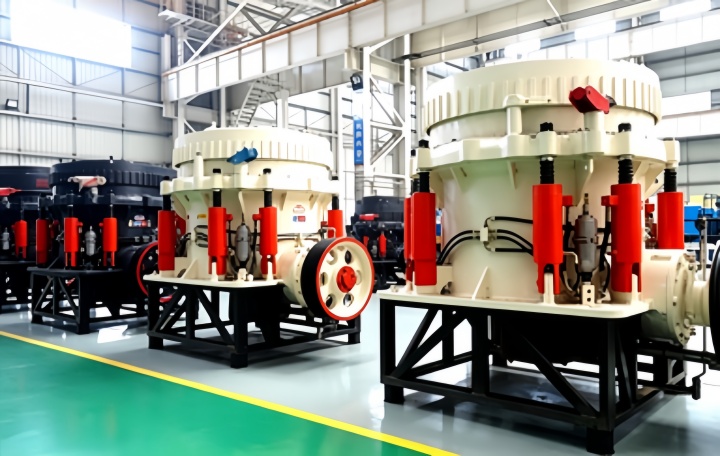
What Makes Our Hydraulic Cone Crusher Stand Out?
The long-term stable operation of the equipment relies on attention to production details and a series of specific quality assurance measures. These measures together form the foundation of the equipment's reliability.
Throughout the manufacturing process, we maintain strict quality control over every procedure and every component, ensuring the equipment operates reliably even under harsh working conditions.
We adopt mature design concepts and market-verified supporting parts. For example, we use high-manganese steel castings for the mantle and concave, which effectively extends the service life of wear parts.
For the hydraulic and lubrication systems, we use reliable sealing technology that effectively prevents dust and moisture from entering, reducing potential equipment failure points.
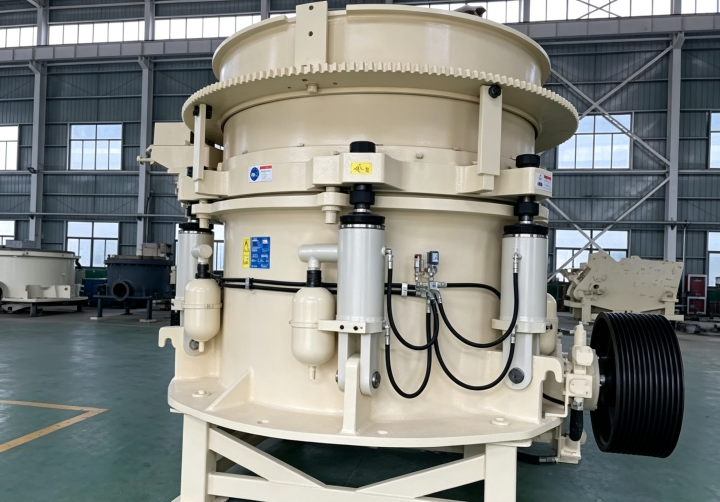
Can the Hydraulic Cone Crusher Be Customized for Specific Needs?
The equipment is designed with flexibility to adapt to different production scenarios. It can be tailored to handle variations in material characteristics and production targets by changing the crushing cavity type, adjusting the discharge opening range, and selecting different wear-resistant materials.
By changing to different crushing cavity types (such as coarse, medium, or fine type), the equipment can adapt to different process stages from coarse crushing to fine crushing.The hydraulic adjustment system allows continuous adjustment of the discharge opening within a wide range, making it convenient to adjust the product particle size at any time according to production needs.Additionally, we can recommend or select more wear-resistant liner materials based on the type of material being processed, such as for highly abrasive ores.
Frequently Asked Questions About the Hydraulic Cone Crusher
Regarding common user concerns about equipment maintenance, material adaptability, wear parts replacement cycles, and overload protection, here are straightforward answers to help you gain a more comprehensive understanding of this equipment.
Q: What requires the most attention in daily equipment maintenance?
A: Daily maintenance mainly focuses on the hydraulic oil circuit and lubrication system. It is recommended to regularly check the oil level and oil quality in the tank to ensure the hydraulic oil remains clean. Also, pay attention to the lubrication condition of the internal and external bearings of the crusher to avoid overheating and wear caused by poor lubrication.
Q: How does it perform when processing materials with high clay or moisture content?
A: When processing materials with high moisture content, attention should be paid to whether the discharge opening is prone to blockage. The hydraulic cone crusher comes with an automatic cavity clearing function. When blockage occurs, the hydraulic system can raise the moving cone to discharge the clogged material, giving it an advantage over older equipment types in such situations.
Q: What are the main wear parts of the equipment, and how often do they need replacement?
A: The main wear parts are the mantle (moving cone liner) and the concave (fixed cone liner). There is no fixed replacement schedule; it entirely depends on the abrasiveness of the processed material and the equipment's operating hours. When you notice that the product particle size has significantly coarsened or the equipment current is abnormal, it is time to inspect the liner wear condition.
Q: How can I tell if the equipment is in an overload condition?
A: Besides checking the ammeter reading, the hydraulic system itself has overload protection. When an uncrushable object enters the crushing chamber and causes excessive pressure, the hydraulic safety system automatically activates, increasing the discharge opening and ejecting the foreign object, thereby protecting the main components of the equipment from damage.
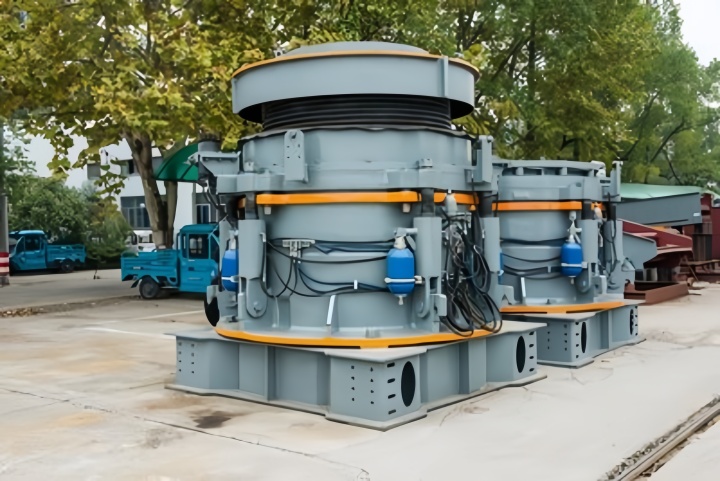
Summary and Final Thoughts
An excellent hydraulic cone crusher must strike a careful balance between high production efficiency, stable product particle shape, convenient maintenance, and low operating costs. Its value is most evident in demanding applications—whether crushing hard rocks, processing metal ores, or producing high-quality construction aggregates. When making a selection decision, the priority should always be given to your actual material characteristics, target capacity, and final product specifications. Choosing technically proven equipment with well-matched parameters is the surest way to secure long-term, trouble-free production.
Of course, no two production lines are exactly alike, and the best configuration often comes down to a thorough discussion of your specific operating conditions. If you are currently evaluating options or would like a clearer picture of how different models compare against your real-world feed and output targets, we would be happy to walk you through the details—because a well-informed choice today is what keeps your operation running smoothly for years to come.