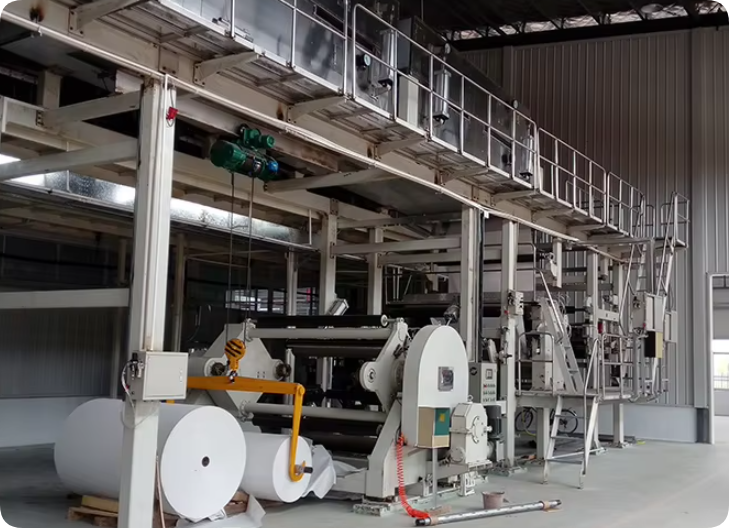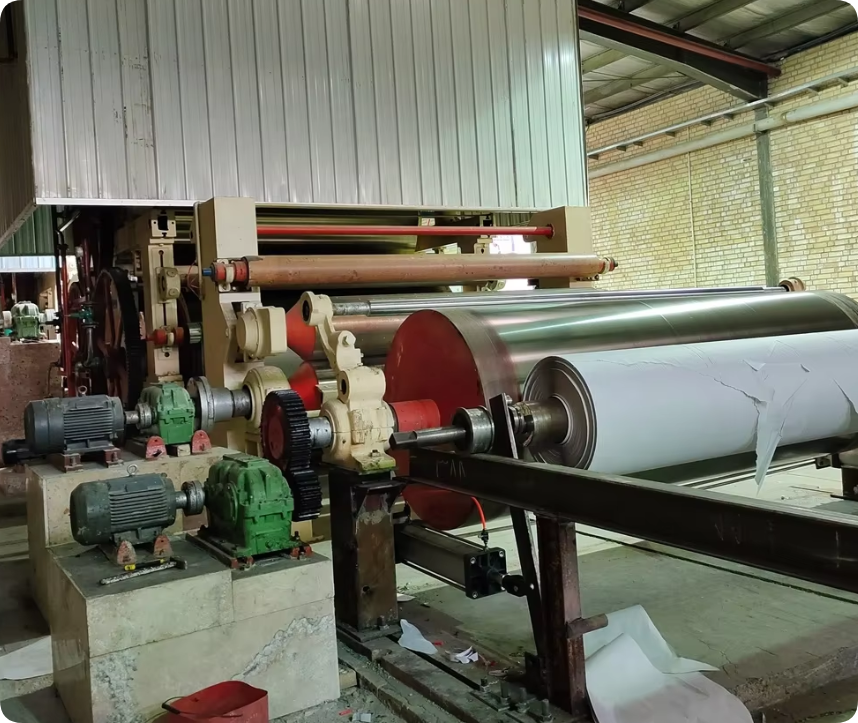
Shoe Press Paper Machine
Width: 2640 – 6600 mm
Linear Pressure: 800 Kn/m – 1000 Kn/m
Maximum Operating Speed: 1000 m/min
Design Speed: 1200 m/min
What is a Shoe Press Paper Machine?
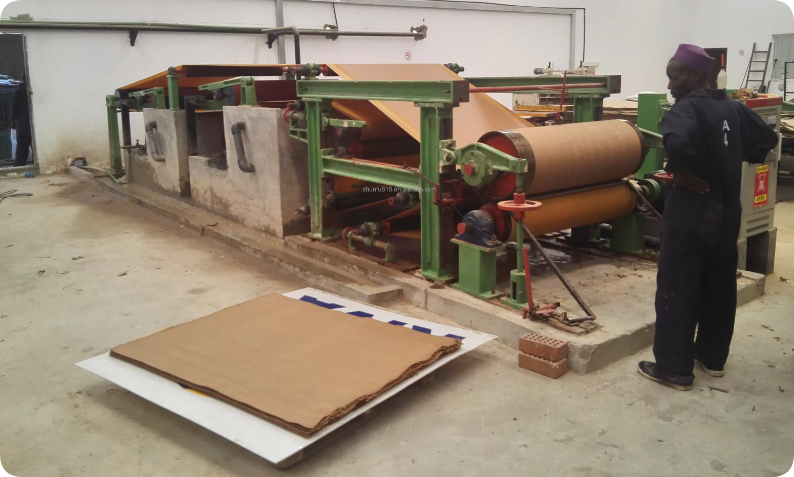
Shoe pressing is a core technology of the paper machine's press section, hailed as an "energy saver" in the paper machine's drying section. It works like slowly and forcefully pressing a sponge with the side of a book, squeezing out water more gently and thoroughly compared to traditional pressing, which is like rapidly hammering with a fist.
Shoe Cover (Sleeve/Blanet): The shoe cover is a high-speed rotating "flexible shell" surrounding the shoe roll and is one of the core components of shoe pressing technology.
How Does a Shoe Press Paper Machine Work?
It comes into direct contact with the paper sheet or blanket, acting as a "flexible interface" for transmitting enormous pressing force. A high-pressure oil film forms fluid lubrication between its interior and the fixed shoe plate, achieving near-frictionless sliding. The shoe cover is typically made of high-strength, heat-resistant, and oil-resistant polyurethane or composite materials, with special grooves (such as "U" or "trapezoidal") on its surface to provide temporary storage and lateral flow channels for the squeezed water.
What are the advantages of a shoe press?
Extended residence time: As a key component in the wide press zone, it allows the paper sheet to reside in the press zone for several times longer than in traditional presses, significantly improving dewatering efficiency.
Paper protection: The flexible interface and fluid lubrication ensure even pressure distribution, preventing paper crushing and protecting the paper's bulk and strength.
Energy saving and efficiency improvement: Due to the shoe, the dryness of the paper exiting the press can be increased by 2-8 percentage points, thus saving approximately 15-30% of steam consumption in the subsequent drying section.
Shoe (Pressure Shoe): The shoe is the "power source" for the enormous linear pressure generated by the shoe press and is typically made of high-strength steel.
What are the applications of a shoe press?
It is mounted on a fixed shoe roll beam, located inside the rotating shoe. Its back is connected to a set of loading hydraulic cylinders. During operation, high-pressure oil pushes the shoe plate towards the back pressure roller, applying a linear pressure of up to 1000-1500 kN/m to the paper sheet through the shoe sleeve and blanket. The shoe plate surface is designed with precise oil chambers and holes; after the high-pressure oil is injected, a static pressure oil film is formed, evenly supporting and transferring the heavy pressure to the rotating shoe sleeve.
Advantages: High pressure and uniformity combined: It can generate high linear pressures unattainable by traditional pressing, while the static pressure oil film ensures uniform pressure distribution across the entire width, guaranteeing consistent paper dewatering.
Ultimate lubrication and cooling: The static pressure oil film completely isolates the shoe plate and shoe sleeve, placing these two high-speed relative moving parts in a pure liquid friction state, resulting in extremely low wear and low energy consumption.
Shoe Press Felt
The shoe press felt is the "highway" and "buffer" in the shoe press dewatering process.
Applications and Principles:
It carries the wet paper sheet through the press zone, its main function being to absorb and laterally guide the large amount of water squeezed from the paper sheet. It employs a multi-layered composite structure design: a high-strength, tensile-resistant base fabric layer ensures operational stability; the thick flocked layer, formed through a needle-punching process, creates abundant three-dimensional pores, providing space and channels for the rapidly generated large amounts of water.
Advantages:
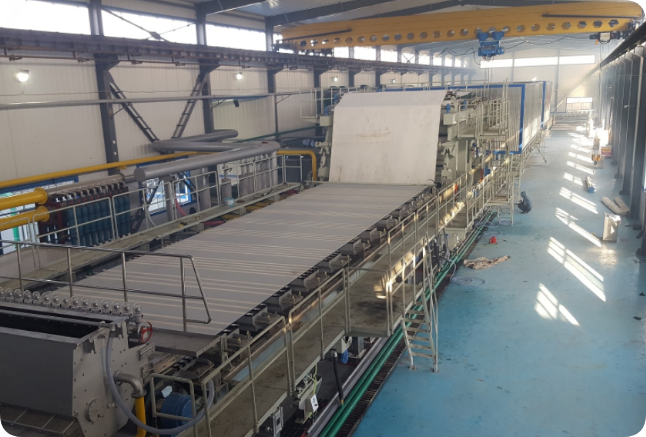
High-efficiency dewatering and water conduction: Under press zone pressures exceeding 15 MPa, its unique pore gradient structure creates a directional water-guiding effect, quickly drawing water from the paper sheet and draining it laterally.
Paper surface protection and transfer: The specially treated flocked layer effectively protects the paper surface, preventing indentations, and reliably guides the paper sheet smoothly through the press zone.
Suitable for high-speed production: On modern paper machines with speeds exceeding 1200 m/min, high-performance press blankets are crucial for achieving efficient dewatering and stable operation.
Hydraulic System
The hydraulic system is the "heart" and "brain" of the entire shoe pressing device, providing power and control for the shoe pressing.
Applications and Principles:
It consists of an oil tank, a high-precision oil pump, a complex valve assembly, and piping. It has three main functions: first, to provide high-pressure oil to the shoe plate loading cylinder to generate enormous pressing force; second, to continuously supply high-pressure oil to the shoe plate surface to form a hydrostatic oil film for lubrication; and third, to provide power to the shoe sleeve tensioning mechanism to ensure smooth shoe sleeve operation. The system is designed with high precision, for example, using a siphon principle to isolate the return oil line to maintain proper expansion and oil pressure inside the shoe sleeve and prevent excessive air dissolution in the hydraulic oil.
Advantages
Precise and Controllable: It allows for real-time and precise adjustment and control of key parameters such as the shoe pressing line pressure and oil film thickness, adapting to the needs of different paper types and production processes.
High Reliability and Long Service Life: Precision filtration, cooling, and pressure compensation designs ensure the cleanliness and stability of the hydraulic oil, providing reliable lubrication and support for critical components such as the boot sleeve and boot plate, significantly extending the service life of these expensive parts.