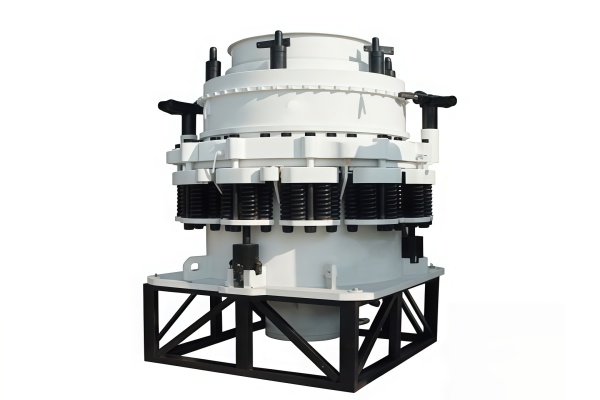
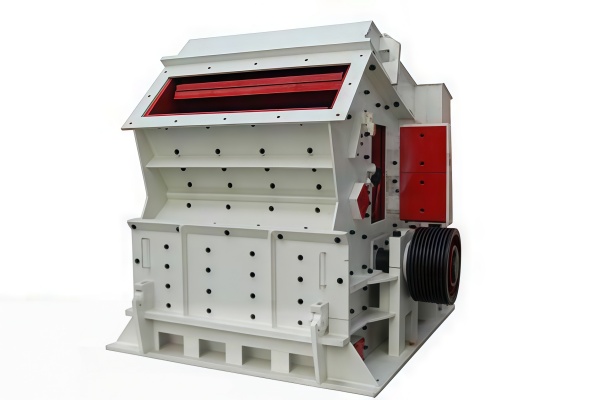
Fine Cone Crusher Market Trends – What's Driving the Industry?
Tuesday September-01 2026 17:50:14
Current growth in the Fine Cone Crusher market is driven by five main forces: global infrastructure investment expansion, rising demand for fine crushing in mining, automation technology adoption, tariff-driven supply chain adjustments, and diverging trends across regional markets.
Estimates of the global cone crusher market size vary across research firms. Research and Markets values it at $1.82 billion, while The Business Research Company reports $2.57 billion. This discrepancy stems from different methodologies—the former focuses on equipment sales, while the latter includes aftermarket services. Under either measure, the equipment, as a core machine in the fine crushing segment, is growing faster than the industry average.
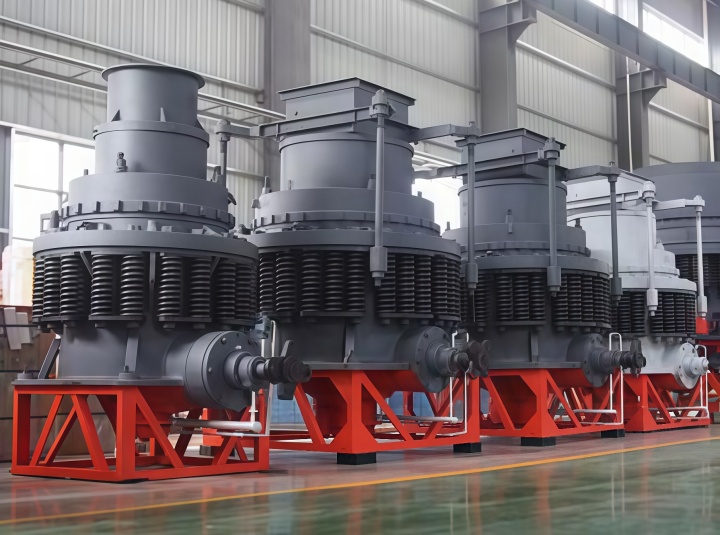
Basic Features and Market Overview of Fine Cone Crusher
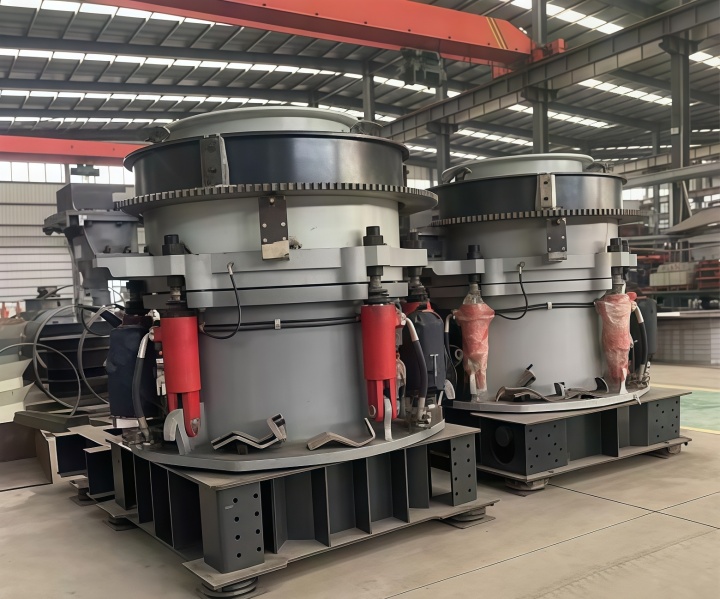
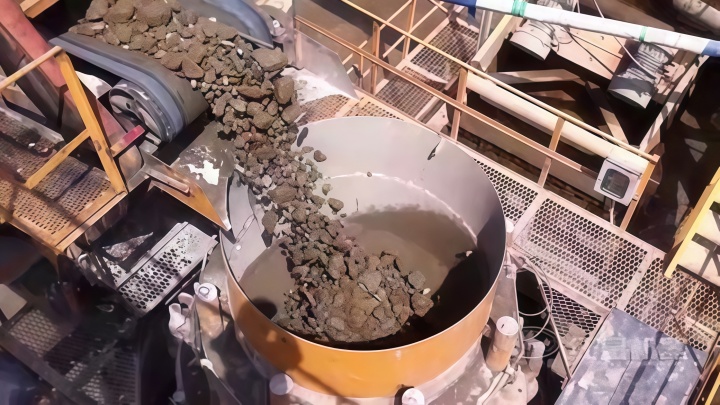
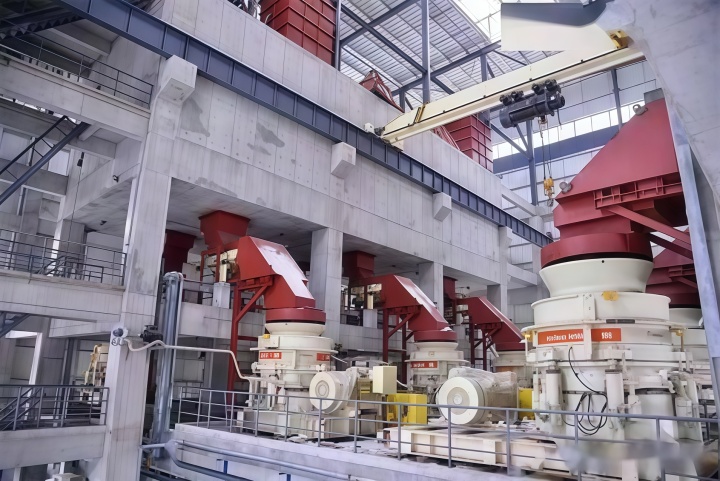
The machine reduces medium-hard and harder materials through compression, offering advantages in discharge size control, product shape, and energy performance. Its compact design and high reduction ratio, combined with a hydraulic system for rapid closed-side setting adjustments, allow it to adapt to varying material characteristics.
Globally, Asia-Pacific is the largest regional market for cone crushing equipment. However, "largest" does not imply a uniform demand structure—growth in China is driven primarily by large-scale mines and mega aggregate lines seeking equipment upscaling, while Southeast Asia's growth comes largely from first-time purchases by new small-to-medium quarries. These two demand profiles have very different requirements for specifications, pricing, and service support. The equipment differs from standard cone crushers in that standard models focus on secondary crushing, whereas this unit has a steeper cone angle and a narrower closed-side setting range, enabling stable product sizing below 10 mm.
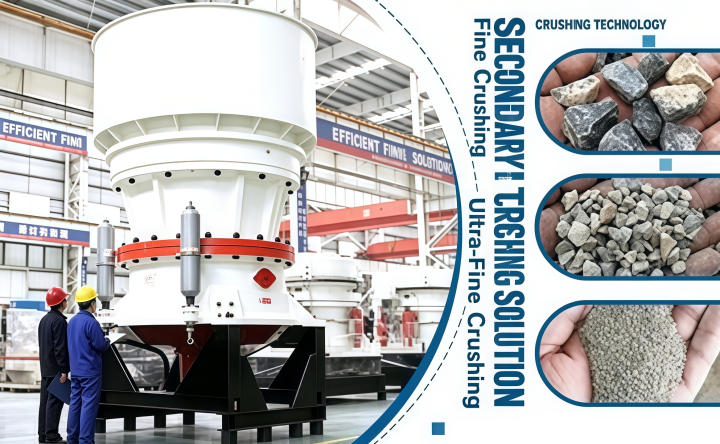
How Does Infrastructure Construction Drive Demand for Fine Cone Crusher?
Large road and bridge projects impose strict requirements on aggregate shape and gradation, typically requiring three or four crushing stages. Global sales data shows that models with capacities between 200 and 500 tonnes per hour represent the most concentrated demand segment. When the closed-side setting is below 10 mm, a short-head model combined with a multi-layer crushing chamber can keep flakiness content within 8%.
In aggregate and quarry applications, liner life and operating costs are the primary concerns for users. According to a published industry case, a granite quarry reduced its annual replacement parts procurement costs by 28% and improved overall equipment energy efficiency by 19% through optimized liner selection and gradient casting technology. If the equipment produces excessive fines, the issue is usually a closed-side setting that is too tight or too much fine material in the feed—it is advisable to gradually increase the setting by 1 to 2 mm while monitoring the particle size distribution.
How Are Mine Production Requirements Changing for Fine Cone Crusher?
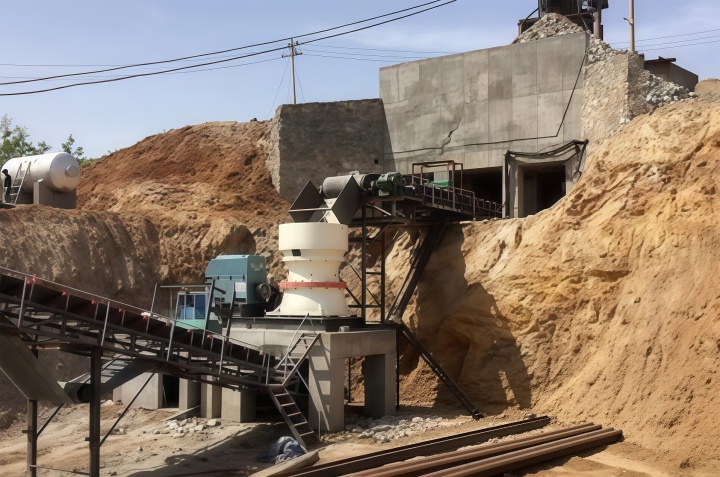
The short-head version, with its steeper cone angle and smaller feed opening, performs well in fine crushing applications. With a feed size of 50 to 80 mm, single-unit capacity ranges from 200 to 450 tonnes per hour. Reducing the discharge setting from 16 mm to 10 mm can increase the proportion of material below 5 mm from 25% to over 40%. The hydraulic system shortens closed-side setting adjustments from 40 minutes manually to less than 3 minutes.
When selecting a model, four core parameters must be considered: minimum closed-side setting, maximum feed size, installed power, and throughput capacity—all matched against the material's work index and abrasiveness index.
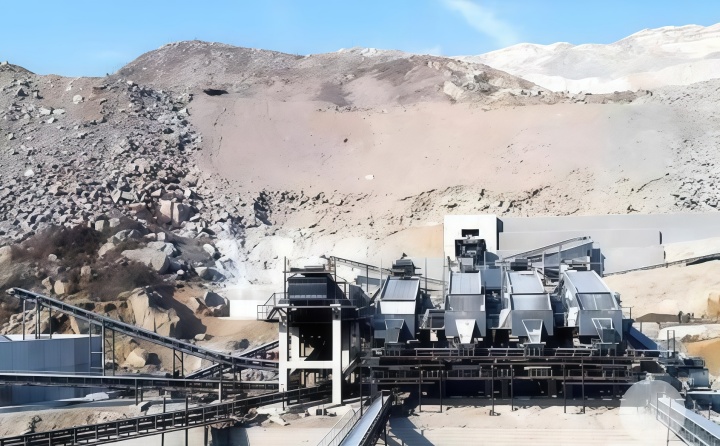
In a concentrator's total energy consumption, the comminution circuit typically accounts for 30% to 70%. This means that for every 1 mm reduction in the discharge setting of this crusher, the downstream ball mill's specific energy consumption can decrease by 3% to 5%—the exact figure depends on the ore's work index. For a concentrator processing 5 million tonnes per year, this adjustment could translate into millions of dollars in annual electricity savings. This illustrates that the fine crushing capability of this machine is directly linked to the economic performance of downstream grinding.
How Much Improvement Can Automation and Digitalization Bring to Fine Cone Crusher?
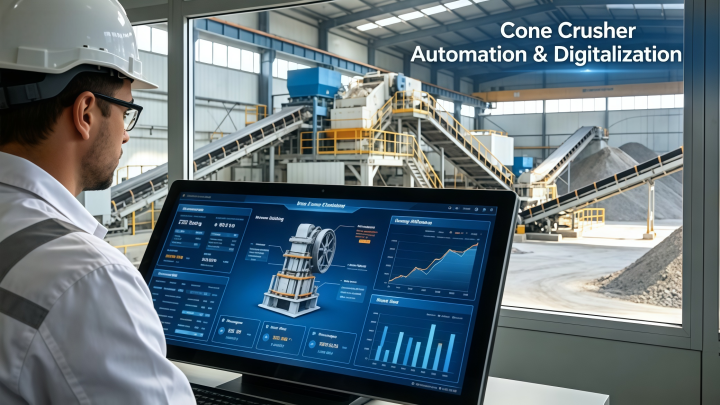
The payback period for automation systems depends heavily on site-specific conditions. New-generation automation platforms use data-driven algorithms to optimize crushing parameters, improving the equipment's availability and product size stability. When the system detects liner wear reaching a preset threshold, it provides advance warning, helping to reduce unplanned downtime.
However, in feed conditions where particle size fluctuates by more than ±30%, the automation system's adjustment capability hits hardware limits—sensors can detect the variations, but the hydraulic system's response speed and the crushing chamber's throughput capacity cannot compensate indefinitely. A case from an iron mine in northern China confirms this judgment: after installing an automation system, the utilization rate improved only marginally in the first three months. Investigation revealed feed particle sizes fluctuating wildly between 20 mm and 120 mm, beyond the system's control range. Only after upgrading the upstream primary screening circuit did the utilization rate reach expected levels. Therefore, deploying an automated version of this equipment requires first resolving upstream feed size control.
How Do Tariffs and Trade Policies Affect the Fine Cone Crusher Market?
Since 2025, U.S. tariff adjustments have had a tangible impact on the cone crusher supply chain. Tariffs have increased costs for imported steel castings, hydraulic systems, wear parts, and electronic control units. Mining and aggregate processors in North America and Europe, which rely heavily on imported components, have been significantly affected, while Asia-Pacific faces export cost pressures.
These tariffs have raised equipment procurement and maintenance costs, slowing equipment replacement cycles for some projects. On the other hand, tariff pressures have also stimulated local manufacturing of cone crusher components, regional supply chain development, and more durable, cost-effective cone crusher design innovations. Manufacturers are responding to tariff volatility through partnerships with secondary suppliers, modular product assembly, and adjustments to product roadmaps and aftermarket inventory planning. In this context, the regional supply chain positioning of this unit is becoming a key variable affecting delivery lead times and overall cost competitiveness.
How Does Demand for Fine Cone Crusher Differ Across Regional Markets?
Asia-Pacific is the largest regional market for cone crushing equipment. Continued infrastructure investment in China, India, and Southeast Asia is driving demand for larger and more intelligent equipment. North America and Europe, however, face rising costs for critical components due to tariffs, leading some projects to postpone equipment upgrades—yet this has also accelerated local parts manufacturing capabilities. Understanding and adapting to regional divergences is fundamental for suppliers of this crushing equipment to remain globally competitive.
Conclusion
The Fine Cone Crusher industry is in an upward cycle, but the equipment itself is only one part of the overall production chain. Industry data shows that Asia-Pacific infrastructure investment, automation penetration, and tariff-driven supply chain restructuring are collectively reshaping the market landscape for this equipment. The global cone crusher market is expected to continue expanding at a compound annual growth rate of 5.53%. While tracking macro trends, it is more meaningful to combine that perspective with the actual site-specific operating characteristics of this machine when making equipment selection and upgrade decisions. For any specific questions regarding selection or field application of the Fine Cone Crusher, we welcome further discussion.
FAQ
Q: What is the core difference between a Fine Cone Crusher and a standard cone crusher?
A: standard cone crusher focuses on secondary and coarse crushing, while a Fine Cone Crusher is designed specifically for fine crushing applications, with a steeper cone angle and a narrower closed-side setting range, enabling stable product sizing below 10 mm.
Q: What key parameters should be considered when selecting a Fine Cone Crusher?
A: The four core parameters are the minimum closed-side setting, maximum feed size, installed power, and throughput capacity—all of which must be matched against the material's work index and abrasiveness index.
Q: How should excessive fines production be adjusted on a Fine Cone Crusher?
A: The main causes are a closed-side setting that is too tight or an excessive amount of fine material in the feed. The recommended approach is to gradually increase the setting by 1 to 2 mm while monitoring changes in the product particle size distribution.
Q: How can the liner replacement interval for a Fine Cone Crusher be determined?
A: It depends on the abrasiveness of the crushed material and the operating hours. When crushing granite, high-chromium cast iron liners typically last 1,200 to 1,500 hours; when crushing limestone, the interval can extend beyond 2,000 hours.