Aggregate Crusher Crushing Ratio: Feed Size vs Discharge Size Guide
Tuesday August-25 2026 13:43:05
Our factory has been engaged in on‑site commissioning and selection services for Aggregate Crusher equipment for many years. The following content is compiled based on industry‑standard calculation methods and publicly available technical data from major global equipment manufacturers.
The answers to the three questions most frequently asked by users are as follows: For hard rock, the single‑stage reduction ratio should be kept at a relatively lower range; for soft rock, it can be moderately increased. If the total reduction ratio exceeds the nominal upper limit of the Aggregate Crusher, additional crushing stages are required. In multi‑stage crushing, the reduction ratio should be allocated according to the principle of progressive decrease from primary to secondary to tertiary stages.
The reduction ratio directly affects the number of equipment units required. Insufficient equipment configuration often necessitates additional crushing stages, and each additional stage increases both capital investment and operating costs. Understanding the calculation logic of the reduction ratio is the first step in properly selecting an Aggregate Crusher.
What is the formula for calculating reduction ratio?
Use the feed size at which 80% passes, designated as F80, divided by the product size at which 80% passes, designated as P80. For example, if 500mm goes in and 80mm comes out, the reduction ratio is 6.25:1. An alternative simplified method uses the maximum feed size divided by the maximum product size, but the F80/P80 method better reflects the overall material condition.
If the calculated value is less than 3:1, it indicates that the Aggregate Crusher selection is oversized. If it exceeds the equipment's nominal upper limit, it means the equipment cannot independently achieve the target size reduction, and additional crushing stages are required.
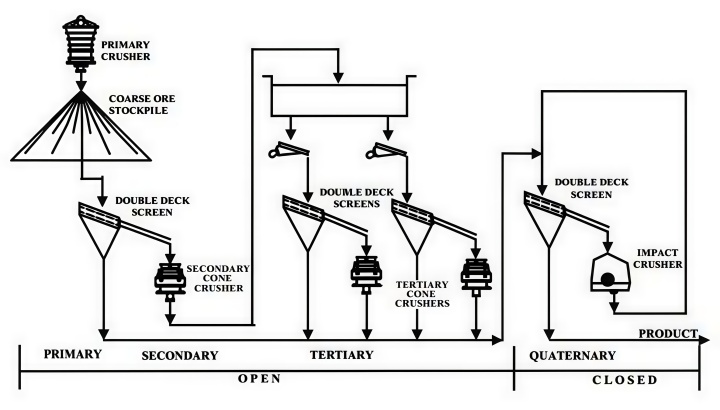
Why can't the reduction ratio of compressive crushers exceed 8:1, while impact crushers can reach 20:1?
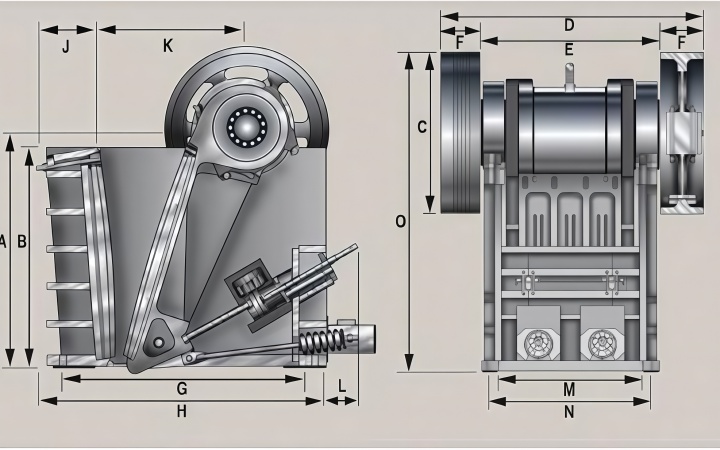
In compressive crushing equipment such as jaw crushers and cone crushers, when the moving jaw or cone compresses the material, the pressure transmits layer by layer from the contact surface inward. During each compression cycle, cracks can only extend a limited distance along existing weak planes. Griffith's crack theory in rock mechanics indicates that under compressive stress, crack propagation in brittle materials is stable and gradual, which establishes the upper limit of the reduction ratio for compressive Aggregate Crushers—typically not exceeding 8:1.
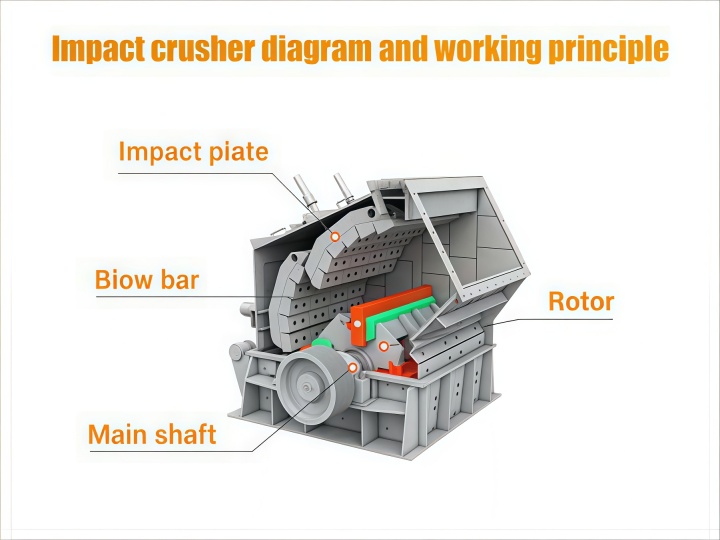
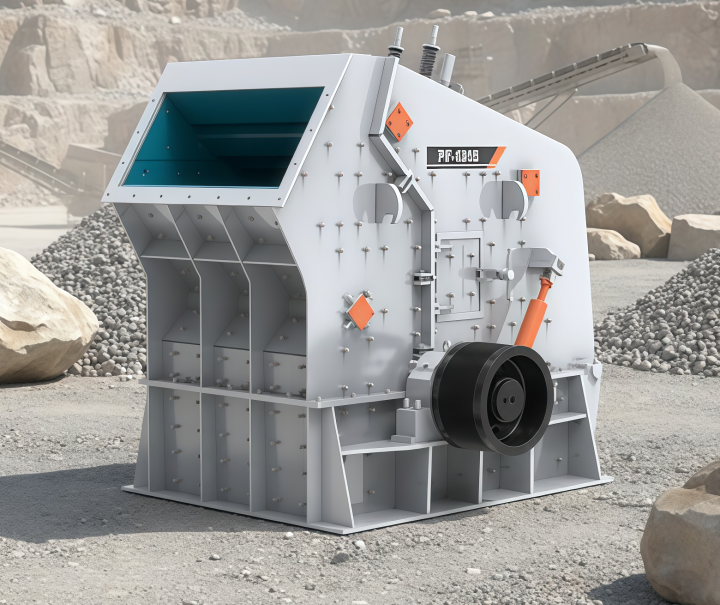
The principle of impact crushing is entirely different. Material is thrown by a high‑speed rotor against impact plates, and the impact energy acts simultaneously on multiple weak planes of the material particles within milliseconds, causing multiple cracks to rupture at once. The crushing effect of a single impact is equivalent to the cumulative effect of multiple compressive cycles, which is why impact‑type Aggregate Crushers can achieve a single‑stage reduction ratio of up to 20:1.
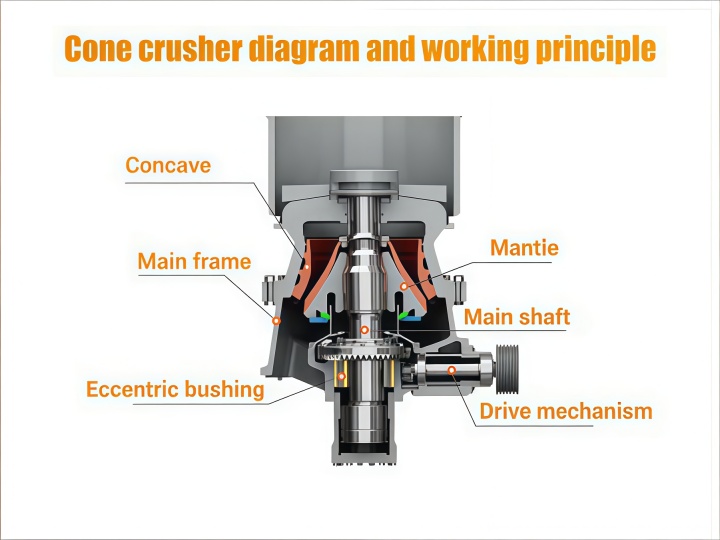
The selection approach is thus clear: choose impact crushers when prioritizing high throughput and high reduction ratio; choose compressive crushers when prioritizing particle shape and size uniformity.
The reduction ratio ranges for different types of Aggregate Crushers are as follows:
| Equipment Type | Typical Reduction Ratio | Primary Application |
|---|---|---|
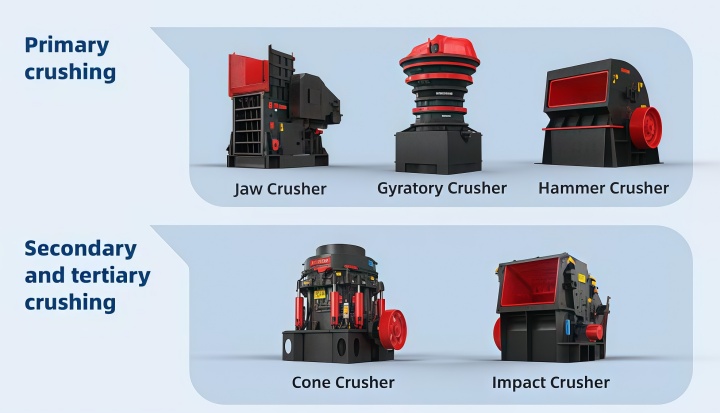
| Jaw Crusher | 4:1‑8:1 | Primary crushing |
| Gyratory Crusher | 6:1‑8:1 | Primary crushing |
| Standard Cone Crusher | 3:1‑5:1 | Secondary crushing |
| Short‑head Cone Crusher | 1.5:1‑3:1 | Tertiary crushing or shaping |
| Impact Crusher | 10:1‑20:1 | Secondary/tertiary crushing |
Note: The above are industry‑general ranges. Actual values vary by equipment model, material characteristics, and operating conditions. Please refer to the equipment manufacturer's technical manual for specific data.
How do you determine how many crushing stages are needed?
In multi‑stage crushing, the total reduction ratio equals the product of the reduction ratios of each individual stage. The calculation formula is: Total Reduction Ratio = F80 ÷ P80.
For example: feed F80 is 400mm, target product P80 is 10mm, the total reduction ratio is 40. If the average single‑stage reduction ratio is estimated at 4, the required number of stages = ln40 ÷ ln4 ≈ 2.66, which rounds up to three stages. If the total reduction ratio is around 16, two stages are sufficient.
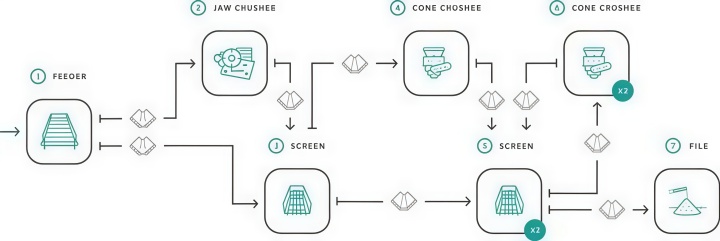
A practical rule of thumb: when the feed‑to‑product size ratio is 16:1, typically 2 units of Aggregate Crusher are required; when it reaches 20:1, 3 units are needed. It is important to note that reducing the number of crushing stages may cause equipment overload, which in turn increases cost per ton and accelerates equipment wear.
How does closed‑side setting adjustment affect reduction ratio and throughput?
Adjusting the reduction ratio is achieved by changing the closed‑side setting. Metso officially states that the closed‑side setting CSS determines the reduction ratio of cone crushers and has a significant impact on product gradation, capacity, and power draw.
When the closed‑side setting is reduced, the reduction ratio increases and the product becomes finer, but throughput decreases. When the closed‑side setting is increased, the reduction ratio decreases and the product becomes coarser, but throughput increases.
Data reference: a cone crusher processing granite, with the closed‑side setting adjusted from 22mm to 28mm, the reduction ratio decreased from 5.5:1 to 4.2:1, and throughput increased from 145 tons/hour to 185 tons/hour. In the reverse direction, adjusting from 22mm to 18mm increased the reduction ratio to 7:1, but throughput dropped to 110 tons/hour. Closed‑side setting adjustment exhibits a non‑linear relationship, with diminishing returns beyond a certain threshold. Adjustments must be made within the safe range specified in the product manual, and the closed‑side setting should not be excessively reduced when processing hard rock.
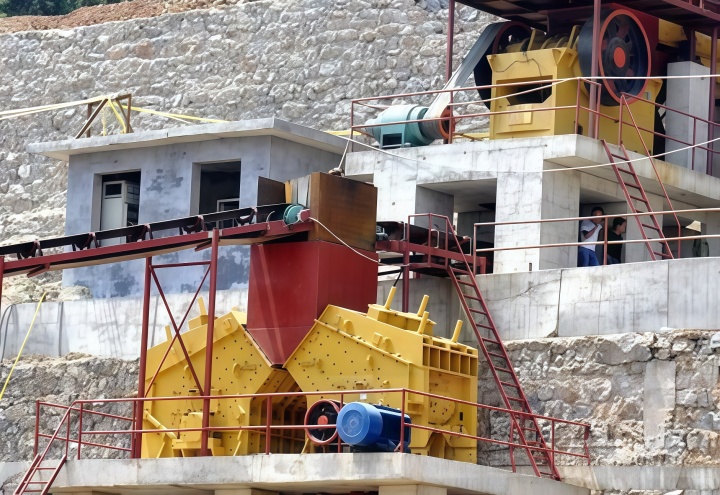
Additionally, note that the feed opening width of a primary Aggregate Crusher should be at least 20% larger than the maximum feed size. Oversized feed material reduces throughput and increases equipment load.
How do you balance reduction ratio with particle shape and throughput?
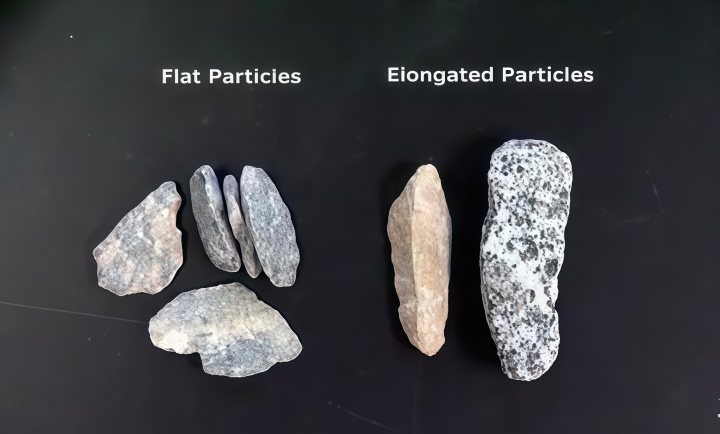
There is an inverse relationship between reduction ratio and particle shape. Industry research confirms that at higher reduction ratios, the flakiness index tends to increase, resulting in poorer particle shape.
Reduction ratio and throughput are also inversely related. The cone crusher data mentioned above demonstrates this: at a reduction ratio of 4.2:1, throughput was 185 tons/hour; increasing to 5.5:1 reduced throughput to 145 tons/hour; further increasing to 7:1 dropped throughput to 110 tons/hour. For each unit increase in reduction ratio, the throughput loss accelerates.
The trade‑off strategy: if the project has requirements for both particle shape and throughput, it is not advisable to rely on a single Aggregate Crusher to achieve all size reduction. Multi‑stage crushing should be used to distribute the total reduction ratio across stages, allowing each stage to operate in its optimal range.
How does material hardness affect the upper limit of reduction ratio?
Material hardness directly affects the upper limit of reduction ratio. Industry data indicates that hard, strong, and wet materials typically can only achieve lower reduction ratios, while soft, weak, and dry materials can achieve higher reduction ratios.
For hard rocks such as granite and basalt, the single‑stage reduction ratio should be kept at a lower level. For soft rocks such as limestone and sandstone, the reduction ratio can be moderately increased. Material hardness is the primary parameter that must be evaluated when selecting an Aggregate Crusher.

Three common selection issues
Three typical issues related to reduction ratio in equipment selection deserve special attention: excessive focus on the nominal maximum reduction ratio, imbalance in reduction ratio distribution across stages, and inadequate feed size control.
The first issue is excessive focus on the nominal maximum reduction ratio. The nominal maximum value is typically measured under ideal conditions; in actual production with hard rock, wet material, or clay‑containing material, this value is difficult to achieve. An appropriate margin should be reserved during selection.
The second issue is imbalance in reduction ratio distribution across stages. The common scenario is that the primary stage reduction ratio is too high while the secondary stage is too low, resulting in primary equipment overload and secondary equipment underutilization. The proper approach is to allocate the reduction ratio of each Aggregate Crusher according to the principle of progressive decrease.
The third issue is inadequate feed size control. Improperly configured grizzly screens allow oversized material to enter, causing the actual reduction ratio to deviate from the design value.
Four steps to determine the configuration plan
Based on material characteristics and total reduction ratio, the equipment configuration and reduction ratio allocation can be determined in the following four steps.
Step one is to confirm whether the material is hard rock or soft rock. For hard rock, keep the single‑stage reduction ratio at a lower range; for soft rock, it can be moderately increased.
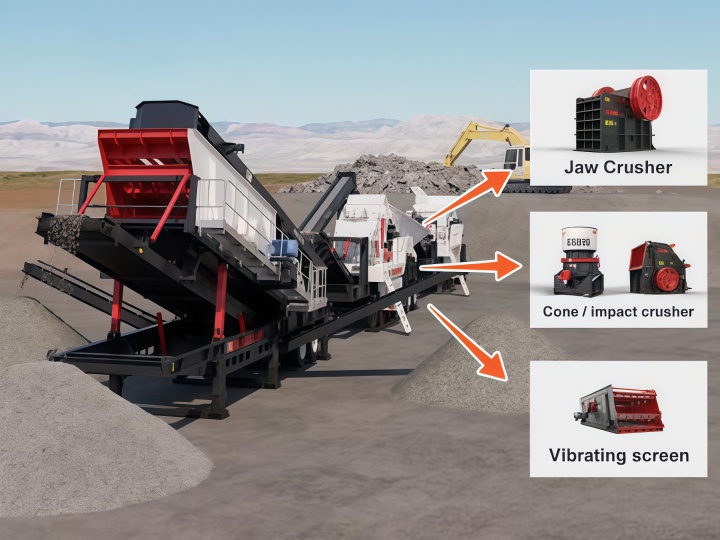
Step two is to calculate the total reduction ratio. If less than 16:1, configure two crushing stages; if between 16:1 and 25:1, configure three stages; if greater than 25:1, configure four or more stages.
Step three is to allocate the total reduction ratio according to the principle of progressive decrease. The actual reduction ratio of each Aggregate Crusher must not exceed its nominal upper limit.
Step four is to fine‑tune the closed‑side setting based on product size analysis results. Adjust in increments of 2‑5mm each time, allow the equipment to run stably, then sample and test, and determine whether further adjustment is needed based on the test results.
FAQ
Q: What are the consequences of feed size exceeding the nominal range of an Aggregate Crusher?
Oversized feed material leads to reduced throughput and increased equipment load, and may cause bridging, hang‑ups, and unscheduled downtime.
Q: What is the impact of setting the reduction ratio too high on product quality?
A reduction ratio that is too high increases flakiness index, degrades particle shape, reduces throughput, and increases energy consumption.
Q: What problems does a reduction ratio that is too small cause?
A reduction ratio that is too small indicates insufficient size reduction capability of a single‑stage Aggregate Crusher, resulting in overly coarse product, increased circulating load, and accelerated wear.
Q: How should reduction ratios be allocated among multiple Aggregate Crushers in a multi‑stage crushing circuit?
Allocate according to the principle of progressive decrease from primary to secondary to tertiary stages, allowing each unit to operate in its optimal range.
Closing Remarks
The essence of reduction ratio is the economic calculation of equipment configuration. Jaw crushers 4:1 to 8:1, impact crushers above 10:1, cone crushers 1.5:1 to 5:1—selecting the right equipment type, allocating proportions properly, and adjusting the closed‑side setting accurately are the keys to simultaneously improving line efficiency and product quality. Mastering the calculation and adjustment methods of reduction ratio is the foundation for fully realizing the value of each Aggregate Crusher. We hope this content provides a useful reference for your production practices.