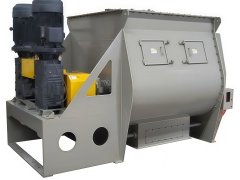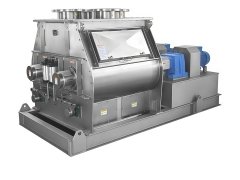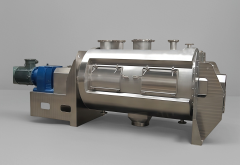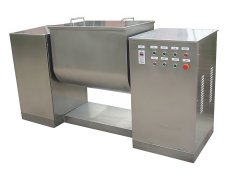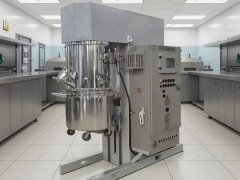
Planetary Mixer for Battery Electrode Slurry
Planetary Mixer for Battery Electrode Slurry: How to Solve the Uniform Dispersion Challenge of High-Viscosity Electrode Slurries?
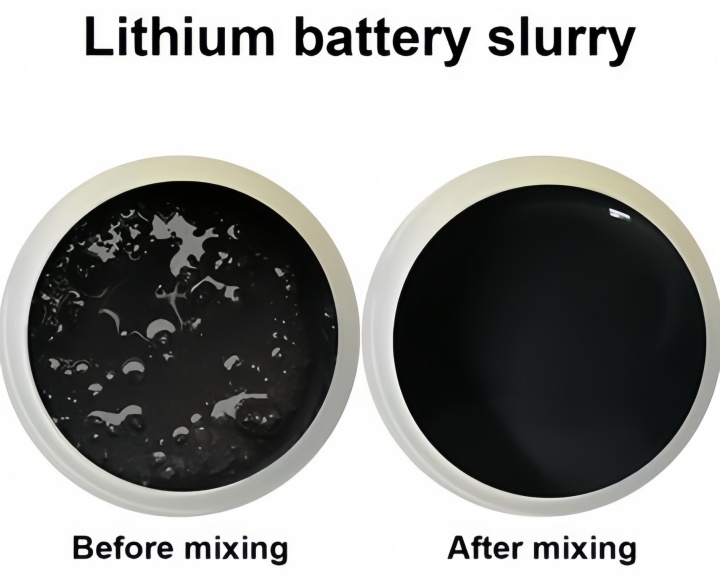
The Planetary Mixer for Battery Electrode Slurry is a high-viscosity mixing system engineered for lithium-ion battery electrode slurry preparation, with the global market size reaching USD 465 million in 2025. This equipment combines planetary revolution and rotation motion with high-speed dispersion technology to address the core process challenges that traditional mixing equipment faces when handling high-solid-content slurries - poor uniformity, bubble entrapment, and batch-to-batch inconsistency.
Taking lithium iron phosphate cathode slurry as an example, after adopting the Planetary Mixer for Battery Electrode Slurry, the slurry solid content can be increased from 65% to over 72%, coating areal density deviation controlled within ±1.5%, and single-batch mixing time reduced from 270 minutes to 120 minutes. Major global battery manufacturers including CATL, BYD, and Panasonic have deployed this equipment across their electrode production lines.
For lithium battery manufacturers pursuing electrode consistency and production yield, the selection and configuration of the Planetary Mixer for Battery Electrode Slurry directly impacts final cell performance.
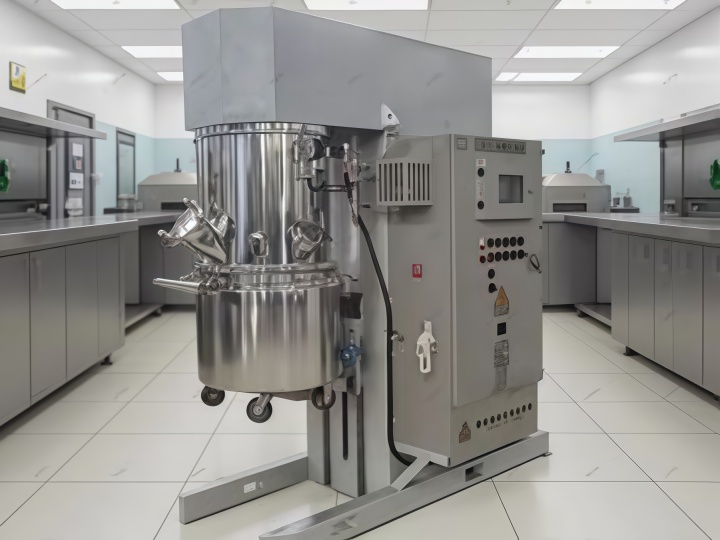
The Core Components of the Planetary Mixer for Battery Electrode Slurry
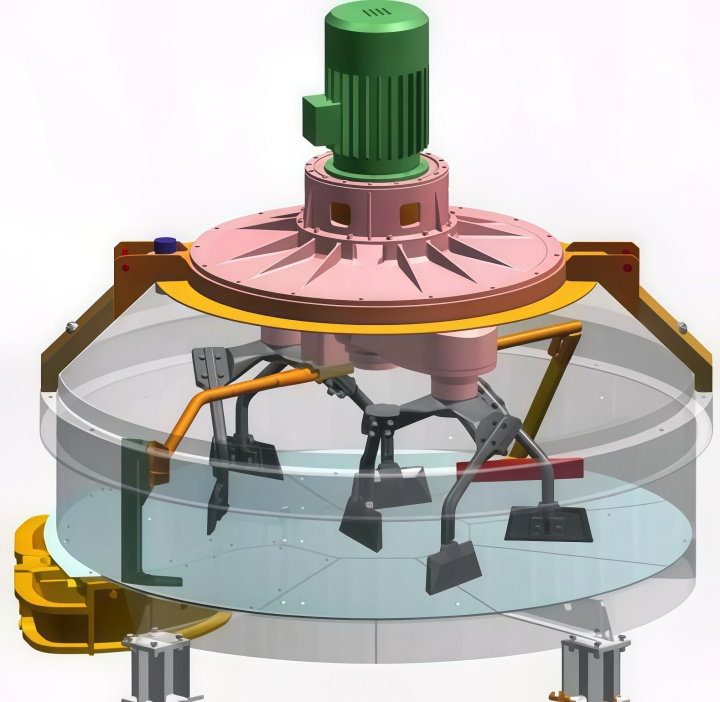
The mechanical architecture of this equipment is built around power splitting. The top-mounted planetary gearbox converts the single motor input into two independent motions - revolution and rotation. Two twist-frame mixing blades are mounted on the planetary carrier, revolving around the container axis while simultaneously rotating about their own axes. The high-speed dispersion shaft, independent of the planetary system, is equipped with a serrated disc that operates at significantly higher speeds to break down particle agglomerates.
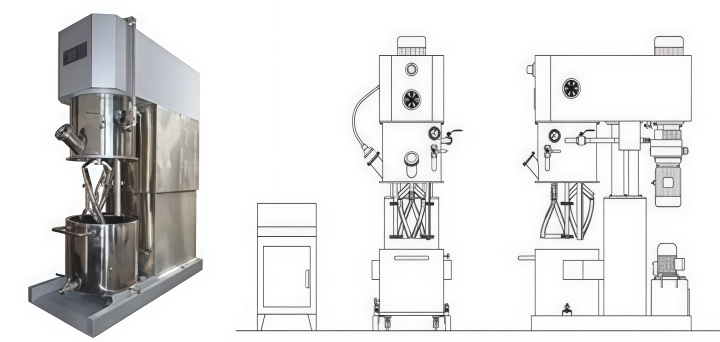
The vacuum system and temperature-control jacket handle deaeration and temperature management respectively. This architecture enables the Planetary Mixer for Battery Electrode Slurry to complete dry pre-mixing, wet kneading, high-speed dispersion, and vacuum deaeration within a single unit.
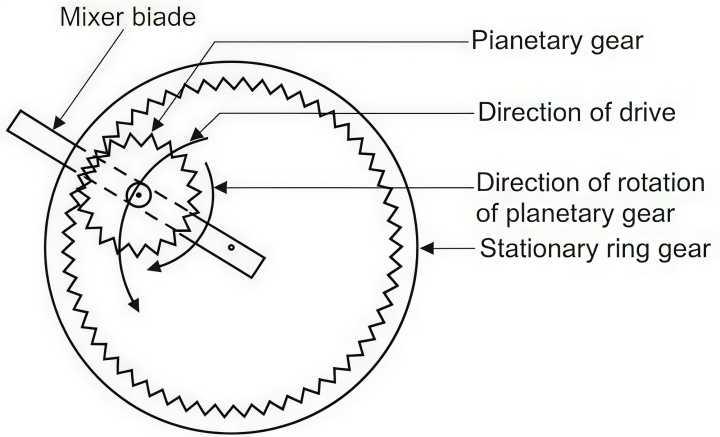
How Does the Dual-Motion System of the Planetary Mixer for Battery Electrode Slurry Achieve Efficient Mixing?
The working principle centers on its coordinated dual-motion system. As the planetary carrier rotates, the mixing blades continuously change their position relative to the container wall while rotating about their own axes. This compound motion subjects the material to alternating effects of two mechanisms - interlayer exchange and local shear. Revolution drives large-scale convection that distributes macro-components uniformly, while rotation generates localized high-shear zones that break down micro-agglomerates. The clearance between blades and container wall is 2 to 7 millimeters, ensuring material near the wall receives comparable shear to that in the central region.
Vacuum operation removes micro-bubbles that could compromise coating quality. The PMH 4000 model, launched by Germany's Netzsch in 2025, requires only 6 units for the anode and 3 units for the cathode in a gigafactory line to meet capacity demands. For every 5 m/s increase in blade linear velocity, mixing time can be reduced by 20 to 30 minutes.
This design solves the common issues of laminar flow dead zones and air entrainment found in traditional single-shaft mixers, making the equipment suitable for advanced battery systems such as high-nickel and high-silicon chemistries.
The Technical Parameters of the Planetary Mixer for Battery Electrode Slurry
The following table presents the actual technical parameters across different specifications, covering laboratory R&D to scaled production.
| Parameter | Lab Model | Pilot Model | Production Model 1 | Production Model 2 |
|---|---|---|---|---|
| Specification | 5L Model | 30L Model | 200L Model | 650L Model |
| Working Capacity | 2.7 – 5 L | 30 L | 95 – 200 L | 650 L |
| Design Volume | 8 L | 45 L | 287 L | 822 L |
| Barrel Inner Diameter | Φ240 mm | Φ400 mm | Φ750 mm | Φ1100 mm |
| Mixing Motor Power | 1.5 kW | 8.5 kW | 15 kW | 45 kW |
| Dispersion Motor Power | 1.5 kW | — | 22 kW | 55 kW |
| Revolution Speed | 5 – 50 rpm | 0 – 50 rpm | 2.5 – 25 rpm | 0 – 28 rpm |
| Rotation Speed | 10 – 98 rpm | 0 – 80 rpm | 4 – 40 rpm | 0 – 47 rpm |
| Dispersion Speed | Up to 6100 rpm | 0 – 5000 rpm | 284 – 2840 rpm | 0 – 1750 rpm |
| Dispersion Linear Velocity | Up to 19 m/s | — | Up to 23 m/s | 23 m/s |
| Vacuum Level | ≤ -0.098 MPa | ≤ -0.098 MPa | ≤ -0.098 MPa | ≤ -0.098 MPa |
| Vacuum Hold | 24h ≥ -0.085MPa | — | — | 24h ≥ -0.085MPa |
| Applicable Viscosity | ≤ 600,000 cps | — | ≤ 1,200,000 cps | — |
In 2024, global production of planetary battery slurry mixers reached approximately 30,410 units, with an average price of approximately USD 14,302 per unit.
Four Core Reasons to Choose the Planetary Mixer for Battery Electrode Slurry
The decision to choose this equipment comes down to four challenging issues it directly addresses.
Issue One: Batch-to-batch consistency. Traditional mixers have dead zones where material does not circulate properly, resulting in viscosity fluctuations of over 15%. The dual-motion system of this equipment ensures consistent flow paths across batches, with finished slurries exhibiting essentially overlapping rheological curves.
Issue Two: Bubbles affect coating yield. Bubbles form pinholes during coating, directly reducing electrode yield. The vacuum system reaches -0.098 MPa with pressure drop not exceeding 0.013 MPa over 24 hours, effectively removing micro-bubbles from the slurry.
Issue Three: High-solid-content dispersion. Formulations such as high-nickel NCM and silicon-carbon place high demands on dispersion capability. This equipment achieves a dispersion linear velocity of up to 23 m/s, sufficient to break down nano-scale particle agglomerates.
Issue Four: Corrosion resistance and maintenance. SUS304 stainless steel with mirror-polished inner wall, roughness Ra ≤ 0.4μm, reduces slurry adhesion and demonstrates good stability when processing NMP solvent systems.
What Specific Material Systems Does the Planetary Mixer for Battery Electrode Slurry Handle?
This equipment can process various electrode material formulations across the battery industry.
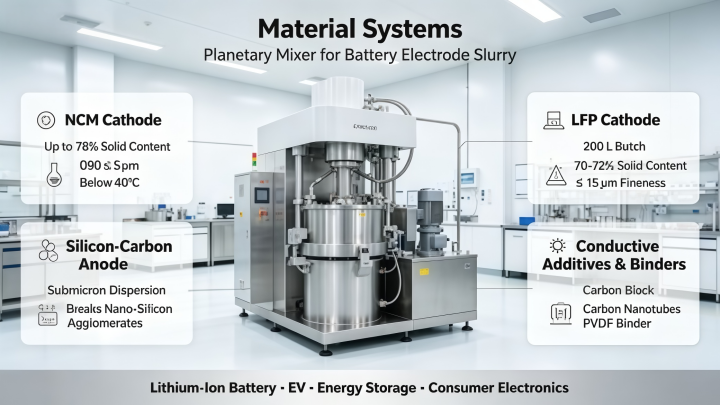
NCM Cathode Materials.When processing NCM811 slurry, solid content can reach over 78%, with dispersion fineness D90 controllable within 5μm. The jacketed cooling water system keeps slurry temperature below 40°C, preventing structural degradation at elevated temperatures.
Lithium Iron Phosphate Cathode.It can complete mixing and deaeration of a 200L batch within 4 to 6 hours, with solid content stable between 70% and 72%, fineness ≤ 15μm, meeting production needs of 20,000 cells per day.
Silicon-Carbon Anode.Silicon particles experience up to 300% volume expansion during cycling, imposing stringent requirements on dispersion uniformity. The shear force of this equipment can effectively break down nano-silicon agglomerates, dispersing primary particles to the sub-micron level.
Conductive Additives and Binders. The equipment can also process carbon black, carbon nanotubes, and binder systems like PVDF. Solid-state battery production is expected to account for 25% to 30% of total production by 2034, and this equipment is equally applicable to solid-state electrolyte processing.
Planetary Mixer for Battery Electrode Slurry FAQ
How does the Planetary Mixer for Battery Electrode Slurry control temperature when processing high-nickel NCM811 slurry?
The jacketed cooling water system keeps slurry temperature below 40°C, preventing structural degradation at elevated temperatures.
How long does vacuum deaeration take with the Planetary Mixer for Battery Electrode Slurry?
Vacuum deaeration is performed at 15 rpm revolution speed with dispersion speed set to zero, for 15 to 30 minutes.
How to address silicon particle agglomeration when preparing silicon-carbon anode slurry with the Planetary Mixer for Battery Electrode Slurry?
Adopt a dry-mix-then-wet-knead process: pre-mix silicon particles with conductive additives at high speed, then add binder solution for wet kneading.
How durable is the mechanical seal of the Planetary Mixer for Battery Electrode Slurry?
The double mechanical seal with seal liquid circulation maintains stable liquid film between seal faces after 8 hours of continuous operation, preventing NMP solvent from penetrating the bearing.
Summary
The Planetary Mixer for Battery Electrode Slurry is an important tool for solving the uniform dispersion challenge of high-viscosity electrode slurries. Its combination of planetary motion, high-speed dispersion, vacuum deaeration, and temperature control makes it suitable for processing lithium iron phosphate, NCM, and silicon-carbon anode materials. As solid-state battery commercialization advances and EV sales continue to grow, the importance of this equipment in battery manufacturing will become increasingly prominent.