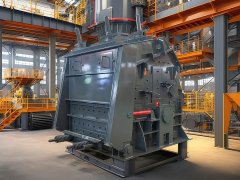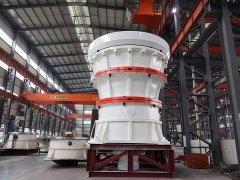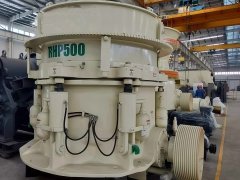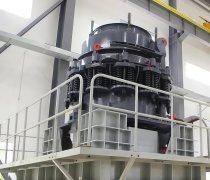
Manganese Ore Cone Breaker for Alloy Charge
This page covers seven sections: product overview, working principle, technical specifications, core advantages, applicable materials, selection guide, maintenance and frequently asked questions, helping you fully understand the technical features and selection methods of the Manganese Ore Cone Breaker for Alloy Charge.
What Is the Manganese Ore Cone Breaker for Alloy Charge?
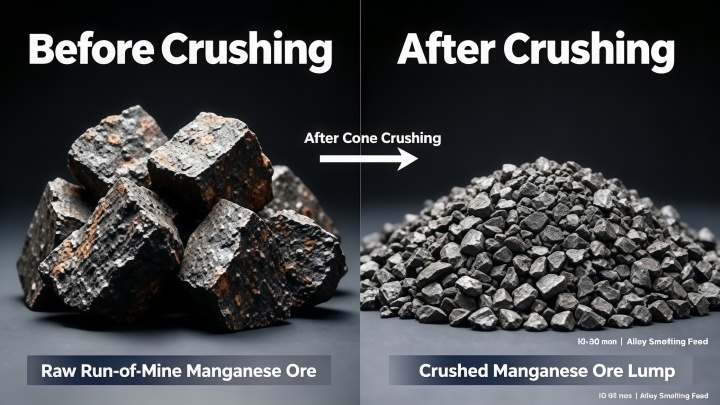
The Manganese Ore Cone Breaker for Alloy Charge is a cone crushing device for medium and fine crushing of manganese ore, processing run-of-mine ore into the feed size required for alloy smelting. Approximately 80 percent of global high-grade manganese ore resources are deposited in South Africa's Kalahari manganese field.
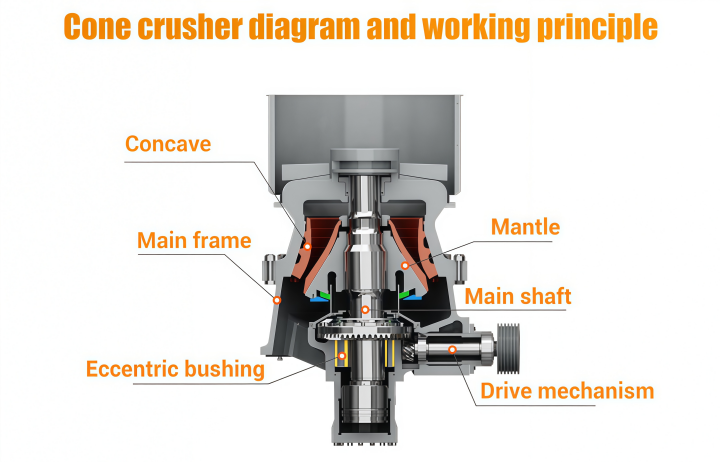
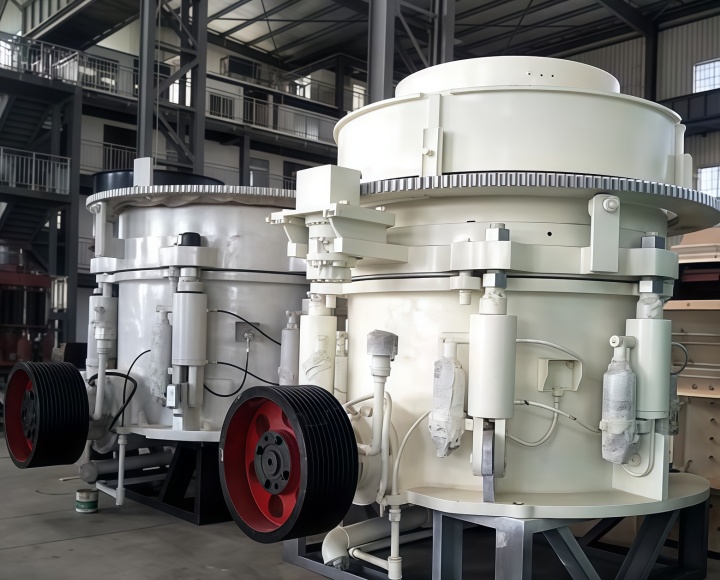
This equipment uses the interparticle breakage principle, with the moving cone performing gyratory motion driven by an eccentric sleeve, and material being subjected to compression, bending and shearing forces between the moving cone and the fixed cone. Key components are made of ZGMn18Cr2 high-manganese steel to handle the high impact loads of manganese ore crushing. In production practices across major global manganese mining regions, the adaptability and operational stability of the Manganese Ore Cone Breaker for Alloy Charge have been widely recognized.
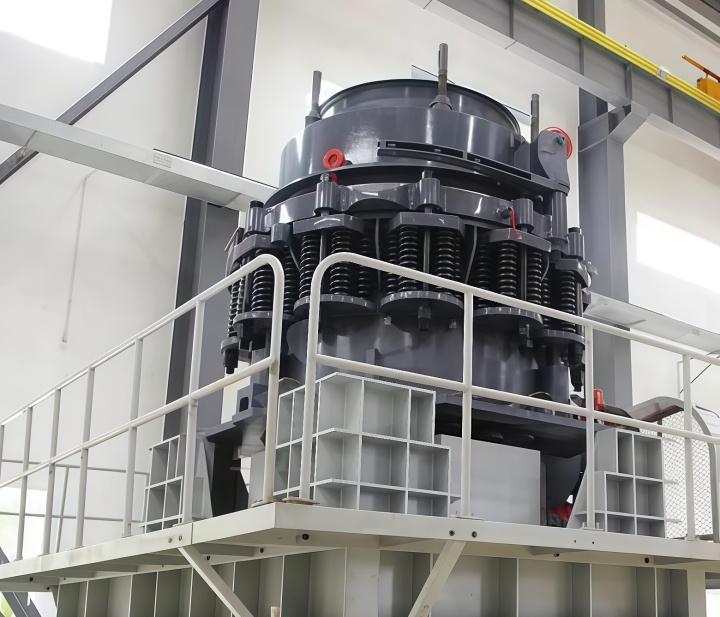
How Does the Manganese Ore Cone Breaker for Alloy Charge Work?
The Manganese Ore Cone Breaker for Alloy Charge relies on the eccentric gyratory motion of the moving cone to achieve interparticle breakage of manganese ore. Material enters the crushing chamber through the top feed opening and falls into the annular space between the moving cone and the fixed cone. Driven by the eccentric sleeve, the moving cone performs periodic gyratory motion, crushing material when approaching the fixed cone and releasing it to move downward when moving away.
This process repeats in the crushing chamber, with material particle size gradually reduced until discharging from the bottom opening. This equipment achieves a crushing ratio between 4 and 8, with discharge size controlled by adjusting the closed side setting. Alloy feed preparation typically requires product size between 10 and 50 millimeters, which this equipment can achieve.
Technical Specifications of the Manganese Ore Cone Breaker for Alloy Charge
The Manganese Ore Cone Breaker for Alloy Charge is available in multiple models. Specific technical specifications are shown in the table below.
| Model | Cone Diameter mm | Max Feed Size mm | Closed Side Setting mm | Capacity t/h | Motor Power kW |
| PYB900 | 900 | 115 | 15-50 | 50-90 | 55 |
| PYZ900 | 900 | 60 | 5-20 | 20-65 | 55 |
| PYD900 | 900 | 45 | 3-13 | 15-50 | 55 |
| PYB1200 | 1200 | 145 | 20-50 | 110-168 | 110 |
| PYZ1200 | 1200 | 100 | 8-25 | 42-135 | 110 |
| PYD1200 | 1200 | 50 | 3-15 | 18-105 | 110 |
| PYB1750 | 1750 | 215 | 25-60 | 280-480 | 160 |
| PYZ1750 | 1750 | 185 | 10-30 | 115-320 | 160 |
| PYD1750 | 1750 | 85 | 5-15 | 75-230 | 160 |
This equipment handles manganese ore with compressive strength not exceeding 300 MPa, with moisture content recommended below 5 percent. South Africa's Black Rock manganese mine produces 4 million tons annually, and the concentration of discharge particle size directly affects the smelting efficiency of electric furnaces.
Core Advantages of the Manganese Ore Cone Breaker for Alloy Charge
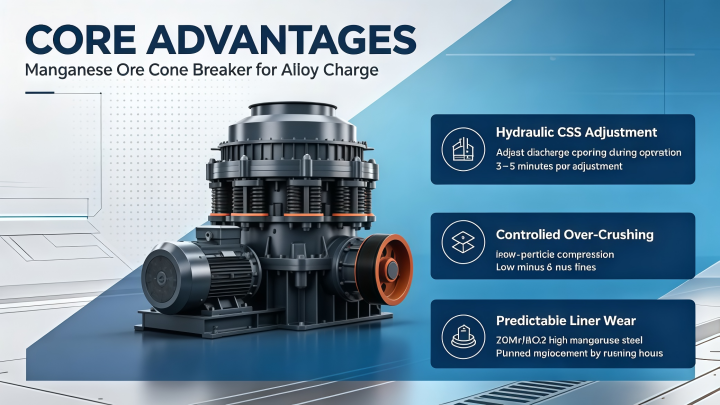
The Manganese Ore Cone Breaker for Alloy Charge offers three main advantages in manganese ore crushing operations, all derived from actual production line data feedback.
Hydraulic closed side setting adjustment: This equipment allows closed side setting adjustment during operation without stopping, with each adjustment taking approximately 3 to 5 minutes.
Controlled over-crushing ratio: The interparticle breakage method subjects material primarily to compressive stress, keeping the proportion of minus 6 millimeter fines in the discharge at a low level.
Predictable liner wear: The ZGMn18Cr2 high-manganese steel liners exhibit linear wear characteristics, enabling planned replacement schedules based on running hours.
What Materials Does the Manganese Ore Cone Breaker for Alloy Charge Handle?
The Manganese Ore Cone Breaker for Alloy Charge handles three main material categories: carbonate and oxide manganese ores, alloy feed preparation, and beneficiation pre-treatment. Production practices across major global mining regions demonstrate the equipment's applicability.
Carbonate and oxide manganese ores: This equipment processes carbonate, oxide and silicate manganese ores of various grades. Gabon's Moanda manganese mine, operated by Eramet's Comilog subsidiary, produced 6.8 million tons in 2024, using a PYB1200 model with a circular vibrating screen in a closed circuit, achieving 87 percent of product in the 10 to 40 millimeter range. Australia's Groote Eylandt manganese mine, operated by South32, produced 1.66 million tons in the second half of 2025, with capacity increasing from 80 to 130-145 tons per hour after installing this equipment.
Alloy feed preparation: In ferroalloy production, this equipment crushes manganese ore to 10 to 50 millimeter feed size. South Africa's Kalahari manganese field holds approximately 80 percent of global high-grade manganese resources, with Black Rock mine producing 4 million tons annually.
Beneficiation pre-treatment: In the beneficiation stage, this equipment reduces ore to a size suitable for ball mill feed, lowering downstream grinding energy consumption.
How to Select the Right Manganese Ore Cone Breaker for Alloy Charge Model?
Selecting the Manganese Ore Cone Breaker for Alloy Charge requires comprehensive evaluation across three dimensions: capacity requirements, feed size, and target discharge size.
Capacity requirements: Choose PYB900 series for under 50 tons per hour, PYB1200 series for 50 to 150 tons per hour, and PYB1750 or larger for over 150 tons per hour, with 10 to 20 percent capacity margin reserved.
Feed size: This equipment accepts maximum feed sizes ranging from 45 to 215 millimeters depending on the model. Oversized feed requires a jaw crusher upstream for primary crushing.
Target discharge size: Alloy feed preparation typically requires product between 10 and 50 millimeters. The standard and medium types suit this range, while the short-head type applies to finer crushing requirements.
Process configuration: This equipment typically operates with jaw crushers, vibrating feeders, and circular vibrating screens in a closed-circuit crushing and screening flow.
Maintenance and Frequently Asked Questions About the Manganese Ore Cone Breaker for Alloy Charge
Daily maintenance of the Manganese Ore Cone Breaker for Alloy Charge covers three main tasks: mantle and concave inspection and replacement, lubrication system maintenance, and closed side setting adjustment.
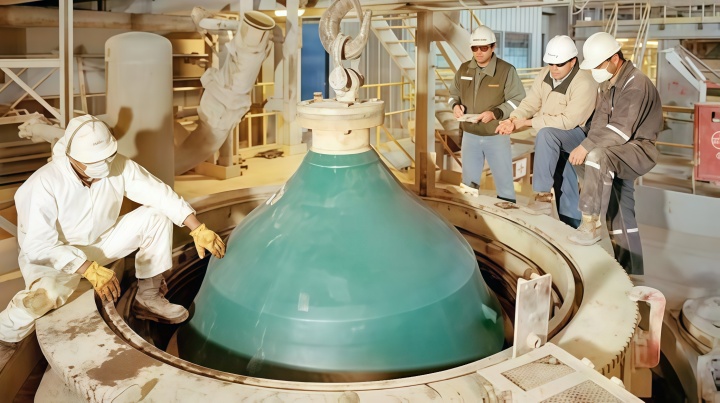
Mantle and concave replacement: Inspect wear after each shift. ZGMn18Cr2 liners typically last 800 to 2,000 hours when processing medium-hardness manganese ore.
Lubrication system maintenance: Use a circulating oil lubrication system with oil temperature controlled between 40 and 55 degrees Celsius and oil pressure maintained between 0.08 and 0.15 MPa.
Closed side setting adjustment: As liners wear, the closed side setting gradually increases and requires periodic hydraulic or mechanical adjustment back to the set value.
How to resolve capacity reduction when the Manganese Ore Cone Breaker for Alloy Charge processes high-grade manganese ore?
High-grade manganese ore has higher density and hardness. Consider increasing the closed side setting of this equipment while checking for consistent and continuous feeding.
What causes uneven wear on the mantle and concave of the Manganese Ore Cone Breaker for Alloy Charge?
Uneven wear typically results from feed segregation causing excessive load on one side of this equipment's crushing chamber. Install a splitting device at the feed end to distribute material evenly around the crushing chamber.
How to control excessive fines in the discharge of the Manganese Ore Cone Breaker for Alloy Charge affecting feed quality?
This is usually caused by an overly small closed side setting or severely worn liners. Consider increasing the closed side setting and adding a screening stage after crushing.